
If you want better voice acting
Choose Total War: WARHAMMER III – Lords of the End Times. It scores 5.0 vs 2.0 for voice acting, with a 4.2 overall score.

Choose Transport Fever 3 if you want a deep, highly replayable logistics sandbox and enjoy optimizing complex networks. Skip it if steep onboarding, fiddly console management, or late-game performance issues outweigh that depth.
Transport-management fans who enjoy trains, supply chains, traffic tuning, long-form sandbox play, and repeatedly optimizing complex systems.
Players seeking a fast, simple city builder, multiplayer or co-op, effortless console navigation, or consistently light hardware demands.
Transport Fever 3 is a substantial evolution of an already specialized formula. Its best qualities are the addictive network-optimization loop, huge historical vehicle roster, flexible sandbox, stronger traffic and city systems, and a much-improved interface. The tradeoff is accessibility: tutorials remain inconsistent, campaign objectives can be rigid, and the growing web of routes, finances, maintenance, pollution, and cargo rules can overwhelm newcomers. Technical results also vary, with some smooth reports and others showing late-game stutter, long loads, or CPU pressure. For players who enjoy methodical logistics, tinkering, and watching a transport network evolve for dozens of hours, the depth and replayability are the main attraction; players wanting a quick, simple city builder may find the same complexity exhausting.
Compared with other Video Games, this product is above average in marketing accuracy, difficulty balance, mission variety, near average in graphics quality, atmosphere, below average in multiplayer design, voice acting, monetization fairness.
| Attribute | This product | Category average | Difference |
|---|---|---|---|
| marketing accuracy | 5.0 | 2.7 | +2.3 |
| multiplayer design | 1.5 | 3.7 | -2.2 |
| voice acting | 2.0 | 4.0 | -2.0 |
| difficulty balance | 4.8 | 3.3 | +1.4 |
| monetization fairness | 1.5 | 3.1 | -1.6 |
| mission variety | 5.0 | 3.4 | +1.6 |
| DLC value | 2.0 | 3.5 | -1.5 |
| user interface design | 4.4 | 3.3 | +1.1 |
Choose Total War: WARHAMMER III – Lords of the End Times. It scores 5.0 vs 2.0 for voice acting, with a 4.2 overall score.
Choose Forza Horizon 6. It scores 4.8 vs 3.0 for frame rate stability, with a 4.2 overall score.
Choose SiN: Reloaded. It scores 5.0 vs 2.0 for DLC value, with a 4.3 overall score.
Choose SPRAWL zero. It scores 5.0 vs 2.6 for learning curve, with a 4.0 overall score.
Products reviewers directly compared with this model, grouped into quick takeaways.
It is more approachable than earlier entries in several areas, especially UI and tutorials, but the overall learning curve is still steep and some systems remain underexplained.
The campaign is useful for learning and offers varied historical scenarios, but the open-ended sandbox is the stronger long-term draw for most logistics-focused play.
Mod support is a major strength, with an integrated hub, substantial day-one content, and cross-platform availability highlighted across the supplied coverage.
Results are mixed. Some sessions run smoothly, while larger late-game networks can introduce stutter, frame-rate drops, longer loads, and heavier CPU pressure.
No. The supplied coverage describes it as a strictly single-player game, and the lack of multiplayer is a disappointment for at least one source.
It keeps the familiar foundation but adds deeper city reactions, cargo timing, traffic control, progression, a larger vehicle roster, improved UI, and more flexible building tools.
These are a few of the reviews included in our analysis.
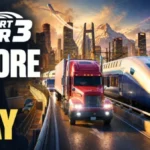
Paradox Interactive is a world leading PC games publisher known for games such as Cities: Skylines, Europa Universalis and Crusader Kings.
Pick up your Transport Fever 3 - Deluxe Edition PC copy from Green Man Gaming today and remember to sign in for our best price
Transport Fever 3 Pushes the Series Further With Deeper Management and Greater Complexity
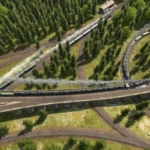
Transport Fever 3 builds on the series with an engaging, all-round approach to transport and logistics management.
The Transport Fever 3: Deluxe Edition allows you to take your network to the next level w

Best for fluid traversal, rewarding exploration, striking art, and forgiving quality-of-life features. Skip it if you want deep combat, radical genre innovation, or consistently demanding bosses.
Pros: difficulty balance, boss design
Cons: innovation, sandbox freedom

Good if you want fast, tactical roguelite combat with huge progression depth, striking art, and standout music. Skip it if repetition, resource micromanagement, or a less emotionally satisfying sequel story...
Pros: combat system, progression system
Cons: originality

Good if you want a beautiful, demanding survival sandbox built around exploration, building, progression, and memorable co-op. Skip it if long resource runs, harsh death recovery, and deliberate pacing sound...
Pros: town-building system, exploration quality
Cons: grind level, fast travel convenience

Best for joyful destruction, dense exploration, and a charming DK-Pauline adventure. Skip it if camera quirks, frame-rate dips, easy bosses, or premium Switch 2 pricing are dealbreakers.
Pros: fun factor, world interactivity
Cons: frame rate stability, boss design