
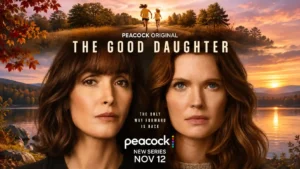
The Good Daughter Feature Scores
Overall Scorata score: 3.7/5
Based on 25 analyzed reviews · View source samples
Explore all 66 feature scores for The Good Daughter, organized into pros and cons.
Scores by Feature
Summary
66 reviewed features-
Very positive 4.5-5.013 (20%)
-
Positive 3.5-4.419 (29%)
-
Neutral 2.5-3.413 (20%)
-
Negative 1.5-2.415 (23%)
-
Very negative below 1.56 (9%)
Pros
Sort
-
The performances are the series' clearest strength, especially those of Fahy and Byrne. They repeatedly keep the drama engaging when the mystery strains credibility.
-
Fahy, Byrne and Gleeson carry most of the emotional weight, with the sister duo singled out again and again as the standout.
-
The sisters' anger, affection and barbed banter come across as lived-in. This chemistry is widely considered more gripping than the crime itself.
-
The fractured bonds between sisters and their father provide the drama's heart, with love and resentment tangled together rather than neatly resolved.
-
Aching sisterly love and buried guilt supply genuine emotional force, even when the crime plot is contrived or overstuffed.
-
Supporting turns often make Pikeville feel more inhabited and nuanced. There is some frustration that characters such as Lenore are underused.
-
The sisters' opposing responses to childhood trauma create layered characters, although some find that the rush between plot turns leaves too little space to grow.
-
The younger versions of Sam and Charlie are generally judged well chosen, alongside an accomplished adult ensemble.
-
Sunlit landscapes, rundown streets and overgrown settings give the Georgia story distinctive visual texture.
-
Its cliffhangers and vivid relationship drama make it hard for enthusiastic viewers to stop between episodes.
-
Late revelations and emotional twists grip admirers, even as other critics fault the finale for overwhelming explanation.
-
An involving Southern crime story wins over many viewers through its characters, but familiar plotting and repeated trauma leave some critics cold.
-
Pikeville's weathered, verdant surroundings can evoke an unsettling Southern Gothic mood, though one critic misses the book's stronger rural specificity.
-
An effective blend of legal thriller and family drama satisfies many genre fans, without entirely escaping formula and melodrama.
-
The childhood scenes reveal new facets of the family's history and often echo the present gracefully. Not everyone likes their hazy look or frequent interruptions.
-
Character dialogue and family psychology are often sharply written, but coincidence, explanation-heavy stretches and some awkward bonding gimmicks reduce confidence in the scripts.
-
Green's assured command of timeline transitions and emotional intensity gives a sometimes overstuffed story coherence.
-
Bright, almost overexposed childhood scenes create a disturbing contrast with the violence they hold.
-
Even while confronting brutality and limited power, Sam and Charlie are active participants in deciding their futures.
-
Bitterly funny family banter and literary references lend the Quinns a distinctive voice. The more forced philosophical speeches and exposition are divisive.
-
The defense of poor and vulnerable people provides meaningful class commentary, though the wider social critique is sometimes underdeveloped.
-
Sam's daily accommodations and encounters with authority create telling moments. The decision not to cast a disabled performer is also questioned.
-
One admirer found a second full viewing even more rewarding, while another enjoyed it chiefly as a one-time watch.
-
Sam and Charlie are compelling when fighting or reconnecting, though Rusty's colorful personality occasionally threatens to overshadow both.
-
The story makes pointed observations about accountability, class and money, even when its speeches become overwrought.
-
Returning to familiar events from other perspectives can add nuance without mechanically repeating every moment.
-
Even a mixed assessment finds the six-part series technically polished.
-
Hints of Biblical duty inform the sisters' family obligations without turning into a sermon or moralizing about the title.
-
An enthusiastic viewer would happily return to these characters, while also accepting that the limited story ends where it should.
-
The adaptation stays close to the original novel for some readers, but others feel the screen version loses much of the book’s psychological and social detail.
-
Rusty's defense of an unpopular client raises compelling questions about fairness. An excessive police-corruption storyline weakens the point for some.
-
The opening is either an instant hook or an overload of violent incidents, depending on tolerance for blunt trauma drama.
Cons
Sort
-
The setting attracts criticism for sparse Black representation and caricatured Southern types, despite some strong interest in social marginalization.
-
The brutal attacks and lingering wounds make this unsuitable for viewers disturbed by graphic crime and assault.
-
Some antagonists are seen as generic Southern bigots or thinly sketched obstacles rather than fully realized people.
-
Underused supporters and an uneven split between the past and present investigations leave some worthwhile stories underexplored.
-
Female trauma and institutional power are central concerns, but some find the many abuses repetitive rather than illuminating.
-
The overlapping cases, characters and timelines make for dense viewing. Some viewers relish the intricacy; others struggle to follow the connections.
-
Charlie's troubled marriage is criticized for lacking the background and development needed to make its conflict resonate.
-
The accumulation of gloomy incidents makes the series emotionally draining for viewers looking for more than suffering.
-
Folksy jokes alongside repeated assaults and murders can feel jarring and affected rather than naturally darkly funny.
-
Gleeson's Rusty supplies energy, but one view is that his dominance undercuts the sisters' story. Others find his presence well judged.
-
Lengthy explanation and late information dumps repeatedly threaten to bury the sisters' emotional story.
-
The graphic, traumatic incidents are central to the thriller, but the relentlessness is distressing and sometimes criticized as excessive.
-
The emotional bond rings true even when coincidences, inconsistent accents and exaggerated law enforcement make the surrounding world less credible.
-
The present-day case generally matters less than the sisters' reconciliation. Its ultimate solution is serviceable to some and disappointing to others.
-
One concern is that Sam's physically disabled character could have been played by someone bringing lived experience of disability.
-
The stark visual contrast between the two sisters can make their different personalities feel too obvious.
-
One blunt brunette-versus-blonde styling contrast is criticized as distracting and simplistic.
-
A crowded, incident-heavy opening gives way to hazier, less urgent early episodes for one critic.
-
An especially gratuitous depiction of police abuse is said to turn potentially pointed criticism into near-parody.
-
The police are depicted as so exaggeratedly abusive that one critic feels the intended criticism loses credibility.
-
Easy to consume episode by episode, but one verdict suggests the elaborate mystery will fade quickly once the secret is out.
-
The show's flashbacks can appear excessively soft and hazy, a look that does not work for everyone.
-
Southern accent work divides critics, from wholehearted approval to complaints about an inconsistent assortment of regional voices.
-
The series occasionally finds fresh angles on a well-worn premise, but familiar Southern corruption and estranged-sibling tropes remain obvious.
-
Pikeville’s streets and surrounding hollers can feel vividly observed, although clichéd small-town imagery sometimes undercuts the regional credibility.
-
Interlocking past and present plots can feel clever and purposeful, but their connections sometimes seem engineered and the storytelling choppy.
-
The better moments probe how the past reshapes identity and family duty. A dissenting view finds the commentary too familiar and thin.
-
Rusty's jokes and family quirks lighten the bleakness, though a few flourishes strike critics as forced or sentimental.
-
The series treats grief, disability and survivor guilt as lasting family wounds, sometimes with moving insight. Its relentless pile-up of violence also feels excessive to several critics.
-
Some find six episodes exactly right for a compact thriller, while others wish the two mysteries had more room to develop.
-
The clues and reversals keep some viewers guessing and hooked, while others regard the big reveals as predictable, random or contrived.
-
The leads make the series compulsively watchable to many, though the relentless misery and familiar tropes put others off.
-
The emotional closure works for many, but several find the mystery resolution and final explanations labored rather than satisfying.
-
The six-episode run can feel propulsive and tightly paced, yet multiple timelines and subplots also produce slow patches, abrupt jumps and a crowded finale.
Use Cases
Best for
Sort
-
Excellent for viewers drawn to vivid, emotionally exposed performances. The leads frequently overcome weak plotting.
-
The sisters' difficult connection is the main attraction, although less favorable opinions say the plotting leaves the characters underexplored.
-
A solid option for lovers of dark, twisty crime drama who value character chemistry. The mystery can be more familiar than surprising.
-
The crime supplies a hook, but the family relationships are what give it lasting impact; the weaker procedural threads are a caveat.
-
All six episodes can make an addictive, manageable marathon, even though one mixed verdict recommends it only conditionally.
-
The timelines and tangled revelations reward attentive viewing, especially through a somewhat patient opening stretch.
-
Family coping, survivor guilt and estrangement are explored most convincingly in the sisters' intimate confrontations.
-
Mature viewers comfortable with very dark crime drama are the best fit for its sexual violence, killings and strong language.
-
The series raises questions about vulnerable defendants and uneven justice, but racial representation and overdone police portrayals limit its effectiveness.
-
The familiar mix of procedural mystery and deeply personal family trauma should appeal to readers of Slaughter's crime fiction.
-
The school shooting investigation drives the initial story, but the emotional family drama ultimately takes greater priority.
-
The investigation and defense of an accused teenager give legal-drama viewers meaningful ethical stakes, though the violence is harrowing.
Conditional or not ideal for
Sort
-
Mystery-solving viewingThere are intertwined clues and revelations, but experienced mystery fans may find the solution predictable or inadequately earned.
-
Emotion-sensitive viewingThis is a harsh choice for viewers sensitive to trauma; the series repeatedly returns to violent attacks and unresolved grief.
-
Family viewingThe story's violence, sexual themes and language make it a poor choice for an all-ages family screening.
-
Book-reader viewingBook readers may enjoy the close adherence to Karin Slaughter's story, although some miss the novel's depth or prefer the book outright.
-
Background viewingThe shifting chronology and intricate plot are poor companions for distracted, phone-in-hand viewing.
-
Children's viewingGraphic violence, explicit sexual material and profanity make the series inappropriate for children.
-
Scare-sensitive viewingThe show features traumatic violence and extremely disturbing events rather than mild, cozy mystery tension.
-
Newcomer viewingThose who have not read the novel may struggle more with the overlapping characters and incidents.
-
Realism-focused viewingThe sisters feel authentic, but the regional accents and exaggerated corrupt officials may trouble viewers seeking strict realism.
-
Teen viewingEven older teens may find the violence, profanity and sexual themes disturbing; this is firmly mature viewing.
Cast & Creators
-
CharlieFahy is the most consistently praised performer, making Charlie vulnerable, funny and stubborn without flattening her pain. Even harsher critics single out her work.
-
SamByrne gives Sam a brittle, reserved exterior with fierce emotion underneath. Her sisterly sparring with Fahy is a high point, though one critique finds some disability-related gestures mannered.
-
RustyGleeson makes Rusty a charismatic, flawed and often funny father who can steal the show. His Southern accent and some clownish flourishes draw criticism.
-
LenoreSteele is warmly praised as Lenore, blending dry humor, naturalism and affection. One critic wishes she had significantly more screen time.
-
WriterSlaughter earns praise for vivid characters and adapting the sisters' complicated past, but some find her plotting contrived and her exposition too heavy.
-
young SamMarshall helps make the traumatic childhood timeline moving and believable; the younger cast adds warmth to the sisters' history.
-
young CharlieCheek's work in the childhood scenes is praised for its warmth and emotional impact, making the family past feel consequential.
-
BenDorman gives Charlie's estranged husband a comparatively gentle, grounded presence amid the heightened ensemble.
-
GammaWilliams leaves a strong impression as the sisters' intelligent, formative mother in the flashback scenes.
-
KellyThe performance as Kelly is noted for being heartbreaking and grounding amid the drama's more heightened turns.
-
HuckJake McDorman provides charm and added texture to a local character who might otherwise be a stock thriller figure.
-
DirectorGreen's confident direction keeps the jumps between past and present smooth through much of the story and tempers difficult material.