
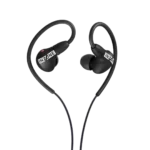
Sony Inzone E9 Feature Scores
Explore all 40 feature scores for Sony Inzone E9, organized into pros and cons.
Scores by Feature
Summary
40 reviewed features-
Very positive 4.5-5.019 (48%)
-
Positive 3.5-4.413 (33%)
-
Neutral 2.5-3.47 (18%)
-
Negative 1.5-2.41 (3%)
Pros
Sort
-
Positional accuracy is the E9’s defining strength: most reviewers can locate footsteps, gunfire, distance, and movement with exceptional precision. A small minority strongly disagrees, but the dominant pattern is excellent competitive directionality.
-
Sony’s generous mix of tip sizes and styles is consistently praised. The range makes it easier to find a secure seal and choose between general-use and stronger-isolation tips.
-
Passive isolation is one of the E9’s clearest strengths, especially with the dedicated isolation tips and a good seal. Most users report substantial blocking of voices, keyboards, and room noise without active noise cancellation.
-
Comfort is a major strength for most users, with many wearing the E9 for several hours without irritation or fatigue. A smaller group reports stiff earhooks, tip sensitivity, or ear discomfort after extended sessions.
-
Most users can find a secure, comfortable seal thanks to the broad tip selection, and a good seal can materially improve bass and isolation. Fit is still personal, with some needing aftermarket or alternate tips to get comfortable.
-
Separation is a standout competitive strength. Reviewers repeatedly say individual footsteps, voices, effects, and layers remain distinguishable even in dense firefights or busy mixes.
-
The included case is one of the most consistently liked extras, with useful organization for the earbuds and dongle. A minority finds it bulkier than necessary, but most consider it practical for travel or tournaments.
-
Spatial processing is usually praised for improving direction, distance, and immersion, and several users consider it exceptionally accurate. A few find it filtered, muffled, or less natural, so its value depends on the listener and mode.
-
The USB-C audio box is widely seen as a valuable part of the package because it unlocks Hub features, spatial processing, EQ, and broader device connections. Some dislike needing it for the best experience, and one listener strongly criticized its stock tuning.
-
The E9 earns strong praise when judged as a specialized competitive-FPS tool, especially for positioning, isolation, and comfort. Satisfaction drops sharply among listeners wanting one pair for music, cinematic games, chat, or a warmer all-purpose sound.
-
Sound quality depends heavily on the use case. Competitive games get repeated praise for clarity and detail, but music and cinematic titles often sound flat, hollow, bass-light, or clinical; a handful of listeners instead find the tuning rich and enjoyable.
-
The E9 is generally considered well equipped, with multiple tip sets, a USB-C audio box, case, and small cable-management extras. The bundle helps it feel ready for PC and travel use out of the box.
-
The earbuds are repeatedly praised for feeling very light. Their low weight helps reduce awareness and fatigue during long sessions.
-
The long cable is usually a strength for desktop PC setups and is often described as practical or well made. It can become cumbersome on controllers or phones, and a few users disagree on whether its length suits their setup.
-
The E9 works across a wide mix of PCs, consoles, phones, and other USB-C or 3.5mm devices. The hardware is broadly compatible, but Windows has the strongest software support and console users lose some tuning options.
-
The E9’s look is understated, compact, and functional rather than flashy. Most like the subtle, lightweight styling, though some find the buds plain or parts of the construction visually cheap.
-
Midrange performance is generally strong, with dialogue, voices, footsteps, and other critical cues sounding clean and forward. One review finds the mids somewhat hollow or overemphasized, but clarity remains a core competitive advantage.
-
The E9 generally presents a wide, precise stage that helps locate sounds across the field. It is more tactical than atmospheric, prioritizing positional awareness over a lush sense of musical space.
-
The compact wired IEM format is easy to stow and much easier to travel with than a full headset. The protective case further improves portability for tournaments and handheld gaming.
-
The 10-band EQ and profile controls are useful for tailoring the E9, especially when adding bass or emphasizing competitive cues. Results are limited by the underlying tuning, and customization is most complete on Windows through the dongle.
-
Setup is usually straightforward, from plug-and-play use to the clean single-screen Hub interface. Complexity rises when users juggle the dongle, separate microphone, per-app profiles, or platform-specific limitations.
-
INZONE Hub is generally easy to use and adds useful profiles, EQ, spatial sound, and app-sync features. The main frustration is platform support: Windows gets the full experience while consoles, Mac, Linux, and mobile lose customization.
-
The USB-C audio box worked successfully with Android in hands-on use, including a Samsung Galaxy phone. Android users can get audio through the dongle even though the full Hub app experience remains PC-focused.
-
Value is highly use-case dependent. Dedicated competitive players often consider the price justified by positioning, comfort, accessories, and software, while generalists and several owners think $150 is too much for weak versatility or no microphone.
-
Depth cues are strong enough to distinguish whether action is far away, mid-range, close, or nearby. Spatial processing can add further depth, although it may trade some tonal naturalness for competitive information.
-
The included USB-C adapter broadens device support and can make the wired E9 convenient with modern phones and computers. It is useful, though some older PCs may still need another adapter.
-
The earhook design usually keeps the lightweight buds securely in place, even during long sessions. One owner reported earpiece parts coming off in the ear, making stability less uniformly positive than comfort.
-
The wired connection was praised for eliminating latency and audio lag. That direct path suits competitive play where timing matters.
-
Replacement tips should be easy to source because the included styles come from Sony’s established tip lines. That makes long-term replacement less troublesome.
-
One reviewer specifically praised the wired path for avoiding data loss. The direct connection also supports the E9’s low-latency competitive focus.
-
The matte finish hides fingerprints very well. It keeps the understated shells looking cleaner during regular handling.
-
Volume feedback is mixed: one reviewer calls the E9 detailed and loud, another says it is loud enough, while one customer finds the output too low. Output level may therefore depend on source and personal preference.
Cons
Sort
-
The lack of a built-in microphone is a recurring drawback. Competitive players with a separate mic may not care, but headset users who expect one-device game chat often see it as an inconvenience or value problem.
-
Bass is the most divisive part of the tuning. Many find it restrained, hollow, or lacking punch for music and cinematic games, while a smaller group likes the cleaner low end or gets fuller bass with the right seal, dongle, or EQ.
-
One owner liked the overall unboxing but criticized the paper ear-tip holder as flimsy and cheap. The packaging itself is therefore less convincing than the included case and accessories.
-
Treble opinions are mixed but lean critical. Some hear crisp, detailed highs, while many find the top end subdued, lacking brilliance, or—at the other extreme—too sharp and fatiguing.
-
Tonal accuracy is disputed. One reviewer hears honest, natural timbres, while another considers the dongle-driven tuning far from accurate and overly shaped for gaming.
-
Cable replaceability gets mixed reports and mixed reactions. Where reviewers describe the cable as detachable, they appreciate easier replacement but note connector limitations; others describe their unit as fixed and see that as a durability drawback.
-
Preset quality is mixed. Some competitive profiles help emphasize useful cues, while others add little, sound unnatural, or are considered excessive compared with simply using a custom EQ.
-
Build impressions range from excellent to concerning. Several owners describe the hardware as high quality, but others report cheap-feeling plastic, a defective first unit, earpiece issues, or an immediate failure.