
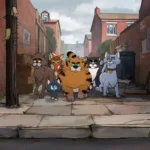
Ricky Gervais Alley Cats Feature Scores
Explore all 44 feature scores for Ricky Gervais Alley Cats, organized into pros and cons.
Scores by Feature
Summary
44 reviewed features-
Very positive 4.5-5.06 (14%)
-
Positive 3.5-4.44 (9%)
-
Neutral 2.5-3.414 (32%)
-
Negative 1.5-2.47 (16%)
-
Very negative below 1.513 (30%)
Pros
Sort
-
The voice cast is frequently one of the strongest elements, with several otherwise negative reviews still calling the ensemble talented or relatively strong. A few sources are less impressed, but the cast receives more praise than the writing or humor overall.
-
The roughly 15-17 minute episodes are usually viewed as a smart fit that keeps the show digestible and easy to binge. One writing-focused review argues that the short runtime leaves too little room for story and character development.
-
Positive takes praise the show’s distinctly British voice, especially its class-conscious banter and working-class social register. For those reviewers, the cats’ rough talk feels culturally specific rather than generic.
-
The six short episodes make this an easy, low-commitment binge. Positive takes especially like how quickly the season can be finished.
-
Positive genre-focused reviews think the series fits comfortably within adult animation and is worth watching for fans of crude, philosophical cartoons. Its appeal is much weaker for viewers who expect tighter plotting or more inventive comedy.
-
One strongly positive review calls the voice cast perfectly chosen, with familiar Gervais collaborators fitting the dysfunctional-cat ensemble naturally.
-
One positive analysis argues that the cats’ crude, unfiltered social register authentically reflects how many working-class British friends talk privately.
-
Ricky Gervais expresses exceptionally strong interest in continuing the series, saying he would like to keep making it indefinitely.
-
The group-recording approach produces relaxed, natural chemistry for several reviewers, and some say the cast feels like longtime friends riffing together. Others hear little chemistry at all, making the ensemble dynamic strongly taste-dependent.
-
One video finds genuine life lessons in the show’s discussions of death, companionship, and appreciating existence, even while criticizing much of the comedy.
Cons
Sort
-
Profanity is pervasive, especially repeated use of the c-word, and most reviewers who address it think the swearing is overused or substitutes for punchlines. Even some positive viewers warn that the language will be a barrier for part of the audience.
-
Writing is the dominant overall concern, with many sources calling it lazy, repetitive, underdeveloped, or overly dependent on Gervais’s familiar habits. A small minority finds it clever, observant, and meaningfully layered.
-
The lost-kitten premise is widely seen as thin or underdeveloped, with many critics saying side conversations crowd out the main story. A more positive view sees enough tenderness and direction for a low-key hangout comedy, but that is less common.
-
Critical reception is consistently described as severe, including extremely low aggregate scores and multiple one- or zero-star notices. This is one of the clearest areas of agreement in the source set.
-
The swing between vulgar banter and sudden tenderness is the series’ defining gamble. A few reviewers think the bittersweet mix works beautifully, but many find the shifts jarring, formulaic, or emotionally unearned.
-
Most comments on originality are negative, arguing that the offensive-cartoon premise and joke targets feel dated or recycled. One review does grant the series some originality, but that is the exception.
-
Several reviews complain that episodes repeat the same sofa-chat, outing, conflict, and sentimental-ending rhythm. That formula makes the season feel predictable for viewers who do not enjoy the banter.
-
Humor is the most consistently criticized trait: many sources say the profanity, sexual jokes, and shock material rarely produce real laughs. A meaningful minority, however, finds the banter hilarious, droll, or among the funniest recent comedy.
-
Overall enjoyment ranges from career-low disgust to enthusiastic praise. Most negative sources find the series boring or joyless, but a smaller group calls it fun, easy to watch, and highly entertaining.
-
Voice acting draws sharp criticism in a few negative takes, especially for low energy, monotone delivery and Gervais’s lead performance. The broader cast is often rated more favorably elsewhere, but these acting-specific comments are notably harsh.
-
The recurring sexual and anal-sex material is criticized as excessive, repetitive, and quickly tiresome by the sources that address it directly.
-
The dialogue is highly polarizing: supporters hear natural, authentic, fast-moving banter, while detractors hear aimless improvisation, repetitive insults, and podcast-like chatter. The same loose style is either the show’s charm or one of its biggest weaknesses.
-
Gus’s growing bond with Kitten is the main source of character growth and lands strongly for some viewers. Many critics, however, argue most characters remain one-note and that emotional turns arrive without enough development or payoff.
-
One detailed video calls the show’s fight scene exceptionally weak and poorly animated, making action a clear low point when it appears.
-
One review specifically criticizes the improvised audio for overlapping lines and sloppy editing, saying the roughness feels unfinished rather than spontaneous.
-
One review sees the provocative cultural framing as stale and overshadowing the show’s softer side rather than adding useful bite.
-
One detailed review says the series lacks a clear narrative identity, veering between a goal-oriented lost-kitten story and unrelated slice-of-life side plots.
-
One critic says the piano-led emotional scoring feels aggressively manipulative rather than moving.
-
One reviewer reports distracting, uneven dialogue audio from the group-recording setup, saying the changing levels break immersion.
-
Two positive-leaning reviews think six episodes are too few, arguing the short season rushes themes and leaves them wanting more.
-
Rewatch interest is sharply polarized: one enthusiastic viewer immediately wants another viewing, while two negative reviewers have no desire to return.
-
This is the show’s biggest split. Some viewers are genuinely moved by Gus and Kitten, the mortality themes, and Gus’s mother, while many critics call the same beats abrupt, manipulative, or unearned.
-
Pacing is sharply split between reviewers who like the brisk, never-boring runtime and those who say even 15-minute episodes drag because of meandering conversations. The pace works best for viewers who enjoy the hangout banter itself.
-
Ponce and the broader group win affection in a few reviews, but several others find the cats unpleasant, bland, or hard to root for. Whether the abrasive personalities feel lovable or exhausting is a major dividing line.
-
The short season moves quickly, but some reviewers feel it delays the Kitten plot or races through themes before they can fully develop.
-
The Gus-Lara relationship is a rare bright spot for some critics because it reveals vulnerability and warmth. Other reviewers find the romance underbuilt or unnecessary, while the Olive-Ponce thread earns praise from one thematic reading.
-
The finale has a few strong moments and a serviceable outcome, but the two detailed assessments stop well short of calling it a strong finish.
-
Music choices divide opinion sharply: one critic finds the needle drops obvious and unimaginative, while another praises the Smiths cue as a clever match to the action.
-
The finale is considered acceptable rather than impressive in the one detailed assessment that directly rates its outcome.
-
The pilot is viewed as decent in one episode-by-episode critique, with a few effective cat-specific gags and a promising Kitten setup despite too much aimless chatter.
-
Animation is one of the most divided areas. Some find it clean, expressive, charmingly simple, or well matched to the grimy cat world, while others call it cheap, stiff, flat, and inexpressive.
-
Mortality, grief, companionship, class, and finding meaning give the show more substance than its crude surface suggests for several positive reviewers. Others think those same ideas are shallow, preachy, or too familiar from Gervais’s earlier work.
-
Viewer appeal is broader than the critic response suggests, with strong streaming-chart performance and enthusiastic fans alongside disappointing audience scores and polarized reactions. Cat lovers and established Gervais fans appear to be the most receptive groups.
-
Visual reactions range from wonderfully expressive and beautifully painted backgrounds to ugly, flat, or hideous character designs. The background art earns more consistent praise than the character presentation.
Cast & Creators
-
OliveDiane Morgan receives direct praise in two reviews, ranging from a welcome, solid presence to being singled out as hilarious.
-
PukeDavid Earl is singled out as the standout performer in one enthusiastic review, with his vocal delivery described as inherently entertaining.
-
GusReaction to Ricky Gervais’s contribution is polarized: one review strongly praises his conversational approach, while another says his ensemble chemistry is almost nonexistent.