
Meze 99 Classics 2nd Gen Feature Scores
Explore all 38 feature scores for Meze 99 Classics 2nd Gen, organized into pros and cons.
Scores by Feature
Summary
38 reviewed features-
Very positive 4.5-5.011 (29%)
-
Positive 3.5-4.426 (68%)
-
Neutral 2.5-3.41 (3%)
Pros
Sort
-
Detail retrieval is strong for the price and markedly clearer than the first generation, even if it does not reach the most analytical competitors.
-
The prevailing view is that the second generation sounds cleaner, more controlled, and more versatile than the original. A small dissenting group found the balance thin, bright, or unrewarding.
-
Most reviewers strongly enjoyed the second generation and considered it a worthwhile modernization. Two sharply negative assessments and a few measured takes keep the consensus from being universal.
-
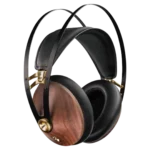
The walnut cups and gold-accented frame are widely described as distinctive and beautiful, though their conspicuous styling will not suit every setting.
-
Most reviewers found them comfortable for hours, helped by the suspension strap and soft pads. A minority noted heat, ear contact, or fit quirks.
-
Improved driver matching supports precise, stable placement, and imaging is frequently singled out as one of the headphone's technical strengths.
-
Midrange is commonly praised for natural vocals, clarity, and separation, though some heard a recessed, hollow, or occasionally shouty region.
-
Bass is tighter, faster, and better controlled than before, with strong texture and punch. Bass-focused listeners may miss the original's heavier weight and deeper slam.
-
Instrument separation is consistently strong, keeping dense arrangements organized and individual parts easy to follow.
-
Materials, finish, and hand feel give these headphones a convincingly premium character well beyond ordinary plastic closed-backs.
-
Tuning moves toward a balanced, near-neutral presentation while retaining some warmth. That broader versatility costs some of the original model's bold coloration.
-
Build quality is a signature strength: reviewers repeatedly praise the metal-and-walnut construction, solid feel, and confidence-inspiring finish.
-
Dynamics and transient control are lively and convincing, though a few reviews wanted more explicit shifts or stronger low-end impact.
-
Low weight, strong isolation, and easy drivability suit portable listening, but the non-folding frame and large case limit bag friendliness.
-
The bundled USB-C DAC is repeatedly praised as transparent, capable, and genuinely useful, adding immediate phone and laptop compatibility.
-
Passive isolation is one of the strongest points, often beating similarly priced closed-backs and making moderate background noise easy to ignore.
-
At 16 ohms and high sensitivity, these headphones are exceptionally easy to drive from phones, controllers, dongles, laptops, and portable players.
-
Treble is often called crisp, smooth, and detailed, but this is the most divisive part of the tuning: several reviewers heard excess energy, sibilance, or a 7–8 kHz peak.
-
They do not require a powerful amplifier, but several reviewers heard added texture, space, or control from higher-quality sources and tube pairings.
-
Reviewers trust the simple metal-and-wood construction for long ownership, drawing confidence from the original model's durability and the new model's serviceability.
-
Tighter left-right driver matching is credited with more stable stereo reproduction and more reliable imaging.
-
The case, adapters, acoustic inserts, and USB-C dongle make the package unusually complete and ready for modern sources.
-
The larger, softer pads improve sealing and long-session comfort, but a few users still found the inner space tight or warm.
-
Neutralized bass, accurate imaging, controller-friendly efficiency, and optional boom-mic support make these versatile for immersive and competitive gaming.
-
Many reviewers heard an unusually spacious closed-back stage with convincing depth and layering. Others found it merely moderate, narrow, or concentrated into left-center-right zones.
-
Clamp is generally secure without becoming oppressive, and the spring-steel frame allows some adjustment; experiences vary with head shape.
-
Despite using wood and metal, the headphones remain light enough for extended wear, with reviewers finding the added second-generation weight largely inconsequential.
-
The longer Kevlar-sheathed cable is a major upgrade in handling, durability, and reduced microphonics, although its thinner upper sections drew some criticism.
-
Larger dual 3.5 mm sockets improve aftermarket cable compatibility, while the detachable layout supports easier ownership and replacement.
-
Fit is stable for commuting and desk use, but it is not consistently secure enough for exercise or highly active wear.
-
They reach generous—and sometimes uncomfortable—volume from modest sources, so extra amplification is unnecessary for loudness.
-
Replaceable, screw-fastened parts and a glue-free approach make long-term repairability a standout advantage in a disposable-electronics market.
-
The closed cups keep outward leakage low enough for shared spaces, according to the reviewers who tested it.
-
The sealed vegan-leather pads can retain heat and breathe less freely, particularly in warm climates or during active use.
-
The protective case is generally viewed as sturdy, practical, and better than average, though the headphones remain bulky to carry.
-
The fit worked comfortably with glasses in the accounts that addressed it, without excessive clamping.
-
Most listening stayed clean, but a few reviewers encountered oversaturation or distortion when volume or bass EQ was pushed too far.
Cons
-
The six-clip pad system makes removal and swapping quick and repeatable, though proprietary mounting narrows third-party pad choices.