
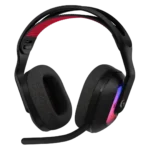
Logitech G Astro A20 X Feature Scores
Explore all 65 feature scores for Logitech G Astro A20 X, organized into pros and cons.
Scores by Feature
Summary
65 reviewed features-
Very positive 4.5-5.025 (38%)
-
Positive 3.5-4.422 (34%)
-
Neutral 2.5-3.48 (12%)
-
Negative 1.5-2.46 (9%)
-
Very negative below 1.54 (6%)
Pros
Sort
-
PLAYSYNC is the headset’s defining strength, making it quick and painless to jump between two gaming systems while also offering Bluetooth and USB options. The main tradeoff is that Bluetooth cannot mix simultaneously with LIGHTSPEED audio.
-
EQ control is unusually deep for a gaming headset, including advanced and community-created profiles for both headphone and mic sound. Tuning is often the key to turning the merely decent default sound into something much better.
-
The sub-300 g design feels notably light and is frequently credited with reducing fatigue during long sessions. For a few users, the very light, loose fit can also make the headset shift around.
-
It is especially strong for mixed setups spanning PC, Xbox, PlayStation, Switch, and mobile devices. The single-version approach avoids needing separate console-specific headset variants.
-
Comfort is generally a major strength thanks to low weight, breathable fabric, and a suspension-style fit. Head shape matters, though: some smaller-head users and a few experts reported slipping, pressure points, or discomfort after extended wear.
-
The detachable 48 kHz boom mic is one of the most consistently praised parts of the headset, often sounding unusually full and clear for wireless gaming gear. A few users found it too sensitive or merely average without tuning.
-
The LIGHTSYNC lighting is widely liked for adding tasteful visual flair, with strong control through G Hub. It can shorten battery life substantially, and a few software quirks make fully disabling it less straightforward.
-
Battery life is a standout feature, commonly landing around 40 hours with RGB and stretching toward 90 hours with lighting off. A few customer units developed battery or charging failures after several months.
-
Directional cues are a strong gaming advantage, with footsteps, gunfire, and enemy locations usually easy to place. Rear positioning and very busy sound mixes can be less precise for some listeners.
-
G Hub is a major strength on desktop, offering detailed audio, mic, lighting, battery, and profile controls. The mobile app is useful on consoles but more limited and occasionally less intuitive.
-
LIGHTSPEED is consistently described as effectively lag-free for gaming, with quick source changes and tight response. Bluetooth can show more noticeable delay in video use.
-
Overall sentiment is strongly positive for multi-platform gaming, with convenience, comfort, mic clarity, and battery life doing most of the work. Negative experiences cluster around fit, default sound tuning, Bluetooth limitations, and a handful of reliability failures.
-
Wireless performance is usually stable and dependable, with many users reporting clean connections and no dropouts. A small minority reported serious disconnects or intermittent crackling after months of use.
-
Gaming audio is usually clear, detailed, and immersive, especially after EQ, but the default tuning divides opinion. Some find it excellent immediately, while others call it flat, dull, or below expectations for the price.
-
Range is generally excellent, staying connected across rooms, around a house, and even through walls in some tests. It compares favorably with several older wireless headsets.
-
Most setups are plug-and-play and PLAYSYNC switching is easy once configured. A minority encountered long Bluetooth pairing attempts, firmware steps that required a PC, or awkward audio-routing quirks.
-
Voice communication is one of the headset’s strongest uses, with crisp, full pickup that can approach a decent USB mic for chats and casual streaming. Software presets can add even more polish.
-
Most physical controls are easy to reach and tactile, including mute, volume, and source switching. Some users dislike the placement of the wheel and buttons because they can be bumped by a chair, hood, or headrest.
-
The fabric memory-foam pads are usually praised as soft, breathable, and cooler than leatherette. Some users find the foam too firm, scratchy, hot, or insufficiently plush for long sessions.
-
Clamp pressure is generally light and comfortable, helping with long sessions and glasses. The downside is that the headset can feel less secure on smaller heads or during quick movement.
-
Separation is a clear gaming strength, keeping gunfire, footsteps, abilities, and ambient effects distinct in busy scenes. This supports accurate tracking in competitive play.
-
Value is strongest for people who will actually use PLAYSYNC across two systems; in that use case the convenience can justify the price premium. Single-platform players often see cheaper alternatives or the G522 as the smarter buy.
-
The modern, lightweight look and tasteful RGB are broadly liked, especially in the white colorway. Some Astro fans dislike how closely it resembles the G522 and feel the brand has lost part of its visual identity.
-
Bluetooth is convenient for phones, calls, and casual listening, but it is not the headset’s strongest connection mode. Some users experienced setup quirks, crackling, or app handoff issues that did not appear over LIGHTSPEED.
-
Recycled plastic and reduced single-use packaging are meaningful positives, especially for a mainstream gaming headset. The lighter material strategy also supports the headset’s low weight.
-
The onboard game/chat mixer is very useful on Xbox and PC and can quickly prioritize teammates or game audio. A few owners found the rocker easy to hit accidentally or reported it failing outright.
-
The removable boom is convenient for solo play, travel, and casual listening. Some users would prefer flip-to-mute, and the lack of dedicated storage makes the mic easier to misplace.
-
The included and community EQ presets are useful starting points, particularly for FPS, bass, and media listening. Default profiles are not universally loved, and several users get better results from custom or community tuning.
-
Removable ear pads are appreciated for cleaning, replacement, and extending the headset’s useful life. Owners who care about maintenance see this as a meaningful practical benefit.
-
Packaging is generally neat, organized, and increasingly eco-conscious, with accessories separated clearly and reduced plastic. Presentation receives positive marks even when extras are sparse.
-
Spatial presentation is a strong gaming feature, helping place enemies and environmental sounds convincingly around the player. It is particularly effective in immersive and competitive titles.
-
The lightweight plastic frame is usually flexible and solid enough for everyday use, but it does not feel especially premium. Some buyers describe it as cheap or plasticky, while others praise its durability and sturdy feel.
-
Bass is highly dependent on tuning and fit: some hear smooth, punchy lows, while others find it weak, overemphasized, or lacking deep rumble. EQ can improve it substantially.
-
Noise handling ranges from excellent with Blue VO!CE filters enabled to overly sensitive in untreated rooms. Background fans, keyboards, and desk noises can still bleed through depending on settings and mic position.
-
Many units work flawlessly in daily use, but there are meaningful outliers involving battery failure, charging problems, disconnects, and intermittent crackling. Long-term reliability is therefore less consistent than the headset’s day-one performance.
-
The compact PLAYSYNC base is central to the headset’s convenience and is much smaller than many multi-system docks. Its light weight can make it slide around, and cable placement can become awkward when systems are far apart.
-
Footstep cues are usually easy to hear and useful for competitive shooters, especially with the right EQ. Dense mixes can sometimes mask subtler steps, so the advantage is not absolute.
-
The mobile control app supports Android and is particularly useful for console-first setups that still need EQ, mic, and lighting access. Desktop G Hub remains more powerful.
-
High-resolution 24-bit/48 kHz playback on PC is a welcome strength for users who want more than basic wireless game audio. Console output is more limited.
-
The earcups offer useful tilt and swivel for fitting different head shapes. That adjustability helps comfort even though the headset does not fold flat.
-
Removable earpads make cleaning and eventual replacement easier. That helps preserve comfort and usability over longer ownership.
-
USB-C adds useful flexibility for wired audio and charging, and at least one buyer specifically valued that option. It helps keep the headset usable even when wireless power is depleted.
-
Midrange performance is mixed: voices and game detail can sound clean, but several experts hear missing detail or recessed presence in the stock tuning. EQ can improve vocal naturalness and balance.
-
Soundstage is serviceable to strong depending on the listener, with good left-right spread for gaming. Some experts still find it narrower than open-back or more premium alternatives.
-
Xbox support is a notable strength when it works, including easy use within the same multi-platform setup. One customer, however, reported that their unit would not connect to Xbox at all.
-
The bundle is well organized and includes useful cables and the PLAYSYNC base, but one expert wanted a power adapter and an additional USB cable. It is comprehensive without feeling luxurious.
-
Firmware updates can improve sound and resolve initial issues, but updating may require connecting directly to a PC. That extra step is useful when it works but not especially seamless.
Cons
Sort
-
Maximum loudness is a recurring complaint, with several users wishing the headset could play louder or deliver stronger chat volume. The restrained output can be a downside for listeners who prefer high volume.
-
The biggest connectivity limitation is that Bluetooth and LIGHTSPEED cannot play at the same time. Switching is fast, but users who want phone audio mixed with console or PC sound may find this restrictive.
-
Bluetooth listening is hampered by the lack of basic playback controls such as play or pause. This makes the headset less convenient away from a computer or console.
-
Sidetone is one of the weaker areas, with complaints about missing or unsatisfactory mic monitoring. In some setups it only becomes available after extra app configuration.
-
There is no charging stand or dock, which disappointed at least one buyer coming from a headset that included one. Charging is handled by cable instead.
-
The microphone material can discolor or stain over time, creating a cosmetic mismatch with the headset. This was a specific durability concern on one long-term unit.
-
One owner found that people nearby could clearly hear what was playing. That makes the headset less private in shared rooms.
-
Passive isolation is inconsistent, ranging from adequate in quiet rooms to almost ineffective in noisy environments. The breathable fabric pads favor awareness and comfort over a tight acoustic seal.
-
Bluetooth can show slight lip-sync delay in podcasts or movies when watched closely. LIGHTSPEED is much tighter and is the better choice for video-sensitive use.
-
Measured tonal balance departs noticeably from the reviewer’s target, especially through the treble. The stock response can make bass feel muddier and vocals less detailed than intended.
-
The keyed mic jack works, but there is no protective cover or dedicated place to store the detached boom. That makes the small microphone easier to lose.
-
Noise cancellation is not a consistent strength: several people expected more isolation or noted that true ANC is absent. A few customers nevertheless described the perceived noise reduction as effective.
-
The suspension band works well for many medium and large heads, but its limited adjustment points can be a poor fit for smaller users. Several people would prefer a more conventional sliding system.
-
Glasses comfort is mixed: some users barely notice interference and praise the light clamp, while others report pressure and soreness. Fit seems especially dependent on head size and pad position.
-
It can travel and work over Bluetooth or USB, but dependence on the base station for full wireless functionality makes it less travel-friendly than ordinary Bluetooth headphones. It also does not fold flat.
-
Fit is the biggest comfort variable: medium and larger heads tend to fare well, while smaller heads can experience slipping and a weak seal. A loose fit can also change bass response and positional consistency.
-
Treble can be crisp and non-fatiguing, but several experts found it recessed, uneven, or lacking sparkle in the default tuning. EQ is often needed to restore detail without making the sound harsh.
-
USB-C charging is generally simple and can be used while playing, with some tests finding recharging reasonably quick. A small number of units suffered serious charging faults.