
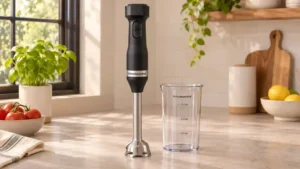
KitchenAid Go Cordless Hand Blender Feature Scores
Overall Scorata score: 3.9/5
Based on 8 analyzed reviews · View source samples
Explore all 79 feature scores for KitchenAid Go Cordless Hand Blender, organized into pros and cons.
Scores by Feature
Summary
79 reviewed features-
Very positive 4.5-5.033 (42%)
-
Positive 3.5-4.417 (22%)
-
Neutral 2.5-3.411 (14%)
-
Negative 1.5-2.418 (23%)
Pros
Sort
-
Freedom from a trailing cord is the most consistent strength, making it easy to move between the stove, counter and dining table.
-
Soup is a standout: cooked vegetables blend into smooth purées, and the cordless design makes working at the stove convenient.
-
Soups, purées, shakes and emulsions generally turn out well, especially for a cordless blender. Ice and other demanding ingredients are less reliable.
-
Soups and mayonnaise can be impressively smooth. Larger fibrous blends and protein shakes may retain a little texture.
-
The blending arm twists on and off easily, simplifying both setup and cleaning.
-
Cordless operation makes it easy to move between work areas or take the blender away from a conventional kitchen.
-
Overall impressions are favorable, particularly for cordless convenience and smooth soups, but awkward controls and charging requirements keep it from being a universal favorite.
-
Most mixtures come together evenly, with particularly good mayonnaise and soup results. Larger volumes and small amounts of oil can leave unevenly processed ingredients.
-
The immersion design lets you blend directly in a variety of pots and containers rather than being restricted to a fixed pitcher.
-
Cleanup is generally straightforward, especially when the detachable arm is rinsed promptly. Accessible blades make sticky food easier to wash away.
-
Smooth sauces and emulsified aioli are strengths, though very small batches may retain some unmixed oil.
-
Power is impressive for many everyday recipes, but assessments differ relative to corded models and heavy blending exposes limits.
-
The cordless design is easier to store without wrapping a cable, and the included lidded cup makes storing blended food convenient.
-
Smoothies turn out well with soft fruit, and one tester had no difficulty blending frozen fruit.
-
The battery clicks securely into place and is easy to insert or remove.
-
A shared removable battery can power other appliances in the same cordless range, reducing the need to buy separate batteries.
-
The blade area can be reached with an ordinary sponge and usually rinses clean easily, though the arm must be hand-washed.
-
Blending hot soup and sauces at the stove is especially convenient without a cable near the burners.
-
The unlock button adds a valuable layer of protection against unintended operation, though it contributes to hand fatigue.
-
The hand blender and compact battery take up relatively little kitchen space compared with a countertop blender.
-
Most found the blender reasonably light, although the battery adds weight and can make it feel top-heavy for some users.
-
Several testers found it fast for everyday recipes, but others needed more time than with corded blenders, especially for tough fibers.
-
The body and removable blending arm generally feel sturdy, comparing favorably with several other cordless models.
-
Mayonnaise and aioli emulsify particularly well; vinaigrette can come together rapidly but sometimes leaves oil on the flat head.
-
Cordless movement and simple assembly are convenient, but the pressure-sensitive trigger and two-button safety hold can make operation awkward.
-
The removable guard is useful for protecting cookware, but its flimsy construction and a reported detachment undermine confidence in it.
-
A lidded blending cup and protective guard are useful extras, but a whisk attachment is notably absent.
-
Generally considered reasonably quiet for an immersion blender, although measured noise can be high and ice crushing is particularly loud.
-
Cooked vegetables and fibrous greens can be puréed to a pleasingly smooth texture, especially in smaller quantities.
-
USB charging is flexible and allows the removable battery to be charged in different locations.
-
Battery life is sufficient for several short recipes for some users, while others find charging frequent. Heavy ingredients and larger batches are more demanding.
-
The blade geometry generally promotes smooth blending, though the flat head can collect oil in low-volume recipes.
-
Some testers found the battery well balanced and stable against the hand; another found the assembled blender top-heavy.
-
Blending time depends strongly on the recipe: batter and some soups are quick, while fibrous vegetables and demanding ingredients take longer.
-
The blending arm uses a simple twist connection that feels secure once attached.
-
The matte black casing gives the motor and battery a modern, upscale appearance.
-
Leafy vegetables such as kale and broccoli break down surprisingly well for a cordless immersion blender, although they need several minutes of blending.
-
Frozen fruit was handled without difficulty in smoothie testing, despite the blender’s separate weakness at crushing ice.
-
The plastic body and other materials feel sturdy and high quality to the tester.
-
Pancake batter comes together rapidly and without lumps.
-
The motor maintained consistent output throughout one tester’s multi-recipe session on a single charge.
-
The battery doubles as a resting base, allowing the motor unit to stand upright when the shaft is detached.
-
Milkshakes can be blended to a smooth, pleasant texture.
-
Separately available replacement batteries make it possible to replace a worn battery or keep a charged spare.
-
The variable trigger lets you switch between gentle stirring and more powerful blending for different textures once you get used to its pressure.
-
One tester maintained power throughout a full session, while another noticed output dipping with tougher ingredients near the end of a charge.
-
Four charge indicator lights let you estimate how much battery power remains before starting a recipe.
-
Protein shakes mix well and have a pleasant texture, although a high-powered blender can produce a smoother drink.
-
Small vegetable blends leave few pieces, but full beakers can retain visible bits. Raspberry seeds are not completely pulverized.
-
The beaker, lid and removable guard can go in the dishwasher, but the blending arm needs hand-washing.
Cons
Sort
-
The plastic guard feels flimsy, and one tester broke it during the first use when it came loose in thick potato purée.
-
Sustained two-button operation can tire the fingers and hand, particularly while emulsifying dressing or blending for longer periods.
-
Simultaneously pressing two buttons can be awkward and tiring, particularly for extended blending or users with reduced hand mobility.
-
The main inconvenience of cordless operation is remembering to keep the battery charged so the blender is ready when needed.
-
Holding the power and unlock buttons together is less convenient than a single trigger and can cause fatigue.
-
Ice crushing is slow, loud and inefficient, leaving slush with sizeable unprocessed pieces.
-
Extended nut-butter blending can heat the motor housing to an uncomfortable temperature, making cooling breaks advisable.
-
The guard detached during a potato-purée test and was chopped by the blade. Installation error could not be ruled out.
-
Ice can build up under the blades, while the flat head can retain oil or fibrous ingredients that need to be scraped away.
-
The accessory selection is relatively limited, particularly compared with immersion blenders that include a dedicated whisk.
-
The relatively short blending shaft can make reaching into tall stockpots awkward.
-
The blender cannot run while its battery is charging, so a depleted battery interrupts food preparation.
-
The head allows ice cubes to reach the blades, but the blender lacks the crushing power to process them effectively.
-
The manual does not clearly state how long the motor can be operated continuously without a cooling break.
-
It can eventually produce spreadable nut butter, but the process is slow and messy and can make the handle uncomfortably hot.
-
There is no clear speed indicator, so it is difficult to tell which speed is active or when it changes.
-
Nut-butter preparation can scatter debris outside the open vessel, especially during scraping.
-
There is no separate whisk attachment for whipping cream or mixing dressings, an omission compared with some alternatives.
-
The cordless premium is most worthwhile for kitchens with inconvenient outlets or owners of other appliances sharing the battery. Otherwise a corded model may be better value.
-
The variable-speed trigger is flexible once mastered, but several testers found it difficult to select or maintain a lower speed.
-
Long demanding blending sessions may require breaks to let the motor cool, and the manual does not clearly specify a continuous duty limit.
-
Recharging takes a substantial amount of time for some testers, even though one found the USB charging arrangement quick.
-
Manual speed adjustment offers flexibility, but the trigger takes practice and provides no clear indication of the selected speed.
-
Frozen fruit can be manageable, but denser foods and prolonged nut processing reveal power limitations, particularly as the battery drains.
-
Pressure-based speed selection allows adjustment, but the minimum speed is relatively fast and a lighter touch takes practice.
-
A charging cable is included, but the availability of a wall plug differs across reports and may require using an existing adapter.
-
The trigger responds to pressure changes, which can make accidental speed changes or finding the correct pressure frustrating.
-
Fluted openings aid circulation, but scraping may be needed for fibrous foods and small amounts of oil can fail to circulate fully.
-
Grip comfort is divisive: some find the handle very comfortable and stable, while others find it bulky, untapered or tiring to hold.
Use Cases
Best for
Sort
-
An excellent choice where outlets are inconveniently positioned, since blending can take place anywhere the charged appliance can reach.
-
This is particularly well suited to making soup directly in the cooking pot, producing smooth results without a cord trailing near the stove.
-
Suitable for everyday smoothies, particularly those made with softer fruit. Frozen fruit also worked well in one test, but ice-heavy drinks are less suitable.
-
Soft fruit and liquids are easy to blend, with fresh raspberries liquefying quickly even though their seeds remain.
-
Cordless operation allows you to make fruit purée, salad dressing or other quick preparations directly at the dining table.
-
Dressing emulsifies quickly, but a small quantity of oil can remain unincorporated and sustained button pressure can be tiring.
-
The guard is intended to make nonstick and enamel cookware safer to blend in, but it may detach in thick mixtures.
-
Small portions of fibrous vegetables blend well, but very shallow batches of dressing can leave oil sitting on the flat blending head.
-
A good fit for quickly mixing pancake batter, with a lump-free mixture achieved in seconds.
-
A useful camping option because it can blend away from power outlets, provided the battery is charged in advance.
-
Cordless blending is practical in dorm rooms where outlets or convenient counter space may be limited.
-
Convenient for regular kitchen tasks such as soups, shakes and purées, particularly when a cord would get in the way.
-
Mayonnaise is an excellent match, producing especially good consistency and texture in comparative testing.
-
The battery-powered design makes it practical to bring along for quick blending at a picnic.
-
Recommended for RV cooking where a portable appliance that does not need an outlet during blending is helpful.
-
The compact design is practical for small kitchens where storing a full-sized blender would take up too much space.
-
Suitable for quick protein shakes with soft fruit and powder, provided a little residual graininess is acceptable.
Conditional or not ideal for
Sort
-
Large-batch blendingLarger batches are less appealing because they can produce less even textures, require more time and strain battery endurance.
-
Budget-conscious blendingThe extra cost of cordless operation makes this a poor fit for tight budgets when an outlet is readily available.
-
Thick blendsThick soups can blend well, but dense ingredients may reduce power and thick potato purée can dislodge the pan guard.
-
Whipped cream preparationQuick tableside whipping is suggested as a possible use, though the absence of a dedicated whisk limits convenience.
-
Ice-heavy blendingPoor choice for ice-heavy recipes: cubes repeatedly collect under the blades and the finished ice remains chunky.
-
Deep-pot blendingA short blending arm limits access to the bottom of especially deep pots, making shallower vessels a better fit.
-
Limited hand strengthThe requirement to hold the unlock and power buttons together makes this less suitable for people with restricted hand or finger mobility.
-
Nut butter preparationNut butter is not a strong use case because it requires repeated scraping and prolonged blending that generates substantial heat.
-
Small-hand operationThe relatively bulky grip is difficult to hold for users with smaller hands, especially while pressing the safety button.
-
Professional-grade blendingThe cordless motor is better suited to everyday recipes than demanding commercial-grade blending tasks.
-
Potato pureeingSmall batches of cooked potatoes can be puréed successfully, but large batches are discouraged and the guard may come loose in the thick mixture.
-
Small-batch sauces and salsaSmall sauce and dressing batches can blend quickly, but the flat head may trap some oil rather than fully emulsifying it.