
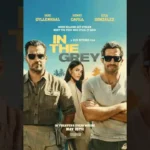
In the Grey Feature Scores
Explore all 42 feature scores for In the Grey, organized into pros and cons.
Scores by Feature
Summary
42 reviewed features-
Very positive 4.5-5.07 (17%)
-
Positive 3.5-4.413 (31%)
-
Neutral 2.5-3.47 (17%)
-
Negative 1.5-2.49 (21%)
-
Very negative below 1.56 (14%)
Pros
Sort
-
Eiza González is frequently the standout, praised for confidence, magnetism, and command even by reviewers who criticize the writing around her.
-
Style is one of the consensus strengths: attractive locations, clothes, camera movement, text overlays, and Ritchie’s polished visual swagger are frequently praised.
-
Action is the clearest strength: chases, firefights, explosions, and practical stunt work often land hard. Several critics still felt the climax became repetitive or too easy for the heroes.
-
Many reviewers enjoy the easy, playful chemistry among the central trio, especially Cavill and Gyllenhaal, though a few found their spark surprisingly thin.
-
Wardrobe is repeatedly singled out as eye-catching and stylish, helping sell the film’s polished, cool-under-pressure fantasy.
-
Practical stunts, grounded action, and in-camera spectacle are repeatedly praised for giving the film tactile energy.
-
The film is generally handsome and slick, with praise for drone shots, locations, and readable action, though one reviewer found the photography less distinctive than Ritchie’s earlier work.
-
This is a sharply divided but often positive area. Fans call it breezy, fun, and highly watchable, while detractors find the same formula dull or empty.
-
Snappy banter and fast-talking dialogue work for many reviewers, but exposition-heavy voiceover and functional chatter frustrate others.
-
Audiences appear more enthusiastic than critics, with solid audience scores and sustained traction on streaming and VOD.
-
Many reviewers praise the brisk runtime and constant motion, but others find the exposition-heavy setup either exhausting or oddly sluggish.
-
Editing is praised when it keeps dense information and action moving cleanly, but other reviewers notice jagged continuity, stitched-together structure, and disjointed cuts.
-
Viewers who want a slick heist-action caper generally find enough style, stars, and set pieces to satisfy, even when the plotting is thin.
-
Christopher Benstead’s booming score is singled out as a major contributor to the film’s excitement.
-
The cast often elevates the material, but several reviewers find individual performances flat, generic, or constrained by thin roles.
-
Fisher Stevens receives particularly strong praise in the supporting ensemble, including being called a scene-stealer or “awesome.”
-
Ritchie’s action craft and style earn strong praise from fans of his formula, while harsher critics call the work autopilot, overfamiliar, or even a career low.
-
Dry banter and oddball touches earn chuckles for some reviewers, but others find the quips flat or rarely funny.
-
The lean roughly 97-minute runtime often prevents the movie from overstaying its welcome, though one harsh critic says it feels far longer.
-
The opening can feel scattered, but the movie settles into a more consistent and effective tone once the action picks up.
Cons
Sort
-
This is the most consistent weakness. Reviewers repeatedly call the characters thin, generic, underexplored, or emotionally hollow despite liking the stars.
-
The screenplay draws repeated criticism for over-exposition, thin characterization, convoluted mechanics, and a rough or stitched-together feel.
-
Suspense is a recurring weakness because the heroes seem hyper-competent, the villain rarely feels threatening, and outcomes often feel pre-solved.
-
Thin supporting characters and hurried deaths often keep the film from generating grief or concern, even when the action is effective.
-
Reviewers often find the core story shallow, thin, or overly procedural, even when the action and style keep it watchable.
-
The basic objective is simple, yet legal maneuvers, voiceover, timelines, and planning montages often make the execution feel needlessly convoluted.
-
The film rarely feels novel; several reviewers describe it as familiar Guy Ritchie territory, though some think it tweaks genre conventions just enough.
-
The harshest script analysis argues that the lack of meaningful choices removes real drama and leaves events feeling mechanical.
-
Frequent profanity, sexualized imagery, heavy violence, and a morally murky outlook make this a poor choice for family viewing.
-
Heavy profanity is a significant drawback for viewers who prefer cleaner language, with roughly three dozen obscenities noted.
-
The movie’s morally grey outlook can be a major turnoff for viewers who dislike its casual treatment of deception, theft, and violence.
-
Lingering cleavage shots and frequent bikini imagery make the sexual content feel unnecessary and overly objectifying for more sensitive viewers.
-
The film is repeatedly described as surface-level, with little commentary or inner life beneath its polished action machinery.
-
Most repeat-viewing comments lean weak: several reviewers call it forgettable or a one-watch movie, though one predicts strong weekend rewatches among its target audience.
-
Frequent profanity, sexualized imagery, and casual killing make the movie a poor fit for younger viewers.
-
The violence is plentiful, but the direct content critique objects to how casually killing is treated rather than to the choreography itself.
-
Opinion is split: some like the fast, decisive finish, while several critics find it rushed, abrupt, incomplete, or lacking payoff.
-
The CGI is a weak spot when it appears, with some explosions looking small or noticeably artificial.
-
Critics are divided, with some enjoying the slick action and breezy style while others find the movie shallow, generic, or overcomplicated.
-
The central debt-recovery setup has some novelty, but the broader action-heist plot is repeatedly described as predictable or familiar.
-
Theatrical value is questioned by reviewers who see the movie as light streaming fare, though another thinks the cast and craft can make it feel worthwhile.
-
Some reviewers appreciate the detailed contingency planning and procedural feel, while others find the legal shortcuts and invincible heroes implausible.
Cast & Creators
-
BroncoGyllenhaal earns frequent praise for charm, comic energy, and chemistry with Cavill, even as a few critics see him coasting on material with limited depth.
-
SidCavill is often praised for relaxed charisma, cool physical presence, and easy chemistry, though some critics think the thin writing leaves him little to do.
-
Rachel WildGonzález is the most consistently praised performer, with reviewers highlighting her confidence, magnetism, and command; even mixed reviews often call her the standout.
-
EditorWalsh’s cutting is praised as electric and highly capable of juggling dense exposition with action.
-
William HorowitzStevens is a notable supporting bright spot, repeatedly praised for making his anxious lawyer more memorable than the thin role requires.
-
DirectorReviews split sharply on Ritchie’s contribution: admirers praise his action construction, pace, and stylish confidence, while detractors see an overfamiliar formula running on autopilot.
-
ComposerBenstead’s booming, seat-vibrating score is praised for making the action feel bigger and more exciting.
-
Costume DesignerBontemps’ costume work is praised as a show in itself, giving leads and even smaller characters distinctive, polished looks.
-
EditorWeedon’s editing contribution is received very positively, with one reviewer saying he is clearly going places.
-
SalazarBardem’s Salazar is usually seen as a serviceable stock villain, but several reviewers say he lacks the intimidation needed to create real stakes.
-
CinematographerWild’s cinematography gets mixed feedback: the film is broadly handsome, but one reviewer says his images do not pop like Ritchie’s earlier collaborations.
-
Bobby SheenPike’s limited role draws a mixed response, including one blunt complaint that she seems to phone in the performance.