If you want better safety features
Choose Garmin Fenix 8. It scores 4.6 vs 3.9 for safety features, with a 4.0 overall score.

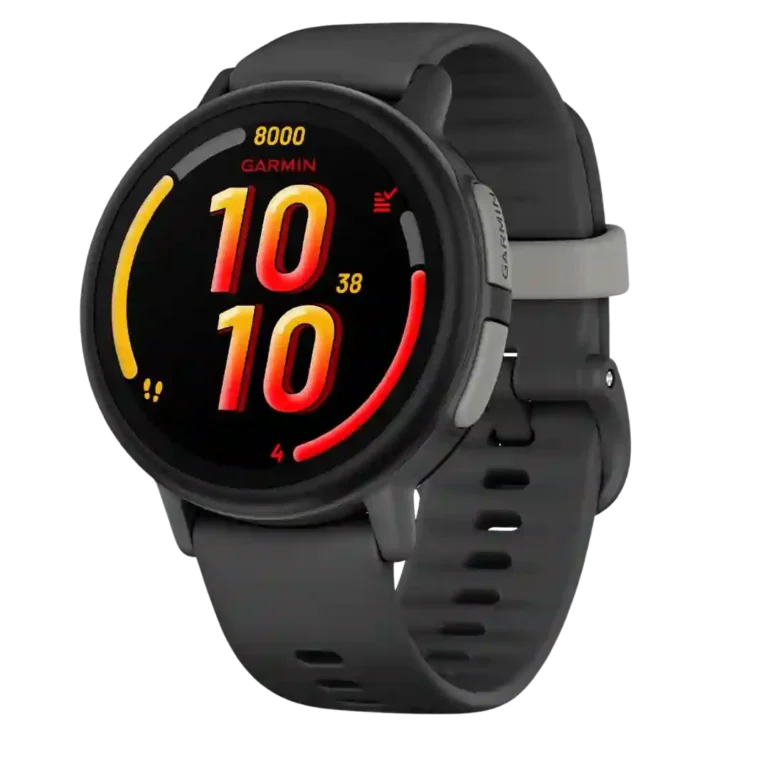
Choose it for younger kids who need waterproof, phone-free calling, geofencing, and simple parental controls. Skip it if dependable indoor tracking, regular phone-number calling, multi-day battery life, or low total cost is essential.
Families with younger children who want controlled communication, geofencing, waterproofing, and a phone-free path to independence. It fits best where Garmin LTE coverage is consistently strong.
Families that need guaranteed real-time tracking, ordinary phone-number communication, long battery life, or a low-cost device. Older children may also outgrow its closed feature set quickly.
The Garmin Bounce 2 gets the child-facing hardware right: it is light, colorful, responsive, highly water-resistant, and simple enough for young users. Geofencing, approved contacts, calls, voice notes, activity challenges, and the Garmin Jr. app create a convincing bridge between no device and a first phone. The problem is that its most important services are also its least consistent. Some families report accurate tracking and reliable communication, while many others encounter indoor dead zones, delayed messages, failed calls, or location lag. Battery life commonly requires nightly or every-other-night charging, and the $299 price plus LTE subscription makes those failures harder to accept. It is strongest for younger children in areas with dependable coverage, but it is not a safe purchase for families unwilling to tolerate connectivity uncertainty.
Compared with other Smartwatches, this product is above average in Wi-Fi connectivity, mapping and navigation, cross-platform compatibility, near average in call handling, safety features, below average in reliability, GPS accuracy, value for money.
| Attribute | This product | Category average | Difference |
|---|---|---|---|
| Wi-Fi connectivity | 5.0 | 2.8 | +2.2 |
| reliability | 2.0 | 3.7 | -1.7 |
| GPS accuracy | 2.6 | 4.1 | -1.5 |
| value for money | 2.4 | 3.8 | -1.4 |
| score tracking | 2.0 | 3.9 | -1.9 |
| charging convenience | 1.8 | 3.3 | -1.6 |
| battery life | 3.0 | 4.2 | -1.2 |
| app ecosystem | 2.2 | 3.6 | -1.4 |
Choose Garmin Fenix 8. It scores 4.6 vs 3.9 for safety features, with a 4.0 overall score.
Choose Garmin Venu X1. It scores 4.9 vs 3.9 for comfort, with a 3.9 overall score.
Choose Amazfit GTR Mini. It scores 4.8 vs 2.4 for value for money, with a 4.0 overall score.
Choose Samsung Galaxy Watch 6. It scores 4.7 vs 3.0 for call handling, with a 4.0 overall score.
Products reviewers directly compared with this model, grouped into quick takeaways.
It fits younger children roughly six to ten best. Older children may find the limited apps, closed contacts, and basic health tracking too restrictive.
Yes for calling, messaging, live location, geofencing, and emergency assistance. Without the plan, much of the watch’s core value disappears.
Experiences are mixed. Some families get accurate, useful tracking, while others report lag, wrong locations, weak indoor performance, or updates that fail entirely.
Most experiences cluster around one and a half to two days. Heavy LTE, GPS, calling, music, poor signal, or battery degradation can reduce it to a day or less.
Communication is generally limited to approved contacts using Garmin Jr. The app requirement is a major frustration for grandparents, friends, and relatives who expect ordinary calling or texting.
Yes. Its 5 ATM water resistance performed well in pools, showers, rain, snow, and ocean use.
These are a few of the reviews included in our analysis.
Forget bulky eSIM watches. Garmin Bounce 2 shows kids’ smartwatches can finally be truly wearable.
Smartphone-level connectivity but without the social media risks
As Labour considers an under-16s social media ban, could a children’s Garmin watch with messaging be a worthy alternative?
Looking to delay getting my kid a smartphone, I was thrilled to test this high-tech smartwatch for kids.
Parents face a tough choice today. You want to keep your child safe and connected. But you don’t want to hand them a smartphone too early...
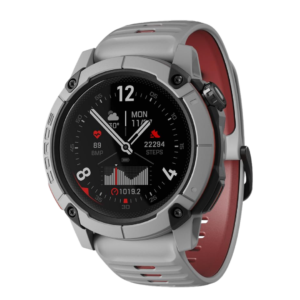
Best for long battery life, accurate GPS and useful offline maps at a strong price. Skip it if you need payments, richer apps, a built-in LED flashlight or polished smartwatch...
Pros: mapping and navigation, value for money
Cons: smartwatch features, contactless payments
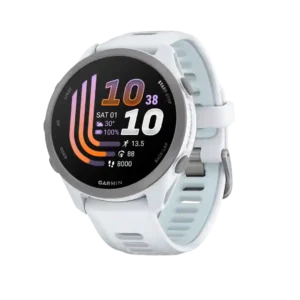
Best for accurate run tracking, deep Garmin coaching and phone-free Spotify in a light package. Skip it if you need full maps, triathlon mode, Apple Music support or the strongest...
Pros: value for money, GPS accuracy
Cons: mapping and navigation, third-party app support
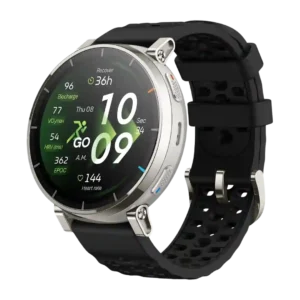
Good if you want premium running features, long battery life, and maps for under $200. Skip it if you need flawless heart-rate data, multiband GPS, LTE, or richer app support.
Pros: value for money, battery life
Cons: heart rate accuracy, third-party app support
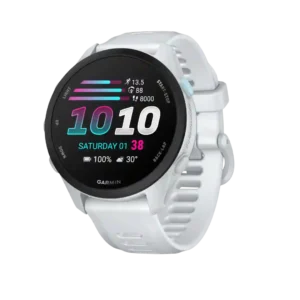
Best for accurate running metrics, excellent coaching tools, a bright AMOLED display, and dependable battery life. Skip it if you need offline maps, music storage, contactless payments, multi-band GPS, or...
Pros: battery life, value for money
Cons: mapping and navigation, smartwatch features