
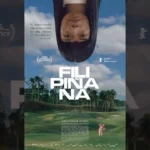
Filipiñana Feature Scores
Explore all 36 feature scores for Filipiñana, organized into pros and cons.
Scores by Feature
Summary
36 reviewed features-
Very positive 4.5-5.020 (56%)
-
Positive 3.5-4.49 (25%)
-
Neutral 2.5-3.45 (14%)
-
Negative 1.5-2.42 (6%)
Pros
Sort
-
The visual style is overwhelmingly praised: boxy framing, symmetry, color, painterly long takes, and precise mise-en-scène make nearly every image feel deliberately composed.
-
The cinematography is the clearest consensus strength: painterly 4:3 compositions, precise blocking, long static frames, and lush surfaces repeatedly turn the golf course into something beautiful and unsettling.
-
The ending is widely praised as the payoff to the slow build, with the final images and action continuing through the credits to deliver a dark, haunting final provocation.
-
Rafael Manuel’s precise framing, atmosphere, and visual satire earn widespread praise, but the same deliberate control can feel repetitive, overextended, or too withholding for some viewers.
-
Its humor is dark, dry, and visual, emerging from synchronized labor, absurd privilege, and carefully prolonged compositions rather than conventional jokes.
-
The film draws layered connections among class, colonialism, gender, labor, displacement, and memory. Its ideas are often praised as powerful, though some critics think the treatment can be too blunt or not fully developed.
-
The soundscape is a major craft strength, using crisp cuts, amplified nature, golf impacts, water, footsteps, and ambient detail to deepen both serenity and unease.
-
Isabel’s gradual disillusionment and awakening is one of the film’s stronger arcs, with Clara providing a contrasting path toward compromise and inaction. Some viewers may still feel emotionally held at a distance.
-
The film feels distinctive in its formalism, compressed framing, sensory heat, and unusual golf-course microcosm, even while working within a familiar tradition of class satire.
-
The country club becomes a vivid self-contained world, with small side stories, labor routines, sound, and spatial detail making its hierarchy and artificiality feel immersive.
-
The film’s Philippine setting, Ilocos connections, land displacement, class hierarchy, and colonial legacy give the satire a specifically local texture even as it reaches for universal themes.
-
Music is used sparingly but effectively, with synchronized musical passages and ambient, diegetic sound creating a meditative, slightly fantastical atmosphere.
-
The writing is strongest when it sets Isabel and Clara against each other as parallel expressions of entitlement, complicity, and awakening. Individual exchanges are also praised as sharply observed.
-
Jorrybell Agoto’s Isabel is often praised for watchful restraint, curiosity, and latent rage. A more skeptical take found the monotone style made her difficult to judge until a brief late breakthrough.
-
The class and colonial critique often lands with force and incisiveness, but several critics find the message too obvious, repetitive, or heavily underlined.
-
The editing often stretches scenes and comic beats to match the languor of the golf course. Some critics admire that deliberate rhythm even when the film’s overall slowness remains divisive.
-
The film can build to devastating, shattering unease, especially late, but not everyone connects with its emotional distance; one critic wanted a stronger lingering emotional aftereffect.
-
The sparse story divides opinion: its careful convergence and side stories can be gripping and meaningful, but some critics want more narrative substance and less contemplation.
-
The color-coded costumes are called striking, using mint green, hot pink, and white clothing to make the club’s social hierarchy immediately legible.
-
The film arrived with strong festival reception and strong critical notices, reinforcing its standing as a formally ambitious art-house debut.
-
The golf resort’s production design is called excellent, with detailed interiors, landscaping, and color helping create an alluring but ominous environment.
-
At least one critic found the film substantially more riveting on a second viewing, suggesting its deliberate details can reward revisiting.
-
The film’s blend of dry humor, oppressive heat, surreal artificiality, and quiet menace is praised as singular and cohesive.
-
Suspense stays low-key rather than thriller-like. Several critics hear a persistent hum of tension and premonition, while others warn that viewers seeking conventional thrills will find little of them.
-
The ensemble is generally seen as capable within the stylized direction, with Carmen Castellanos singled out for having more range and visible emotion.
-
As a class satire, it is praised as beguiling, restrained, and effective rather than built around broad comic punchlines or explosive catharsis.
-
The trailer’s visually creative impression is borne out by the finished film, whose framing and artistic presentation remain major strengths.
-
The resort works as a convincing realistic-satirical bubble, grounding its heightened class critique in recognizable labor, luxury, heat, and inequality.
-
The central story is easy to grasp early, which keeps the sparse narrative readable but can also make its major direction feel predictable.
Cons
Sort
-
Dialogue is a weak point for some viewers: long pauses and exchanges that seem to go nowhere can feel unnatural or painfully sluggish.
-
The feature-length expansion can feel overextended when paired with the glacial pace. The harshest take felt scenes were padded rather than gaining impact from their extra duration.
-
The drama is intentionally internal and subdued rather than conventionally eventful, which can leave viewers seeking external excitement unsatisfied.
-
The pace is deliberately languorous and is the film’s biggest dividing line. Some critics find the slowness hypnotic and purposeful, while others call it punishing, glacial, repetitive, or indulgent.
-
For some, the film is mesmerizing and terrific; for others, its glacial pace and austere storytelling make it tiring or hard to recommend. Enjoyment depends heavily on patience for slow cinema.
-
The cast generally handles the stylized, unhurried delivery well, but one dissenting take says the monotone direction makes several performances hard to read.
-
Its formal beauty can win over patient art-house viewers, but the extreme slowness and austere style are repeatedly flagged as barriers to broader mainstream appeal.
Cast & Creators
-
CinematographerPatricia’s cinematography is one of the strongest points of agreement, with precise long shots, painterly compositions, strong 4:3 geometry, and beautiful surfaces that carry social meaning.
-
Writer-DirectorManuel earns broad praise for formal confidence, precise framing, layered satire, and control of atmosphere. The main criticism is that his slow-burn direction can become repetitive, overindulgent, or too blunt.
-
IsabelAgoto’s restrained Isabel is praised for watchful curiosity and latent rage. One dissenting take found the monotone direction made her performance difficult to judge until a brief late breakthrough.
-
Costume DesignerVillanueva’s costume work is praised as striking, using the club’s color-coded wardrobe to sharpen the visual separation between social groups.
-
RenatoSiguion-Reyna’s Renato is memorably described as perfectly oily, matching the character’s privileged confidence and moral slipperiness.
-
Costume DesignerHonegger’s costume work is praised as striking, with the film’s color-coded clothing helping make status differences immediately visible.
-
ColoristBarin’s color work is praised for a dreamy palette that strengthens the film’s almost fantastical visual atmosphere.
-
Sound DesignerVilla’s sound design uses exaggerated natural sounds to deepen the golf course’s spa-like calm while preserving the film’s uneasy atmosphere.
-
ClaraCastellanos is singled out in one mixed assessment as the stronger performer because Clara gives her more range and visible emotion.