
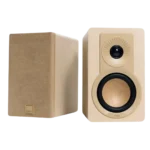
Dali Kupid Feature Scores
Explore all 32 feature scores for Dali Kupid, organized into pros and cons.
Scores by Feature
Summary
32 reviewed features-
Very positive 4.5-5.022 (69%)
-
Positive 3.5-4.47 (22%)
-
Neutral 2.5-3.41 (3%)
-
Negative 1.5-2.42 (6%)
Pros
Sort
-
Small-room and nearfield use is arguably the Kupid’s defining use case. Reviewers repeatedly recommend it for desks, offices, bedrooms, apartments and secondary systems where its compact footprint and wide dispersion work to advantage.
-
Overall sound quality receives exceptionally strong approval: reviewers repeatedly describe the Kupid as lively, natural, detailed, smooth and genuinely engaging. Its sonic limits are mainly deep bass, ultimate scale and the need for suitable amplification.
-
Midrange performance is the strongest consensus area. Reviewers repeatedly praise vocals and instruments for clarity, natural tone, texture, warmth and expressive presence, often calling the midrange the Kupid’s standout feature.
-
Value is widely praised because the Kupid combines strong sound, compact size and distinctive design, particularly at European pricing. U.S. value is less clear, with some reviewers pointing to cheaper rivals that offer more bass or larger cabinets.
-
Dynamic ability is a core strength: the Kupid sounds lively, quick and confident, and several reviewers were surprised by how clearly it tracks shifts in intensity. Proper amplification helps it show this strength fully.
-
The rounded cabinet, modern proportions and colorful finishes are widely liked, with several reviewers calling the Kupid stylish, premium-looking or unusually fun. Basic vinyl execution on some finishes keeps the design from feeling universally luxurious.
-
Imaging is one of the Kupid’s most consistent strengths, with many reviewers describing stable placement, convincing center images and a soundstage that extends well beyond the cabinets. A few comparisons found its ultimate scale or image specificity merely average.
-
Treble is generally smooth, detailed and non-fatiguing, with good extension and clean transient definition. Some reviewers heard a mild bright edge or occasional sibilance with leaner electronics, making amplifier matching relevant.
-
Detail retrieval consistently exceeds entry-level expectations, revealing subtle textures, attacks and background information without usually becoming clinical. A few reviewers noted a resolution ceiling compared with larger or more expensive speakers.
-
Setup and placement are broadly fuss-free, with several reviewers getting good results close to walls or with little adjustment. Careful positioning can still improve imaging and bass, but the speakers are notably forgiving.
-
Tonal balance is usually described as even, integrated and natural, with strong driver integration. Some listeners heard a mild bright tilt or extra upper-bass warmth, so it is not universally judged ruler-flat.
-
Build quality is generally judged solid to excellent for the price, with good terminals, clean assembly and thoughtful detailing. Opinions soften on luxury finish: a few reviewers found the cabinetry or vinyl less refined than larger British rivals.
-
The five finish options are a major part of the appeal, especially the blue, yellow and white variants with color-matched cones and grilles. Reviewers generally liked the playful choice and saw it as a welcome break from conventional black boxes.
-
Reviewers generally found distortion well controlled, including at fairly high levels, with woofers and treble staying composed. The strongest caveat is simply not to treat this tiny speaker as a high-SPL party box.
-
Low-volume listening is unusually successful, with reviewers reporting that clarity, separation and engagement remain intact at desktop and room-friendly levels.
-
The Kupid is repeatedly framed as a serious, high-quality small loudspeaker rather than a lifestyle toy. Reviewers praise how convincingly it combines real hi-fi performance, compact dimensions and accessible pricing.
-
Vocals are repeatedly singled out for clarity, presence and natural tone. Reviewers heard voices as open, focused and expressive rather than congested or artificially spotlighted.
-
A subwoofer is not mandatory for every listener, especially at a desk, but it is the clearest upgrade for deeper bass or larger rooms. Multiple reviewers found the Kupid scales beautifully once properly integrated with a sub.
-
Music playback is consistently described as fun, rhythmic and involving, with especially strong results on electronic music, pop, jazz and vocal material. The Kupid favors engagement and timing over heavyweight scale.
-
Bass is fast, punchy and unusually controlled for such a small cabinet, often sounding bigger than expected. The consensus is equally clear that true deep bass and room-shaking weight are beyond its limits, particularly at distance.
-
The Kupid can serve in compact TV and home-theater systems, including surround or height roles, especially where space is tight. Reviewers consistently suggest adding a subwoofer for action movies or full-range impact.
-
The Kupid can play surprisingly loud for its size, and several reviewers found it clean and composed at sensible levels. Extreme party-volume use is the limit: some heard compression, harshness or strain when pushed very hard.
-
Recording tolerance is mixed. Some reviewers found the Kupid pleasantly forgiving of imperfect masters, while another noted that its transient clarity can expose low-resolution or edgy recordings.
-
The Kupid usually sounds coherent and well integrated, keeping bass, midrange and treble working together naturally. Very dense material can reduce separation somewhat, but most reviewers still found the presentation organized and musical.
-
One review specifically noted a fairly low-noise background that helped intimate vocals remain clearly focused.
-
Packaging was singled out as robust and well protected, with the speakers and grilles packed securely enough to inspire confidence in delivery.
-
One review specifically praised the generous five-year warranty and the long-term protection it gives buyers.
-
The light, compact cabinets are easy to move between desks, shelves and rooms, making experimentation and secondary-system use unusually convenient.
-
The included wall-mount hardware, magnetic grilles and rubber feet add useful flexibility and are welcome at the price. The wall bracket itself is basic, but reviewers still appreciated having these accessories in the box.
Cons
Sort
-
Break-in is a real ownership consideration: multiple reviewers say the Kupid needs time to settle, with one citing DALI’s recommendation of roughly 100 hours before it sounds fully developed.
-
Pricing is much more controversial in the U.S. than in Europe. Reviewers and embedded comments repeatedly noted that the roughly $600 U.S. price feels high beside the much lower European price and strong competition.
-
The 83 dB sensitivity and 4-ohm load make amplification the most repeated setup caveat. Many reviewers recommend real current and roughly 40 watts or more, though several found affordable modern amps capable of driving the Kupid successfully.