
Atari 2600+ Pac-Man Edition Feature Scores
Explore all 21 feature scores for Atari 2600+ Pac-Man Edition, organized into pros and cons.
Scores by Feature
Summary
21 reviewed features-
Very positive 4.5-5.06 (29%)
-
Positive 3.5-4.47 (33%)
-
Neutral 2.5-3.42 (10%)
-
Negative 1.5-2.45 (24%)
-
Very negative below 1.51 (5%)
Pros
Sort
-
Cartridge compatibility is one of the console’s strongest advantages: owners repeatedly report successful play with original 2600 and 7800 games, plus several older controllers and homebrew titles. A few edge cases and specialty carts remain less certain, but the overall coverage is exceptionally strong.
-
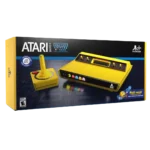
The vivid yellow shell, light-up Pac-Man and ghosts, themed joystick, and retro detailing earn unusually strong praise and make the console a display piece. A few reviewers call the color gaudy or overly bright, but even some skeptics say the lighting wins them over.
-
The Pac-Man theme, gift appeal, manuals, branded cables, packaging, and nostalgia make this especially attractive as a display collectible. Collector-focused buyers are enthusiastic, although damaged boxes and a few complaints about nostalgia-driven marketing can spoil that appeal.
-
Wireless play is widely seen as a meaningful upgrade over the old short cable, and USB-C charging, dongles, PC use, and original-controller support add flexibility. Most connectivity experiences are positive, though a few users report pairing quirks or prefer wired alternatives.
-
HDMI output is a major success, delivering clean, sharp images on modern TVs without the analog interference and adapter hassles of original hardware. Several reviewers say old games look better than expected and avoid stretched or muddy presentation when configured properly.
-
Most reviewers find setup quick and straightforward, especially HDMI connection and wireless pairing. Minor friction comes from missing wall adapters in some packages and one owner wanting clearer TV-connection instructions.
-
Most reviewers describe the console itself as working well, playing games correctly, and delivering an enjoyable retro experience. The major exceptions are control-related lag or failures and a smaller number of resets, power issues, or cartridge-detection problems that can make some units frustrating or unusable.
-
The new 7800-style Pac-Man is a highlight, often described as fun, accurate, and dramatically better than the original 2600 port. The old 2600 version is mostly treated as a curiosity, and some buyers dislike getting so few games in the box, though cartridge compatibility greatly expands what can be played.
-
Modern output and the newer Pac-Man version are praised for clean, smooth, arcade-like visuals, while the original 2600 Pac-Man still suffers from flicker and overlap. The console preserves the retro look well without making modern-display presentation feel muddy.
-
Classic Atari sound is generally reproduced clearly and authentically, with one reviewer noting the new Pac-Man audio is closer to the arcade version. A separate port-focused take still found the underlying Atari-era audio limitations noticeably weak.
-
Cartridge dumping introduces a short wait that original hardware did not have. Reviewers generally consider the roughly few-to-15-second loading time acceptable, though it is noticeable and one wished the loading screen offered more to look at.
-
Family and two-player use can be enjoyable, and the console supports shared play in the old living-room style. The main limitation is that only one joystick is included, so some two-player setups require another purchase.
-
Shared play can recreate the relaxed family arcade feeling and works well for casual holiday sessions. Rough joystick control can reduce that enjoyment, especially in games that demand quick directional inputs.
Cons
Sort
-
Joystick stiffness is the most consistent drawback. Many players report difficult turns, hand or wrist soreness, and excessive force, while a smaller group accepts the feel as authentic to the original or says it becomes manageable with practice.
-
Controller quality is the clearest weak point in owner feedback, with repeated reports of missed directions, sticking, lag, dropouts, and outright failures. Some reviewers find the wireless stick responsive and authentic, but the volume of negative control experiences is substantial.
-
The reliability complaints are serious even though they come from a minority of the full set: random resets, power-on trouble, controller disconnections, intermittent cutouts, and cartridge recognition issues all appear. These failures contrast with many other owners who report trouble-free operation.
-
Value is one of the most divisive areas. Collectors and Atari fans often accept the roughly $169 price for the themed hardware, cartridge support, and presentation, while many customers consider it overpriced—especially when controllers fail, extra joysticks cost more, or the box includes only a small game selection.
-
One owner reports that the processor occasionally cannot keep up and motion visibly slows. No broader pattern of frame-rate complaints appears across the rest of the set.
-
Construction draws sharply mixed reactions. Some reviewers find the console solid, robust, and surprisingly durable, while multiple customers criticize cheap-feeling plastic, assembly flaws, brittle lightness, or a creaky cartridge slot.
-
The deliberately bare-bones software approach preserves the original Atari feel, but one detailed reviewer wanted a more useful central interface and additional visual or software options. The minimal loading screen was also seen as a missed opportunity.
-
The smaller, lighter chassis is convenient for carrying and fitting on a shelf, and some reviewers like its petite footprint. Others interpret the same lightness as flimsy or disappointingly toy-like, so the compact build is a tradeoff rather than a universal win.