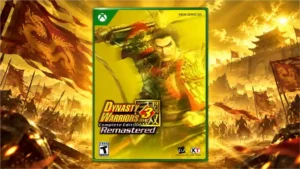
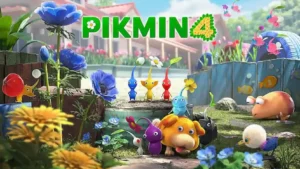
Dynasty Warriors 3 Complete Edition Remastered
Where It Has the Edge
- co-op experience is 4.8 vs 4.0. Co-op is a standout: dividing battlefield duties with another player makes campaigns more manageable and much more entertaining.

Scorata scores summarize analyzed review evidence on a 1–5 scale; they are not laboratory measurements or a simple average of customer star ratings. Feature scores summarize the reviews covering that feature. The overall score averages feature scores within each review, then combines review averages. When both expert and customer evidence are available, those two groups receive equal weight. Products can have different review coverage, so small score gaps do not establish a winner.
Recommendations prioritize important features for the category, with a score of at least 3.5, a gap of at least 0.25 points and at least two supporting reviews per product. Features with widely varying scores or broad connectivity contexts are excluded from recommendations. These safeguards do not establish statistical significance.
Quick verdict
The review evidence points to a tradeoff: co-op experience versus mission design and multiplayer design. Choose according to which strengths matter more to you; the overall score alone does not settle that choice.
Choose Dynasty Warriors 3 Complete Edition Remastered for co-op experience.
Choose Pikmin 4: Nintendo Switch 2 Edition + Dandori Academy for mission design and multiplayer design.
Scores are out of 5. Missing scores mean missing review evidence, not a missing feature.
The classic menu layout is easy, clean, and straightforward despite the age of its overall structure.
A prominent Academy notice on the title screen looks intrusive to some players, undercutting an otherwise charming presentation.
Older mission structure shows its age with straightforward objectives, less dynamic setups, and scenarios that can be bypassed too directly.
Optional challenges and tense nighttime defense missions enrich the adventure without forcing a single way to enjoy the main campaign.
Local multiplayer is welcome, but missing online co-op at launch and limited launch options leave the multiplayer feature set incomplete.
GameShare makes friend Dandori Battles more accessible across consoles, strengthening the game’s head-to-head appeal.
Several critics find the older stages flat, sparse, or barren compared with modern Musou design.
The campaign’s varied miniature settings and some clever Academy layouts earn praise, but copied challenge maps and repetitive caves draw criticism.
Horse summons, faster dashes, clearer camera control, and freer routes make large battlefields easier to cross, though some maps remain sprawling chores.
The map provides a practical way to plan routes through the large, treasure-filled locations.
Historical maps, factions, landmarks, and contextual detail give players a surprisingly rich sense of the Three Kingdoms setting.
The game cleverly reframes ordinary household and outdoor spaces as giant environments filled with surprises and personality.
The thin cutscenes often fail to give officers much motivation or background, limiting character depth.
Rescued castaways have distinct personalities that give the supporting cast character.
The consensus is strongly positive: this is a careful, substantial revival that modernizes visuals and mechanics without sanding away Dynasty Warriors 3's identity.
The new hardware brings cleaner visuals and extra challenges without major campaign changes. Whether that counts as a thoughtful refresh or a bare-minimum port strongly divides opinion.
Combining the base game, Xtreme Legends material, and added scenarios makes this feel like an unusually complete revival.
The original adventure is rich with exploration and side activities, yet the Switch 2-only additions feel sparse at release. More Academy stages are planned rather than immediately available.
Cleaving through crowds while managing battlefield pressure remains deeply satisfying for fans, though repetition and simple combos can wear down newcomers.
Exploring, assembling a squad, and carrying home surprising treasures remains deeply satisfying and difficult to put down.
Revisiting the same conflicts from different officers can be appealing contextually, but repetition is still one of the most consistent complaints.
Dandori Battles, deep caves, rescue missions, and tense nighttime defense expeditions help keep the lengthy adventure varied.
The underlying combo structure can still feel hyper-repetitive by modern standards despite the remaster's added defensive tools.
Fights add action to the exploration, but the relatively simple combat is less compelling than experimenting with Pikmin abilities.
Seeing classic outfits and battlefields rebuilt with modern visuals can hit returning fans with a strong nostalgic emotional punch.
Losing Pikmin can feel surprisingly sad, making the safety of the tiny squad matter.
Active soldiers, battlefield duels, and audio cues can sell the sense of war, though some campy performance choices may pull other players out.
The sharp, detailed world can feel like a living tabletop diorama, making ordinary gardens rewarding to revisit.
The core formula is deliberately familiar rather than new, which suits nostalgic fans but limits its sense of freshness.
Several Academy maps are criticized for being copied directly from older stages, weakening the promised novelty.
Split-screen play turns the battlefield into a lively shared experience and is repeatedly treated as part of the game's personality.
Medal sharing and online comparisons could sustain conversation and friendly rivalry between weekly events.
Story writing is mixed: one critic finds the cutscenes thin and incoherent, while another praises the way the game captures its historical culture and lore.
The rescue story’s light comic writing keeps its relatively simple plot entertaining.
The remaster keeps the demanding old-school pressure, with dangerous archers and aggressive officers; some find that refreshing, others unfair or exhausting.
The campaign generally welcomes new players without punishing them, while Graduate Academy exams demand serious precision. Some veterans find the main story too easy.
Co-op is a standout: dividing battlefield duties with another player makes campaigns more manageable and much more entertaining.
GameShare lowers the barrier to playing Dandori Battles with a friend. The underlying campaign’s limited secondary-player role is still considered underdeveloped.
Right-stick control and officer targeting make the camera far easier to manage than the original, although some manual work remains.
A low-to-the-ground view effectively emphasizes the huge scale of ordinary surroundings.
Performance depends heavily on platform: high-end PC, PS5-class hardware, and tuned Steam Deck runs draw praise, while Switch 2 suffers drops and instability.
Even with the frequently cited 30fps cap, several players describe the adventure as smooth enough for its pace; another source reports exceptionally stable higher-frame-rate play.
Weapon Fusion is one of the best new systems, letting players carry preferred bonuses forward and giving drops lasting value, though one critic finds it basic.
Training Oatchi to handle increasingly difficult carrying and movement tasks opens satisfying new tactical options.
Some reviewers see this as a strong entry point with helpful modern tools, while others think its old rules and combat make newer entries easier for newcomers.
A welcoming introduction helps beginners get comfortable with squad management. Some find the early tutorials overly persistent.
The famously cheesy dialogue is frequently enjoyed as comedy, turning dated writing into part of the game's personality.
Rescue Corps conversations are lively and full of humorous exchanges.
The upgraded scenery makes simply riding around and taking in the maps enjoyable enough to become a break from combat.
Everyday gardens and rooms become inviting miniature worlds full of treasure, cave entrances, and unexpected detours. Discovering one more item is often the highlight of the game.
Dodge and block additions improve battle pacing by helping players stay engaged instead of frequently disengaging from threats.
The campaign balances broad exploration with short side activities, keeping progress steady rather than repetitive or stressful.
Weapon and stat growth can be rewarding, but the old Merit and stat-pickup structure feels antiquated to critics who expect direct leveling.
Medals, rewards, stamps, and additional attempts can motivate continued practice, though the prizes are not universally exciting.
The Three Kingdoms setup has plenty of charm and can be compelling, but several critics find the actual storytelling sparse, fragmented, or repetitive.
The rescue plot is simple but charming, with humorous moments and an inviting premise rather than intricate storytelling.
Modern teaching tools integrate smoothly into the push-and-pull of battle, making new defensive mechanics easy to absorb.
Early lessons and Academy practice explain planning well and offer helpful reminders, even for players returning after a break.
Loading is a recurring complaint, especially on Switch 2, where waits are notably longer than on other platforms.
Several reviewers report disappointingly slow loads, with some finding the Switch 2 edition slower than the original. Others notice little difference or describe improvement, making results inconsistent.
The Unreal Engine 5 rebuild is broadly praised for characters, lighting, and battlefields, but Switch 2 cutbacks and some legacy-looking assets create a clear platform gap.
Native 4K docked and sharper handheld visuals make Pikmin’s miniature environments look cleaner and more detailed. Some find the change spectacular; others regard it as barely noticeable without a comparison.
Dodging, perfect guards, counters, weapon fusion, and other quality-of-life additions make the old framework much easier to enjoy today, even if it remains simple.
Controlling different Pikmin types is strategic yet approachable, with more opportunities for planning and creative solutions than first impressions suggest.
Dozens of officer campaigns and long-form completion goals can stretch playtime into tens or even hundreds of hours.
There is a substantial amount of adventure beyond the main objective, especially for players chasing full completion.
Musou, Free, Challenge, Versus, and other modes give the package considerable breadth beyond repeated story runs.
Exploration, tactical puzzles, caves, and defense battles ensure the original game has more variety than its simple premise suggests.
Weather, water, lighting, snow, foliage, and varied terrain give the remade battlefields far more visual presence.
Grass, household objects, water, and Pikmin themselves gain extra definition, revealing the artistry of the small-scale world. A few new trial areas look flatter and less inspired.
Updated outfits, menus, and environments preserve the PS2 identity while giving the game a polished modern visual style.
Colorful, carefully composed miniature scenery gives Pikmin 4 a distinctive and lovingly crafted visual identity.
Weapon collecting gains purpose from fusion, making new drops feel useful rather than disposable.
Recovering seemingly mundane objects becomes rewarding because each discovery has whimsical names and a satisfying sense of completion.
Most reviewers see generous value in the huge package and modest price, but the Switch 2 version draws a strong value warning because of its technical compromises.
The graphics-and-challenges tradeoff is attractive at a low price for some, but slower loads and minimal improvements lead others to reject it.
Mid-stage recording and exact resume points make lengthy battles much easier to fit around real-world interruptions.
An existing player appreciated being able to transfer their Switch save rather than starting over.
Forty-plus officers, unlock requirements, Free Mode, rare items, difficulty tiers, and co-op give completion-minded players enormous replay potential.
High-score chasing, new monthly trials, and the already sizable campaign create reasons to return. Reused maps and restricted exams can also make repeat play feel less worthwhile.
On PC, controller glyph handling can be inconsistent; one reviewer reports a PS4 pad displaying Xbox button prompts.
GameShare is a welcome Switch 2 addition, but missing mouse input and limited higher-frame-rate options leave the hardware potential underused.
Modern controls usually feel smoother and more responsive, but parries can be finicky and several longtime players prefer the classic layout.
Traditional commands remain reliable, but spoken Oatchi commands may misfire, miss requests, or react to voices in the room.
Optimization is strong on PC and PS5-class hardware and workable on Steam Deck, but Switch 2 is a major outlier with aggressive visual cuts and unstable performance.
Views differ between smooth operation and disappointing technical progress, especially concerning the frame-rate ceiling and longer loading times.
Medals and practice perks provide some incentive to improve, but photo frames, stamps, and similar cosmetic unlocks are too slight for several players.
Control and style toggles earn praise, but the dedicated accessibility suite is inconsistent and one critic flags missing color-blind and audio-direction options.
The achievement list is described as mostly uninspired, with several tasks demanding substantial time and effort.
Enemy behavior is one of the most divisive holdovers: soldiers can be aggressive and battlefield-aware, but ranged AI, pathing, and occasional passivity or dogpiling expose the game's age.
Third-person bow aiming is easier to place accurately than before, including shots around barricades.
Oatchi is a lovable, flexible helper who improves hauling, travel, and fights. His powerful early abilities can also reduce the difficulty too much.
Character movement is more fluid and modern, but stiff legacy animation, uneven NPC motion, and a few presentation quirks keep it from feeling uniformly current.
The campy, unserious old-school Musou vibe is a major part of the appeal for players who miss that era.
Challenge and Versus modes can be excellent diversions, especially with another player, but not every challenge has lasting appeal.
Minor oddities such as NPCs snagging on scenery appear, but they are described as uncommon rather than pervasive.
The cast offers satisfying historical variety, though one critic finds too many fighters cosmetically distinct but mechanically similar.
More than 40 officers provide a broad selection of weapons and campaigns; the roster is repeatedly treated as a major strength.
Modern checkpoints and rewind-style retries are praised for preventing long battles from becoming punishing full restarts.
The secondary-player pebble-throwing role feels tacked on and can make an already easy campaign even simpler.
Battlefield callouts from allies help players track multiple objectives without constantly staring at the map.
Shared Dandori exams and rankings create the feeling of a community optimizing the same problems together.
Bodyguards are criticized for contributing less than other battlefield NPCs.
Local couch co-op is consistently one of the game's strongest features, adding coordination and comedy to the campaign.
One co-op session produced a fatal error, but it did not recur during that reviewer's playtime.
Officer cutscenes can be disabled, though finding the relevant setting is described as more cumbersome than it should be.
The new efficiency trials can be wonderfully addictive, especially when fine-tuning routes for higher medals. The limited selection at launch and familiar stage layouts leave some players underwhelmed.
Practice is broadly accessible, but scored exams operate in specific real-world windows with limited attempts. Some enjoy the exam-day stakes, while others find the restrictions inconvenient.
Only a small batch of new trials arrives each month rather than the full promised set at launch. Although that may encourage recurring visits, many would rather have the complete collection immediately.
Keeping progress from the free demo makes trying the game low-risk before committing to the full edition.
The playable sample gives a useful taste of campaign exploration and Dandori exams, and hands-on practice even converted a skeptical player.
Reworked cutscenes and proper lip-syncing are a noticeable presentation upgrade.
The remaster is widely praised for preserving the original maps, combat rhythm, audio, modes, and quirks while adding optional modernization.
The charming dog and funny spoken commands create moments likely to amuse younger players, although some nighttime battles are tense.
Most sources criticize the lack of a 60fps option despite stronger Switch 2 hardware, although a minority report improved motion. Several still consider the 30fps presentation comfortable for the slower-paced strategy.
Most critics still find the game highly entertaining and addictive, especially longtime fans, although a few newcomers find the loop dull or dated.
Weapon fusion and focused rewards reduce the need to slog through layers of currencies, making long-term upgrading feel purposeful.
Portable quality is highly platform-dependent: Steam Deck can be a good tuned experience, while Switch 2 handheld draws strong criticism.
Busy battlefield events can be hard to parse, with one critic saying the action lacks enough readability to make important events feel meaningful.
The Rescue Corps’ banter and absurd descriptions of everyday treasures add a consistently playful tone.
The remaster is not viewed as groundbreaking; its goal is refinement and preservation rather than reinventing the Musou formula.
The tactical map pressure and old-school combat ask newcomers to learn quickly, but the challenge can be rewarding once it clicks.
Weapon drops stay relevant because useful bonuses can be transferred forward through fusion.
Story context is comparatively sparse and often pushed into pre-battle text, so players who want deeper lore need to do extra reading.
Dodging and faster horse travel make characters feel substantially more mobile without erasing the heavier classic combat rhythm.
The original Pikmin 4 adventure remains widely loved for its tactical creativity, charm, and discovery. Reservations focus much more on the scope of the Switch 2 upgrade than on the underlying game.
Being able to pause a scenario, leave, and resume later is a welcome convenience for long battles.
Photo-mode stamps are poor incentives for players who rarely use the camera feature.
Cross-game cosmetics and challenges connect console achievements to the mobile Pikmin experience, appealing to players who use both.
The package generally feels polished, but texture streaming, FMV quality gaps, platform hitching, and other small technical quirks remain.
Pikmin 4 allows players to choose the order and pace of many activities rather than constantly racing a strict overall timer.
Split-screen remains a fan-favorite feature and is praised for making both co-op and Versus play more fun.
Dividing Pikmin across jobs, selecting special abilities, and finding efficient routes produce satisfying tactical decisions. The main story is more forgiving than older entries, but Academy stages push mastery further.
At least one critic specifically enjoys the exaggerated crowd-clearing violence, treating the scale of the melee as part of the game's satisfaction.
Weather, lighting, fire, water, and large-scale spectacle are major beneficiaries of the rebuild.
The bow is substantially more useful than in the original, turning a formerly weak tool into a practical option on higher difficulties.
Static, indestructible obstacles stand out against the otherwise lively battlefields and can feel dated.
Late-fight boss healing is viewed as an extra point of friction rather than a satisfying escalation.
The left-stick horse summon can be triggered accidentally, creating an awkward control quirk.
Combining Pikmin abilities to reach hidden objects and navigate obstacles is satisfying, though not everyone finds the caves or puzzles equally inventive.
The returning button-mashing weapon clashes were singled out as an unwelcome old mechanic.
Metallic weapon impacts, battlefield noise, and refreshed audio give battles strong energy and reinforce the series' old-school identity.
The relatively inexpensive Upgrade Pack softens the disappointment of limited extras. Value remains highly dependent on enjoying timed Dandori trials and appreciating the visual bump.
Multiple English, Japanese, and Chinese voice options are appreciated, though one critic notes a few naming inconsistencies.
Missing Joy-Con 2 mouse support is one of the most consistent complaints, particularly because pointing and commanding Pikmin seems ideal for the control scheme.
The clean, simple classic menus are praised, but a few settings are buried outside battle preparation.
The English dub is intentionally preserved and sharply divisive: technically rough and often mocked, but also loved for its camp and nostalgia; alternate languages help.
Talking to Oatchi can be amusing and occasionally convenient, particularly with the console nearby. False triggers, inconsistent recognition, and redundant button commands make the novelty wear thin for others.
The returning heavy-metal score is close to universally loved, with several critics calling it a defining strength.

Best for fluid traversal, rewarding exploration, striking art, and forgiving quality-of-life features. Skip it if you want deep combat, radical genre innovation, or consistently demanding bosses.
Pros: difficulty balance, boss design
Cons: innovation, sandbox freedom

Best for superb combat, inventive builds, and richly voiced characters. Skip it if repeated runs, resource gathering, or visually busy battles outweigh the appeal of steady progress.
Pros: overall quality, combat system
Cons: pacing, grind level

Good if you want a beautiful, demanding survival sandbox built around exploration, building, progression, and memorable co-op. Skip it if long resource runs, harsh death recovery, and deliberate pacing sound...
Pros: town-building system, exploration quality
Cons: grind level, fast travel convenience

Choose Clair Obscur if you want a story-rich RPG with thrilling timed combat, gorgeous art, and standout music. Skip it if poor maps, tight parry timing, or occasional bugs and...
Pros: narrative quality, combat system
Cons: map and navigation design, menu usability