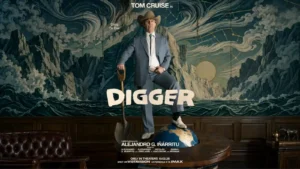

Digger
Where It Has the Edge
- costume design is 4.8 vs 4.3. Costume work is praised for supporting the storytelling and visual contrast, from Digger’s flamboyant wardrobe to carefully controlled...

Scorata scores summarize analyzed review evidence on a 1–5 scale; they are not laboratory measurements or a simple average of customer star ratings. Feature scores summarize the reviews covering that feature. The overall score averages feature scores within each review, then combines review averages. When both expert and customer evidence are available, those two groups receive equal weight. Products can have different review coverage, so small score gaps do not establish a winner.
Recommendations prioritize important features for the category, with a score of at least 3.5, a gap of at least 0.25 points and at least two supporting reviews per product. Features with widely varying scores or broad connectivity contexts are excluded from recommendations. These safeguards do not establish statistical significance.
Quick verdict
The available evidence supports the recommendation below, but does not establish an overall winner. Check the remaining features against your priorities.
Choose Digger for costume design.
There is not enough comparable review evidence to recommend A Talent for Murder over the other product.
No clear scored advantage over the other product.
Scores are out of 5. Missing scores mean missing review evidence, not a missing feature.
The visual-effects work supporting Cruise’s transformation is praised as seamless, blending with hair and makeup to sell the character’s altered appearance.
The face-transition effect earns a strong complaint for looking poorly executed at a crucial late moment.
At its best, the movie can turn its bravura staging into genuine feeling; one major set piece is praised as emotionally overwhelming while still finding room for comedy.
The thinly drawn characters can make it hard to care about their fortunes, leaving the story emotionally distant.
The editing draws a specific criticism that at least one supporting role feels so reduced that its substance may have been lost in the cut.
The montage of shifting faces helps turn changing identities into a distinctly cinematic experience.
Runtime is a recurring concern. Several reviewers find the film exhausting at more than two hours and say the experience would benefit from being shorter.
The running time feels cramped to accounts wanting fuller development of the nested thriller. Another response finds the overall experience quick and breezy despite occasional dragging scenes.
The film’s tonal pivots are intentionally abrupt, but the movement between farce, tragedy, and meta-drama can feel jarring or atonal even when the ambition is appreciated.
Some find the mixture of lighter real-world scenes and darker invented ones well balanced. Others see a film uncertain of its own identity or lacking conviction.
The concealed structure gives the film a genuine discovery factor, with one reviewer saying that figuring out what Iñárritu is really doing is a major part of the fun.
The premise offers intriguing literary games, but the mystery does not always match the standard it invokes. A missing-agent thread is also criticized as underdeveloped.
Cosmo Sheldrake’s score receives emphatic praise for its distinctive use of altered birdsong and broken-carnival texture.
The ominous string score is admired for its atmosphere, but its insistence can also promise more thrills than the movie delivers or reveal emotional turns too clearly.
The early structural turn is often praised as daring, surprising, and inventive. Several critics, though, think the same twist destabilizes the movie and makes its construction less satisfying.
The story-within-a-story device feels fresh to some, but others see a derivative inheritance scheme and a familiar Ripley imitation. Its inventiveness is more contested than its cast's appeal.
The movie’s nested framing can be hard to follow on its own terms, with one reviewer arguing that its explanatory twist still does not quite make logical sense.
The overlapping realities can be an intriguing puzzle or a source of persistent confusion. Visual and performance cues help some viewers follow the shifts, but the ending leaves others unsure what they have watched.
Pacing is a recurring weakness: the intensity can become exhausting, the middle can feel slack, and several reviewers wish the film moved faster or ended sooner.
A slow opening and momentum lost away from Highsmith's house are recurring complaints. Supporters find the deliberate buildup absorbing or increasingly rewarding, while others experience repetition and boredom.
The film’s themes can feel layered, provocative, and intellectually ambitious, especially around climate, power, art, and complicity. Critics who resist it find the same ideas shallow, obvious, or overexplained.
Identity, concealed impulses, and the connection between an author and a fictional creation give the film substantial interpretive appeal. Not everyone thinks its ambitious questions receive enough depth or payoff.
Iñárritu’s direction earns respect for its formal daring and control, but the same maximalism is often criticized as heavy-handed, self-indulgent, or too insistent.
Corbijn's strongest work creates tension through controlled staging and carefully chosen images. Detractors find the approach flat or too theatrical, particularly when the film tries to expand beyond the central house.
Humor is intensely divisive. Some reviewers find the satire hilarious or mordantly funny, while many others say the jokes fall flat and the movie is louder than it is funny.
Dry insults, uncomfortable exchanges, and sly dark comedy provide much of the entertainment. Mirren's caustic delivery is a particularly reliable source of laughs.
The core disaster setup and meta-narrative fascinate some viewers, but others find the story messy, hollow, or fundamentally broken once its layered structure takes over.
The central literary challenge is a compelling hook, and the nested story can be inventive and immersive. Less favorable responses find the plotting dull, stale, or unable to connect its competing strands.
The ending sharply divides opinion. Some find the final beat provocative or darkly funny, while others call it weak, empty, or an unsatisfying payoff to the film’s elaborate setup.
The ending is the biggest dividing point: some enjoy its open questions and gathering momentum, but many find it weak, abrupt, overcomplicated, or less ingenious than promised.
Cinematography is a major strength, with repeated praise for Emmanuel Lubezki’s compositions, long takes, scale, and unusual imagery. Some viewers dislike the washed-out, colorless look and find it visually off-putting.
Rich color, European scenery, and expressive light and shadow are major strengths. Even less favorable responses often admire the photography, though a few find the Swiss landscape underused.
Character work is uneven. Cruise sometimes finds extra humanity in Digger, but many reviewers describe the surrounding characters as thin, one-note, underwritten, or lacking interior life.
Ehrenreich's character gains layers as confidence and menace emerge, and Mirren reveals vulnerability beneath hostility. Clementine is repeatedly considered underwritten, while one brief supporting character supplies welcome emotional depth.
As satire, the movie inspires opposite reactions: some see a sharp, biting success, while others think the farce fails because the comedy and critique do not work together.
The film works best as a cerebral, performance-led thriller. Some enjoy its seductive literary games, while others find too little urgency or surprise to satisfy the genre promise.
The prosthetic makeup is often admired for helping Cruise disappear into the role, with several reviewers calling the transformation seamless or striking. Others find the fat suit and facial work conspicuous or distracting.
The lined, pasty physical appearance supports a committed, deliberately unglamorous version of Highsmith.
The screenplay is one of the most contested elements. Some call it whip-smart or masterful, while many others see the writing as overstuffed, messy, or the film’s central weakness.
The screenplay's clever metafictional premise earns real admiration, but its theatrical dialogue, competing narratives, and uncertain conclusion are frequent obstacles. Opinions differ sharply on whether ambiguity enriches the script or exposes its weaknesses.
The deliberately artificial presentation weakens realism for the reviewer who addresses it directly, making the world feel more like a constructed facsimile than lived reality.
The stylized fiction is grounded enough for some viewers. Others struggle with the characters' supposedly dangerous nature, the intellectual connection, or romantic encounters that make little practical sense.
The long monologues produce some of the movie’s most celebrated scenes, especially when Cruise or Ahmed gets room to perform. Elsewhere, the dialogue is criticized as didactic, repetitive, shouty, or awkward.
The insults and verbal volleys can be sharply funny, even top-notch. Other responses find the lines insufficiently cutting, unnaturally assembled, or repetitive by the later scenes.
Marketing deliberately conceals the movie’s central structural reveal, so trailers present only part of what the film actually becomes and can create expectations that the finished movie quickly overturns.
The promotional impression can make the film look safer and more conventional than its adult wit, dark comedy, and ambiguous design actually are.
The ensemble acting draws strong praise from the review that evaluates the cast as a whole, with Cruise and his costars described as giving bravura performances.
The cast is the most dependable attraction, with Mirren's acidic presence and Ehrenreich's shifting identities drawing frequent praise. Strong acting often carries scenes whose plotting earns a less enthusiastic response.
The supporting ensemble is frequently praised, especially Riz Ahmed and several scene-stealing players. The main caveat is limited screen time and uneven material, which leaves some performers underused.
Brief supporting performances add charm and intrigue, with Brennan especially praised for emotional layers and a comforting presence.
Cruise’s lead performance is the clearest point of praise, with many calling his commitment, physicality, and monologue work riveting or career-best. A smaller group finds the performance hammy, overblown, or too external.
The leading work is usually a major reason to watch, particularly Mirren's intimidating wit and Ehrenreich's transformations. A few responses find parts theatrical or less convincing, but the leads regularly outperform the material.
The visual style can be striking, dreamlike, and disturbing, but not every choice lands; the square framing and aggressively stylized presentation can also feel irritating.
The handsome, richly colored presentation and giallo-like imagined sequences are frequent pleasures. A dissenting response finds the film visually anonymous despite its attractive material.
Costume work is praised for supporting the storytelling and visual contrast, from Digger’s flamboyant wardrobe to carefully controlled color choices in major set pieces.
Elegant clothes add visual pleasure, while smaller wardrobe changes help distinguish the nervous editor from his more polished fictional counterpart.
Production design earns some of the strongest consensus, with elaborate sets, layered detail, and theatrical spaces repeatedly singled out as exceptional. A few reviewers find the maximalism overloaded rather than immersive.
Highsmith's weapon-filled, cluttered home vividly communicates her personality, while the glamorous interiors offer a contrasting world. The sets are among the most consistently admired parts of the production.
Audience appeal is deliberately narrow and repeatedly described as divisive. The film’s abrasive tone, dense ideas, and radical shifts are likely to alienate viewers looking for a conventional Cruise vehicle.
This is an acquired taste: patience for a contained, conversational mystery matters more than a general appetite for thrillers.
Entertainment value depends heavily on tolerance for the film’s abrasive style. Some viewers find it captivating and never boring, while others say the experience is simply not enjoyable.
Strong performances and attractive craft make this an enjoyable diversion for many. Enjoyment depends on tolerating the slow start and an ambiguous payoff that some find fascinating and others reject outright.
Mirren's American accent draws a specific complaint for sounding exaggerated, even from an otherwise enthusiastic response to her performance.
The limited action does little to lift the pace for one viewer, who wanted more happening between the talk-heavy scenes.
The isolated house and cool European settings create an appealing mix of cozy intimacy and menace. Some find the mood absorbing, while others wish the landscape or claustrophobia had been used more effectively.
The fictional Highsmith portrait earns both appreciation and frustration. Some find a convincing late-life personality, while others see a softened caricature or little more than a collection of biographical details.
The treatment of a real author is contentious, especially where her prejudices are softened or murderous possibilities are suggested. An explicit acknowledgment that the story is fictional offers some reassurance.
Mirren and Ehrenreich's verbal duel is frequently the film's strongest element. Ehrenreich and Cooke also generate convincing romantic heat, though chemistry cannot always overcome doubts about the situations.
The ensemble can feel exceptionally well chosen, but one account finds the insistence on Edward's youth awkward beside the actor's clearly adult appearance.
Mirren's long absences are a recurring frustration because the housebound contest is often the main attraction. Cooke likewise has less material than her performance seems capable of supporting.
The social-climbing plot loses force for one critic because advancement seems assured, without enough risk of exposure or loss of status.
Hitchcock-inspired visual techniques give the film a pleasing classical-thriller flavor, especially in its close-ups, juxtapositions, and understated staging.
Mirren's timing makes the barbed remarks land, with both a critic and an audience reaction singling out her comic precision.
A supposedly seductive surprise involving a bedroom intrusion and a knife is criticized as crossing the boundaries implied by the invitation.
The imagined collaboration between Highsmith and Edward is exhilarating when their intellectual, artistic, and psychological sparring comes together.
The best moments turn inventing a murder into a revealing contest between author and collaborator. Opinions split on whether the film explores that process sharply enough or wanders too far into the story they create.
The dramatic games can be clever and engaging, though the combination of literary drama and thriller is less convincing to some.
The near-constant smoking is distracting for one viewer, who finds it excessive rather than an effective part of the period atmosphere.
The film's balance suffers when the expanding story sidelines Mirren, whose central contest is often its strongest material.
One favorable account finds the film's Ripley-like figure close to the personality of Highsmith's novels, especially his dissatisfaction with himself and hunger for social advancement.
Premeditated murder, sexual material, and profanity limit the film's appeal as entertainment for families with younger children.
Claustrophobic close-ups and carefully juxtaposed faces give the psychological exchanges visual force and emphasize unstable identities.
The attempted blend of literary drama and psychological thriller does not fully click for one account, leaving the performances stronger than the combined story.
The deliberately unflattering haircut contributes to Mirren's convincing lack of glamour as the reclusive author.
The strong language contributes to the mature-content reservation, especially for anyone seeking a gentler mystery.
The handling of sexuality divides opinion: one account appreciates its integration with identity themes, while another objects that a story about a queer figure remains heavily heterosexual.
Cold Alpine light and warmer noir shadows distinguish the film's different worlds. Low light and firelit interiors are also praised for expressing the characters' hidden sides.
The film can feel like a clever lost Highsmith tale, capturing her interest in deception and dark impulses. Other accounts see fan fiction that misses the originality, nastiness, and elegant plotting of its model.
The strangers-on-a-train opening supplies a clever, recognizable nod to Highsmith that adds pleasure for viewers who catch the reference.
One account credits the visibly convincing location work with strengthening the film's sense of place.
The climate-and-power message lands as urgent and resonant for some reviewers, but others see the satire as blunt, shallow, smug, or too heavily explained to be persuasive.
Several accounts struggle to care about the invented murders because the story feels hypothetical or the social advancement too assured. The absence of meaningful risk weakens the thriller's urgency.
The initial train meeting is singled out as a clever way to launch the story and introduce its literary echoes.
Reversals divide opinion between ingenious surprise and predictable, low-impact plotting. Several accounts feel the final turns either go on too long or fail to reframe the story convincingly.
The practical craftsmanship stands out in the handmade sets and physical effects, which one reviewer specifically praises for their tactile, visibly constructed quality.
The romance offers fun and heat but often feels secondary to the author-editor contest. Implausible encounters and time spent away from Mirren reduce its value for some.
A few jump scares work effectively because Mirren's presence and the uneasy staging make small jolts count.
The sensual moments are enjoyable for one account, while another sees them as a reason to reserve the film for mature viewers. The sexual material is not considered especially explicit by R-rated thriller standards.
Opening the play into multiple screen realities is clever and cinematic for some viewers. Others find the expansion stiff, overcomplicated, or less tense than the basic two-person contest.
The conversational contest can create electric psychological tension. The invented plot's weaker stakes, predictable turns, and departures from the chamber setting often blunt that suspense.
Highsmith makes an intriguing adversary: difficult to read, mischievous, and apparently several moves ahead of her visitor.
The brutal murder plotting is enjoyable as thriller entertainment for one account, while another regards even the relatively restrained violence as a mature-content concern.
Bloody murder, sexual scenes, and strong language make this a mature thriller rather than an appropriate choice for younger audiences.
Edward works as a worthwhile protagonist for some, but the thinner, status-driven characters can make emotional investment difficult.
Critical reception within the supplied material is visibly split, with reviewers explicitly noting divided reactions and, in some cases, a colder response from critics overall.
The title sounds somewhat like a direct-to-video thriller to one account, underselling the film's more sophisticated ambitions.
The opening narration suggests an intriguing possibility about who is inventing the story, but that possibility is considered underdeveloped.
The production values are gorgeous enough to stand out even in a strongly negative response to the movie overall.
Memorability is a weakness: several accounts describe fleeting entertainment, forgettable sequences, or little desire for a second viewing.
Value is strongest for moviegoers who already have a cinema subscription or want the large-format craft experience; one reviewer calls it worth seeing on the big screen while stopping short of must-watch status.
Sound design is a rare technical complaint: one review finds the deliberately abrasive clanging and artificial sonic texture actively off-putting.
The stylized world is praised for being unusually detailed and visually coherent, with production design creating a heightened environment full of distinctive character and texture.

Choose this inventive, unsettling documentary for fearless questioning, dark humor, and unpredictable storytelling. Skip it if you want a short, straightforward exposé with definitive answers.
Pros: originality, humor

Extraordinary performances and richly observed relationships make this a rewarding, emotionally forceful drama. Its nearly three-hour length and slow opening demand patience and undivided attention.
Pros: class commentary, character development

Best for a hypnotic, bookish mystery with tactile visuals and cerebral chills. Skip it if reading-heavy, attention-demanding storytelling sounds more exhausting than exciting.
Pros: Atmosphere, cinematography
Cons: audience appeal

Best for an intimate, searching documentary that rewards focused attention and invites discussion. Skip it when devastating grief, addiction footage, and unresolved family tensions would be too much.
Pros: emotional impact, theme depth