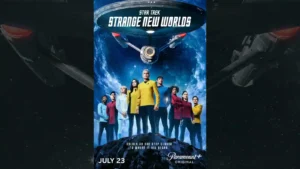
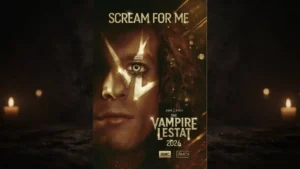
Star Trek: Strange New Worlds, Season 4
Where It Has the Edge
No clear scored advantage over the other product.

Scorata scores summarize analyzed review evidence on a 1–5 scale; they are not laboratory measurements or a simple average of customer star ratings. Feature scores summarize the reviews covering that feature. The overall score averages feature scores within each review, then combines review averages. When both expert and customer evidence are available, those two groups receive equal weight. Products can have different review coverage, so small score gaps do not establish a winner.
Recommendations prioritize important features for the category, with a score of at least 3.5, a gap of at least 0.25 points and at least two supporting reviews per product. Features with widely varying scores or broad connectivity contexts are excluded from recommendations. These safeguards do not establish statistical significance.
Quick verdict
The available evidence supports the recommendation below, but does not establish an overall winner. Check the remaining features against your priorities.
There is not enough comparable review evidence to recommend Star Trek: Strange New Worlds, Season 4 over the other product.
Choose Interview With the Vampire, Season 3 for plot twists and cinematography.
No clear scored advantage over the other product.
Scores are out of 5. Missing scores mean missing review evidence, not a missing feature.
One critique says past experiences do not meaningfully change current behavior, weakening the sense that characters face lasting consequences.
A late-season conversation earns praise for letting the characters plainly acknowledge a disturbing truth instead of romanticizing or dodging it.
One commenter strongly criticizes Pelia’s casting, calling the character and casting choice a poor fit.
New casting choices generally feel well matched to their roles, with the touring band in particular praised for feeling like an organic group.
Lore use is contentious: callbacks can enrich the Trek setting, but some reviewers feel canon and legacy references are mishandled or used without enough purpose.
The season expands vampire mythology while tying new supernatural material back to the core relationships, making the world feel broader without abandoning character stakes.
One review criticizes an important emotional scene for being cut too short.
Rapid cutting is often praised for matching Lestat’s manic perspective and musical energy. The speed can be demanding, but the edit is repeatedly treated as purposeful rather than careless.
Continuity is a recurring concern, particularly when genre episodes appear to ignore earlier rules or when legacy connections feel forced.
Despite a radical change in style and point of view, the season is praised for connecting cleanly to the emotional and narrative history of the first two seasons.
One reviewer welcomes the reduced emphasis on characters being sexually or romantically fixated on Spock.
Explicit sexuality is part of the show’s established identity, but the mother-son sexual material draws strong criticism from several reviewers who find it excessive, gross, or used for shock.
Romance is divisive: some pairings have chemistry, but other reviewers dislike the Kirk/La’An direction or feel existing romantic arcs have run their course.
The Louis–Lestat relationship remains the emotional center even with limited shared screen time. Their scenes are praised as electric, tender, painful, and central to the adaptation’s queer love story.
Genre-hopping is the season’s biggest divide: some reviewers love the fearless variety, while others find the fantasy, puppet, soap, and parody swings exhausting or un-Trek-like.
As gothic camp, rock opera, melodrama, and supernatural horror, the season’s genre blend is widely praised as bold, strange, and emotionally potent.
Screenplay reactions are mixed, with some scripts faulted at the concept level while stronger episodes benefit from clearer structure and sharper character turns.
The script’s speed and wit are praised as a major strength, packing dense ideas and character beats into fast-moving scenes.
Una is described as solid, charismatic, and capable of making difficult situations feel manageable.
Daniel becomes more abrasive after his transformation, and some viewers find his smugness noticeably less appealing than in earlier seasons.
Dialogue draws some of the harshest criticism in weaker episodes, where it is called shallow, forced, ridiculous, or overly melodramatic.
The writing remains sharp, dense, and layered at its best, especially in relationship scenes. Some reviewers find Lestat’s rock-star monologues and intentionally excessive banter cringeworthy or exhausting.
Franchise connections are split between praise for the Original Series feel and concern that existing canon is beginning to dominate the show.
This is emphatically a third season rather than a clean restart. Multiple reviewers warn that newcomers will be lost, and one also objects to wider Immortal Universe connections feeling increasingly necessary.
Ethical themes can feel authentically Trek-like, but reviewers also criticize how some mental-health and relationship material is handled.
The incestuous Gabriella storyline is deliberately disturbing; one reviewer specifically appreciates that the show eventually confronts the discomfort rather than treating it as harmless.
The season earns credit for inventive time-bending and genre concepts, though some later riffs are described as derivative or insufficiently fresh.
The rock-tour documentary, layered narration, and unstable point of view are widely praised as fearless reinvention rather than a repeat of the first two seasons.
Tone is a major weakness for detractors, especially when serious grief or character work is paired with broad parody or comedy.
The shift from melancholy period drama to flamboyant rock camp is the season’s most visible gamble. Most reviewers think it suits Lestat and retains the show’s emotional core, while others find it jarring, messy, or superficial.
One critic is disappointed that LGBT representation has receded since the first season, especially while heterosexual relationships remain prominent.
The series’ race-conscious reinvention of Louis and Claudia continues to earn praise for expanding the world’s perspective, though one later Claudia scene drew concern about how a racialized insult was handled.
Drama is inconsistent: performers can sell emotional material, but soap-opera framing and weak character drama sometimes undercut otherwise serious ideas.
The strongest grief and trauma storylines retain the dramatic gravity of earlier seasons, even for reviewers who find the overall reinvention messier.
Emotional impact peaks when grief, identity, or loss receives room to breathe, though several reviewers say those moments are weakened by surrounding gimmicks.
Beneath the camp and spectacle, the season is repeatedly described as heartbreaking, devastating, and unexpectedly moving. Claudia’s grief, Lestat’s trauma, and the Louis–Lestat material drive the strongest reactions.
Twists receive mixed reactions, from a clever dinosaur-time-travel turn to character resolutions that some viewers found telegraphed.
The season delivers frequent surprises and several jaw-dropping turns, with its biggest reveals generating strong excitement even among mixed reviews.
Writing quality is sharply divided: reviewers praise inventive standalone ideas and character beats, but repeatedly criticize thin plotting, gimmicks, and weak resolutions.
The writing is frequently praised as dense, witty, and playwright-level, though Daniel’s material and a few overstuffed passages draw targeted criticism.
Stories are the main fault line: strong standalone adventures can be compelling, but several gimmick-heavy episodes are criticized as thin, pointless, or weakly resolved.
Overall story reception is strongly positive but not unanimous. Many call the season gripping or among TV’s best, while harsher critics see a shallower, overstuffed detour from the strengths of earlier seasons.
One commenter strongly dislikes Pelia’s stylized accent and considers it unnecessary to the character.
Gabriella’s accent is one of the season’s most divisive details: some find it entertaining or mostly convincing, while several others call it exaggerated, inconsistent, or outright distracting.
Clarity is a recurring weakness in the more fantastical episodes, where reviewers question unexplained rules, hand-waved setups, and shaky internal logic.
The nonlinear approach works for viewers who enjoy assembling the pieces, but newcomers and some returning viewers find it head-spinning. Later context and rewatches clarify scenes that initially seem opaque.
One reviewer says the season leaves viewers hungry for more even after a binge.
The dense, propulsive episodes inspired TV-hangover reactions and strong binge enthusiasm, though the amount of information can make the experience intense.
One positive assessment says the episodic format still preserves consistent character arcs across episodes.
Even with major plot and characterization changes from the books, the adaptation is praised for preserving the essential integrity of its central characters.
Camera work and cinematography are consistently among the better-regarded craft elements, especially when episodes adopt distinct visual identities.
Close-ups and concert photography draw strong praise, with musical performances benefiting from expressive framing, stage light, and intimate character-focused shots.
One reviewer finds worthwhile political themes in the season’s more overtly political material and sees room for deeper interpretation.
Updating the story to the mid-2020s is praised for letting Lestat collide with contemporary culture and topical references in a way that feels specific to this version.
The season can reach meaningful themes about identity, grief, ethics, and self-acceptance, but several reviewers think its genre conceits sometimes leave those ideas underexplored.
The show continues to dig into memory, performance, guilt, failure, trauma, and the need to be loved. Several reviewers see those themes as the substance that keeps the maximalist presentation emotionally grounded.
Comedy is often a highlight, from Spock and Pike’s fantasy doubles to the stoner-style episode, but some parody-heavy installments are described as painfully unfunny.
The comic turn is one of the reinvention’s biggest successes for many reviewers, from mock-rockumentary banter to Lestat’s absurd self-seriousness. A minority finds some of the silliness tonally jarring.
Effects are usually impressive, from dragons and creatures to large-scale space imagery, though a few reviewers call out weaker CGI moments.
Effects quality is inconsistent: Claudia’s séance transformation is praised as highly effective, while at least one creature effect is criticized as visibly rough.
Acting is broadly praised even when the surrounding episode is disliked, though a few reviewers object to deliberately hammy or exaggerated performances.
Performance quality is a major consensus strength. Even reviews that dislike the season’s writing or direction repeatedly praise the cast for carrying the material with emotional force.
Character balance improves when neglected pairings receive attention, but some reviewers still think legacy characters can pull focus away from Pike’s crew.
Lestat’s dominance works for many viewers, but the supporting cast is unevenly served. Established characters stay compelling while several new band members and mythology figures feel thin or underused.
The season’s rhythm feels compressed and uneven to several reviewers, with back-to-back gimmick episodes creating fatigue and serialized arcs feeling disrupted.
Pacing is the most repeated structural tradeoff: the breakneck energy suits Lestat, but the short season can feel rushed, overstuffed, or uneven as it moves among many timelines and characters.
Character development is uneven: some arcs and spotlight episodes land well, while other reviewers find major threads underdeveloped or insufficiently lasting.
The season substantially deepens Lestat and gives several returning characters meaningful emotional turns. Criticism centers on newer or secondary characters whose arcs feel compressed or insufficiently explained.
Trelane and other antagonistic figures are generally enjoyed, with praise for personality and the way they support the episode’s conflict.
Armand’s antagonist turn is polarizing: one review celebrates a series-best Big Bad performance, while another finds the escalation cartoonish and insufficiently earned.
The season premiere is generally viewed as a strong return to classic Trek-style adventure, with a few dissenting reactions to its execution.
The premiere is mostly received as an audacious, highly entertaining reset, with several calling it exceptional. A few find it loose, disorienting, or overstimulating.
Episode pacing varies widely: the real-time disaster story uses relentless momentum effectively, while weaker episodes are said to sag or rush their final acts.
Individual episodes can be exhilaratingly fast, but the barrage of edits, jokes, music, and plot sometimes becomes overstimulating or hard to track.
The score is a strong craft element, including praise for Nami Melumad’s symphonic work, even if not every episode’s musical support lands equally well.
Daniel Hart’s orchestral work earns emphatic praise for carrying grief and atmosphere beneath the louder rock material.
Direction ranges from nimble comic staging to choices some reviewers call uninspired, making the execution as variable as the season’s concepts.
The premiere’s psychedelic direction is a weak spot for one reviewer, who finds the drug-trip imagery too aggressive to follow alongside the already dense narration.
The episodic, mission-of-the-week structure is frequently praised, although some reviewers think the short streaming format gives the standalone approach too little room.
The season’s best episodes balance trauma, romance, humor, and vampire politics with confidence. Weaker installments feel less focused, making the episode-to-episode consistency uneven.
The crew’s chemistry is a major asset, especially when new pairings and alternate-character dynamics let familiar cast members play off each other differently.
The ensemble chemistry remains a standout, especially Reid with Anderson, Bogosian, and Zaman. The Louis–Lestat connection is repeatedly described as the emotional engine of the season.
The 10-episode season is widely seen as too short for this many tones, characters, and ideas, leaving several reviewers wanting a longer traditional TV run.
The seven-episode order is a recurring concern. Several reviewers argue an eighth episode or a fuller season would have given major plotlines and the promised concert more room to breathe.
The season’s suspense works best in its disaster and horror modes, where reviewers praise real tension, unease, and edge-of-your-seat momentum.
The season’s escalating tour danger, vampire conflict, and major late-episode reveals create strong edge-of-the-seat momentum.
Several reviewers feel the season recaptures classic or traditional Star Trek structure and spirit, while one fantasy episode is criticized as barely feeling like Trek.
The adaptation is broadly praised for preserving Anne Rice’s spirit while making bold changes. The largest source-material objections focus on Gabriella and several altered character histories.
Interest in continuing is strong in the positive season reviews, with critics expressing excitement for what comes next and sadness that so few episodes remain.
Even reviewers discussing unresolved questions express strong interest in continuing, with explicit enthusiasm for another season and the larger supernatural story.
A strongly negative commenter says the season lacks enough substance to inspire a rewatch.
The out-of-order structure rewards a second pass once later revelations are known, and several viewers are eager to revisit both this season and earlier episodes with fresh context.
Despite major disagreements about individual episodes, reviewers frequently describe Season 4 as fun, entertaining, or enjoyable when its experiments click.
Most reviewers find the reinvention enormously entertaining, using phrases such as roaring fun, campy fun, and a bloody good time even when they note structural flaws.
Audience appeal looks polarized: some see broad, accessible fun and familiar TOS flavor, while others think the gimmick-heavy direction alienates viewers.
The season lands best with established fans willing to embrace its maximalist rock-opera turn; passionate viewers describe it as highly absorbing, while its niche excess limits universal appeal.
Production design earns strong praise for giving wildly different episodes their own identity while keeping the Enterprise polished and recognizable.
Concert staging and lighting can look excellent, but some reviewers feel the broader production value has slipped from the ornate period settings of earlier seasons.
One reviewer highlights a small world-building detail as a fun addition to the setting.
The season expands the vampire world and supernatural stakes while retaining a lived-in feel. Its best mythology additions deepen the central relationships rather than functioning as lore for its own sake.
Costumes are repeatedly singled out as a strength, especially the elaborate fantasy looks and the show’s playful genre-specific wardrobe.
Lestat’s wardrobe is singled out as part of the season’s creative spectacle, with the costume work contributing heavily to his glam-rock transformation.
The season is visually ambitious and often striking, though isolated effects shots and some heavily stylized episodes draw criticism.
Color, lighting, concert imagery, and a brighter contemporary palette give the season a vivid identity. Some drug-trip visuals are criticized as cheap or distracting, making the presentation impressive but uneven.
The main ensemble is one of the season’s clearest strengths, with repeated praise for the cast’s range across comedy, drama, horror, and adventure.
The main ensemble is praised as unusually strong, with Lestat’s expanded focus still leaving room for returning leads to register as essential rather than ornamental.
Music is usually regarded positively, with praise for the season’s genre-shifting sound, though one critic feels a droning score sometimes carries weak material.
Music is one of the season’s defining strengths for most reviewers, functioning as character confession as well as spectacle. A notable minority finds the retro glam-rock songs cheesy or outright poor.
A supporting performance receives standout praise, especially Joe Morton’s guest turn.
Sheila Atim’s Akasha is singled out as a breathtaking supporting turn, giving the larger mythology immediate presence.
Action ranges from tense, effective disaster storytelling to sequences some reviewers see as empty spectacle.
One critic sees the return to The Elysian Kingdom as an unnecessary sequel and questions why that story needed revisiting.
One commenter describes the approaching end as bittersweet, simultaneously sad to lose more Trek and ready for this series to conclude.
CGI is generally praised as polished and ambitious, with occasional shots criticized for looking unconvincing.
The season repeatedly lands major episode-ending shocks, with the penultimate cliffhanger receiving especially ecstatic praise. The final cliffhanger is more divisive because some wanted fuller payoff first.
Runtime works when an episode has enough story to fill the hour, but thinner comedy installments are criticized for stretching limited plots.
The finale sharply divides opinion. Some appreciate its thematic closure and perspective shift, while others see it as an underwhelming bookmark that postpones the concert and apocalypse payoff.
One commenter feels the Princess Bride-style fourth-wall reference makes the fantasy episode less immersive.
The séance material earns specific praise for unsettling makeup work, especially the disturbing physical details used as Claudia materializes.
Historical detail is less consistently convincing than in the first two seasons, making some liberties in Lestat’s earlier life more noticeable.
One reviewer finds it odd that fantasy magic can function aboard the Enterprise, weakening the internal power rules.
Practical work is well received, including creatures and the puppet execution, which several reviewers say looks excellent.
Some episodes ask for a heavy suspension of disbelief, and reviewers are less satisfied when emotional stories lack a grounded framework.
The finale ranges from exceptional to deeply underwhelming depending on the reviewer. Its thematic ambition and performances impress, but withheld payoff and cliffhanger structure frustrate a substantial minority.
One critic thinks the prequel function is becoming too eager to position the series for a hypothetical Kirk-era continuation.
Lestat and Claudia’s histories are treated as central emotional material, with the supernatural framework praised for exploring assault, shame, grief, and defensive behavior with unusual force.
The darker episodes use violence and body horror effectively for some reviewers, while others feel gore becomes spectacle without enough story support.
Critical enthusiasm is extremely high overall, with multiple writers placing the season among television’s best despite meaningful dissent over pacing, adaptation choices, and the finale.
One commenter misses Star Trek’s older reputation for inspiring scientific and professional curiosity and feels this season offers less of that quality.
Sound work is mixed: atmospheric design receives praise, while one fantasy episode is criticized for conspicuous ADR.

Best for sharp adult humor, magnetic chemistry and a deeply satisfying farewell. Skip it if familiar will-they-won’t-they plotting or deliberately messy leads are dealbreakers.
Pros: season pacing, episode structure
Cons: none
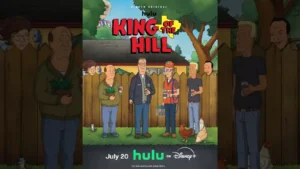
Choose Season 15 for warm, character-driven comedy, meaningful growth, and a finale that rewards longtime fans. Skip it if the short binge format, uneven replacement voices, or occasional clumsy commentary...
Pros: episode structure, season finale quality
Cons: release schedule, bingeability

Choose The Pitt Season 2 for a gripping, realistic medical drama with superb acting and emotional depth. Skip it if graphic procedures, unresolved arcs, or slower character-driven pacing bother you.
Pros: episode structure, main cast performance
Cons: age appropriateness, plot clarity

Best for powerhouse performances, thorny character work, and a tense revenge mystery that grows richer as it goes. Skip it if abuse, trafficking, graphic violence, or deliberately messy moral questions...
Pros: episode structure, supporting cast performance
Cons: cinematography, sexual content level