Scorata scores summarize analyzed review evidence on a 1–5 scale; they are not laboratory measurements or a simple average of customer star ratings. Feature scores summarize the reviews covering that feature. The overall score averages feature scores within each review, then combines review averages. When both expert and customer evidence are available, those two groups receive equal weight. Products can have different review coverage, so small score gaps do not establish a winner.
Recommendations prioritize important features for the category, with a score of at least 3.5, a gap of at least 0.25 points and at least two supporting reviews per product. Features with widely varying scores or broad connectivity contexts are excluded from recommendations. These safeguards do not establish statistical significance.
Quick verdict
What each product is best for
The review evidence points to a tradeoff: score quality and suspense versus audience appeal. Choose according to which strengths matter more to you; the overall score alone does not settle that choice.
Choose Chronovisor for score quality and suspense.
Choose Dear You for audience appeal.
Why these recommendations?
Chronovisor
Where It Has the Edge
score quality is 4.9 vs 2.1. The Holst-driven score gives quiet research scenes noirish tension and orchestral weight. It feels compelling, entrancing, and dramatically...
suspense is 4.9 vs 4.5. Books, recordings, and research generate an unusual amount of tension. The slow accumulation of clues builds cerebral dread...
originality is 5.0 vs 4.6. The film feels singular, unusual, and inventive, with a form that is difficult to compare directly with conventional...
Dear You
Where It Has the Edge
audience appeal is 4.6 vs 3.1. The film has unusually strong emotional resonance with Chinese and Teochew diaspora audiences while several writers also find...
Chronovisor4.8 overall score
Dear You4.5 overall score
Compare features
Scores are out of 5. Missing scores mean missing review evidence, not a missing feature.
Scored on both products
Other features
Score quality
Chronovisor
4.9
The Holst-driven score gives quiet research scenes noirish tension and orchestral weight. It feels compelling, entrancing, and dramatically effective without needing a conventional action-heavy setup.
Dear You
2.1
The score is the most repeated craft complaint: several writers call it maudlin, treacly, manipulative, or too eager to tell viewers when to cry. A few still find it effective in parts.
Chemistry between characters
Chronovisor
2.5
Béatrice’s early academic interactions are deliberately cool and detached rather than warm or connective. The exchange of ideas never develops into much personal chemistry.
Dear You
5.0
The relationships are described as convincing enough that the friendships and family dynamics feel fully believable.
Tonal consistency
Chronovisor
5.0
Analogue nostalgia, scholarly obsession, and low-key dread stay coherent even as humor and multiple genre influences enter the mix. The craft elements reinforce one another instead of pulling the film apart.
Dear You
4.0
The warm blend of hope, sadness, humor, and tenderness often works beautifully, but several writers feel the modern comedy, heavy score, or occasional melodrama clashes with the film’s otherwise restrained historical sections.
Pacing
Chronovisor
4.6
The unusual rhythm can feel hypnotic, expertly controlled, and even surprisingly fast for a film built around reading. Repetition is the main caveat, with some stretches becoming exhausting or patience-demanding.
Dear You
3.6
Pacing is one of the most divided areas: some enjoy the patient, unhurried build, while others find the opening rushed, transitions abrupt, or the nearly two-hour journey slow to hit its stride.
Plot clarity
Chronovisor
5.0
Despite dense material, the clue trail is praised for moving forward cleanly enough to let viewers act as textual detectives. Setups and payoffs give the radical presentation a sturdy narrative spine.
Dear You
4.0
The timeline handling improves as the film develops, and some find the transitions smooth and confident. Others say the rushed opening and abrupt early shifts can make the setup hard to track.
Screenplay quality
Chronovisor
5.0
The film’s radical presentation is supported by a sturdily plotted foundation, with setups and later payoffs keeping the information-heavy mystery moving.
Dear You
4.0
The writing is praised for balancing identity, migration, intergenerational threads, and emotional themes with real subtlety at its best. Its weaker moments include one-dimensional antagonists, implausible selflessness, and occasional simplification.
Character development
Chronovisor
3.5
Béatrice is intentionally less filled-in than a conventional protagonist, functioning partly as an audience conduit into the obsession. Her emotional grounding still keeps her from feeling completely blank.
Dear You
4.3
The women, especially Sogriu and Lamgi, are often praised as resilient, empathetic, and fully realized, while Bhagseng also gains depth over time. A recurring counterpoint is that some characters can feel saintly, underdeveloped, or implausibly selfless.
Humor
Chronovisor
4.8
Dry humor keeps the scholarly obsession from becoming overly solemn, especially Béatrice’s recurring trick of inventing academic awards to get sources on the phone. The tongue-in-cheek tone complements the conspiracy rather than deflating it.
Dear You
4.0
The occasional humor helps make the historical setting more approachable without erasing the story’s emotional core.
Suspense
Chronovisor
4.9
Books, recordings, and research generate an unusual amount of tension. The slow accumulation of clues builds cerebral dread into a genuinely gripping thriller experience.
Dear You
4.5
The mystery of who sent the letters and the multiple points where communication can fail create unusually effective dramatic tension for a quiet family drama.
Originality
Chronovisor
5.0
The film feels singular, unusual, and inventive, with a form that is difficult to compare directly with conventional thrillers. Its key achievement is making written text and research feel cinematic rather than merely illustrative.
Dear You
4.6
The Teochew-language approach, qiaopi-centered premise, and unconventional emotional structure give the film a distinctive identity even within a familiar family-drama framework.
Message quality
Chronovisor
5.0
The film’s affection for books and physical archives develops into a broader defense of how knowledge is preserved and interpreted. Its conspiracy also becomes a pointed parable about truth, technology, and control.
Dear You
4.7
The film’s emphasis on family duty, kindness, loyalty, sacrifice, memory, and connection across distance is widely admired. A minority view finds the moral framing too explicit or politically nationalistic.
Story quality
Chronovisor
5.0
The research rabbit hole is repeatedly described as engrossing, fascinating, and legitimately thrilling. The pleasure comes less from conventional action than from watching clues, archival fragments, and conspiratorial possibilities accumulate.
Dear You
4.7
The core family story is overwhelmingly regarded as moving, compassionate, and compelling, with its qiaopi mystery opening into a broader portrait of love and migration. Even positive assessments acknowledge structural or historical simplifications.
Genre satisfaction
Chronovisor
5.0
The blend of occult mystery, dark academia, science fiction, conspiracy thriller, and cosmic horror is widely praised. Rather than collapsing under its influences, the film uses them to make a cerebral but gripping genre experience.
Dear You
4.7
As a family melodrama, it largely succeeds through sincerity, tragedy, and warmth. Its familiar emotional formula works for most writers even when the sentiment is judged slightly overdone.
Plot originality
Chronovisor
4.3
The mystery’s genre blend feels unusually fresh, mixing dark academia, science fiction, conspiracy, and cosmic horror. The final destination can feel somewhat expected, but the route there remains distinctive.
Dear You
4.0
The story earns credit for steering away from an expected romantic triangle, though its intergenerational melodrama is also compared to a recent Thai hit with a similar emotional tenor.
Realism
Chronovisor
4.3
Academic dialogue, authentic materials, and Sellier’s real-world fluency make much of the film feel unusually credible. At the same time, the filmmakers openly admit that parts of the research life and library behavior are deliberately unrealistic.
Dear You
4.0
Natural performances, dialect use, archival grounding, and lived-in settings create strong authenticity. That realism is weakened for some by saint-like characterization, implausible plot turns, or historical omissions.
Ending satisfaction
Chronovisor
4.7
The finale is widely praised as eerie, gripping, creepy, and in some cases excellent or remarkable. A minority found the last act more conventional, expected, or too literal than the journey preceding it.
Dear You
4.9
The late emotional payoff is one of the film’s strongest areas, with the final meetings and revelations described as devastating, graceful, bittersweet, and memorable.
Theme depth
Chronovisor
5.0
The mystery opens into questions about memory, certainty, historical truth, media, obsession, identity, and the human desire to recover the past. Those ideas give the small-scale film unusually expansive reach.
Dear You
4.8
The film draws substantial depth from migration, memory, female solidarity, sacrifice, kindness, and the way family history becomes myth. Its strongest passages turn culturally specific experience into a broader reflection on connection.
Emotional impact
Chronovisor
5.0
The film can create vertigo, unease, and a strong sense of creeping disorientation. Its late images especially leave a disturbing impression without relying on conventional spectacle.
Dear You
4.9
This is the clearest point of agreement: the film repeatedly brings viewers close to tears or fully to tears, with the final stretch described as devastating, heartbreaking, and deeply compassionate.
Directing quality
Chronovisor
5.0
Jack Auen and Kevin Walker earn broad praise for turning reading, research, and archival material into compelling cinema. Their debut is repeatedly called inventive, controlled, thoughtful, or unusually accomplished.
Dear You
4.9
Lan Hongchun is mostly praised for patient, emotionally controlled direction that trusts small moments rather than spectacle. Even the more critical take still credits his melodramatic execution while finding parts overdone.
Cinematography
Chronovisor
5.0
The warm, grainy 16mm photography is a defining strength, with tactile paper textures, amber light, claustrophobic libraries, and a ghostly sense of time displacement.
Dear You
5.0
The cinematography earns strong praise for bright, colorful camerawork and an impressive period look enhanced by warm, golden lighting.
Editing quality
Chronovisor
5.0
The editing turns pages, highlighted passages, recordings, and archival fragments into momentum rather than homework. Its cumulative rush and carefully timed release of information keep the mystery moving.
Dear You
5.0
The past-and-present structure is praised for smooth, unobtrusive transitions that keep the multi-timeline story easy to follow.
Performance
Soundtrack quality
Chronovisor
4.8
Holst, Gregorian chants, and other analogue audio choices give the film grandeur, dread, and an out-of-time mood. The music is repeatedly praised as lush, inspired, dramatic, or crucial to the atmosphere.
Dear You
3.0
Music selection gets mixed reactions: one period-incongruous song is called distracting and out of place, while another writer simply finds the music fitting.
Historical accuracy
Chronovisor
5.0
The fictional mystery is anchored in an exhaustively researched and sourced real-world story about Ernetti and the Chronovisor legend. That historical scaffolding impressed even viewers who initially assumed the material was fabricated.
Dear You
3.3
Views are mixed: some see a credible, well-grounded entry point into Teochew migration history, while others criticize the film for glossing over political consequences and omitting major events from the era.
Acting performance
Chronovisor
4.9
Anne-Laure Sellier’s academic authenticity, restraint, and intellectual command are repeatedly praised. Her natural fluency with scholarly language helps the movie’s unusual premise feel grounded.
Dear You
4.8
The largely non-professional ensemble is repeatedly praised for natural, lived-in work that suits the Teochew setting. The main caveat is some unevenness in smaller roles.
Lead performance
Chronovisor
4.9
Sellier gives Béatrice stoic intelligence, tenacity, and subtle signs of mounting fatigue and obsession. The restrained character remains convincing even without conventional emotional expansiveness.
Dear You
4.9
The central performances are a major strength, with Li Sitong repeatedly singled out for quiet expressiveness and emotional weight and the older female performances also drawing strong praise.
Controls and connectivity
Audience appeal
Chronovisor
3.1
The same formal audacity that makes the film distinctive also limits its audience. Long stretches of reading, sparse characterization, and repetition make it best suited to patient arthouse viewers rather than broad mainstream tastes.
Dear You
4.6
The film has unusually strong emotional resonance with Chinese and Teochew diaspora audiences while several writers also find its family themes broadly accessible. One assessment cautions that its cultural and national framing may narrow appeal for some non-Chinese viewers.
Critic appeal
Chronovisor
5.0
Its Rotterdam showing is described as a conversation-stoking standout, suggesting especially strong appeal within festival and art-film circles.
Dear You
3.8
The film arrived with festival acclaim, but one assessment notes that reactions from non-Chinese critics have been more measured than its strongest audience response.
Ownership and support
Entertainment value
Chronovisor
4.9
Against expectations, a movie dominated by reading is repeatedly called addicting, riveting, spellbinding, and compulsively watchable. Its appeal depends on enjoying research itself as a form of cinematic action.
Dear You
4.6
Despite its quiet scale, the film is described as charming, fascinating, easy to watch, and rewarding entertainment rather than a dry historical exercise.
Rewatch value
Chronovisor
4.8
The clue density encourages close inspection and another pass. Frames and details feel packed enough that revisiting the film could reveal pieces of the mystery missed the first time.
Dear You
5.0
One critic’s appreciation rose substantially on a second viewing, suggesting the film’s emotional distance and historical detail can reward revisiting.
Comfort and build
Visual style
Chronovisor
5.0
The lo-fi analogue look turns libraries, text, VHS material, and night streets into a distinctive dark-academia world. The imagery feels gorgeous, evocative, bewitching, and at times mesmerizing.
Dear You
5.0
The film’s warm palette, vivid color, soft period lighting, and simple but elegant compositions are repeatedly praised, especially given the modest budget.
Production design
Chronovisor
5.0
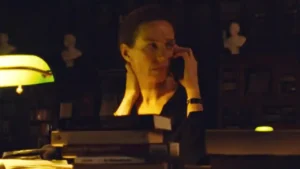
Dark wood, green reading lamps, archives, and scholarly interiors make academia feel unusually seductive and cinematic. The physical spaces strongly reinforce the film’s obsession with books and analogue research.
Dear You
5.0
The period environments are consistently praised as lived-in and evocative, with boarding houses, classrooms, and Bangkok streets giving the modest production convincing texture.
World-building
Chronovisor
5.0
Libraries, nocturnal New York, analogue media, and ambiguous technology create a world that feels both magical and forbidding. Even the fantastical premise gains a surprisingly believable environment.
Dear You
5.0
The boarding houses, classrooms, and crowded Bangkok streets are described as worn, cluttered, and occupied, giving the period migrant community a convincing lived-in presence.
Evidence available for one product
Other features
Archival footage quality
Chronovisor
5.0
The books, magazines, recordings, and other archival materials feel unusually authentic and convincing. Real sources become an active, thrilling part of the mystery rather than background decoration.
Dear YouNo score yet
Cultural representation
ChronovisorNo score yet
Dear You
4.9
Its Teochew language, qiaopi tradition, and migrant history are widely treated as the film’s defining strengths, giving it identity, authenticity, and emotional specificity. One critique objects to simplified portrayals of Thai and Indian characters and nationalistic undertones.
Dialogue quality
Chronovisor
3.8
The academic exchanges often sound more credible than genre-movie scholarship usually does. Outside the central research, some conversations feel deliberately deadening and dramatically thin.
Dear YouNo score yet
Drama quality
ChronovisorNo score yet
Dear You
4.1
The family melodrama is generally considered moving and effective, especially in its later emotional turns. Several writers nevertheless feel the third act or sentiment occasionally becomes too heavy.
Romance quality
ChronovisorNo score yet
Dear You
4.5
The love story is praised for enduring separation and distance, with devotion expressed through letters and long-term sacrifice rather than conventional romance.
Runtime
ChronovisorNo score yet
Dear You
4.0
The nearly two-hour length works for viewers who appreciate the patient character development, but others feel the film takes too long to reach its destination.
Scares
Chronovisor
5.0
The horror is more uncanny and cerebral than graphic, but the denouement lands hard. The climax feels frightening, spine-tingling, creepy, and deeply unsettling.
Dear YouNo score yet
Special effects quality
Chronovisor
5.0
The superimposed translations and graphic text effects do more than clarify information; they become part of the storytelling. Their integration with the 16mm image is praised as expressive and carefully designed.
Dear YouNo score yet
Comfort and build
Sound design
Chronovisor
2.5
The restaurant mix deliberately buries some dialogue in ambient noise, but that realism can become a usability problem. One interviewer wondered whether the playback volume needed to be raised just to follow the conversation.
Dear YouNo score yet
Performance
Supporting cast performance
ChronovisorNo score yet
Dear You
4.4
The supporting ensemble is generally praised for adding warmth, flavor, and emotional continuity, especially Usha Seamkhum’s brief older-role work. One review finds some smaller performances uneven.
Best for pristine archival footage, immersive sound, and a surprisingly tense look at Disneyland’s construction. Skip it if you want a comprehensive, deeply critical history; several reviewers found the 78–79-minute...
Best for an intimate, inventive archival portrait with strong emotional and cultural impact. Skip it if substantial nudity or an occasionally wandering biographical structure will frustrate you.
Pros: chemistry between characters, emotional impact
Best for a profound, formally inventive meditation on grief, memory, and the ethics of filming family. Skip it if intensely personal addiction material, a 114-minute runtime, or occasional repetition will...
Best for joyful music, rare footage, candid interviews, and a layered Maurice White portrait. Skip it if you want a tightly focused, unconventional reappraisal that lingers on performances instead of...