Scorata scores summarize analyzed review evidence on a 1–5 scale; they are not laboratory measurements or a simple average of customer star ratings. Feature scores summarize the reviews covering that feature. The overall score averages feature scores within each review, then combines review averages. When both expert and customer evidence are available, those two groups receive equal weight. Products can have different review coverage, so small score gaps do not establish a winner.
Recommendations prioritize important features for the category, with a score of at least 3.5, a gap of at least 0.25 points and at least two supporting reviews per product. Features with widely varying scores or broad connectivity contexts are excluded from recommendations. These safeguards do not establish statistical significance.
Quick verdict
What each product is best for
The available evidence supports the recommendation below, but does not establish an overall winner. Check the remaining features against your priorities.
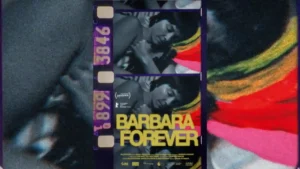
Choose Barbara Forever for critic appeal and entertainment value.
There is not enough comparable review evidence to recommend Dear You over the other product.
Why these recommendations?
Barbara Forever
Where It Has the Edge
critic appeal is 5.0 vs 3.8. Critical reception is strongly positive, with festival plaudits described as deserved and strong praise for the film’s assembly...
entertainment value is 5.0 vs 4.6. Despite its art-documentary subject matter, the film is called engaging, exhilarating, engrossing, and even a must-watch.
message quality is 4.9 vs 4.7. Its clearest message is that preserving and representing queer lives matters; Hammer’s legacy becomes a call to remember,...
Dear You
Where It Has the Edge
No clear scored advantage over the other product.
Barbara Forever4.8 overall score
Dear You4.5 overall score
Compare features
Scores are out of 5. Missing scores mean missing review evidence, not a missing feature.
Scored on both products
Other features
Score quality
Barbara Forever
5.0
Taul Katz’s score is singled out for beautifully complementing one of the film’s most affecting experimental passages.
Dear You
2.1
The score is the most repeated craft complaint: several writers call it maudlin, treacly, manipulative, or too eager to tell viewers when to cry. A few still find it effective in parts.
Tonal consistency
Barbara Forever
5.0
Tenderness and quiet melancholy permeate the film, giving its mix of memory, love, and loss a cohesive emotional atmosphere.
Dear You
4.0
The warm blend of hope, sadness, humor, and tenderness often works beautifully, but several writers feel the modern comedy, heavy score, or occasional melodrama clashes with the film’s otherwise restrained historical sections.
Humor
Barbara Forever
5.0
A funny, disarming streak helps keep the film lively without undercutting its quieter uplift.
Dear You
4.0
The occasional humor helps make the historical setting more approachable without erasing the story’s emotional core.
Realism
Barbara Forever
5.0
The tactile archive and candid home-video texture give Hammer’s portrait a raw, intimate authenticity, with the realism of the portrait explicitly praised.
Dear You
4.0
Natural performances, dialect use, archival grounding, and lived-in settings create strong authenticity. That realism is weakened for some by saint-like characterization, implausible plot turns, or historical omissions.
Runtime
Barbara Forever
3.0
One assessment finds the roughly hour-and-45-minute experience can waver and wander, making the runtime feel less disciplined than the film’s emotional impact.
Dear You
4.0
The nearly two-hour length works for viewers who appreciate the patient character development, but others feel the film takes too long to reach its destination.
Plot clarity
Barbara Forever
3.3
Loose chronology and occasional wandering can make the documentary feel less cohesive or firmly outlined, even when its emotional throughline remains strong.
Dear You
4.0
The timeline handling improves as the film develops, and some find the transitions smooth and confident. Others say the rushed opening and abrupt early shifts can make the setup hard to track.
Character development
Barbara Forever
4.9
Hammer emerges as warm, charming, vulnerable, powerful, and increasingly complex as the film traces her artistic and personal evolution.
Dear You
4.3
The women, especially Sogriu and Lamgi, are often praised as resilient, empathetic, and fully realized, while Bhagseng also gains depth over time. A recurring counterpoint is that some characters can feel saintly, underdeveloped, or implausibly selfless.
Pacing
Barbara Forever
4.2
The pace is often praised as brisk or deliberately unhurried in a way that lets archival material breathe. Two assessments, however, say the structure can tire or wander.
Dear You
3.6
Pacing is one of the most divided areas: some enjoy the patient, unhurried build, while others find the opening rushed, transitions abrupt, or the nearly two-hour journey slow to hit its stride.
Romance quality
Barbara Forever
5.0
The partner footage is singled out as tender, unabashedly romantic, and more moving because lesbian intimacy was historically underrepresented.
Dear You
4.5
The love story is praised for enduring separation and distance, with devotion expressed through letters and long-term sacrifice rather than conventional romance.
Message quality
Barbara Forever
4.9
Its clearest message is that preserving and representing queer lives matters; Hammer’s legacy becomes a call to remember, create, and make space.
Dear You
4.7
The film’s emphasis on family duty, kindness, loyalty, sacrifice, memory, and connection across distance is widely admired. A minority view finds the moral framing too explicit or politically nationalistic.
Plot originality
Barbara Forever
3.8
The film’s narrative shape divides opinion: one take praises its refusal of the usual overnight-success arc, while another calls the underlying structure simplistic and conventional.
Dear You
4.0
The story earns credit for steering away from an expected romantic triangle, though its intergenerational melodrama is also compared to a recent Thai hit with a similar emotional tenor.
Genre satisfaction
Barbara Forever
4.9
As a documentary portrait, it lands very well: intimate, immersive, accessible, and emotionally charged, with only occasional structural fatigue.
Dear You
4.7
As a family melodrama, it largely succeeds through sincerity, tragedy, and warmth. Its familiar emotional formula works for most writers even when the sentiment is judged slightly overdone.
Theme depth
Barbara Forever
5.0
The film reaches beyond biography into identity, sexuality, aging, illness, legacy, preservation, and the politics of visibility.
Dear You
4.8
The film draws substantial depth from migration, memory, female solidarity, sacrifice, kindness, and the way family history becomes myth. Its strongest passages turn culturally specific experience into a broader reflection on connection.
Story quality
Barbara Forever
4.8
The biography feels intimate, creative, and accessible, using Hammer’s life and archives to build a vivid portrait. One take finds the conventional framework tiring, but still credits the film with a holistic view.
Dear You
4.7
The core family story is overwhelmingly regarded as moving, compassionate, and compelling, with its qiaopi mystery opening into a broader portrait of love and migration. Even positive assessments acknowledge structural or historical simplifications.
Directing quality
Barbara Forever
4.8
O’Connor is widely praised for making the material intimate, accessible, and emotionally resonant while honoring Hammer’s experimental spirit. A minority critique her less-distinct authorial voice or conventional structure.
Dear You
4.9
Lan Hongchun is mostly praised for patient, emotionally controlled direction that trusts small moments rather than spectacle. Even the more critical take still credits his melodramatic execution while finding parts overdone.
Emotional impact
Barbara Forever
5.0
The film is repeatedly described as affecting, moving, poignant, and inspiring, especially around illness, intimacy, memory, and legacy.
Dear You
4.9
This is the clearest point of agreement: the film repeatedly brings viewers close to tears or fully to tears, with the final stretch described as devastating, heartbreaking, and deeply compassionate.
Cultural representation
Barbara Forever
5.0
The documentary strongly celebrates lesbian life, queer filmmaking, feminist art, and the importance of putting marginalized lives on screen.
Dear You
4.9
Its Teochew language, qiaopi tradition, and migrant history are widely treated as the film’s defining strengths, giving it identity, authenticity, and emotional specificity. One critique objects to simplified portrayals of Thai and Indian characters and nationalistic undertones.
Originality
Barbara Forever
4.6
Most praise the film for refusing a standard biographical mold and echoing Hammer’s experimental sensibility, though one assessment finds the underlying structure conventional.
Dear You
4.6
The Teochew-language approach, qiaopi-centered premise, and unconventional emotional structure give the film a distinctive identity even within a familiar family-drama framework.
Chemistry between characters
Barbara Forever
5.0
Archival footage of Hammer with her partner lands as tender, romantic, and emotionally convincing.
Dear You
5.0
The relationships are described as convincing enough that the friendships and family dynamics feel fully believable.
Cinematography
Barbara Forever
5.0
O’Connor’s camera and use of repurposed footage are praised for immersing viewers in Hammer’s mindset.
Dear You
5.0
The cinematography earns strong praise for bright, colorful camerawork and an impressive period look enhanced by warm, golden lighting.
Editing quality
Barbara Forever
5.0
Editing is one of the film’s clearest strengths, with sharp montage, precise pairings of testimony and imagery, and inventive archival weaving earning repeated praise.
Dear You
5.0
The past-and-present structure is praised for smooth, unobtrusive transitions that keep the multi-timeline story easy to follow.
Controls and connectivity
Critic appeal
Barbara Forever
5.0
Critical reception is strongly positive, with festival plaudits described as deserved and strong praise for the film’s assembly and introductory value.
Dear You
3.8
The film arrived with festival acclaim, but one assessment notes that reactions from non-Chinese critics have been more measured than its strongest audience response.
Audience appeal
Barbara Forever
4.8
Longtime Hammer fans are expected to be satisfied, while newcomers get an accessible entry point. The main barrier is a structure that some find tiring or wandering.
Dear You
4.6
The film has unusually strong emotional resonance with Chinese and Teochew diaspora audiences while several writers also find its family themes broadly accessible. One assessment cautions that its cultural and national framing may narrow appeal for some non-Chinese viewers.
Ownership and support
Entertainment value
Barbara Forever
5.0
Despite its art-documentary subject matter, the film is called engaging, exhilarating, engrossing, and even a must-watch.
Dear You
4.6
Despite its quiet scale, the film is described as charming, fascinating, easy to watch, and rewarding entertainment rather than a dry historical exercise.
Comfort and build
Visual style
Barbara Forever
5.0
Striking, luminous, dreamlike, and sometimes surreal imagery gives the film a sensuous experimental character that echoes Hammer’s work.
Dear You
5.0
The film’s warm palette, vivid color, soft period lighting, and simple but elegant compositions are repeatedly praised, especially given the modest budget.
Evidence available for one product
Performance
Acting performance
Barbara ForeverNo score yet
Dear You
4.8
The largely non-professional ensemble is repeatedly praised for natural, lived-in work that suits the Teochew setting. The main caveat is some unevenness in smaller roles.
Historical accuracy
Barbara ForeverNo score yet
Dear You
3.3
Views are mixed: some see a credible, well-grounded entry point into Teochew migration history, while others criticize the film for glossing over political consequences and omitting major events from the era.
Lead performance
Barbara ForeverNo score yet
Dear You
4.9
The central performances are a major strength, with Li Sitong repeatedly singled out for quiet expressiveness and emotional weight and the older female performances also drawing strong praise.
Soundtrack quality
Barbara ForeverNo score yet
Dear You
3.0
Music selection gets mixed reactions: one period-incongruous song is called distracting and out of place, while another writer simply finds the music fitting.
Supporting cast performance
Barbara ForeverNo score yet
Dear You
4.4
The supporting ensemble is generally praised for adding warmth, flavor, and emotional continuity, especially Usha Seamkhum’s brief older-role work. One review finds some smaller performances uneven.
Other features
Archival footage quality
Barbara Forever
5.0
The archival construction is the movie’s defining strength: luminous recordings, personal materials, photos, outtakes, and testimony become an intimate, immersive portrait. Even the more critical take calls the archive work thrilling.
Dear YouNo score yet
Drama quality
Barbara ForeverNo score yet
Dear You
4.1
The family melodrama is generally considered moving and effective, especially in its later emotional turns. Several writers nevertheless feel the third act or sentiment occasionally becomes too heavy.
Ending satisfaction
Barbara ForeverNo score yet
Dear You
4.9
The late emotional payoff is one of the film’s strongest areas, with the final meetings and revelations described as devastating, graceful, bittersweet, and memorable.
Faithfulness to source material
Barbara Forever
5.0
The documentary evokes Hammer’s own films and is praised as a fitting tribute made in the spirit of its subject rather than a generic biography.
Dear YouNo score yet
Interview quality
Barbara Forever
5.0
Interviews and recorded testimony are woven into the archive with care; Hammer’s voice and wisdom are described as striking and soul-stirring.
Dear YouNo score yet
Screenplay quality
Barbara ForeverNo score yet
Dear You
4.0
The writing is praised for balancing identity, migration, intergenerational threads, and emotional themes with real subtlety at its best. Its weaker moments include one-dimensional antagonists, implausible selflessness, and occasional simplification.
Sexual content level
Barbara Forever
4.5
Nudity and sexuality are central to Hammer’s life and art and are generally framed as vulnerable, powerful, tender, and liberating. One take finds some extended nude and sexual stretches mundane.
Dear YouNo score yet
Suspense
Barbara ForeverNo score yet
Dear You
4.5
The mystery of who sent the letters and the multiple points where communication can fail create unusually effective dramatic tension for a quiet family drama.
Comfort and build
Production design
Barbara ForeverNo score yet
Dear You
5.0
The period environments are consistently praised as lived-in and evocative, with boarding houses, classrooms, and Bangkok streets giving the modest production convincing texture.
Sound design
Barbara Forever
5.0
The blend of image and sound is described as a radiant sensory polyphony joining sex, love, life, and death.
Dear YouNo score yet
World-building
Barbara ForeverNo score yet
Dear You
5.0
The boarding houses, classrooms, and crowded Bangkok streets are described as worn, cluttered, and occupied, giving the period migrant community a convincing lived-in presence.
Ownership and support
Rewatch value
Barbara ForeverNo score yet
Dear You
5.0
One critic’s appreciation rose substantially on a second viewing, suggesting the film’s emotional distance and historical detail can reward revisiting.
Best for pristine archival footage, immersive sound, and a surprisingly tense look at Disneyland’s construction. Skip it if you want a comprehensive, deeply critical history; several reviewers found the 78–79-minute...
Best for an audacious, text-driven conspiracy thriller with gorgeous 16mm atmosphere and mounting dread. Skip it if long stretches of reading, deliberate repetition, and an intentionally austere narrative sound more...
Best for a profound, formally inventive meditation on grief, memory, and the ethics of filming family. Skip it if intensely personal addiction material, a 114-minute runtime, or occasional repetition will...
Best for joyful music, rare footage, candid interviews, and a layered Maurice White portrait. Skip it if you want a tightly focused, unconventional reappraisal that lingers on performances instead of...