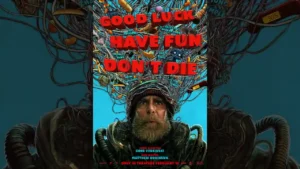
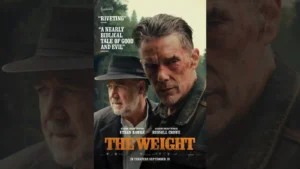
Good Luck, Have Fun, Don’t Die
Where It Has the Edge
No clear scored advantage over the other product.

Scorata scores summarize analyzed review evidence on a 1–5 scale; they are not laboratory measurements or a simple average of customer star ratings. Feature scores summarize the reviews covering that feature. The overall score averages feature scores within each review, then combines review averages. When both expert and customer evidence are available, those two groups receive equal weight. Products can have different review coverage, so small score gaps do not establish a winner.
Recommendations prioritize important features for the category, with a score of at least 3.5, a gap of at least 0.25 points and at least two supporting reviews per product. Features with widely varying scores or broad connectivity contexts are excluded from recommendations. These safeguards do not establish statistical significance.
Quick verdict
The available evidence supports the recommendation below, but does not establish an overall winner. Check the remaining features against your priorities.
There is not enough comparable review evidence to recommend Good Luck, Have Fun, Don’t Die over the other product.
Choose The Weight for value for money and lead performance.
No clear scored advantage over the other product.
Scores are out of 5. Missing scores mean missing review evidence, not a missing feature.
The music and end-credit material fit the film’s manic, darkly playful personality, with a few reviewers calling the soundtrack a strong tonal match.
The music choices outside the score are much more divisive, especially the anachronistic rock needle drop near the ending. A few viewers enjoy that choice, while several critics call it jarring or tonally wrong.
Sam Rockwell is the clearest consensus strength: charismatic, funny, manic, and emotionally frayed without turning the character into a one-note joke. Even mixed reviews often say he keeps the movie watchable.
Ethan Hawke's restrained, gravel-voiced turn is the clearest point of consensus, repeatedly described as the film's anchor and among his strongest recent work. The main reservation is that a few critics find him less convincing in full action-hero mode.
The performances are widely seen as a major strength, with the ensemble committing fully to the movie’s eccentric mix of comedy, anxiety, and heart. A few critics think the shifting tone leaves some actors less grounded.
The cast is widely praised for giving the rugged material credibility, with the strongest notices going to Ethan Hawke and several supporting players. Even more reserved assessments still describe the ensemble as solid.
The supporting cast is widely praised for fully committing to the film’s strange tone, with Haley Lu Richardson and Juno Temple receiving especially strong notices. A few roles are considered underused despite the talent involved.
Russell Crowe, Julia Jones, Avi Nash, Austin Amelio, and the broader ensemble receive frequent praise for adding menace, warmth, or personality around Hawke. Even reviews critical of the characters often distinguish the performances as strong.
Its dense ideas and details invite repeat viewing, with the appeal growing as the ending and themes are unpacked.
Rewatch interest is mixed and sparsely discussed: one critic predicts a long afterlife as a comfort-watch 'dad movie,' while others expect it to be remembered pleasantly rather than revisited often.
Enthusiastic reviewers call it worth the ticket price and particularly suited to a theatrical crowd, while more mixed reactions stop short of urging an immediate cinema trip.
Most direct recommendations say the film is worth seeking out, and several specifically encourage seeing its physical set pieces on a big screen. More qualified praise still frames it as worthwhile genre entertainment.
Most reviewers find it energetic, funny, and highly entertaining, often calling it a blast or a wild ride. A smaller group finds the experience exhausting, disjointed, or simply not entertaining enough to justify the length.
For many reviewers, the straightforward adventure delivers sturdy, old-school entertainment with enough peril and character interplay to stay engaging. More negative critics find it merely agreeable or weighed down by sluggish stretches.
The anti-AI and anti-distraction message feels timely, pointed, and emotionally relevant to many reviewers. Others find it repetitive, preachy, condescending, or less nuanced than its ambitious setup suggests.
Reviewers respond strongly to the film's ideas about labor, class, institutional power, greed, and solidarity. Even when the politics are called direct or blunt, the social message is generally seen as meaningful rather than disposable.
The dialogue has sharp one-liners, comic rhythms, and memorable verbal bits, but several critics think the script becomes overly expositional or obvious in the final stretch.
The dialogue is generally praised as sharp and purposeful, with several reviewers singling out the writing enough to want every line to land clearly. Even positive accounts note that some delivery can be very quiet.
The movie intentionally jumps between slapstick, grief, horror, action, and bleak satire. Many reviewers admire how boldly those tones coexist, while others find the shifts jarring, unstable, or exhausting.
The film's tone is a repeated concern, especially when its grim, punishing journey gives way to a sunnier resolution or an anachronistic musical flourish. Reviewers who raise the issue generally find those shifts mismatched.
The story wins praise for energy, ideas, and memorable character vignettes, but its central mission can feel thinner than the side stories. Reviewers most often disagree over whether the messy structure enriches or weakens the experience.
The core premise—a desperate father leading a dangerous gold transport—is often called a strong, well-told yarn with clear stakes. Less enthusiastic critics find the execution saggy, familiar, or weaker than the setup.
The dramatic material can land surprisingly hard beneath the absurd comedy, particularly around grief, isolation, and damaged relationships. Its tonal shifts make those beats powerful for some viewers and awkward for others.
The drama is strongest when the performances keep the human stakes grounded between bursts of action. Reviewers who mention these quieter scenes often find them among the film's best material.
Verbinski can generate real tension inside the comedy, especially in escape scenes and uncertain reality shifts. Some reviewers think jokes or detours repeatedly deflate that tension before it can fully build.
The bridge and river sequences generate the strongest agreement, with many reviewers describing them as gripping or nerve-racking. Still, a substantial minority feel the film never sustains the white-knuckle tension its premise suggests.
The editing helps organize rapid shifts between action, flashbacks, and surreal imagery, though the stop-start structure and long detours make the overall flow feel uneven to some reviewers.
Editing is a major point of disagreement: some critics call it sharp, intentional, or even stunning, while others say fast cuts and disjointed transitions make climactic action rushed or hard to follow.
The comedy is frequently praised as sharp, dark, and laugh-out-loud funny, especially when it turns modern anxieties into absurd set pieces. Some reviewers find the gallows humor mean, obvious, or ineffective.
Humor is used sparingly but effectively, with reviewers noticing both subtle comic touches in the script and lighter moments that relieve the otherwise grim trek.
The two-hour-plus runtime is the most repeated complaint. Even many positive reviewers say the film would be stronger with tighter trimming, especially around flashbacks and the extended finale.
The nearly two-hour length is a recurring drawback, with several reviewers arguing that tighter cuts would improve the film. One more positive assessment considers the 113-minute ride an uncomplicated, worthwhile use of time.
The ending is one of the biggest points of disagreement. Some like its open, strange, thematic finish, while others find the final act drawn out, confusing, over-explained, or less satisfying than the setup.
The finale divides opinion. Some find the hard-won resolution entertaining and emotionally earned, while others think its cheerful turn clashes with the story's darker themes or arrives too neatly.
The film’s camera work earns strong praise for inventive framing, movement, lighting, and a grubby blue-toned look that keeps the lower-budget production visually lively.
The wilderness photography is one of the most consistently praised crafts, with reviewers admiring its foreboding landscapes, period texture, and composed imagery. A few object to murky lighting, shallow focus, or claustrophobic framing.
As a sci-fi dark comedy, it embraces time travel, horror, action, satire, and surrealism with unusual confidence. Fans of weird genre mashups tend to respond much more strongly than viewers wanting a conventional thriller.
The film is widely seen as a satisfying throwback survival thriller, with its 1970s-style grit and character-driven adventure earning repeated praise. Even mixed reviews generally recognize the appeal of its old-fashioned genre approach.
The core time-travel and rogue-AI setup is familiar, yet many reviewers think the film finds a fresh angle through its bizarre vignettes and satire. Others see the story as too indebted to earlier genre landmarks.
Some viewers enjoy the story's surprises and resistance to cookie-cutter plotting, but others see predictable bones and familiar turns beneath the polished execution.
The opening is commonly praised for immediate momentum, but the flashback structure often slows the central mission. Many reviewers say the movie regains energy in bursts rather than sustaining it cleanly for the full runtime.
Pacing is one of the most divided attributes. Positive reviews praise sustained momentum and a confident clip, while critics of the film point to a long setup, a sagging middle, or an overlong runtime.
Character interplay is frequently enjoyable, with Sam Rockwell and Haley Lu Richardson singled out for strong chemistry and banter. Some relationships feel less developed than the performances themselves.
The strongest relationship work comes from the believable camaraderie and friction within the group and the understated connection between Murphy and Anna. A few reviews find some alliances too thinly developed.
Despite the manic premise, the film repeatedly finds real sadness and heart in grief, loneliness, and the desire for human connection. Susan and Ingrid’s material is most often cited as the emotional core.
Murphy's separation from his daughter gives the film a strong emotional anchor, and several critics find the opening or quieter character beats genuinely affecting. Others feel the movie pushes the pathos too hard or leaves emotional potential underdeveloped.
Its sci-fi events are intentionally absurd, but the social behavior underneath them often feels uncomfortably plausible and recognizable. That near-future familiarity gives the satire much of its sting.
The grounded locations, practical texture, and believable problem-solving often make the danger feel immediate. However, a few major set-piece choices—especially the bridge solution—are criticized as forced or implausible.
Gore Verbinski’s direction is mostly praised for energy, visual invention, and control of the film’s chaos. Critics who are cooler on the movie still often credit his staging, even while calling the result overlong or indulgent.
Padraic McKinley's debut is frequently praised for confidence, atmosphere, and physical staging, especially in the survival set pieces. Dissenting reviews fault uneven visual choices, limited suspense, or action coverage that sacrifices clarity.
The film has substantial ideas about grief, distraction, technology, authenticity, and choosing painful reality over comforting simulation. Reviewers disagree on how deeply those ideas are explored versus loudly stated.
Many critics appreciate the survival story's deeper interest in class, labor, greed, solidarity, fatherhood, and institutional cruelty. Others find those ideas blunt, shallow, or insufficiently explored.
The flashback chapters give several recruits memorable emotional context, especially Susan and Ingrid. Reviewers also note that some supporting characters remain thin and that the backstories can interrupt momentum.
Some reviews find the travelers distinct, sympathetic, and well-defined enough for their changing dynamics to matter. Others see thin archetypes, an over-idealized protagonist, and underwritten supporting characters.
The screenplay is admired for ambition, sharp satire, funny ideas, and inventive structure, but it is also the main target of criticism for repetition, overstuffing, exposition, and uneven late plotting.
The script earns praise for its premise, momentum, character relationships, and class themes, but reactions are uneven. Critics of it point to contrivances, thin secondary characters, forced beats, and shortcuts in the final act.
The action is often praised for kinetic staging, readable movement, and oddball set pieces. Some reviewers find the later action less exciting or too dependent on chaotic spectacle.
The physical set pieces—especially the rope bridge, river crossing, and later confrontations—are often tense, tactile highlights. A minority find some action confusingly cut, implausible, or less exciting than the setup promises.
The basic mission is easy enough to follow, but dream logic, shifting reality, and late reveals make the larger mechanics deliberately slippery. Some enjoy that uncertainty; others find the logic inconsistent or confusing.
Several reviewers report moments of confusion, especially during fast-cut action or late-story developments. The underlying mission remains simple, but visual and narrative transitions sometimes make execution harder to follow.
The score is praised for shifting between ominous electronic textures and bigger orchestral energy without losing the movie’s playful, anxious tone.
The metallic, propulsive score is often praised for adding dread, momentum, and scale to the journey. Some critics find it distracting, overbearing, or stylistically out of place.
The practical effects blend nearly seamlessly with the visual effects, helping the movie’s handmade chaos feel cohesive.
Real locations and tactile, practical filmmaking are praised for giving the danger physical credibility and a rugged texture that more polished studio action can lack.
The sound design is singled out for how fully it reinforces the film’s heightened comic-sci-fi identity and recurring title motif.
Creaking forests, environmental texture, and impact-heavy action sound are frequently praised for increasing immersion and tension. One notable complaint is a dialogue mix so quiet that lines become difficult to hear.
The production design turns modest locations into a vivid, grimy, surreal world, with the diner, future-tech props, AI room, and bizarre creatures giving the film a distinctive personality.
Sets, period vehicles, worn environments, and other production details are consistently credited with making the Depression-era world believable and textured.
The film’s look is one of its most consistent strengths: grimy, blue-tinged, kinetic, surreal, and packed with odd imagery. Even mixed reviews often credit its visual personality.
The weathered 1970s throwback look, natural environments, and period imagery are frequently admired. Critics who dissent complain about overly murky images, shallow focus, or stylized framing that distracts from the action.
The strange anti-tech world is compelling enough to inspire interest in spending more time with the premise and its characters.
The 1933 wilderness and labor-camp setting are often described as immersive, lived-in, and carefully developed, giving the heist real social and physical context.
The costumes help sell the movie’s handmade, surreal personality, especially the Man from the Future’s improvised plastic-and-wires outfit and Ingrid’s battered princess look.
Period clothing, especially the worn workwear and denim, is repeatedly credited with helping the 1933 setting feel lived-in and authentic.
Its oddball style has clear cult-movie potential and many reviewers recommend seeing it with a crowd. The same weirdness, blunt satire, and long runtime make it an acquired taste rather than a universal crowd-pleaser.
Several critics describe the film as crowd-pleasing, theater-worthy adult entertainment, particularly for viewers who miss old-fashioned survival adventures. Others think its slow stretches make streaming a better fit.
The UHD transfer is praised for razor-sharp detail, clean imagery, strong texture, and a cool-toned grade that suits the movie’s look.
The CG is divisive: some like the deliberately strange, AI-slop look of the creatures and finale, while others call parts of it rough or distracting.
Anna's assimilation history gives the film some meaningful cultural texture, but multiple reviewers criticize the Native character's narrative function or say the racial politics are too bluntly handled.
The quiet connection between Murphy and Anna works best when treated as mutual respect and tenderness rather than a conventional romance. Several critics, however, find the romantic thread unnecessary, thin, or underdeveloped.
The movie is more unsettling than traditionally frightening, using horror imagery, technology anxiety, and disturbing social ideas to create discomfort. Viewers wanting straightforward scares may find the tone too comic or surreal.
The effects are generally viewed as imaginative and resourceful for the scale, especially the surreal creatures and action imagery. Some late digital work looks deliberately or unintentionally rough, which splits opinion.
One reviewer approves of the rough, unglamorized handling of violence because it carries emotional impact rather than feeling like polished action spectacle.
The Atmos mix is described as bold and active, with deep bass, wide surrounds, directional effects, and strong action impact.
The period setting is largely praised for researched detail, convincing production texture, and Depression-era context. A few critics question specific historical or geographic choices, including how convincingly the Pacific Northwest is represented.

Choose this inventive, unsettling documentary for fearless questioning, dark humor, and unpredictable storytelling. Skip it if you want a short, straightforward exposé with definitive answers.
Pros: originality, humor

Extraordinary performances and richly observed relationships make this a rewarding, emotionally forceful drama. Its nearly three-hour length and slow opening demand patience and undivided attention.
Pros: class commentary, character development

Best for a hypnotic, bookish mystery with tactile visuals and cerebral chills. Skip it if reading-heavy, attention-demanding storytelling sounds more exhausting than exciting.
Pros: Atmosphere, cinematography
Cons: audience appeal

Best for an intimate, searching documentary that rewards focused attention and invites discussion. Skip it when devastating grief, addiction footage, and unresolved family tensions would be too much.
Pros: emotional impact, theme depth