Good Luck, Have Fun, Don’t Die
Where It Has the Edge
No clear scored advantage over the other product.

Scorata scores summarize analyzed review evidence on a 1–5 scale; they are not laboratory measurements or a simple average of customer star ratings. Feature scores summarize the reviews covering that feature. The overall score averages feature scores within each review, then combines review averages. When both expert and customer evidence are available, those two groups receive equal weight. Products can have different review coverage, so small score gaps do not establish a winner.
Recommendations prioritize important features for the category, with a score of at least 3.5, a gap of at least 0.25 points and at least two supporting reviews per product. Features with widely varying scores or broad connectivity contexts are excluded from recommendations. These safeguards do not establish statistical significance.
Quick verdict
The available evidence supports the recommendation below, but does not establish an overall winner. Check the remaining features against your priorities.
There is not enough comparable review evidence to recommend Good Luck, Have Fun, Don’t Die over the other product.
Choose The Way of the Gun for visual style and cinematography.
No clear scored advantage over the other product.
Scores are out of 5. Missing scores mean missing review evidence, not a missing feature.
Despite the manic premise, the film repeatedly finds real sadness and heart in grief, loneliness, and the desire for human connection. Susan and Ingrid’s material is most often cited as the emotional core.
The film’s refusal to make its leads sympathetic can leave viewers detached even when its action and dialogue impress.
The story wins praise for energy, ideas, and memorable character vignettes, but its central mission can feel thinner than the side stories. Reviewers most often disagree over whether the messy structure enriches or weakens the experience.
The kidnapping premise opens into a knot of shifting allegiances and motives. Some enjoy the complexity; others find the story overworked and unable to sustain its striking individual scenes.
The editing helps organize rapid shifts between action, flashbacks, and surreal imagery, though the stop-start structure and long detours make the overall flow feel uneven to some reviewers.
The film can feel overlong and overcomplicated, with transitions between action and plotting slowing the momentum. Some appreciate the deliberate pacing more than others.
The screenplay is admired for ambition, sharp satire, funny ideas, and inventive structure, but it is also the main target of criticism for repetition, overstuffing, exposition, and uneven late plotting.
The script is admired for sharp exchanges, layered betrayals and unconventional character choices. Its tendency to pile on complications leaves some critics feeling the cleverness overwhelms the story.
The flashback chapters give several recruits memorable emotional context, especially Susan and Ingrid. Reviewers also note that some supporting characters remain thin and that the backstories can interrupt momentum.
Surprising loyalties and shifting motives can make the characters feel richer as the story develops. Others see inconsistent decisions and too little believable personal growth.
The film’s camera work earns strong praise for inventive framing, movement, lighting, and a grubby blue-toned look that keeps the lower-budget production visually lively.
Still, observant camerawork contrasts with sudden violence, while dusty exteriors echo classic Westerns. Even some critics disappointed by the story admire the film’s visuals.
The score is praised for shifting between ominous electronic textures and bigger orchestral energy without losing the movie’s playful, anxious tone.
The restrained, Western-influenced orchestral score reinforces the dusty crime atmosphere. Its distinctive motifs also benefit from the remastered Atmos presentation.
The ending is one of the biggest points of disagreement. Some like its open, strange, thematic finish, while others find the final act drawn out, confusing, over-explained, or less satisfying than the setup.
The extended, blood-soaked climax delivers catharsis for some action fans but strikes others as overlong or emotionally empty. The protagonists’ uncertain fate is another point of division.
The opening is commonly praised for immediate momentum, but the flashback structure often slows the central mission. Many reviewers say the movie regains energy in bursts rather than sustaining it cleanly for the full runtime.
A striking opening and muscular finale are often separated by a slower, tangled middle act. Several critics find the two-hour film sluggish despite its frequent bursts of action.
The core time-travel and rogue-AI setup is familiar, yet many reviewers think the film finds a fresh angle through its bizarre vignettes and satire. Others see the story as too indebted to earlier genre landmarks.
Some regard the film as a distinctive revisionist Western, with inventive tactics and an abrasive personality. Others see too much borrowing from late-1990s crime cinema.
The action is often praised for kinetic staging, readable movement, and oddball set pieces. Some reviewers find the later action less exciting or too dependent on chaotic spectacle.
The low-speed car chase, tightly planned kidnapping and bloody final battle are frequent standouts. A minority find the extended gunplay repetitive or anticlimactic, but its staging is the film’s clearest attraction.
The dialogue has sharp one-liners, comic rhythms, and memorable verbal bits, but several critics think the script becomes overly expositional or obvious in the final stretch.
The highly stylized, quotable exchanges are a major attraction for admirers, especially the verbal sparring between seasoned criminals. Detractors call the lines overwritten, self-conscious or too eager to shock.
The two-hour-plus runtime is the most repeated complaint. Even many positive reviewers say the film would be stronger with tighter trimming, especially around flashbacks and the extended finale.
At nearly two hours, the film feels longer to viewers frustrated by its many subplots and drawn-out confrontations. The runtime is a frequent concern rather than a selling point.
The basic mission is easy enough to follow, but dream logic, shifting reality, and late reveals make the larger mechanics deliberately slippery. Some enjoy that uncertainty; others find the logic inconsistent or confusing.
Multiple schemes and hidden relationships reward attention but can be hard to follow. Several critics find the motivations inconsistent or the twists too convenient, while others appreciate how the pieces connect.
The UHD transfer is praised for razor-sharp detail, clean imagery, strong texture, and a cool-toned grade that suits the movie’s look.
The UHD restoration brings much sharper textures, more natural film grain, and stronger desert colors than earlier editions. A few softer shots and subdued interiors keep it from being a consistently showy transfer.
Verbinski can generate real tension inside the comedy, especially in escape scenes and uncertain reality shifts. Some reviewers think jokes or detours repeatedly deflate that tension before it can fully build.
Escalating betrayals and carefully controlled confrontations can keep the stakes tense. For those unable to connect with the amoral characters, the danger loses its grip.
Gore Verbinski’s direction is mostly praised for energy, visual invention, and control of the film’s chaos. Critics who are cooler on the movie still often credit his staging, even while calling the result overlong or indulgent.
Christopher McQuarrie shows a distinctive eye for gunfights, staging and performances in his debut. Critics differ over his control of the overall pace and crowded narrative.
Its sci-fi events are intentionally absurd, but the social behavior underneath them often feels uncomfortably plausible and recognizable. That near-future familiarity gives the satire much of its sting.
The gun battles favor credible movement, cover and consequences over flashy movie choreography. A few ballistics and plot details strain belief, but the grounded combat style earns unusually strong praise.
The comedy is frequently praised as sharp, dark, and laugh-out-loud funny, especially when it turns modern anxieties into absurd set pieces. Some reviewers find the gallows humor mean, obvious, or ineffective.
The movie uses grim, profane humor to puncture its hard-boiled seriousness. Its abrasive jokes and occasional absurdity are a strong taste rather than broadly accessible comedy.
Character interplay is frequently enjoyable, with Sam Rockwell and Haley Lu Richardson singled out for strong chemistry and banter. Some relationships feel less developed than the performances themselves.
The two leads play off one another effectively as wary partners, creating tension even when their characters are hardly sympathetic.
As a sci-fi dark comedy, it embraces time travel, horror, action, satire, and surrealism with unusual confidence. Fans of weird genre mashups tend to respond much more strongly than viewers wanting a conventional thriller.
It offers a bleak, hard-boiled take on crime and noir that some find refreshingly uncompromising. Other viewers consider the formula overly familiar and derivative.
The film’s look is one of its most consistent strengths: grimy, blue-tinged, kinetic, surreal, and packed with odd imagery. Even mixed reviews often credit its visual personality.
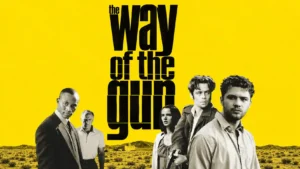
Dry landscapes, subdued colors and carefully composed confrontations evoke a gritty 1970s Western. The deliberate, unshowy look is an important part of its personality.
The sound design is singled out for how fully it reinforces the film’s heightened comic-sci-fi identity and recurring title motif.
Gunshots have heavy, realistic impact, and the action gains extra presence from strong bass and atmospheric effects. The contrast between restrained quiet passages and explosive battles is especially effective.
The production design turns modest locations into a vivid, grimy, surreal world, with the diner, future-tech props, AI room, and bizarre creatures giving the film a distinctive personality.
The seedy rooms, stark settings and convincingly staged spaces support the film’s modern-Western atmosphere without expensive spectacle.
The music and end-credit material fit the film’s manic, darkly playful personality, with a few reviewers calling the soundtrack a strong tonal match.
Music is used sparingly during several firefights, giving the gunfire a raw, immediate feel instead of making every encounter a conventional action spectacle.
The supporting cast is widely praised for fully committing to the film’s strange tone, with Haley Lu Richardson and Juno Temple receiving especially strong notices. A few roles are considered underused despite the talent involved.
James Caan is repeatedly singled out for his commanding, world-weary presence. The bodyguards and other supporting players also help make the criminal standoffs compelling.
The performances are widely seen as a major strength, with the ensemble committing fully to the movie’s eccentric mix of comedy, anxiety, and heart. A few critics think the shifting tone leaves some actors less grounded.
The cast earns considerable praise, particularly the understated work of Benicio del Toro and James Caan. A few critics struggle with Ryan Phillippe’s mannerisms or Juliette Lewis’s delivery.
The Atmos mix is described as bold and active, with deep bass, wide surrounds, directional effects, and strong action impact.
The Atmos mix gives gunfire powerful impact, clear dialogue and an expansive soundstage. Quiet scenes are less immersive, but the firefights make excellent use of a home theater setup.
Sam Rockwell is the clearest consensus strength: charismatic, funny, manic, and emotionally frayed without turning the character into a one-note joke. Even mixed reviews often say he keeps the movie watchable.
Benicio del Toro brings a restrained, watchful presence, while Ryan Phillippe offers a more aggressive counterpart. Their contrast works for many viewers, though Phillippe’s hard-boiled persona draws some skepticism.
Its dense ideas and details invite repeat viewing, with the appeal growing as the ending and themes are unpacked.
Admirers keep returning for its quotable exchanges and carefully staged violence, finding new details over time. Some initial enthusiasm fades when its limitations become more apparent.
Enthusiastic reviewers call it worth the ticket price and particularly suited to a theatrical crowd, while more mixed reactions stop short of urging an immediate cinema trip.
The 4K Steelbook is praised as a worthwhile upgrade, particularly for anyone still using the old DVD or Blu-ray. Its limited distribution makes the purchase less convenient and potentially expensive.
Most reviewers find it energetic, funny, and highly entertaining, often calling it a blast or a wild ride. A smaller group finds the experience exhausting, disjointed, or simply not entertaining enough to justify the length.
Viewers who respond to the film’s attitude find it engaging and frequently revisit it. Others see a frustrating mismatch between excellent isolated sequences and a cumbersome whole.
Ryan Phillippe’s affected vocal delivery is a sticking point for some critics, who find his accent distracting or unconvincing.
The older Blu-ray is criticized for heavy image processing and dated picture quality. The newer 4K transfer is a substantial visual improvement.
The edition includes substantial director and music commentaries alongside new production-design and firearms featurettes. Some archival cast interviews are fairly routine, but the overall selection is worthwhile.
Several performances feel sharply matched to the film’s abrasive tone, with particular enthusiasm for the principal cast and the memorable opening cameo.
The CG is divisive: some like the deliberately strange, AI-slop look of the creatures and finale, while others call parts of it rough or distracting.
Names, confrontations and desert images pay clear homage to classic Westerns. The references are most rewarding for viewers familiar with older outlaw films.
The remixed center channel keeps even quiet remarks intelligible, so the elaborate dialogue rarely gets lost under the soundtrack.
The dramatic material can land surprisingly hard beneath the absurd comedy, particularly around grief, isolation, and damaged relationships. Its tonal shifts make those beats powerful for some viewers and awkward for others.
Careful reloads, use of cover, weapon malfunctions and coordinated movement make the gunfights unusually convincing. Firearms specialists still notice a handful of errors, but tactical detail is a defining strength.
A modern kidnapping thriller is recast in the language of old Westerns, from desert landscapes to gunslinger showdowns. The combination gives the action an unusual identity beyond routine crime-movie conventions.
The extended shootings, bloody injuries and disturbing childbirth imagery make it a poor choice for viewers uncomfortable with graphic violence.
Inventive swearing entertains some viewers, but the repeated obscenities and derogatory slurs can feel gratuitous and unpleasant.
Distinctive dialogue, vivid action moments and unusual character confrontations linger long after viewing, including for critics who have reservations about the film as a whole.
The anti-AI and anti-distraction message feels timely, pointed, and emotionally relevant to many reviewers. Others find it repetitive, preachy, condescending, or less nuanced than its ambitious setup suggests.
The confrontational opening makes an immediate impression and sharply establishes the leads’ cruelty. Some find it memorably bold, while others consider its profanity and aggression unpleasant.
The lenticular sleeve and wraparound Steelbook artwork make the limited edition a handsome collectible, although getting hold of it can be inconvenient.
Reversals and double-crosses keep the criminal alliances unstable, which some find exciting and unpredictable. For others, the sheer number of turns becomes exhausting rather than surprising.
The practical effects blend nearly seamlessly with the visual effects, helping the movie’s handmade chaos feel cohesive.
The movie is more unsettling than traditionally frightening, using horror imagery, technology anxiety, and disturbing social ideas to create discomfort. Viewers wanting straightforward scares may find the tone too comic or surreal.
The effects are generally viewed as imaginative and resourceful for the scale, especially the surreal creatures and action imagery. Some late digital work looks deliberately or unintentionally rough, which splits opinion.
The deliberately slow vehicle pursuit and close-quarters firefights offer unconventional action beats. Careful movement and spatial staging make even modest-budget scenes memorable.
The film has substantial ideas about grief, distraction, technology, authenticity, and choosing painful reality over comforting simulation. Reviewers disagree on how deeply those ideas are explored versus loudly stated.
The movie intentionally jumps between slapstick, grief, horror, action, and bleak satire. Many reviewers admire how boldly those tones coexist, while others find the shifts jarring, unstable, or exhausting.
Graphic gunfire, a disturbing childbirth sequence and the aggression of the opening are central to the experience. Some accept the brutality as part of the film’s identity; others find particular moments unpleasant.
Its oddball style has clear cult-movie potential and many reviewers recommend seeing it with a crowd. The same weirdness, blunt satire, and long runtime make it an acquired taste rather than a universal crowd-pleaser.
The lead criminals are deliberately ruthless and unlikable; some find that honesty compelling, while others never develop a reason to care. Caan’s seasoned enforcer is a particular standout.
Its unapologetically early-2000s crime-movie attitude makes it a time capsule for admirers of that era, although its provocative language has aged poorly for some.
The deliberately literary narration exaggerates classic noir conventions, giving the story a knowingly artificial flavor rather than a naturalistic voice.
Weapon choices help distinguish generations and professions among the criminals, subtly conveying who these people are before they speak.
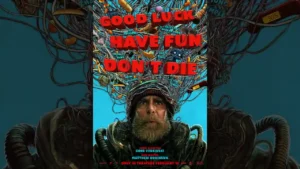
The costumes help sell the movie’s handmade, surreal personality, especially the Man from the Future’s improvised plastic-and-wires outfit and Ingrid’s battered princess look.
The strange anti-tech world is compelling enough to inspire interest in spending more time with the premise and its characters.
The comedy-heavy trailers are criticized for giving a misleading impression of a much bleaker and more violent crime drama.
The climactic shootout feels impressively large and intricate despite the film’s relatively modest budget.

Choose this inventive, unsettling documentary for fearless questioning, dark humor, and unpredictable storytelling. Skip it if you want a short, straightforward exposé with definitive answers.
Pros: originality, humor

Extraordinary performances and richly observed relationships make this a rewarding, emotionally forceful drama. Its nearly three-hour length and slow opening demand patience and undivided attention.
Pros: class commentary, character development

Best for a hypnotic, bookish mystery with tactile visuals and cerebral chills. Skip it if reading-heavy, attention-demanding storytelling sounds more exhausting than exciting.
Pros: Atmosphere, cinematography
Cons: audience appeal

Best for an intimate, searching documentary that rewards focused attention and invites discussion. Skip it when devastating grief, addiction footage, and unresolved family tensions would be too much.
Pros: emotional impact, theme depth