Obsession
Where It Has the Edge
- editing quality is 4.8 vs 4.3. Editing is praised for economy, sharp rhythm, and knowing when to linger versus strike suddenly. Reviewers credit the...

Scorata scores summarize analyzed review evidence on a 1–5 scale; they are not laboratory measurements or a simple average of customer star ratings. Feature scores summarize the reviews covering that feature. The overall score averages feature scores within each review, then combines review averages. When both expert and customer evidence are available, those two groups receive equal weight. Products can have different review coverage, so small score gaps do not establish a winner.
Recommendations prioritize important features for the category, with a score of at least 3.5, a gap of at least 0.25 points and at least two supporting reviews per product. Features with widely varying scores or broad connectivity contexts are excluded from recommendations. These safeguards do not establish statistical significance.
Quick verdict
The review evidence points to a tradeoff: editing quality versus supporting cast performance and production design. Choose according to which strengths matter more to you; the overall score alone does not settle that choice.
Choose Obsession for editing quality.
Choose Victorian Psycho for supporting cast performance and production design.
Scores are out of 5. Missing scores mean missing review evidence, not a missing feature.
The runtime is a recurring weakness in the direct assessments, with critics calling the film overlong and arguing that its tension does not always justify the full length.
The roughly 90-minute length is praised as tight, keeping the film compact even as other aspects of the final act draw criticism.
The one direct assessment of character chemistry is negative, criticizing the main group for feeling artificial and showing little chemistry.
Winifred’s interactions generate some of the film’s best character energy, from a strong scene partnership with Mr. Pounds to a bond with Miss Lamb that rapidly turns from sisterly sweetness toward dangerous obsession.
The reviewers who directly assess plot originality praise the film for pushing a familiar wish-gone-wrong structure into a fresh, modern extreme.
One assessment finds the plot notably predictable and unambitious even when Monroe herself remains hard to anticipate. The lead performance supplies more unpredictability than the story mechanics do.
The film’s slow-building dread and claustrophobic tension are among its most consistently praised qualities. Reviewers often highlight framing, pacing, and sound as working together to keep the pressure rising.
Suspense is one of the biggest fault lines: one take praises the film for building intense unease through atmosphere and unreliable perspective, while others say narration and predictable buildup drain surprise, stakes and tension.
Dialogue reactions are split: one reviewer praises believable natural delivery, while another dismisses the writing as shallow TV-writers’-room cleverness.
Winifred’s inner monologue and narration are frequently singled out as funny, compelling and revealing, while the script also lands witty social gags. The voiceover is one of the clearest sources of the film’s comic personality.
The story is usually praised as an efficient, compelling use of a simple premise, though one mixed review regards the overall movie as merely okay rather than transformative.
The basic story can be exciting, macabre and engaging, but several reactions think Monroe and Winifred are more interesting than the plot itself. Late revelations, thin secondary plotting and muted payoff keep the narrative from matching the strength of the central performance.
Genre satisfaction is extremely strong. Horror-focused reviewers repeatedly call it a standout, favorite, or top-tier modern horror film, especially for its blend of dread, gore, comedy, and psychological discomfort.
As a period horror-comedy, the film is highly divisive: some call it a near-perfect, wickedly funny Gothic ride, while others find it neither scary nor funny enough. Its success depends heavily on whether the viewer clicks with its deliberately odd horror-comedy register.
Most reviewers find the film genuinely scary, praising its dread, sudden shocks, and unsettling behavior over routine jump-scare mechanics. A minority report that some early scares play as silly or unintentionally funny.
The horror impact varies sharply by taste: some moments and performances are described as genuinely terrifying or disturbing, while another assessment says the movie is never remotely frightening. It leans more on unease, grotesquerie and character behavior than conventional jump scares.
Ending reactions lean positive, with several reviewers calling the finale satisfying, brutal, smart, or perfect. Dissenters criticize indecision, rushed denouement, or a failure to fully stick the landing.
The finale is the most disputed part of the movie. Some find the twist, coda or final spree satisfying, while several others say the last act loses steam, waters down the carnage or stops short of the catharsis the buildup promises.
The themes around consent, agency, loneliness, entitlement, and distorted ideas of love are widely viewed as substantial and resonant. Some reviewers wish the film followed those ideas further.
The gender, class and sanity themes can be sharp, playful and surprisingly nuanced, especially when the film avoids turning Winifred into a simple symbol. Skeptics feel the same ideas stay too shallow, weightless or diluted by the movie’s rushed and comic approach.
Barker’s direction is widely praised for confidence, timing, restraint, and command of dread. A sharply dissenting review finds the visual direction banal and aesthetically thin.
Zachary Wigon’s direction sharply divides opinion: several assessments praise his precision, visual control and handling of actors, while others fault him for weak buildup and a restrained payoff. The craft is rarely dismissed, but the final impact is contested.
Editing is praised for economy, sharp rhythm, and knowing when to linger versus strike suddenly. Reviewers credit the cutting with helping the slow burn stay destabilizing.
The murder sequences can be elegantly and amusingly cut, giving the violence comic snap. Later, more frantic editing is more divisive, though its escalating intensity is still seen as purposeful.
The horror-comedy balance works very well for some reviewers, who admire the jarring shifts and control. Others experience tonal whiplash or need much of the runtime before the humor and horror feel balanced.
The horror-comedy balance is either a major strength or the film’s central flaw. Some find the mix of gore, absurdity and Gothic mood impressively controlled; others see an awkward hybrid whose actors and scenes seem to belong to different movies.
Pacing is one of the clearest tradeoffs. Some praise a deliberate slow burn and tight editing, while others find the second act uneven, the progression insufficiently signposted, or the film somewhat drawn out.
Pacing is split: energetic takes praise the manic momentum or say the film never slows, while others feel the final chapters overstay their welcome, the middle meanders or the movie drags before finding its footing.
Originality is debated: several reviewers call the execution fresh and distinctive, while others stress that the Monkey’s Paw foundation is familiar or not groundbreaking.
Several reactions see a fresh, unusually playful mix of female-rage satire, Gothic horror and black comedy, helped by inventive presentation. More skeptical takes view the mad-governess premise as familiar, so the freshness comes more from execution than the basic setup.
Cinematography is strongly praised for shadow-heavy compositions, claustrophobic framing, and precise lighting. Even a mixed visual assessment acknowledges clever tricks within the low-budget presentation.
The camera work is a major strength, using canted angles, wide lenses, unusual viewpoints and restless movement to mirror Winifred’s instability. Even a harsh overall assessment credits the off-kilter lensing with creating atmosphere.
Character work earns praise when the friend group and Bear’s flaws feel lived-in and revealing, but some critics find Nikki’s arc too linear or the ensemble underwritten.
Winifred is widely seen as a vivid, memorable antihero whose tics, inner voice and flashes of fragility make her compelling. The main criticism is that she starts at such an extreme pitch—or gets softened so late—that her arc can lose room to build.
Practical effects are praised for being gnarly, committed, and tactile, with gore that makes the film’s bursts of violence feel immediate rather than polished away.
The practical gore is a standout, with the kills described as wonderfully tactile and among the film’s crown jewels. The physical effects help the violence feel more satisfying when the movie chooses to show it.
The synth-heavy score is repeatedly praised as haunting, gorgeous, atmospheric, and crucial to the film’s escalating dread. Reviewers often describe it as one of the production’s standout elements.
Ariel Marx’s score is consistently praised for its lyrical, stormy and theatrical qualities. Strings, whispers and darker orchestral textures help intensify Winifred’s descent and reinforce the Gothic atmosphere.
The screenplay is divisive. Supporters praise tight, memorable writing and thematic intelligence, while detractors flag repetition, missing connective tissue, weak character logic, and incomplete ideas.
The script draws praise for wit, surprise and a smart page-to-screen foundation, but it also takes criticism for heavy narration, late-reveal structure and a first-draft feeling in its escalation. The final-act writing is the most common weakness.
The violence is generally praised when it arrives suddenly and earns its shock, but one critic finds a prolonged murder more cartoonish than nauseating. The brutality is a feature for gore-friendly viewers, not a neutral content count.
The bloody content is welcomed when it arrives, with practical kills and grotesque imagery earning praise. The recurring complaint is not excess but restraint: several assessments think the film promises a wilder bloodbath than the climax actually delivers.
Plot clarity is a recurring weakness around timing and supernatural rules. Reviewers cite confusing chronology, overly explained moments, and wish mechanics that are never fully laid out.
One key criticism is that Winifred’s deeper motive is withheld until the last act, leaving the story less coherent than it might have been if that information had tied the tonal halves together earlier.
Reviewers praise the film’s message about coercion, objectification, selfish desire, and the difference between love and possession, often noting that the ideas emerge through the horror rather than lectures.
The social commentary works best when it lets Victorian hypocrisy and class cruelty speak through the story rather than turning into a lecture. Its critique is described as sharp while remaining embedded in the Gothic comedy.
Dark comedy generally complements the horror and gives the film a wicked, uncomfortable energy. Some reviewers, however, find certain laughs unintentional or the humor cruel rather than controlled.
The darkest jokes, absurd line readings and class satire land strongly for many, sometimes making the comedy one of the film’s biggest pleasures. Others find the humor too arch, too self-aware or simply not funny enough to support the genre blend.
The make-up effects receive emphatic praise for convincing gore that earns the film’s age rating without feeling merely splashy.
The makeup is praised for keeping Winifred appropriately imperfect rather than overly polished, with small details such as flyaway hair helping the period character feel lived-in.
The One Wish Willow mythology divides reviewers. Some like its spare, suggestive rules, while others find the supernatural logic underexplained, inconsistent, or frustratingly underdeveloped.
The strange version of 1858 England feels vivid and distinctive, blending rigid manners, class cruelty and modern-feeling attitude inside a lavish Gothic household. The setting is described as fascinating even when the story is not fully engaging.
The visual approach is usually praised for muted palettes, deep shadows, retro texture, and unnerving compositions. A notable dissent calls the look aesthetically flat and uninteresting.
The film’s Gothic look is consistently strong, combining candlelit interiors, crooked framing, dreamlike imagery and lush period decay. Even negative assessments often separate the striking visuals from their complaints about story and tone.
Production design earns positive notices for small, convincing details and a tactile low-budget look that supports the film’s strange, decaying atmosphere.
Ensor House and its decaying Victorian grandeur are among the film’s most consistent strengths. Lavish rooms, Gothic embellishments and period detail make the setting visually rich even for assessments that dislike the story or tone.
Supporting performances are generally seen as grounding the central nightmare, with particular praise for Megan Lawless and Cooper Tomlinson. A few critics find parts of the ensemble rough or wooden.
The supporting ensemble is broadly well regarded, with Ruth Wilson, Jason Isaacs, Jacobi Jupe, Evie Templeton and Thomasin McKenzie receiving particular praise across the coverage. The younger performers are especially effective at mixing entitlement, vulnerability and menace.
Performances are one of the film’s clearest strengths: most reviewers praise the cast’s commitment and control, though a few find some early or supporting work awkward.
The ensemble is often praised for committing fully to the film’s heightened horror-comedy, though one negative take finds the cast’s styles too mismatched. Even skeptical reactions generally see the performers as stronger than the material around them.
The central performances draw exceptional praise, especially the volatile, physically expressive work around Nikki and the anxious, compromised portrayal of Bear. Even mixed reviews often single out the leads.
Maika Monroe is the strongest point of agreement, repeatedly described as fearless, commanding, funny, chilling and even career-best. A minority finds her miscast or not fully convincing in villain mode, but the consensus on her commitment is overwhelmingly positive.
Rewatch interest is mostly positive, with viewers wanting to revisit the film or buy it, though one second viewing made its repetitive structure more noticeable.
One especially enthusiastic reaction wanted to spend another two hours with Winifred wandering Ensor House, a strong sign that the central character and setting can inspire repeat-viewing enthusiasm.
Entertainment value is very high for most reviewers, who call the film a blast, a crowd-pleaser, or a morbid joy even when the experience is deliberately uncomfortable.
Reactions range from a wildly fun, blood-soaked good time to a frustrating experience that should be much more entertaining than it is. Even many mixed takes agree that Monroe’s presence keeps the film watchable when the plot or tone wobbles.
Audience appeal is strongest as a communal horror experience: reviewers describe it as a must-see crowd movie that invites discussion, repeat attendance, and watching with friends.
Gore-loving and Gothic-horror audiences are the clearest fit, with one take strongly recommending it to fans of psychological horror and black comedy. Broader crossover appeal looks shakier because the goofy quips and uneven genre mix may be divisive.
The digital visual effects support Winifred’s slipping grip on reality without dominating the film, but some shots are criticized for looking over-glossy next to the stronger practical work.
Reviewers value how the film connects its horror to contemporary loneliness, gender anxiety, and modern relationship dynamics, giving the old wish premise a distinctly current social frame.
Reviewers repeatedly describe the film as sad, haunting, upsetting, or emotionally bruising, with the trapped-Nikki material giving the horror unusual emotional weight.
The adaptation earns praise for carrying over the novel’s storybook structure while making use of film language. Other reactions argue that some changes dilute the book’s darkest impulses, or conversely that the movie stays too attached to suggestion from the source.
Winifred’s bond with Miss Lamb moves quickly from sisterly warmth toward dangerous fixation, and that escalating relationship is praised for how rapidly and entertainingly it changes shape.
Several reviewers value how grounded the characters and relationship dynamics feel despite the supernatural premise. One major dissent argues the characters feel artificial and unrelatable.
One review directly praises the film’s treatment of love as curdled, self-centered possession, finding the relationship horror effective precisely because it rejects conventional romance.
Special-effects reactions are mixed: one violent effect looks weak enough to draw criticism, while another review finds the exaggerated effects cartoonish in an enjoyable way.
The period wardrobe consistently strengthens the Victorian setting, from severe governess blacks to more lavish dresses. The costuming is repeatedly folded into praise for the film’s polished Gothic visual identity.
Sound design is a major strength, with reviewers describing the audio as masterful, immersive, and precisely timed to make quiet scenes and shocks physically tense.
The period recreation earns direct praise for convincingly evoking 19th-century England through the estate, candlelit spaces, wardrobe and Gothic architecture. Elsewhere, a few deliberate anachronisms are treated as comic flourishes rather than a major flaw.
The film is described as delivering the socially charged, bloody dark-comedy experience it advertises, even if the escalation does not push as far as that assessment wanted.
The soundtrack receives a mild criticism: the pop selections are considered less inspired than the film’s much more celebrated original score.
One enthusiastic reviewer says the theatrical experience was worth more than the ticket price and would gladly pay to see it again.
Best for pristine archival footage, immersive sound, and a surprisingly tense look at Disneyland’s construction. Skip it if you want a comprehensive, deeply critical history; several reviewers found the 78–79-minute...
Pros: plot clarity, realism
Cons: plot originality, runtime
Best for an intimate, inventive archival portrait with strong emotional and cultural impact. Skip it if substantial nudity or an occasionally wandering biographical structure will frustrate you.
Pros: chemistry between characters, emotional impact
Cons: runtime, plot clarity
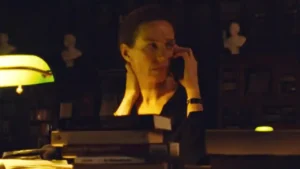
Best for an audacious, text-driven conspiracy thriller with gorgeous 16mm atmosphere and mounting dread. Skip it if long stretches of reading, deliberate repetition, and an intentionally austere narrative sound more...
Pros: story quality, plot clarity
Cons: chemistry between characters, sound design
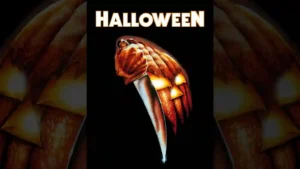
Best for slow-burn suspense, iconic synth music, and shadow-soaked filmmaking that still feels influential. Skip it if you need fast pacing, polished sound, consistently natural dialogue, or modern gore-heavy kills.
Pros: chemistry between characters, directing quality
Cons: sound design, dialogue quality