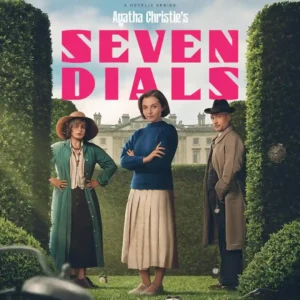

Agatha Christie’s Seven Dials, Season 1
Where It Has the Edge
- character appeal is 5.0 vs 2.3. Bundle is consistently described as feisty, curious, determined, and easy to root for. Even mixed reviews often treat...

Scorata scores summarize analyzed review evidence on a 1–5 scale; they are not laboratory measurements or a simple average of customer star ratings. Feature scores summarize the reviews covering that feature. The overall score averages feature scores within each review, then combines review averages. When both expert and customer evidence are available, those two groups receive equal weight. Products can have different review coverage, so small score gaps do not establish a winner.
Recommendations prioritize important features for the category, with a score of at least 3.5, a gap of at least 0.25 points and at least two supporting reviews per product. Features with widely varying scores or broad connectivity contexts are excluded from recommendations. These safeguards do not establish statistical significance.
Quick verdict
The review evidence points to a tradeoff: character appeal versus critic appeal. Choose according to which strengths matter more to you; the overall score alone does not settle that choice.
Choose Agatha Christie’s Seven Dials, Season 1 for character appeal.
Choose Interview With the Vampire, Season 3 for critic appeal.
Scores are out of 5. Missing scores mean missing review evidence, not a missing feature.
The Seven Dials organization is an intriguing idea that never feels fully developed. Its buildup suggests a weightier secret society than the eventual explanation provides.
The season expands vampire mythology while tying new supernatural material back to the core relationships, making the world feel broader without abandoning character stakes.
The show’s effectiveness is not credited to originality; one favorable reviewer explicitly says the story itself is not what makes it work.
The rock-tour documentary, layered narration, and unstable point of view are widely praised as fearless reinvention rather than a repeat of the first two seasons.
Twists are a major weakness in many reviews because suspects or reveals can be spotted too early. A few critics enjoy the final surprises, but predictability is one of the most repeated complaints.
The season delivers frequent surprises and several jaw-dropping turns, with its biggest reveals generating strong excitement even among mixed reviews.
Editing contributes to the show’s modernized feel in ways that do not always suit the 1920s material. One critic specifically disliked how the visual editing pulled the period piece toward a contemporary look.
Rapid cutting is often praised for matching Lestat’s manic perspective and musical energy. The speed can be demanding, but the edit is repeatedly treated as purposeful rather than careless.
The master-villain material is a low point for the harshest critic, who finds the reveal melodramatic, cartoonish, and far too predictable.
Armand’s antagonist turn is polarizing: one review celebrates a series-best Big Bad performance, while another finds the escalation cartoonish and insufficiently earned.
Tone is the show’s most consistent criticism. The mixture of cozy comedy, grief, espionage, modern attitudes, and melodrama often feels uneven or off-kilter, even to reviewers who otherwise enjoy the series.
The shift from melancholy period drama to flamboyant rock camp is the season’s most visible gamble. Most reviewers think it suits Lestat and retains the show’s emotional core, while others find it jarring, messy, or superficial.
Sexual content is restrained, with promiscuity kept to a minimum. That restraint contributes to the show feeling more approachable than many streaming murder mysteries.
Explicit sexuality is part of the show’s established identity, but the mother-son sexual material draws strong criticism from several reviewers who find it excessive, gross, or used for shock.
The added political material sharply divides critics. Some welcome the contemporary themes of empire, war, and gender, while others find the 21st-century framing forced and out of place in Christie’s lighter story.
Updating the story to the mid-2020s is praised for letting Lestat collide with contemporary culture and topical references in a way that feels specific to this version.
The central story is the biggest structural weakness in the overall response. Admirers find enough character-driven entertainment to enjoy, but many critics call the mystery dull, minor, poorly shaped, or simply not strong enough for three hours.
Overall story reception is strongly positive but not unanimous. Many call the season gripping or among TV’s best, while harsher critics see a shallower, overstuffed detour from the strengths of earlier seasons.
The opener has a promising setup but uneven execution. Some critics like its initial mystery and atmosphere, while others find Bundle underdeveloped or the pacing too slow.
The premiere is mostly received as an audacious, highly entertaining reset, with several calling it exceptional. A few find it loose, disorienting, or overstimulating.
The screenplay draws opposite reactions: one critic praises how clearly it motivates Bundle, while another faults it for lacking narrative discipline. The script’s character focus works better than its mystery construction for some viewers.
The script’s speed and wit are praised as a major strength, packing dense ideas and character beats into fast-moving scenes.
The dry British wit and character banter can be genuinely funny, especially around Battle and Bundle. Slapstick and overly snarky comedy are more divisive, with some critics saying they drain menace or clash with the story’s darker turns.
The comic turn is one of the reinvention’s biggest successes for many reviewers, from mock-rockumentary banter to Lestat’s absurd self-seriousness. A minority finds some of the silliness tonally jarring.
The harshest reviews blame the direction for frustrating or inexplicable creative choices, especially when potentially interesting framing gives way to more mundane execution.
The premiere’s psychedelic direction is a weak spot for one reviewer, who finds the drug-trip imagery too aggressive to follow alongside the already dense narration.
Adding grief and family trauma gives the mystery more emotional weight, but the effect is divisive. Some find the added depth moving, while others think it makes a light Christie story unnecessarily angry or tragic.
Beneath the camp and spectacle, the season is repeatedly described as heartbreaking, devastating, and unexpectedly moving. Claudia’s grief, Lestat’s trauma, and the Louis–Lestat material drive the strongest reactions.
The adaptation takes substantial liberties, and reactions depend on whether those changes feel purposeful. Some praise the emotional depth and Christie spirit, while purists and harsher critics think the changes undermine the novel’s tone or ending.
The adaptation is broadly praised for preserving Anne Rice’s spirit while making bold changes. The largest source-material objections focus on Gabriella and several altered character histories.
The explicit push toward a larger Seven Dials universe lands badly with the critic who focuses on it, who sees the franchise setup as intrusive rather than exciting.
This is emphatically a third season rather than a clean restart. Multiple reviewers warn that newcomers will be lost, and one also objects to wider Immortal Universe connections feeling increasingly necessary.
Bundle’s more emotional, grief-driven characterization gives her stronger motivation, but not everyone likes the tradeoff. One critic found the character writing weak, while another saw the added emotional focus as a meaningful improvement.
The season substantially deepens Lestat and gives several returning characters meaningful emotional turns. Criticism centers on newer or secondary characters whose arcs feel compressed or insufficiently explained.
Suspense works well for viewers who respond to the atmosphere, sound, and brisk stretches, but multiple critics say the low stakes, obvious culprit, or heavy comedy reduce tension. The result is more intriguing than consistently gripping.
The season’s escalating tour danger, vampire conflict, and major late-episode reveals create strong edge-of-the-seat momentum.
As a cozy or light mystery, the series often works better than it does as a demanding whodunit. Fans of breezy Christie-style entertainment may enjoy it, but critics seeking a sharper puzzle or more menace are less satisfied.
As gothic camp, rock opera, melodrama, and supernatural horror, the season’s genre blend is widely praised as bold, strange, and emotionally potent.
The central mystery is frequently criticized as either overcomplicated, choppy, or too loosely connected. A few critics appreciate the streamlined adaptation, but the overall pattern points to clarity problems.
The nonlinear approach works for viewers who enjoy assembling the pieces, but newcomers and some returning viewers find it head-spinning. Later context and rewatches clarify scenes that initially seem opaque.
The photography divides opinion more than the production design: Ronda, Chimneys, trains, and period interiors can look gorgeous, but some critics dislike flat yellow lighting, portrait-style blur, or other modern visual choices.
Close-ups and concert photography draw strong praise, with musical performances benefiting from expressive framing, stage light, and intimate character-focused shots.
Three episodes sounds ideal on paper, but reviewers split on whether the story justifies all three hours. Some call the length perfect for a binge, while others insist the material belongs in a much shorter film.
The seven-episode order is a recurring concern. Several reviewers argue an eighth episode or a fuller season would have given major plotlines and the promised concert more room to breathe.
At the season level, pacing is more often criticized than praised. Even where the story moves quickly, detractors feel the overall three-hour shape is stretched, while one positive review credits the expeditious pace for keeping weaker plotting entertaining.
Pacing is the most repeated structural tradeoff: the breakneck energy suits Lestat, but the short season can feel rushed, overstuffed, or uneven as it moves among many timelines and characters.
The ensemble often feels overcrowded or unevenly used. Several critics found semi-prominent characters forgotten, blurred together, or introduced without enough time to matter.
Lestat’s dominance works for many viewers, but the supporting cast is unevenly served. Established characters stay compelling while several new band members and mythology figures feel thin or underused.
The three-part format is widely seen as easy to binge, with several critics describing it as a one-sitting watch. Even a negative review conceded that its short runtime gives it some background-viewing appeal.
The dense, propulsive episodes inspired TV-hangover reactions and strong binge enthusiasm, though the amount of information can make the experience intense.
Despite mixed opinions on season one, many reviewers want another Bundle adventure. Enthusiasm for a continuation is driven largely by the lead character and cast, though one critic questions whether this first case is strong enough to sustain a franchise.
Even reviewers discussing unresolved questions express strong interest in continuing, with explicit enthusiasm for another season and the larger supernatural story.
The dinner-table material around colonialism and war adds poignancy and gives Dr. Matip’s story greater weight. Its broader political handling is more divisive, but this specific thread landed emotionally for one critic.
The series’ race-conscious reinvention of Louis and Claudia continues to earn praise for expanding the world’s perspective, though one later Claudia scene drew concern about how a racialized insult was handled.
At its best, the show balances grief, danger, comedy, and family tension without losing its caper energy. Positive reviews especially like the heart and high-stakes drama around Bundle and Lady Caterham.
The strongest grief and trauma storylines retain the dramatic gravity of earlier seasons, even for reviewers who find the overall reinvention messier.
The ending is one of the most divisive elements. Some viewers find the payoff satisfying, but many critics dislike the changed reveal, unresolved threads, or franchise setup and see the finale as a major weakness.
The finale sharply divides opinion. Some appreciate its thematic closure and perspective shift, while others see it as an underwhelming bookmark that postpones the concert and apocalypse payoff.
The three-part structure works well for some viewers because it gives the mystery room without losing momentum. Others note that the episodes still behave like sections of a single feature film.
The season’s best episodes balance trauma, romance, humor, and vampire politics with confidence. Weaker installments feel less focused, making the episode-to-episode consistency uneven.
The 1920s setting is visually convincing in places, but modern behavior, dialogue, styling, and faux-English touches repeatedly break the illusion. When the production leans on lived-in period detail rather than overt modernization, it fares much better.
Historical detail is less consistently convincing than in the first two seasons, making some liberties in Lestat’s earlier life more noticeable.
Themes of war, grief, modernity, gender, and empire give the adaptation more weight than a simple cozy caper. Some critics admire that ambition, while others feel there are too many ideas for three episodes to explore properly.
The show continues to dig into memory, performance, guilt, failure, trauma, and the need to be loved. Several reviewers see those themes as the substance that keeps the maximalist presentation emotionally grounded.
Dialogue is a major split point: some critics enjoy the witty, old-fashioned banter, while others find it plot-heavy or jarringly modern. The best exchanges add charm; the weakest feel like exposition.
The writing remains sharp, dense, and layered at its best, especially in relationship scenes. Some reviewers find Lestat’s rock-star monologues and intentionally excessive banter cringeworthy or exhausting.
Episode three is often considered the strongest installment, with several critics saying it restores momentum or redeems the mystery. A harsh outlier found the finale disastrous, so praise for the episode does not always extend to the ending itself.
The finale ranges from exceptional to deeply underwhelming depending on the reviewer. Its thematic ambition and performances impress, but withheld payoff and cliffhanger structure frustrate a substantial minority.
Chemistry is a standout, especially around Bundle’s pairings with Gerry, Battle, and Lady Caterham. The ensemble’s playful back-and-forth gives the mystery extra warmth even when the plot falters.
The ensemble chemistry remains a standout, especially Reid with Anderson, Bogosian, and Zaman. The Louis–Lestat connection is repeatedly described as the emotional engine of the season.
Pacing varies noticeably by reviewer and episode. The show can feel brisk and propulsive, but the opener and middle stretch are repeatedly criticized for filler, exposition, or sluggishness.
Individual episodes can be exhilaratingly fast, but the barrage of edits, jokes, music, and plot sometimes becomes overstimulating or hard to track.
The cliffhangers work extremely well for viewers who click with the series, pushing one episode directly into the next and strengthening its binge appeal.
The season repeatedly lands major episode-ending shocks, with the penultimate cliffhanger receiving especially ecstatic praise. The final cliffhanger is more divisive because some wanted fuller payoff first.
Bundle is consistently described as feisty, curious, determined, and easy to root for. Even mixed reviews often treat her personality as the main reason to keep watching.
Daniel becomes more abrasive after his transformation, and some viewers find his smugness noticeably less appealing than in earlier seasons.
Appeal is sharply split: some coverage describes viewers devouring the series, while other reception reporting points to a much colder audience response. Even critics questioning the target audience acknowledge the show’s easygoing accessibility.
The season lands best with established fans willing to embrace its maximalist rock-opera turn; passionate viewers describe it as highly absorbing, while its niche excess limits universal appeal.
Critical reception trends positive but not enthusiastic. Coverage frames the show as broadly liked by critics, while still highlighting substantial reservations about story and execution.
Critical enthusiasm is extremely high overall, with multiple writers placing the season among television’s best despite meaningful dissent over pacing, adaptation choices, and the finale.
Rewatch interest is polarized. One enthusiastic critic wanted to start again immediately, while negative reviewers describe the series as forgettable and easy to move on from.
The out-of-order structure rewards a second pass once later revelations are known, and several viewers are eager to revisit both this season and earlier episodes with fresh context.
Overall enjoyment is mixed but leans watchable: admirers call it a treat, fun escapism, or a satisfying quick mystery, while detractors find it dull, pedestrian, or lifeless. The cast and visuals often keep it afloat when the mystery does not.
Most reviewers find the reinvention enormously entertaining, using phrases such as roaring fun, campy fun, and a bloody good time even when they note structural flaws.
The production design is one of the strongest consensus wins: mansions, country estates, nightclubs, trains, and landscapes are repeatedly described as beautiful, sumptuous, or stunning.
Concert staging and lighting can look excellent, but some reviewers feel the broader production value has slipped from the ornate period settings of earlier seasons.
Costumes range from immaculate and whimsically period-styled to disappointingly modern or generic. The strongest praise goes to the overall lavishness, while detractors feel Bundle’s styling weakens the 1920s illusion.
Lestat’s wardrobe is singled out as part of the season’s creative spectacle, with the costume work contributing heavily to his glam-rock transformation.
The show can be gorgeous, whimsical, and richly atmospheric, especially in its estates and period settings. At the same time, flat lighting, modern blur, and inconsistent visual choices keep the style from winning universal praise.
Color, lighting, concert imagery, and a brighter contemporary palette give the season a vivid identity. Some drug-trip visuals are criticized as cheap or distracting, making the presentation impressive but uneven.
Supporting performances are unevenly served by the material. Several critics praise the ensemble and individual scene-stealers, while others feel good actors are sidelined, blurred together, or wasted.
Sheila Atim’s Akasha is singled out as a breathtaking supporting turn, giving the larger mythology immediate presence.
The cast is one of the show’s most consistent strengths, with several critics calling the ensemble excellent, pitch-perfect, or worth watching on its own. A smaller group found the younger performances uneven or underpowered.
Performance quality is a major consensus strength. Even reviews that dislike the season’s writing or direction repeatedly praise the cast for carrying the material with emotional force.
The principal cast is a major selling point, with the lead performances repeatedly singled out as engaging and high quality. Mia McKenna-Bruce in particular anchors the show’s appeal.
The main ensemble is praised as unusually strong, with Lestat’s expanded focus still leaving room for returning leads to register as essential rather than ornamental.
Gabriella’s accent is one of the season’s most divisive details: some find it entertaining or mostly convincing, while several others call it exaggerated, inconsistent, or outright distracting.
A late-season conversation earns praise for letting the characters plainly acknowledge a disturbing truth instead of romanticizing or dodging it.
New casting choices generally feel well matched to their roles, with the touring band in particular praised for feeling like an organic group.
Green-screen work is a recurring visual weakness in the harshest reviews, where it is described as obvious enough to break immersion in the period setting.
Even with major plot and characterization changes from the books, the adaptation is praised for preserving the essential integrity of its central characters.
Despite a radical change in style and point of view, the season is praised for connecting cleanly to the emotional and narrative history of the first two seasons.
Hour-long episodes can make the material feel stretched, with one critic arguing the same story would have worked better as a tighter feature.
The incestuous Gabriella storyline is deliberately disturbing; one reviewer specifically appreciates that the show eventually confronts the discomfort rather than treating it as harmless.
Compared with many streaming murder mysteries, the content is relatively restrained. Blood and peril remain, but limited sex and language make it more approachable for cautious households.
Strong language is very limited, with virtually no profanity beyond a few mild religious exclamations. The restrained language helps the show remain relatively approachable.
The séance material earns specific praise for unsettling makeup work, especially the disturbing physical details used as Claudia materializes.
Some filmmaking choices weaken immersion, including portrait-style blur and the lead’s very youthful appearance. Other unusual camera techniques add charm, so the realism concerns are noticeable rather than universally damaging.
The Louis–Lestat relationship remains the emotional center even with limited shared screen time. Their scenes are praised as electric, tender, painful, and central to the adaptation’s queer love story.
Daniel Hart’s orchestral work earns emphatic praise for carrying grief and atmosphere beneath the louder rock material.
Effects quality is inconsistent: Claudia’s séance transformation is praised as highly effective, while at least one creature effect is criticized as visibly rough.
Lestat and Claudia’s histories are treated as central emotional material, with the supernatural framework praised for exploring assault, shame, grief, and defensive behavior with unusual force.
Violence includes onscreen deaths, corpses, and some blood, but the camera generally avoids dwelling on gore. The restraint keeps the murder-mystery content from becoming excessively graphic.
The series stays comparatively restrained for a murder mystery, avoiding explicit material while still showing death and some blood. That makes it more approachable for viewers who want a milder crime drama.
Ticking clocks, dripping water, and other small effects create a chilling atmosphere and strengthen the mystery mood.
The season expands the vampire world and supernatural stakes while retaining a lived-in feel. Its best mythology additions deepen the central relationships rather than functioning as lore for its own sake.
Music is one of the season’s defining strengths for most reviewers, functioning as character confession as well as spectacle. A notable minority finds the retro glam-rock songs cheesy or outright poor.

Best for sharp adult humor, magnetic chemistry and a deeply satisfying farewell. Skip it if familiar will-they-won’t-they plotting or deliberately messy leads are dealbreakers.
Pros: humor, writing quality

Choose Widow’s Bay for its dark laughs, richly haunted island and memorable ensemble. Skip it if you need straightforward scares, rapid answers to every mystery or a completely resolved finale.
Pros: humor, genre satisfaction
Cons: ending satisfaction, season pacing

Choose Season 15 for warm, character-driven comedy, meaningful growth, and a finale that rewards longtime fans. Skip it if the short binge format, uneven replacement voices, or occasional clumsy commentary...
Pros: franchise connection, character development

Best for sharply acted, compassionate, high-pressure hospital drama. Skip it if graphic procedures unsettle you or you need a neatly resolved season finale.
Pros: character development, acting performance
Cons: character consistency, dialogue quality