Controls and connectivity
Age appropriateness
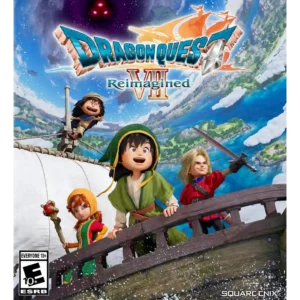
Dragon Quest VII Reimagined
4.0
The simple systems and forgiving puzzle design were seen as friendly for younger or first-time JRPG players. That same simplicity can leave experienced players under-stimulated.
Onimusha: Way of the SwordNo score yet
Other features
AI behavior
Dragon Quest VII ReimaginedNo score yet
Onimusha: Way of the Sword
2.0
Regular Genma can be overly passive and easy to dispatch without using the full defensive toolkit, making ordinary encounters feel weaker than the bosses.
Aiming precision
Dragon Quest VII ReimaginedNo score yet
Onimusha: Way of the Sword
2.8
The bow’s generous auto-aim makes headshots easy, but lock-on and targeting can occasionally keep attacks moving in an unwanted direction.
Bug frequency
Dragon Quest VII ReimaginedNo score yet
Onimusha: Way of the Sword
5.0
The reviewers who discussed technical reliability reported playthroughs without notable bugs, glitches, or crashes.
Camera behavior
Dragon Quest VII ReimaginedNo score yet
Onimusha: Way of the Sword
2.8
Cinematic camera work can make attacks look spectacular, but combat framing is inconsistent. A few reviewers found the camera could get trapped or become frustrating near walls and bosses.
Casting choices
Dragon Quest VII ReimaginedNo score yet
Onimusha: Way of the Sword
4.5
The use of Toshiro Mifune’s likeness and the game’s performance casting are generally viewed as fitting and distinctive, even though a minority questioned the ethics or necessity of recreating a deceased actor.
Checkpoint system
Dragon Quest VII ReimaginedNo score yet
Onimusha: Way of the Sword
3.3
Checkpointing is usually generous, especially around difficult fights, though one reviewer disliked having to restart multi-phase boss encounters from the beginning.
Class balance
Dragon Quest VII Reimagined
1.5
The vocation system is flexible, but some powerful jobs and combinations can overwhelm the intended challenge.
Onimusha: Way of the SwordNo score yet
Collectibles
Dragon Quest VII ReimaginedNo score yet
Onimusha: Way of the Sword
3.8
Collectibles often reward exploration with mythology, story details, cosmetics, or progression, and the Lion Dogs and Oni Portals are particular favorites. Some completion-oriented tasks still feel repetitive or low-value.
Companion AI
Dragon Quest VII Reimagined
4.0
Auto-battle is notably competent at handling routine encounters and can even carry tougher fights. That intelligence is convenient, but it also contributes to the sense that the game can play itself.
Onimusha: Way of the SwordNo score yet
Crash stability
Dragon Quest VII ReimaginedNo score yet
Onimusha: Way of the Sword
5.0
The reviewers who addressed crashes reported stable playthroughs without crashes, reinforcing the broader impression of strong technical reliability.
Dialogue quality
Dragon Quest VII ReimaginedNo score yet
Onimusha: Way of the Sword
4.6
Character banter and comic exchanges give the cast personality, while quieter conversations help sell relationships and the reluctant-hero tone.
Gameplay mechanics
Dragon Quest VII ReimaginedNo score yet
Onimusha: Way of the Sword
4.3
The layered defensive options, soul management, armaments, environmental tools, and resource systems create unusually rich moment-to-moment play. A few explanations and secondary systems can feel confusing or less polished.
Horror tension
Dragon Quest VII ReimaginedNo score yet
Onimusha: Way of the Sword
4.5
The body horror, grotesque Genma, corrupted environments, and occasional Resident Evil-like sequences add genuine unease without overwhelming the action-adventure focus.
Immersion
Dragon Quest VII ReimaginedNo score yet
Onimusha: Way of the Sword
4.4
Detailed environments, expressive characters, fluid presentation, and the historical-fantasy setting create strong immersion for many reviewers. Repetitive Kyoto layouts and repeated activities can break that spell for some.
Innovation
Dragon Quest VII ReimaginedNo score yet
Onimusha: Way of the Sword
4.5
Reviewers praise the way the game modernizes Onimusha and combines familiar action ideas into a distinctive parry-centered system rather than simply becoming another Soulslike.
Lore depth
Dragon Quest VII ReimaginedNo score yet
Onimusha: Way of the Sword
4.5
Japanese myths, legends, readables, collectibles, and side stories give the world substantial optional lore without requiring prior knowledge of the series.
Mission variety
Dragon Quest VII ReimaginedNo score yet
Onimusha: Way of the Sword
2.0
Fetch quests, repeated demon-clearing jobs, and reused overworld activities create a clear sense of repetition between the stronger set-piece missions.
Originality
Dragon Quest VII ReimaginedNo score yet
Onimusha: Way of the Sword
4.0
The best reviews argue that the swordplay has a rhythm and identity of its own despite borrowing from modern action games. More critical voices feel the broader structure follows too many familiar contemporary conventions.
Platforming precision
Dragon Quest VII ReimaginedNo score yet
Onimusha: Way of the Sword
4.5
Wall-running is a small but well-liked traversal addition that expands movement without turning the game into a platformer.
Remake/remaster quality
Dragon Quest VII Reimagined
3.9
Most reviewers see this as a strong, often excellent modernization that makes Dragon Quest VII far easier to recommend. Longtime fans are more divided over removed islands, systems, and friction that gave earlier versions their identity.
Onimusha: Way of the SwordNo score yet
Skill tree depth
Dragon Quest VII ReimaginedNo score yet
Onimusha: Way of the Sword
2.0
One critical review argues that some late skill upgrades feel more like delayed quality-of-life fixes than genuinely meaningful progression choices.
Stealth mechanics
Dragon Quest VII ReimaginedNo score yet
Onimusha: Way of the Sword
2.0
Stealth exists, but the reviewer who evaluated it found direct sword combat far more rewarding.
Upgrade system
Dragon Quest VII ReimaginedNo score yet
Onimusha: Way of the Sword
3.6
Upgrades are mixed: combat skills and some equipment boosts feel meaningful, while incremental stat gains and material requirements can feel dull, imperceptible, or grindy.
Weapon balance
Dragon Quest VII ReimaginedNo score yet
Onimusha: Way of the Sword
4.5
Oni Armaments fill distinct roles such as healing, stamina damage, and crowd control, and at least one reviewer found each option useful rather than redundant.
Comfort and build
Boss design
Dragon Quest VII ReimaginedNo score yet
Onimusha: Way of the Sword
4.7
Boss fights are the standout attraction: dramatic, mechanically distinct, visually memorable, and built to reward mastery of parries, dodges, deflects, and Issens. The main caveat is repeated use of some minibosses and recurring foes.
Level design
Dragon Quest VII ReimaginedNo score yet
Onimusha: Way of the Sword
4.2
The handcrafted linear stages are generally the strongest spaces, with memorable temples, castles, laboratories, and supernatural areas. The hub and a few repetitive routes are less consistently praised.