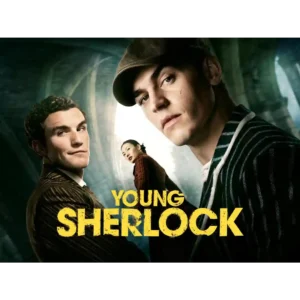

Young Sherlock, Season 1
Where It Has the Edge
No clear scored advantage over the other product.

Scorata scores summarize analyzed review evidence on a 1–5 scale; they are not laboratory measurements or a simple average of customer star ratings. Feature scores summarize the reviews covering that feature. The overall score averages feature scores within each review, then combines review averages. When both expert and customer evidence are available, those two groups receive equal weight. Products can have different review coverage, so small score gaps do not establish a winner.
Recommendations prioritize important features for the category, with a score of at least 3.5, a gap of at least 0.25 points and at least two supporting reviews per product. Features with widely varying scores or broad connectivity contexts are excluded from recommendations. These safeguards do not establish statistical significance.
Quick verdict
The available evidence supports the recommendation below, but does not establish an overall winner. Check the remaining features against your priorities.
There is not enough comparable review evidence to recommend Young Sherlock, Season 1 over the other product.
Choose DTF St. Louis for directing quality.
No clear scored advantage over the other product.
Scores are out of 5. Missing scores mean missing review evidence, not a missing feature.
One critic flags information gaps where characters appear to know things the established continuity has not shown them learning.
Despite the fragmented timeline, scenes are praised for flowing into one another in unorthodox but intuitive ways.
Princess Shou’an’s wardrobe is praised for avoiding lazy Orientalism, but other reviews criticize the series for thin cultural context and broad stereotypes.
One review specifically praises the show’s sharp understanding of midlife and Middle American anxieties rather than treating its Missouri setting as generic backdrop.
The opening episode is repeatedly praised as a strong, stylish, fast-moving introduction that balances character setup with an engaging case.
The premiere sharply divides reviewers. One calls it especially strong, while several others find the opening disjointed or off-putting before the series improves in episode two and beyond.
The deliberately heightened adventure asks viewers to suspend disbelief; some enjoy the scrappy fight authenticity, while others find deductions and conspiracy turns implausible.
The deliberately awkward speech is praised for sounding true to the strange, repetitive ways people actually talk, even when the larger world remains stylized.
The last episode offers big revelations and spectacle but is polarizing because some reviewers find the payoff earned while others call it rushed and overloaded.
The season-ending episode is praised for delivering a satisfying emotional wallop while tying the mystery back to the characters’ loneliness and vulnerability.
Writing reactions are divided: some praise the tightly threaded mystery and character work, while harsher critics call the subplots weak and the dialogue/material poorly written.
One full-series assessment calls the writing top-notch, praising how the script handles midlife crisis, friendship, and emotional discomfort without feeling manipulative.
Family revelations, rivalry, and intrigue give the adventure real dramatic pull, especially as the season moves into its more personal material.
One mixed review finds the dramatic material humane but not quite poignant, suggesting the emotional intentions land more fully for other critics than for this one.
The propulsive mystery makes the season easy to binge for some viewers, while others found the all-at-once experience exhausting or padded enough to benefit from breaks.
Several reviewers found the show hard to stop once its mystery and character layers took hold. One weekly viewer explicitly thought the completed series works better as a binge.
Episodes usually move quickly and keep viewers engaged, but the middle stretch and finale draw complaints for either dragging or cramming too much into too little time.
Pacing is a recurring weakness. Several critics say the mystery scenes stall momentum or the early episodes take too long to click, although one review appreciates the deliberate slow-burn buildup.
The central mystery and family conspiracy are compelling enough to sustain the adventure, though some critics find the story overcomplicated, disjointed, or weaker than its presentation.
The broader story draws some of the harshest disagreement. Supporters see a fresh, well-written mystery about loneliness, while detractors think the crime framework stretches or obscures stronger character material.
As a mystery-adventure caper, the show is widely enjoyed for its blend of crime, action, humor, suspense, and globe-trotting escapades.
The dark comedy and character drama generally fare better than the murder-mystery machinery. Some critics call the blend ideal, while others think the crime framework is conventional, distracting, or unnecessary.
Several critics think eight episodes overextend the material and argue a six-episode season or even a film could have preserved momentum better.
One critic wonders whether the material might have worked better as a movie, though the same review says the occasional stretching never fully derails momentum.
The finale delivers major payoffs, revelations, and appetite for more, but reactions are mixed because some twists feel rushed or overstuffed.
Most finale reactions are strongly positive, praising the ending as haunting, emotionally satisfying, and the show’s greatest strength. One full-season viewer calls it mostly neatly resolved.
The family history and Moriarty friendship give several characters meaningful arcs, but some critics feel the breakneck conspiracy leaves too little room for reflection or earned growth.
The strongest praise centers on how Clark, Floyd, and Carol gain layers as new perspectives expose their loneliness, contradictions, and hidden needs. Reviews often describe the shift from pity or suspicion toward empathy.
Fast, rhythmic editing gives the series momentum and style, but the same hyperactive cutting can make scenes feel trailer-like or rushed.
The nonlinear cutting is repeatedly praised for making flashbacks and flashforwards feel purposeful and for adding to the mystery rather than simply scrambling chronology.
The suggestive material is described as mild, contributing to the show’s relatively restrained TV-14 profile.
The series talks explicitly about sex and kink, but a positive review praises its nonjudgmental empathy and its refusal to make unusual preferences the punchline.
The best thematic material comes from grief, family, loyalty, class differences, morality, and the diverging values that will eventually separate Holmes and Moriarty.
This is the strongest consensus beyond the acting: reviewers repeatedly praise the exploration of loneliness, shame, midlife dissatisfaction, male vulnerability, desire, and the need for genuine connection.
Several reviewers like how individual episodes build their own hooks while feeding the larger mystery, though others dislike the season-long case swallowing episodic detective storytelling.
The flashback-and-flashforward construction is praised as complex but controlled, helping the story reveal motives and relationships piece by piece.
Turning Moriarty into Sherlock’s friend and reshaping his family history gives the familiar character a fresh angle, even if some reviewers see the broader prequel formula as derivative.
Reviewers frequently call the show unique, audacious, fresh, or difficult to compare with anything else. Even critics who note a familiar murder hook often praise the unusual way it is told.
The full-season drop is criticized by reviewers who think the dense plotting and constant reveals would have played better with a weekly release.
One reviewer found weekly viewing difficult and thought the series played better once all episodes were available to binge.
The rapid banter and one-liners are often called sharp, witty, and fun, though detractors find the quipping forced, anachronistic, or exhausting.
The dialogue is one of the show’s most divisive signatures. Many critics love its repetitive, awkward, precisely observed cadence, while a strong detractor calls it reliably terrible.
Guy Ritchie’s kinetic approach is widely praised for giving the show energy and visual identity, even as a minority finds the imitation of his style overbearing or stale.
The direction is praised as confident and precise, with deliberate staging, camera movement, and visual control supporting the offbeat tone.
The season’s overall rhythm is its biggest structural weakness: a fast opening and ending can surround a dull middle, while nonstop revelations leave little breathing room.
Season pacing is mixed: the show often grows stronger as it proceeds, but several critics feel the seven-episode shape stretches thin material or becomes ponderous in places.
The show sustains a brash, playful adventure tone surprisingly well, though some reviewers think its lighter energy undercuts tension or its late escalation pushes too far.
The show’s mix of absurd comedy, melancholy, sexuality, and mystery is admired by many as a difficult balancing act. Others find the shifts forced, inconsistent, or tonally nightmarish.
The conspiracy, recurring mysteries, and steady curveballs keep tension high, although the lighter tone occasionally softens the urgency.
The slow-burn mystery keeps suspicion moving from person to person, and one reviewer says the first four episodes kept them nervous even when the comedy stayed restrained.
The widening conspiracy often becomes difficult to follow, with critics citing logical leaps, too many subplots, and revelations that can overwhelm rather than clarify.
The nonlinear mystery becomes clearer after the first episode for some viewers, but the harshest review finds the narrative unable to cohere at all.
The visual photography is consistently praised as polished, immersive, carefully curated, and cinematic.
The visual work is widely admired for careful framing, desaturated suburban spaces, sharp lighting contrasts, and compositions that reinforce the show’s emotional chill.
The banter, quips, campiness, and comic performances land very well for most reviewers, though a few find the jokes effortful or overly constant.
Most reviewers respond well to the dry, surreal, sexually awkward comedy, with several calling it hilarious. A minority finds the jokes muted, forced, or only mildly funny.
Twists are a major attraction, frequently described as bold, surprising, riveting, and effective enough to propel the binge.
The shifting perspectives and suspicion keep many critics guessing, with repeated praise for reversals that change how characters and motives are understood. One mixed review finds the puzzle connections less revelatory than hoped.
Sherlock and Moriarty’s chemistry is one of the clearest strengths, with their banter, camaraderie, and doomed-friendship dynamic repeatedly singled out as the show’s best element.
Bateman and Harbour’s odd-couple friendship is widely praised, and several reviews also like the lead trio and detective pairing. One sharply negative review found chemistry lacking across the cast.
Sherlock’s characterization can wobble, and one review specifically found his behavior inconsistent across the season.
One critic felt Floyd’s willingness to cheat clashes with the kindness established elsewhere, making that choice feel out of character.
The Holmes family tragedy and the doomed Sherlock-Moriarty friendship provide unusually strong emotional stakes for such a pulpy adventure.
The show is repeatedly described as moving, heartwarming, heartbreaking, devastating, and deeply poignant. Later reviews especially praise the finale for turning the mystery into a painful study of isolation.
One critic argues the overall running time feels bloated, suggesting the story could have worked better in a much shorter format.
One full-season reviewer felt several near-hour episodes contained too much material that did not advance the characters or mystery, making the runtime feel padded.
One family-focused review found only a modest amount of language, keeping the show comfortably within a TV-14 range.
The sexually explicit talk is treated as deliberately excessive but amusing; one critic finds its blunt phrasing part of the show’s comic appeal rather than a drawback.
Multiple reviewers explicitly want another season, citing the open ending, strong character dynamics, and curiosity about where Sherlock and Moriarty go next.
A full-series reviewer wanted to spend more time with the characters and even floated interest in seeing them return in a spin-off.
The theme music receives unusually enthusiastic praise for amplifying the show’s energy.
The score is praised for building dread without obvious musical cues, complementing the show’s restrained and uneasy suburban atmosphere.
The modern, high-energy soundtrack helps sell the youthful Ritchie style for many viewers, but others find the choices dated, anachronistic, or potentially quick to age.
Needle drops are repeatedly praised for adding energy and contrast to the gray suburban mood, including songs that make the show’s odd flourishes feel playful.
The core cast is generally strong, especially Dónal Finn, though Hero Fiennes Tiffin receives more divided reactions and Max Irons draws some notable criticism.
The lead trio is the clearest point of agreement. Bateman, Harbour, and Cardellini are repeatedly described as excellent, nuanced, career-best, or central to why the strange material works.
The supporting ensemble is a major asset, with Dónal Finn, Colin Firth, Natascha McElhone, Zine Tseng, and Holly Cattle receiving repeated individual praise.
The supporting players are another strength, with Joy Sunday’s presence and Peter Sarsgaard’s layered turn receiving especially enthusiastic praise.
Performance quality is a major strength overall, with the ensemble repeatedly called superb, phenomenal, fantastic, or assured despite a few sharply negative takes on the leads.
The performances are a major strength, with the ensemble repeatedly praised for making the show’s odd mix of comedy, melancholy, and mystery feel human.
This younger Sherlock is often described as boyish, accessible, and easy to like, while Moriarty’s charm also wins over many reviewers.
Floyd emerges as the most consistently lovable figure: warm, sincere, decent, and emotionally generous even when his choices are messy.
Most reviewers see an easy-to-recommend adventure with wide appeal, though a few question whether its youthful remix will satisfy either traditional Holmes fans or Gen Z viewers.
The show looks capable of reaching beyond Steven Conrad’s cult following, though its deliberately peculiar style remains a hurdle for broader viewers.
One reviewer thought the show’s Metacritic score understated its quality, placing it closer to a solidly positive reception.
Critical reaction is broadly positive but not uniform: several outlets praise the show’s originality and character drama, while others object to the murder-mystery framing.
The dominant verdict is that the series is lively, fun, and highly watchable even when its logic, fidelity, or depth falls short.
Most reviews find the series compelling or highly entertaining once it settles into its rhythm, though one severe pan sees little value and others describe a slower, more selective appeal.
One devoted Holmes reviewer was already rewatching early episodes and expected to restart the season immediately after finishing.
The finale’s reinterpretation of earlier behavior gives the opening episode new meaning, prompting one reviewer to say the ending practically demands a rewatch.
The production is repeatedly described as stylish, polished, cinematic, and visually impressive, even by reviewers who dislike the story.
The desaturated palette, brutalist spaces, off-kilter angles, and carefully controlled compositions give the series a distinctive look. One reviewer finds the grayness dull, but most see it as purposeful.
Period Oxford, elaborate sets, props, and international locations are consistently praised as detailed, high-budget, and immersive.
The stark sheriff’s station earns especially strong praise, with its brutalist spaces and oppressive colors helping define the show’s strange, hostile atmosphere.
Oxford, the Holmes family estate, Paris, Constantinople, and the wider Victorian setting create a rich, expansive adventure world that reviewers find immersive.
The peculiar dialogue, brand-heavy suburbia, specific habits, and recurring visual details create a world that feels intentionally strange despite its mundane setting.
One critic found the exaggerated Victorian accents part of the show’s broad, stereotyped period caricature rather than convincing texture.
The ending gives Clark meaningful consequences for his neglect and selfish choices, and one finale analysis finds that isolation a fitting outcome.
The fights and chases are energetic and frequent, but reactions split: some call them inventive and top-notch, while others find them forgettable, overused, or unable to generate excitement.
The season’s cliffhangers land strongly, with reviewers describing them as effective hooks that immediately create appetite for another episode or season.
The three central characters get comparable opportunities to carry the story, with each lead receiving meaningful screen time and moments to stand out.
The show takes major liberties with Conan Doyle and Andrew Lane, which some viewers embrace as a fresh remix and purists or critics see as barely recognizable Holmes.
Reviewers describe the series as comparatively clean and suitable for a broad family audience, with restrained violence and mild suggestive material.
One reviewer especially enjoyed the playful mind-palace device, where remembered characters seem to interact with Sherlock inside his reconstruction.
The series borrows recognizable Holmes lore and Ritchie-style DNA without belonging to his Robert Downey Jr. film continuity, a separation reviewers view with both relief and disappointment.
Reviewers enjoy the family history, early mind palace, Moriarty friendship, and other origin-story additions that expand Holmes lore beyond familiar Baker Street territory.
Colin Firth’s transformation earns specific praise for its delightful makeup-and-hair disguise.
One critic objects that the series recreates imperial-era Oxford without offering enough perspective on its colonial context.
Familiar brands such as Purina, Outback Steakhouse, and Jamba Juice are seen as purposeful texture that reinforces the story’s aggressively ordinary suburban setting.
The finale produces sharply split interpretation. Two reviews praise its emotional force and human reveal, while another argues the ending retreats into a damaging cliché after a more nuanced season.
Moriarty’s reinvention is widely praised as fresh and compelling, but his late movement toward villainy can feel rushed and inconsistent to some reviewers.
Violence is frequent but generally restrained rather than graphic, which one family-focused critic considers appropriate for the TV-14 range.
The series is generally viewed as accessible to teens and adults, with a comparatively clean TV-14 level and broad family appeal.
Costumes are a standout craft element, praised for rich detail, character storytelling, texture, and visual appeal even when historical accuracy is imperfect.
Muted sound is singled out as part of the show’s cool, emotionally twilight atmosphere, working with the stark imagery rather than competing with it.

Best for sharp adult humor, magnetic chemistry and a deeply satisfying farewell. Skip it if familiar will-they-won’t-they plotting or deliberately messy leads are dealbreakers.
Pros: humor, writing quality

Choose Widow’s Bay for its dark laughs, richly haunted island and memorable ensemble. Skip it if you need straightforward scares, rapid answers to every mystery or a completely resolved finale.
Pros: humor, genre satisfaction
Cons: ending satisfaction, season pacing

Choose Season 15 for warm, character-driven comedy, meaningful growth, and a finale that rewards longtime fans. Skip it if the short binge format, uneven replacement voices, or occasional clumsy commentary...
Pros: franchise connection, character development

Best for sharply acted, compassionate, high-pressure hospital drama. Skip it if graphic procedures unsettle you or you need a neatly resolved season finale.
Pros: character development, acting performance
Cons: character consistency, dialogue quality