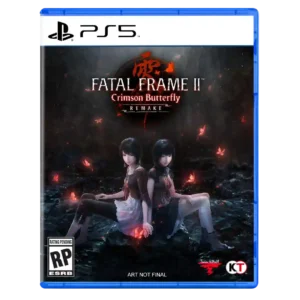

Fatal Frame II: Crimson Butterfly Remake
Where It Has the Edge
- replay value is 4.0 vs 2.4. Multiple endings, New Game+, higher difficulties, missed ghosts, and collectibles give strong reasons to revisit Minakami.

Scorata scores summarize analyzed review evidence on a 1–5 scale; they are not laboratory measurements or a simple average of customer star ratings. Feature scores summarize the reviews covering that feature. The overall score averages feature scores within each review, then combines review averages. When both expert and customer evidence are available, those two groups receive equal weight. Products can have different review coverage, so small score gaps do not establish a winner.
Recommendations prioritize important features for the category, with a score of at least 3.5, a gap of at least 0.25 points and at least two supporting reviews per product. Features with widely varying scores or broad connectivity contexts are excluded from recommendations. These safeguards do not establish statistical significance.
Quick verdict
The review evidence points to a tradeoff: replay value versus emotional impact and environmental detail. Choose according to which strengths matter more to you; the overall score alone does not settle that choice.
Choose Fatal Frame II: Crimson Butterfly Remake for replay value.
Choose CRYMELIGHT for emotional impact and environmental detail.
Scores are out of 5. Missing scores mean missing review evidence, not a missing feature.
Reliable autosaves pair well with generous checkpoints, making progress feel secure even when combat suddenly turns punishing.
Reliance on autosaves and limited mid-run stopping are unwelcome restrictions. These choices also magnify the frustration of technical interruptions.
Multiple endings, New Game+, higher difficulties, missed ghosts, and collectibles give strong reasons to revisit Minakami.
Poker builds and permanent upgrades give reruns a purpose. Familiar arenas, repeated bosses, and limited new tools can undermine lasting interest.
Several customers expected preorder bonuses and were disappointed when the promised extras were missing.
The deluxe extras are difficult to recommend at roughly twice the base price unless you already want the additional items and collector material.
For horror fans, the expanded content and strong presentation generally justify the purchase, while performance-sensitive players may prefer a sale or patches.
The standard edition’s asking price is considered fair for the amount of content and is easier to recommend than the deluxe premium.
Generous checkpoints reduce the sting of deaths and keep difficult sections from forcing long replays.
Reloading at a map’s beginning can preserve a build, but substantial progress may still need repeating. Sparse checkpoints make technical faults particularly punishing.
Some added material gives supporting spirits more context, though not every side story feels substantial enough to deepen its character.
The other girls have complicated motives and painful histories that make the story feel personal rather than a simple race to the Queen.
One tested run reported no crashes, even while other performance limitations remained.
Steam and Steam Deck accounts describe freezes, hard locks, and stalled encounters that can force restarts or reloading.
Handheld play keeps the same general experience, but reduced clarity and blur make the Switch 2 presentation less appealing on the small screen.
The run structure suits handheld play in one Steam Deck OLED account, although inconsistent performance and lockups interrupt that fit.
Mio is easier to steer than in older versions, but slow, heavy, or stiff movement remains one of the most common frustrations during combat.
Crymeride and well-timed dodges make crowd control and counterattacks satisfying. The faster movement remains useful even without a dedicated build.
Camera and filter upgrades can be rewarding, yet balance is shaky: some boosts feel unclear or weak while others eventually trivialize enemies.
Permanent weapon and accessory improvements make failed expeditions useful and provide a satisfying sense of growing stronger.
The photography-and-exploration loop can lose momentum when repeated ghost encounters interrupt the slow-burn horror too often.
The run-and-return structure can be absorbing and satisfying. Its appeal falls sharply when repeated fights stop offering meaningful changes.
New side stories, areas, collectibles, and endings give returning players meaningful extra material, even if a few additions feel secondary.
Visual backgrounds can be surprisingly varied, while enemy and arena repetition draw criticism. Broader run-to-run changes are less convincing to the harshest reviewers.
Photography-based exorcism still gives Fatal Frame a distinctive identity that stands apart from gun-focused survival horror.
The illustrated setting and interacting systems feel distinctive to some reviewers. Others find the combat and room-clearing structure too derivative.
The camera system needs some adjustment time, but combat becomes more natural once focus, timing, filters, and Fatal Frames click.
Dense early tutorial exposition makes the mechanics harder to take in than necessary.
Sound, lighting, village detail, and the sisters’ vulnerability pull players into Minakami, while busy HUD elements and gamey upgrade systems can break the spell.
The strongest supporters describe an absorbing experience that combines combat, characters, and music and can make time slip away.
Lighting, fog, shadows, and spectral effects strongly reinforce the horror, but aggressive film grain can muddy an otherwise impressive image.
Color and dimension effects can look striking, but busy screens sometimes hide threats and compromise combat clarity.
The remake’s moody J-horror look is widely effective, but the heavy film-grain treatment is divisive and can obscure the cleaner visual upgrade.
Hand-drawn characters, ornate Wonderland scenery, and contrasting memory sketches are among the most consistently praised qualities.
The over-the-shoulder view makes exploration easier to control, but some players feel losing fixed angles weakens surprise and dread.
Switching between a close side view and a wide overhead view is a welcome quality-of-life option.
The themes of sacrifice, guilt, loss, and the sisters’ bond give the horror a melancholy weight beyond its jump scares.
The girls’ painful histories give the story considerable emotional weight. Even a strongly critical gameplay review found it heart-wrenching.
Ghosts have memorable designs and behaviors, but repeated encounters can make the roster feel less varied over a full playthrough.
The enemy roster loses novelty quickly in the review that evaluates its variety directly.
Tutorials explain many systems, but the timing and volume of instruction can be awkward, with some crucial guidance arriving only after failure.
The tutorial introduces too much exposition in quick succession, making the early systems harder to absorb.
Most players still find the remake enjoyable and compelling, but prolonged combat and technical friction can turn tense encounters into chores.
The strongest supporters find the game deeply enjoyable and absorbing. Even the more hesitant demo impression becomes warmer once combat begins.
Holding Mayu’s hand is a meaningful, health-restoring expression of the sisters’ bond, though the interaction can feel clumsy or underused.
Throwing enemies into groups and using scenery as ammunition create satisfying opportunities to control space.
Camera-based combat remains distinctive, tense, and satisfying when it clicks, but aggravated wraiths, long health bars, and clunky movement frequently turn fights into frustration.
Flexible throws, dodges, and Crymeride win enthusiastic praise, but others find the fighting shallow and poorly balanced. Impact weight and repeated encounters also draw criticism.
Houses, streets, textures, and small lived-in touches make Minakami feel convincingly decayed and unsettling.
Gardens, castle grounds, and sweets-shop scenery give the illustrated environments distinct decorative identities.
Camera progression gives exploration a satisfying sense of growth and makes later encounters more manageable.
Some find each attempt rewarding through mastery, upgrades, and new memories. Others say small statistical gains cannot compensate for repetitive encounters and slow early growth.
The story’s slow-burn rhythm often works beautifully, but backtracking, optional material, and overlong ghost battles can make stretches drag.
Repeated battles and sudden boss demands can delay the next story revelation. The lengthy opening dialogue also risks losing players before combat gets going.
The restrained exposition and improved translation let the mystery unfold naturally without burying the player in long explanations.
The writing gives guilt, trauma, and redemption emotional substance. Its best conversations are moving and nuanced, even when the surrounding structure weakens delivery.
A customer reports the game feeling both clunky and buggy, pointing to rough technical edges.
Progress-blocking faults are a serious concern in several accounts. Even intermittent failures become costly when they require repeating part of a run.
Detailed environments, lighting, character models, and ghost designs make this the best-looking Fatal Frame for many, despite some film-grain and performance complaints.
The stylized 2D presentation is praised for its beauty and strong character design, with a visual identity that supporters expect to age well.
Minakami Village is the remake’s defining strength: oppressive darkness, fog, lighting, and eerie spaces keep the experience tense even between fights.
Colorful fantasy and a persistent sense of unease work well together, with art and music making Wonderland both inviting and disturbing.
Character and ghost animation is generally expressive and improved, though some movement still looks stiff or less polished than modern peers.
Character animations help convey personality and bring the girls to life amid the darker story.
Modernized mechanics add depth and convenience, yet the extra systems sometimes feel overcomplicated or at odds with the series’ vulnerability-first horror.
The broad core moveset stays useful in the most positive accounts. Critics find the extra systems unnecessary and believe passive upgrades dominate the interesting options.
The remake looks ambitious but retains noticeable jank, with clunky controls, awkward animations, and performance roughness keeping it from feeling fully refined.
Visual clutter prevents combat from consistently feeling polished, especially when several enemies attack together.
Camera filters and upgrades can swing too far, with powerful setups trivializing ghosts after earlier fights feel overly resistant.
Dominant options and an unreliable lance discourage trying different weapons in the most critical assessment.
Mio and Mayu’s strained bond comes through strongly, with side stories and hand-holding mechanics adding texture to their relationship.
Personal histories and tea-party conversations give the small cast substance beyond their borrowed Wonderland identities.
Console performance is the clearest technical complaint, with a 30 FPS cap and reports of stutter or drops overshadowing otherwise strong presentation.
Steam Deck OLED performance fluctuates more than expected, with gameplay running less consistently than menus and dialogue.
Difficulty is uneven: early fights and aggravated wraiths can spike sharply, while later upgrades or patches can swing combat toward trivial.
Pattern learning remains important even in Story mode. Opinions split between satisfying tests of skill and spikes that encourage grinding or lucky builds.
The remake preserves the tragic story and Fatal Frame identity well, while modern camera and combat changes divide purists who preferred the older feel.
The shift to a roguelite feels like a successful evolution to several reviewers, and familiar references reward existing fans. The signature crying mechanic feels less naturally connected to Alice for others.
The unusual line delivery fits the uncanny tone and helps the sisters’ conversations feel appropriately unsettling.
Conversations carry much of the emotional nuance and character development. Their length can also make the opening feel slow for players eager to fight.
The tragic mystery of Mio, Mayu, and Minakami is consistently praised as a major strength, with new material generally expanding the story without disrupting it.
The troubled cast and dark Wonderland mystery are major attractions. Repetition, a conventional amnesia device, and uneven revelation timing can weaken the payoff, while one demo player found the opening unengaging.
Repeated ghost fights and health regeneration can grind the pacing down, especially when ordinary enemies take too long to finish.
Returning through familiar enemies and bosses is a recurring complaint. Small stat increases do not always make the repetition feel worthwhile.
The interface is serviceable, but persistent HUD elements and a few menu choices can feel visually intrusive in such an atmosphere-driven game.
The option to hide the interface entirely is praised as a small but worthwhile quality-of-life improvement.
Minakami’s dense houses and winding paths build strong tension and familiarity, though some corridors and chase spaces can feel restrictive or confusing.
Small arenas recur with limited changes, making the middle of the campaign and repeated attempts feel too familiar.
Major apparitions can be memorable and terrifying, but early mini-boss spikes and drawn-out encounters make boss quality inconsistent.
Bosses can demand rewarding mastery of dodges, throws, and projectile reflection. Abrupt punishment and repeated variants also make them a major source of frustration.
Minakami’s architecture, rituals, journals, spirits, and side stories form a cohesive folk-horror setting that grows richer the more it is explored.
Wonderland’s familiar names take on new meaning as provisional identities for wounded souls. The darker reinterpretation gives the setting substance beyond decorative references.
Modern controls are easier to live with than the originals, but stiffness, awkward bindings, and slow combat inputs remain recurring complaints.
Responsive movement gives combat a satisfying immediacy in the positive account that evaluates it directly.
Mio’s vulnerability and determination suit the story well, though her slow movement and dependence on Mayu-related systems can be frustrating in play.
Alice’s bluntness and loyalty make her compelling to several reviewers. Her amnesia is a weaker point for those tired of the familiar device.
The English dub receives unusually strong praise, with the leads selling fear and emotion well; the Japanese track remains an appealing alternative.
Japanese vocal performances help support the emotional story and are explicitly praised alongside the art, dialogue, and music.
The music supports both the story’s melancholy and its tension without overpowering the quieter environmental horror.
The score is a widely praised highlight, balancing whimsy, melancholy, and unease. Most find it well suited to repeated runs, though some tracks can wear thin.
Technical performance is a weak point, especially on consoles where stutter, frame drops, and limited performance options are repeatedly criticized.
Results vary across hardware and builds. Reports of memory leaks and freezes qualify the accounts of otherwise stable PC performance.
Settings cover useful basics such as subtitles, control choices, lock-on, and vibration, but PC keyboard support and customization are uneven.
Holding hands can sometimes confuse enemy behavior, causing ghosts to shuffle awkwardly around the sisters.
Aiming can still feel awkward when the Camera Obscura gets hectic, even with the remake’s extra focus and targeting tools.
Higher battle settings can balloon enemy health enough to make encounters feel excessive rather than meaningfully tougher.
The cast is one of the elements that makes the experience especially engaging in the enthusiastic review that evaluates its overall appeal.
Dense effects can hide incoming attacks during the moments that most need clear timing. One critical account also finds attack warnings inconsistent.
Mayu can reinforce the sisters’ bond without making escort sections unbearable, yet she is often too passive or becomes a liability during fights.
Automatic skipping of previously read scenes helps repeated runs keep moving without manually dismissing the same dialogue.
Sketch-like flashbacks effectively distinguish painful memories from colorful Wonderland. Limited illustrations leave some character weapon details harder to grasp.
Keeping permanent improvements softens the cost of failed runs and helps unsuccessful attempts feel productive.
The opening-chapter demo is useful for deciding whether the lengthy story sections and combat suit your tastes before buying.
Limited film and healing supplies create useful survival-horror pressure, but health-regenerating enemies can make resource loss feel unfair.
New Game+ extends camera progression and gives completion-focused players more to pursue after the first ending.
Exploration rewards curiosity with lore, upgrades, and secrets, though backtracking, slow movement, and occasional over-signposting can sap momentum.
Character faces look much improved overall, but facial motion can still lack the fluidity and polish of the best modern remakes.
One critical review finds the repeated action stretches well beyond its enjoyable lifespan and would prefer less gameplay padding between story developments.
Controller vibration is notably light for at least one player, leaving the remake with less tactile feedback than expected.
The lance’s narrow, unreliable hitboxes can miss enemies unless aiming is exceptionally precise.
The remake remains intensely creepy and often terrifying, although greater player control and overlong fights can occasionally dilute the fear.
A persistent minimap and interface can feel intrusive for players who want an uncluttered, more immersive horror presentation.
The Camera Obscura remains an inventive horror concept, and the remake takes some smart chances with filters and combat without reinventing the series.
Loading can interrupt the experience in spots, adding another small layer of friction to an already deliberate pace.
Journals, spirit traces, side stories, and new locations deepen the village’s ritual history and make its ghosts more tragic and memorable.
The story sustains an unrelentingly heavy focus on grief, guilt, and trauma. That mood can become exhausting when you are not ready for it.
Lock-on, dodging, difficulty choices, and clearer navigation make this an approachable entry point, though some guidance arrives awkwardly or feels excessive.
The overall response ranges from enthusiastic endorsement to substantial disappointment. Art, music, and story carry the strongest consensus, while combat depth, repetition, and reliability determine the final recommendation.
Most physical copies arrived sealed or in excellent condition, but several customers received loose discs and a few reported damage.
This is broadly seen as a strong, visually striking modernization that respects the original story, but combat balance, camera changes, and console performance keep it from being definitive for everyone.
Repentance can reinforce themes of guilt and redemption, but opinions differ sharply on whether crying meaningfully belongs to Alice’s story.
Some find enough build depth to stay engaged. Others see little strategy beyond passive buffs, favorable cards, and patience.
Running and hiding can create excellent panic, but dark visual filters, unclear hiding spots, and trial-and-error failures make stealth inconsistent.
The library lets you revisit scenes or read a synopsis, making it easier to preserve story context while skipping repeats.
The small arsenal offers too little differentiation for the critical accounts, particularly when heavy attacks and practical strategies overlap.
The expanding field rewards aggression, builds momentum, and adds a satisfying layer of strategy within an encounter.
Poker hands offer a welcome way to shape a build through interacting card choices rather than isolated upgrades.
The artbook, soundtrack, voice dramas, and extra items have conditional appeal for dedicated fans, with a substantial premium to weigh.
Menus are functional for most needs, yet customization is limited and at least one player considers the UI a major downgrade.
Derivative skills and card effects give Alice several appealing ways to alter her moveset during a run.
Missing German and Croatian text can make a story-heavy game difficult to enjoy if the available languages are not comfortable for you.
3D audio can noticeably strengthen the horror, but missing gyro support, HDR/film-grain issues, and console limitations make platform features inconsistent.
Maps and signposting usually keep objectives readable, but guidance ranges from welcome clarity to hand-holding that some players find excessive.
Optional side stories often add worthwhile character and lore context, though some feel redundant or less naturally integrated than the main path.
Balancing immediate benefits against a stronger poker hand creates satisfying decisions for many reviewers. One critic finds success too dependent on drawing the right sequence.
Puzzles provide welcome breaks from combat and generally fit classic survival horror, but some are simple while chase-related problem solving can become trial and error.
Side stories can deepen the village and its spirits in rewarding ways, although a few players find the quest-like structure artificial or poorly integrated.
Creaks, distant cries, spatial audio, and oppressive silence are standout strengths that make the village feel hostile before anything appears.

Best for fluid traversal, rewarding exploration, striking art, and forgiving quality-of-life features. Skip it if you want deep combat, radical genre innovation, or consistently demanding bosses.
Pros: difficulty balance, boss design
Cons: innovation, sandbox freedom

Best for superb combat, inventive builds, and richly voiced characters. Skip it if repeated runs, resource gathering, or visually busy battles outweigh the appeal of steady progress.
Pros: overall quality, combat system
Cons: pacing, grind level

Good if you want a beautiful, demanding survival sandbox built around exploration, building, progression, and memorable co-op. Skip it if long resource runs, harsh death recovery, and deliberate pacing sound...
Pros: town-building system, exploration quality
Cons: grind level, fast travel convenience

Choose Clair Obscur if you want a story-rich RPG with thrilling timed combat, gorgeous art, and standout music. Skip it if poor maps, tight parry timing, or occasional bugs and...
Pros: narrative quality, combat system
Cons: map and navigation design, menu usability