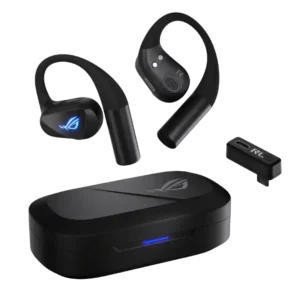
Asus ROG Cetra Open
Where It Has the Edge
- USB-C is 5.0 vs 2.0. USB-C implementation is excellent where discussed, particularly the case-friendly dongle plug and passthrough charging that keeps handhelds or...

Scorata scores summarize analyzed review evidence on a 1–5 scale; they are not laboratory measurements or a simple average of customer star ratings. Feature scores summarize the reviews covering that feature. The overall score averages feature scores within each review, then combines review averages. When both expert and customer evidence are available, those two groups receive equal weight. Products can have different review coverage, so small score gaps do not establish a winner.
Recommendations prioritize important features for the category, with a score of at least 3.5, a gap of at least 0.25 points and at least two supporting reviews per product. Features with widely varying scores or broad connectivity contexts are excluded from recommendations. These safeguards do not establish statistical significance.
Quick verdict
The review evidence points to a tradeoff: USB-C versus Stability and Included accessories. Choose according to which strengths matter more to you; the overall score alone does not settle that choice.
Choose Asus ROG Cetra Open for USB-C.
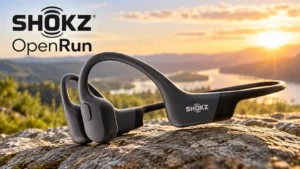
Choose Shokz OpenRun for Stability and Included accessories.
Scores are out of 5. Missing scores mean missing review evidence, not a missing feature.
Sound quality is good for many gaming-focused users, especially for dialogue and positional cues, but it is not a universal win. Some reviewers hear clean, detailed audio while others describe the presentation as thin, compressed, or harsh.
Often clear and enjoyable by bone-conduction standards, especially in quiet surroundings. It loses richness and detail beside good conventional earbuds, particularly outdoors near loud traffic.
Noise suppression works well in many tests, keeping speech understandable while reducing fans, background media, and ambient chatter.
Background-noise suppression is inconsistent: voices can come through clearly when cycling, yet loud surroundings often reach callers.
Default tuning was described as reasonably clean and usable, though one reviewer still preferred the flatter EQ setting.
The tonal balance noticeably underrepresents deep sub-bass, so it will not sound faithful to low-frequency-heavy recordings.
Reliability is the biggest technical concern. Multiple customer reviews report disconnects, one-sided audio, distortion, failed updates, beeping, or erratic behavior, although some users find later firmware dramatically improves performance.
Connections and playback normally remain stable, although occasional brief audio stutters can interrupt listening.
Leakage is better controlled than some open-ear designs, though nearby people may hear faint audio in quiet rooms or at higher volumes.
Leakage is modest at restrained settings for some wearers but becomes noticeable in quiet shared spaces; music may be audible to people nearby.
Passive isolation is essentially nonexistent by design. That is useful for awareness, but it makes noisy environments and fully immersive gaming poor fits.
They deliberately do very little to shield outside noise, which is a poor fit for planes and crowded transit but useful when hearing surroundings matters.
Bass is the most divisive part of the tuning. Phantom Bass can add useful punch, but many reviewers still hear weak sub-bass or thin impact compared with sealed earbuds, while a smaller group finds the low end surprisingly satisfying.
Bass is the recurring musical sacrifice: many find it thin or lacking depth, although some are content with the available punch during workouts.
USB-C implementation is excellent where discussed, particularly the case-friendly dongle plug and passthrough charging that keeps handhelds or phones powered.
The proprietary charging setup is a nuisance for anyone who wants to use the same USB-C cable for all their devices.
The included charging cable received a positive mention and was viewed as a useful part of the package.
The magnetic connection is convenient and helps protect the hardware, but needing a proprietary cable is frustrating if it is lost or forgotten.
Treble is another polarizing area. Some reviewers praise crisp detail, but many hear excessive brightness, sibilance, or piercing highs at louder levels.
High notes can sound clear and present, though the praise is less emphatic than for spoken voices and overall outdoor practicality.
Overall opinion is polarized but leans positive for the right niche. Fans love the comfort, awareness, and gaming responsiveness, while critics are pushed away by price, sound compromises, or software instability.
A favorite for exercise and outdoor awareness, though its purpose-built approach is less convincing as an all-day replacement for conventional headphones.
The built-in microphones are considered decent for an earbud design, especially for casual chat rather than broadcast-quality recording.
Hands-free calling is a useful built-in convenience, although the microphone works far better in quiet conditions than in wind.
Glasses compatibility is consistently excellent, with thin hooks and low pressure working well alongside frames. One expert also found the fit comfortable with hats and sunglasses.
Glasses, hats and cycling helmets often work well, but some combinations crowd the ears or require rearranging straps and headwear.
The dongle works across a wide range of PCs, handhelds, phones, and consoles, but platform-specific quirks appear on Steam Deck, Mac, and PS5 in some reviews.
Works smoothly with several everyday phone and watch setups, including major mobile voice assistants.
The case draws mixed reactions. Some owners like its quality and dongle storage, but many reviewers criticize its bulky size, plasticky feel, or missing premium touches.
The included pouch or soft case is useful for everyday storage, but it offers less protection and polish than a rigid case.
Game-audio separation is consistently strong. Reviewers can distinguish footsteps, dialogue, and competing sounds clearly enough for competitive play.
Layered vocals and intricate arrangements can remain surprisingly distinguishable despite the unconventional sound delivery.
The earbuds get very loud, but the volume curve is uneven. Several reviewers complain that even low settings are too loud, while others appreciate the strong headroom.
Volume is sufficient on quieter routes for some, but traffic, construction noise, and busy gyms can overwhelm it. Others appreciate that they are not tempted to drown out their surroundings.
Physical fit is highly secure for most users. The hooks stay put during running, workouts, and active movement, though a few ear shapes struggle with fit.
The wraparound band stays put through running and vigorous activity far better than loose earbuds; lying back can be an exception.
The dongle and charging cable are useful additions, while the reflective neck strap is more mixed because some find it stiff or uncomfortable.
A pouch and exercise-oriented extras are helpful for taking the headset out, although the bundle varies and is not especially lavish.
IPX5 earbud protection is viewed as well suited to workouts, sweat, and light rain, supporting the product’s gaming-and-fitness crossover use.
The IP67 protection inspires confidence through sweat, rain and accidental splashes, outclassing many workout earbuds. It is not an endorsement for swimming.
Mids are usually a strength, with clear dialogue, vocals, and footsteps. A few reviewers hear lower-mid thinness, but speech intelligibility remains strong.
Vocals and spoken material come through particularly well, even when bass-heavy instruments or other musical details struggle to keep pace.
Portability is a recurring weakness because the charging case is unusually large and thick. Several reviewers say it is barely pocketable or not pocket-friendly at all.
The stiff, wraparound frame does not fold neatly into a pocket, making a bag or protective pouch more practical.
Situational awareness is nearly universally praised. Reviewers can hear conversations, doorbells, traffic, children, and room activity without removing the earbuds.
Open ear canals make traffic, conversations and household sounds easy to monitor without stopping music. This is the standout reason to choose the OpenRun.
Manual voice-assistant activation via a triple press was viewed as redundant and not a good use of the control scheme.
Phone voice assistants activate smoothly, and the microphone can recognize spoken commands without trouble.
The EQ is highly useful and often materially improves the sound. Several reviewers say tuning or Phantom Bass turns a mediocre out-of-box presentation into something much better.
Custom sound adjustment is lacking, which makes it harder to compensate for a bass-light profile or vibration at higher volume.
Setup experiences vary sharply. Some users get simple plug-and-play operation, while others encounter hidden apps, multiple utilities, web-only controls, or convoluted firmware update steps.
Bluetooth pairing is mostly quick and painless, and the headphones are straightforward to operate without a complicated setup process.
Gear Link is polarizing: several reviewers love the browser/mobile flexibility and deep controls, while others find it buggy, hidden, web-dependent, or awkward during firmware setup.
There is no companion app for the standard OpenRun, leaving some control preferences and audio personalization inaccessible.
Bluetooth works well for ordinary listening in several reviews, but reliability is inconsistent. Some owners report slow pairing, disconnects, or worse sound than the 2.4GHz dongle.
Pairing and everyday connections are usually reliable, with few interruptions during runs or regular listening.
Mic quality is mixed but generally usable. Many reviewers find voice chat clear and good for earbuds, while several customers report thin, robotic, or poor-sounding voice transmission.
Quiet indoor calls are workable, and a few find them clear, but other users sound fuzzy or difficult to understand outdoors.
Physical buttons are easy to find and tactile, but the default multi-press scheme is contentious. Four presses for volume and three presses for mute or assistant functions feel unnecessarily cumbersome to several reviewers.
Physical play and pause controls are convenient while exercising, but closely packed volume buttons and triple presses can be fiddly with gloves.
ASUS acknowledged a reported Steam Deck issue and said it was being investigated, but did not promise a fix.
A damaged pair was replaced with relatively little hassle, offering reassurance when something does go wrong.
Price is the most consistent purchasing objection. Even positive reviewers often call the $230 class price steep, and several experts say cheaper gaming earbuds or headsets offer better overall value.
Good water protection, fit and fast charging make the price worthwhile for serious outdoor use, while cheaper and better-sounding options challenge its value for casual listening.
AAC and SBC are considered adequate for the gaming-focused use case, though one expert would have preferred higher-bandwidth codec options.
Basic SBC-only wireless audio is a limitation on paper, but higher-quality codecs would do little to fix the open design's acoustic compromises.
Multipoint is excellent when it works, with fast switching and useful dual-device behavior. Several reviews, however, criticize unpredictable switching or the lack of simultaneous audio in certain setups.
Two-device multipoint keeps work and personal sources connected, making it a useful productivity convenience.
The styling splits opinion. Some like the flashy gaming look and RGB accents, while others call the buds chunky, angular, oversized, or unattractive.
The slim, soft-touch design looks sporty without feeling bulky; color and finish earn praise alongside the comfortable shape.
The earbuds themselves are generally seen as solid or premium, but impressions are less consistent around the plastics. Several reviewers think the materials feel good, while others say parts of the package feel cheaper than the price suggests.
The flexible, soft-touch frame generally survives hard workouts, but pressure from helmet straps can break the band.
Comfort is the product’s strongest consensus advantage. Most reviewers can wear the buds for hours without ear-canal pressure, though a minority experience cartilage pain or poor fit depending on ear shape.
The lightweight frame is exceptionally easy to wear for hours and avoids in-ear fatigue. Some face-pressure or gear-interference complaints remain.
The ear-hook design applies little pressure for at least one reviewer, helping the buds stay comfortable during long sessions.
The band holds securely without the tight squeeze that can make some athletic headphones tiring to wear.
Low weight is consistently praised and helps the earbuds disappear during long sessions despite their visibly chunky shape.
The featherweight frame is frequently described as barely noticeable, making extended runs and long rides more comfortable.
Charging is a strong part of the package, especially the USB-C passthrough on the dongle and quick top-ups. One defective unit failed to charge, but most reviewers praise the convenience and speed.
Fast charging is a major strength, regularly supplying enough playback for a workout after only a brief top-up. The magnetic connection is easy to use.
Battery life is usually strong, often lasting through long gaming sessions and in some tests approaching the advertised figures. Heavy use of RGB, Immersion Mode, Phantom Bass, or the mic can cut runtime substantially.
Around eight hours of typical playback is convenient for regular runs and many workdays, though heavier use and high volume can cut into endurance.
Immersion Mode only softens steady background noise and is nowhere near full ANC. A few users notice a small benefit, but most reviewers treat noise reduction as secondary to the open-ear design.
Low-latency gaming is one of the clearest strengths. The 2.4GHz dongle repeatedly delivers near-wired responsiveness and excellent sync for shooters, rhythm games, handhelds, and console play.
The open design generally creates a spacious presentation, with several reviewers praising the wide soundstage and stereo image.
Positional performance is strong for games, especially footsteps and directional cues. A few tests find rear localization or Dolby Atmos rendering less convincing.
Wind can ruin call intelligibility on the move and even interfere with listening, limiting its usefulness for conversations while riding.
Android use is generally workable, though one test still found the volume curve aggressive. The earbuds remain usable on Android without the sharper low-volume problem being quite as severe as on iOS.
The 2.4GHz USB-C dongle is central to the appeal, delivering excellent low-latency gaming and useful passthrough charging. A few units show disconnects or awkward port blocking, so reliability is not universal.
The rounded arm allows useful rotation around the ear, making it easier to dial in a comfortable position.
Fit is generally effortless and secure, though precise cheekbone placement can change audio quality and certain movements or accessories complicate it.
Masks, thick scarves and gear around the back of the head can push against the neckband or make it uncomfortable.
There is no adjustable-length band, so a poor fit cannot be fine-tuned; picking standard or Mini sizing matters.
At high levels, clarity can break down with sharp treble or bass distortion. The earbuds have plenty of headroom, but pushing them hard is not their best use.
One customer received a unit that appeared used or refurbished, with misaligned protective films and a dead earbud.
Presets and Phantom Bass can improve the listening experience, but results vary. Some users call Phantom Bass essential, while others find presets subtle or dislike the default communication profile.
A snapped titanium band cannot be repaired by the wearer, making careful helmet-strap placement especially important.
Wear detection is a useful convenience, automatically stopping playback when the earbuds are removed.
The open design provides a very natural ability to hear your own voice during chat, which one reviewer particularly appreciated.
One video describes the controls as responsive and intuitive, giving them a very positive usability assessment.
The open-ear effect was judged more natural and effective for hearing surroundings than typical electronic transparency modes.
Xbox support is absent, which one reviewer flags as a concrete platform limitation even while noting the broader USB-C ecosystem constraint.
Moisture detection and the sealed magnetic connector add welcome reassurance after wet or sweaty workouts.
Cheekbone vibration can be distracting or irritating, especially when raising the volume for bass, though some barely notice it once moving.
Standard and Mini versions give smaller heads a better chance of a comfortable, secure fit, although each version has a fixed band size.
RGB controls are extensive and easy to personalize, with effects, brightness, and colors available. Some reviewers enjoy the style, while others see lighting as garish or unnecessary battery drain.
Two-year coverage adds peace of mind, with replacement service proving helpful after a band failure.
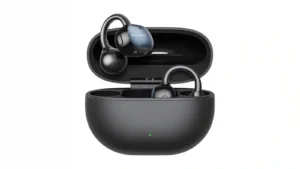
Choose the UU2 for unusually full open-ear sound, all-day comfort, strong battery life and excellent value. Skip it if you need sealed-bud isolation, consistently strong calls, or zero tolerance for...
Pros: Overall satisfaction, Sound quality
Cons: Spatial audio
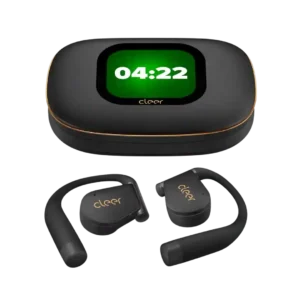
Best for all-day comfort, secure open-ear awareness, long battery life, and a genuinely useful touchscreen case. Skip it if deep bass, strong isolation, compact size, or consistently premium music quality...
Pros: Overall satisfaction, Carry case quality
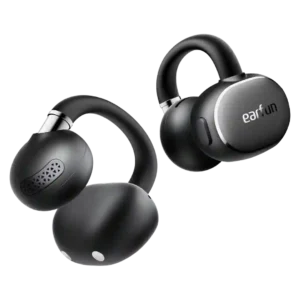
Best for lightweight all-day comfort, outstanding battery life, dependable physical controls, and premium features at a budget price. Skip it if you need deep bass, noise isolation, flawless high-volume sound,...
Pros: Overall satisfaction, Sound quality
Cons: Maximum volume clarity, Noise isolation (passive)
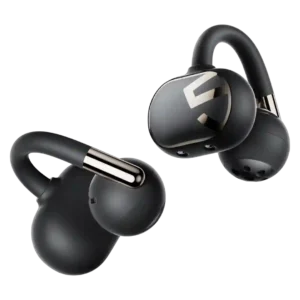
Best for featherlight all-day comfort, secure workout fit, strong open-ear sound, and unusually rich features for the price. Skip it if you need ANC, deep sub-bass, high volume in noisy...
Pros: Comfort during long use, Sound quality
Cons: Carry case quality, Touch control responsiveness