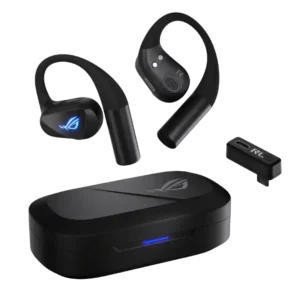
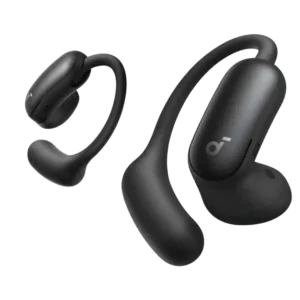
Asus ROG Cetra Open
Where It Has the Edge
No clear scored advantage over the other product.

Scorata scores summarize analyzed review evidence on a 1–5 scale; they are not laboratory measurements or a simple average of customer star ratings. Feature scores summarize the reviews covering that feature. The overall score averages feature scores within each review, then combines review averages. When both expert and customer evidence are available, those two groups receive equal weight. Products can have different review coverage, so small score gaps do not establish a winner.
Recommendations prioritize important features for the category, with a score of at least 3.5, a gap of at least 0.25 points and at least two supporting reviews per product. Features with widely varying scores or broad connectivity contexts are excluded from recommendations. These safeguards do not establish statistical significance.
Quick verdict
The available evidence supports the recommendation below, but does not establish an overall winner. Check the remaining features against your priorities.
There is not enough comparable review evidence to recommend Asus ROG Cetra Open over the other product.
Choose Anker Soundcore AeroFit 2 Pro for Codec support and Build quality.
No clear scored advantage over the other product.
Scores are out of 5. Missing scores mean missing review evidence, not a missing feature.
Sound quality is good for many gaming-focused users, especially for dialogue and positional cues, but it is not a universal win. Some reviewers hear clean, detailed audio while others describe the presentation as thin, compressed, or harsh.
Sound is generally clear, detailed, and better than expected for an open-ear design, especially after tuning. A few reviewers found it merely average or poor, and several noted that fit, mode, and EQ can change the presentation substantially.
Low-latency gaming is one of the clearest strengths. The 2.4GHz dongle repeatedly delivers near-wired responsiveness and excellent sync for shooters, rhythm games, handhelds, and console play.
Latency is mixed rather than universally low. Normal video use can be fine, but several gaming tests still detected lag and found the low-latency mode less effective than dedicated 2.4GHz gaming earbuds.
Bass is the most divisive part of the tuning. Phantom Bass can add useful punch, but many reviewers still hear weak sub-bass or thin impact compared with sealed earbuds, while a smaller group finds the low end surprisingly satisfying.
Bass is unusually capable for open-ear buds and becomes fuller and punchier when the drivers sit closer to the ear. Some listeners still wanted more low-end weight, while others found the closed-position bass boomy or muffled.
Default tuning was described as reasonably clean and usable, though one reviewer still preferred the flatter EQ setting.
One reviewer specifically praised the overall tonal balance after tuning, describing the sound as well balanced. Other comments on bass, mids, and treble show that the default response can vary noticeably by fit and preset.
Noise suppression works well in many tests, keeping speech understandable while reducing fans, background media, and ambient chatter.
Background-noise handling often keeps speech understandable in traffic, crowds, and wind. Results are not uniformly clean, though, with some reviewers hearing digital artifacts or finding the dedicated wind-reduction feature ineffective.
Passive isolation is essentially nonexistent by design. That is useful for awareness, but it makes noisy environments and fully immersive gaming poor fits.
Passive isolation is weak because the semi-in-ear design lacks a full silicone-tip seal. Reviewers repeatedly linked that open fit to outside sound leaking in and to the ANC having less to work with.
Positional performance is strong for games, especially footsteps and directional cues. A few tests find rear localization or Dolby Atmos rendering less convincing.
Spatial audio is a pleasant extra rather than a core reason to buy. Movie mode and added width can be enjoyable, but several reviewers found the effect synthetic, less detailed, or preferable with virtualization turned off for music.
Reliability is the biggest technical concern. Multiple customer reviews report disconnects, one-sided audio, distortion, failed updates, beeping, or erratic behavior, although some users find later firmware dramatically improves performance.
Reliability is a recurring weakness in the more critical reviews. Reported issues include stuttering, delayed or one-sided mode changes, random power-on behavior, ghost button presses, unstable EQ changes, and an earbud failure.
Immersion Mode only softens steady background noise and is nowhere near full ANC. A few users notice a small benefit, but most reviewers treat noise reduction as secondary to the open-ear design.
ANC is the most divisive feature. It can noticeably reduce steady hums when fit is right, but many expert and customer reviews found it weak, fit-dependent, hissy, or far behind dedicated sealed earbuds.
Leakage is better controlled than some open-ear designs, though nearby people may hear faint audio in quiet rooms or at higher volumes.
Leakage reports conflict sharply. Several users and reviewers found surprisingly little sound bleed, while one expert called leakage significant in open mode and warned that nearby gym users would hear the audio.
The open design generally creates a spacious presentation, with several reviewers praising the wide soundstage and stereo image.
The AeroFit 2 Pro creates an impressively broad, open presentation, with reviewers repeatedly calling out spaciousness and scale. Spatial processing can widen it further, though the natural presentation is often preferred.
One customer received a unit that appeared used or refurbished, with misaligned protective films and a dead earbud.
The only packaging-specific customer comment was strongly positive, praising the presentation and condition on arrival. No packaging complaints were reported.
Wear detection is a useful convenience, automatically stopping playback when the earbuds are removed.
Automatic form detection is clever when it works, but sensor behavior is a recurring source of frustration. Reports include unwanted EQ changes, slow mode switching, missing wear detection, and inconsistent automatic ANC activation.
At high levels, clarity can break down with sharp treble or bass distortion. The earbuds have plenty of headroom, but pushing them hard is not their best use.
One detailed ranking found high-volume sound still strong, scoring performance above 60% volume at 8.5/10. That praise is limited to a single source, so broader high-volume consistency is less certain.
Android use is generally workable, though one test still found the volume curve aggressive. The earbuds remain usable on Android without the sharper low-volume problem being quite as severe as on iOS.
Android users get the biggest audio advantage because LDAC can deliver noticeably more detail than standard codecs. Reviewers who tested it on Android considered that support a meaningful benefit.
The built-in microphones are considered decent for an earbud design, especially for casual chat rather than broadcast-quality recording.
One reviewer specifically praised the four-mic calling system as strong for an open design. Broader call-quality results are covered separately and are mostly positive with a few exceptions.
The dongle works across a wide range of PCs, handhelds, phones, and consoles, but platform-specific quirks appear on Steam Deck, Mac, and PS5 in some reviews.
One reviewer praised the ability to use two Bluetooth devices across ecosystems, making phone-and-PC switching practical. Broader platform-specific testing is limited.
Treble is another polarizing area. Some reviewers praise crisp detail, but many hear excessive brightness, sibilance, or piercing highs at louder levels.
Treble often comes across detailed and controlled, but tuning opinions vary more than for the mids. Depending on mode or preset, reviewers heard anything from clean highs to overly prominent, grainy, or rolled-off treble.
Physical fit is highly secure for most users. The hooks stay put during running, workouts, and active movement, though a few ear shapes struggle with fit.
Fit security is highly ear-dependent. Many reviewers ran and worked out without the buds moving, but others reported wobbling, shifting, poor seating, or an inability to keep the ANC position stable.
Presets and Phantom Bass can improve the listening experience, but results vary. Some users call Phantom Bass essential, while others find presets subtle or dislike the default communication profile.
The preset library is useful, but the default Soundcore Signature tuning divides opinion. Several reviewers preferred Balanced or genre presets, while others found certain presets muddy, overly V-shaped, or otherwise poorly matched.
The case draws mixed reactions. Some owners like its quality and dongle storage, but many reviewers criticize its bulky size, plasticky feel, or missing premium touches.
The case has useful touches such as wireless charging, LEDs, and room for the buds at any adjustment angle, but its size dominates the discussion. Many reviewers call it huge or bulky despite appreciating the functional design.
Glasses compatibility is consistently excellent, with thin hooks and low pressure working well alongside frames. One expert also found the fit comfortable with hats and sunglasses.
Most reviewers found the thin, flexible hooks workable with glasses, sunglasses, hats, or beanies. A few experienced interference, so accessory compatibility still depends on ear shape and frame design.
The earbuds get very loud, but the volume curve is uneven. Several reviewers complain that even low settings are too loud, while others appreciate the strong headroom.
Most reviewers found plenty of output, and some called the buds outright loud, especially with booster settings or a closer fit. A smaller group found maximum volume too restrained, particularly when automatic ANC interfered.
Portability is a recurring weakness because the charging case is unusually large and thick. Several reviewers say it is barely pocketable or not pocket-friendly at all.
Portability is hurt by the oversized case. Even reviewers who call it pocketable often say it is noticeably bulky, while several customers considered the case large enough to be a deal breaker.
Game-audio separation is consistently strong. Reviewers can distinguish footsteps, dialogue, and competing sounds clearly enough for competitive play.
Separation is a consistent audio highlight: guitars, vocals, and individual instruments remain easy to pick apart even in the open form. Reviewers often describe the stereo image as clearer than expected for fitness-oriented buds.
Situational awareness is nearly universally praised. Reviewers can hear conversations, doorbells, traffic, children, and room activity without removing the earbuds.
Open-ear awareness is one of the clearest strengths, letting users hear traffic, conversations, and announcements without relying on electronic transparency. Reviewers repeatedly praised it for running, walking, commuting, and work.
Mids are usually a strength, with clear dialogue, vocals, and footsteps. A few reviewers hear lower-mid thinness, but speech intelligibility remains strong.
Vocals and midrange detail are usually a strength, with several reviewers praising clear speech and instrument definition. The weaker takes describe mids as boxy, recessed, or too light to give music enough body.
Overall opinion is polarized but leans positive for the right niche. Fans love the comfort, awareness, and gaming responsiveness, while critics are pushed away by price, sound compromises, or software instability.
The overall response is positive but polarized: many reviewers love the novel versatility and would recommend the buds, while others returned them over fit, ANC, case size, battery, or reliability. Satisfaction is strongest when the user values open-ear comfort and frequent mode switching.
IPX5 earbud protection is viewed as well suited to workouts, sweat, and light rain, supporting the product’s gaming-and-fitness crossover use.
The workout-oriented protection performs well in real use, including sweaty sessions and runs in rain. Reviewers consistently regarded the IP55-level protection as appropriate for active use, though not for swimming.
Gear Link is polarizing: several reviewers love the browser/mobile flexibility and deep controls, while others find it buggy, hidden, web-dependent, or awkward during firmware setup.
The Soundcore app is one of the strongest parts of the package, combining a clean interface with extensive sound, control, battery, and connection settings. Reviewers repeatedly describe it as easy to use and unusually feature-rich.
Bluetooth works well for ordinary listening in several reviews, but reliability is inconsistent. Some owners report slow pairing, disconnects, or worse sound than the 2.4GHz dongle.
Bluetooth performance is usually quick and dependable, with easy pairing and strong connectivity earning repeated praise. A few reports of stuttering, drops, or shorter-than-expected range keep it from being completely trouble-free.
The EQ is highly useful and often materially improves the sound. Several reviewers say tuning or Phantom Bass turns a mediocre out-of-box presentation into something much better.
EQ flexibility is exceptional, with many presets plus separate custom tuning for open and ANC positions. Reviewers frequently relied on it to improve the stock sound, making customization an important part of getting the best results.
Physical buttons are easy to find and tactile, but the default multi-press scheme is contentious. Four presses for volume and three presses for mute or assistant functions feel unnecessarily cumbersome to several reviewers.
Physical buttons are generally preferred to touch controls because they are deliberate, responsive, and easy to customize. Downsides include extra pressure in ANC position and a few customer reports of missed or ghost presses.
Mic quality is mixed but generally usable. Many reviewers find voice chat clear and good for earbuds, while several customers report thin, robotic, or poor-sounding voice transmission.
Call quality is generally usable to very good, with several reviewers praising clear voices outdoors and in everyday noise. There are exceptions, including softer or more digital recordings and one customer who said callers could not hear them.
Setup experiences vary sharply. Some users get simple plug-and-play operation, while others encounter hidden apps, multiple utilities, web-only controls, or convoluted firmware update steps.
The product can demand more setup than ordinary earbuds: finding the right hook position, tuning separate EQs, and waiting for mode changes all add friction. Some reviewers acclimated quickly, while others never found the process intuitive.
AAC and SBC are considered adequate for the gaming-focused use case, though one expert would have preferred higher-bandwidth codec options.
Reviewers who discussed codec support liked the inclusion of LDAC and the broader high-resolution options. The feature set is especially attractive for Android users who can take advantage of the higher-bitrate mode.
Price is the most consistent purchasing objection. Even positive reviewers often call the $230 class price steep, and several experts say cheaper gaming earbuds or headsets offer better overall value.
Value depends heavily on price and how much the dual-form feature matters to you. Launch discounts around $150 drew strong praise, while the $180 list price was often described as premium for ANC and battery performance that remain compromised.
Multipoint is excellent when it works, with fast switching and useful dual-device behavior. Several reviews, however, criticize unpredictable switching or the lack of simultaneous audio in certain setups.
Multipoint is widely praised for moving smoothly between two devices, including phone-and-computer setups. One customer reported that simultaneous multi-device use did not work as expected, so real-world behavior is not perfectly consistent.
ASUS acknowledged a reported Steam Deck issue and said it was being investigated, but did not promise a fix.
Customer-service experiences are mixed: one buyer praised fast, active troubleshooting, while another complained that a refund still had not arrived. There is too little data for a consistent support picture.
The styling splits opinion. Some like the flashy gaming look and RGB accents, while others call the buds chunky, angular, oversized, or unattractive.
The earbuds generally look modern, polished, and more premium than typical sport models, with the color options earning praise. Their chunky shape and complicated mechanical design can look or feel awkward to some users.
Low weight is consistently praised and helps the earbuds disappear during long sessions despite their visibly chunky shape.
Despite weighing more than many rivals, the buds often feel light and well distributed on the ear. Some reviewers still noticed the extra mass during long sessions, especially compared with lighter open-ear competitors.
The earbuds themselves are generally seen as solid or premium, but impressions are less consistent around the plastics. Several reviewers think the materials feel good, while others say parts of the package feel cheaper than the price suggests.
Build impressions are mostly strong, with solid housings, quality materials, and a durable adjustment mechanism. The main exception is criticism of the thin loop material in one expert review, which felt too flexible to hold the buds firmly.
Comfort is the product’s strongest consensus advantage. Most reviewers can wear the buds for hours without ear-canal pressure, though a minority experience cartilage pain or poor fit depending on ear shape.
Most reviewers find the soft hooks and open fit comfortable for hours, with many able to wear them through workdays or workouts. Fit is highly personal, though, and a meaningful minority reported pressure, fatigue, or outright pain.
Battery life is usually strong, often lasting through long gaming sessions and in some tests approaching the advertised figures. Heavy use of RGB, Immersion Mode, Phantom Bass, or the mic can cut runtime substantially.
Battery life is acceptable but inconsistent in perception: roughly seven-hour open-ear use is often considered fine, while five-hour ANC use feels short for the price. Customer reports also include early drain and large left/right battery imbalances.
Charging is a strong part of the package, especially the USB-C passthrough on the dongle and quick top-ups. One defective unit failed to charge, but most reviewers praise the convenience and speed.
Charging is a clear strength, with repeated praise for wireless case charging and fast top-ups that provide hours of playback after a short charge. Reviewers consistently see these conveniences as useful additions.
The included charging cable received a positive mention and was viewed as a useful part of the package.
The 2.4GHz USB-C dongle is central to the appeal, delivering excellent low-latency gaming and useful passthrough charging. A few units show disconnects or awkward port blocking, so reliability is not universal.
The adjustable open-ear/ANC concept is the product’s standout strength: most reviewers found it genuinely useful and surprisingly easy once learned. A minority found the twisting, mode detection, or recalibration fiddly and slow.
The rounded arm allows useful rotation around the ear, making it easier to dial in a comfortable position.
One reviewer found the earbud surface to be a dirt magnet that quickly collected fluff and particles and was difficult to clean. No other source provided a counterpoint.
The dongle and charging cable are useful additions, while the reflective neck strap is more mixed because some find it stiff or uncomfortable.
LDAC usually adds audible detail and is a notable advantage for compatible Android devices. One reviewer felt it was wasted on this airy design, and several notes point to a meaningful battery penalty when it is enabled.
The open design provides a very natural ability to hear your own voice during chat, which one reviewer particularly appreciated.
One video describes the controls as responsive and intuitive, giving them a very positive usability assessment.
The open-ear effect was judged more natural and effective for hearing surroundings than typical electronic transparency modes.
USB-C implementation is excellent where discussed, particularly the case-friendly dongle plug and passthrough charging that keeps handhelds or phones powered.
Xbox support is absent, which one reviewer flags as a concrete platform limitation even while noting the broader USB-C ecosystem constraint.
The ear-hook design applies little pressure for at least one reviewer, helping the buds stay comfortable during long sessions.
There are no swappable silicone tips, and that fixed semi-in-ear contact point creates fit problems for some ears. Reviewers directly connect the lack of tip sizing to weaker seals, comfort issues, and less effective ANC.
The adjustable mechanism inspires confidence: reviewers describe it as sturdy, tight, and resistant to loosening after repeated movement and heavy running use. Durability impressions are consistently positive where tested.
One reviewer liked that either earbud can be used independently rather than forcing a single designated side. That flexibility matches modern true-wireless expectations, though it was not widely discussed.
RGB controls are extensive and easy to personalize, with effects, brightness, and colors available. Some reviewers enjoy the style, while others see lighting as garish or unnecessary battery drain.
Manual voice-assistant activation via a triple press was viewed as redundant and not a good use of the control scheme.
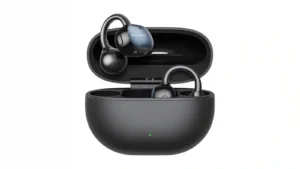
Choose the UU2 for unusually full open-ear sound, all-day comfort, strong battery life and excellent value. Skip it if you need sealed-bud isolation, consistently strong calls, or zero tolerance for...
Pros: Overall satisfaction, Sound quality
Cons: Spatial audio
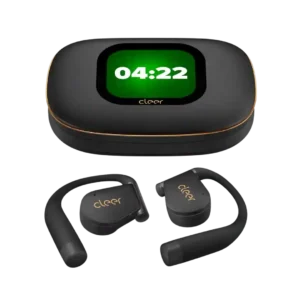
Best for all-day comfort, secure open-ear awareness, long battery life, and a genuinely useful touchscreen case. Skip it if deep bass, strong isolation, compact size, or consistently premium music quality...
Pros: Overall satisfaction, Carry case quality
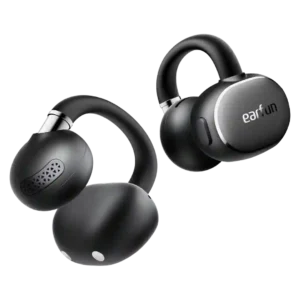
Best for lightweight all-day comfort, outstanding battery life, dependable physical controls, and premium features at a budget price. Skip it if you need deep bass, noise isolation, flawless high-volume sound,...
Pros: Overall satisfaction, Sound quality
Cons: Maximum volume clarity, Noise isolation (passive)
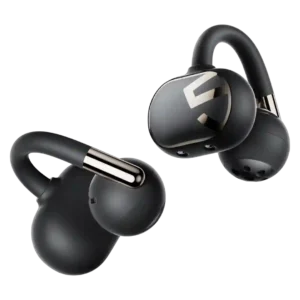
Best for featherlight all-day comfort, secure workout fit, strong open-ear sound, and unusually rich features for the price. Skip it if you need ANC, deep sub-bass, high volume in noisy...
Pros: Comfort during long use, Sound quality
Cons: Carry case quality, Touch control responsiveness