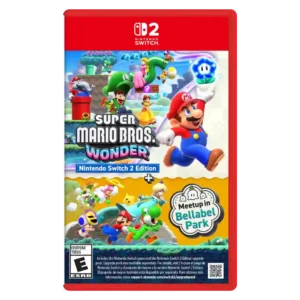
Super Mario Bros. Wonder: Nintendo Switch 2 Edition + Meetup in Bellabel Park
Where It Has the Edge
- load times is 3.8 vs 1.6. Faster loading is a welcome Switch 2 refinement, though several writers note that the original load times were...

Based on 70 scored reviews
Scorata scores summarize analyzed review evidence on a 1–5 scale; they are not laboratory measurements or a simple average of customer star ratings. Feature scores summarize the reviews covering that feature. The overall score averages feature scores within each review, then combines review averages. When both expert and customer evidence are available, those two groups receive equal weight. Products can have different review coverage, so small score gaps do not establish a winner.
Recommendations prioritize important features for the category, with a score of at least 3.5, a gap of at least 0.25 points and at least two supporting reviews per product. Features with widely varying scores or broad connectivity contexts are excluded from recommendations. These safeguards do not establish statistical significance.
Quick verdict
The review evidence points to a tradeoff: load times versus content variety and art direction. Choose according to which strengths matter more to you; the overall score alone does not settle that choice.
Choose Super Mario Bros. Wonder: Nintendo Switch 2 Edition + Meetup in Bellabel Park for load times.
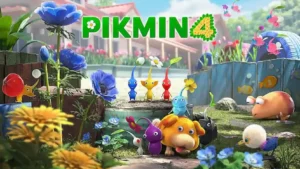
Choose Pikmin 4: Nintendo Switch 2 Edition + Dandori Academy for content variety and art direction.
Scores are out of 5. Missing scores mean missing review evidence, not a missing feature.
Wonder’s base campaign remains one of the most original modern 2D platformers, packed with surprising transformations and level ideas. The expansion is less consistent, often remixing existing environments even when its best bosses and co-op games feel fresh.
Several Academy maps are criticized for being copied directly from older stages, weakening the promised novelty.
Faster loading is a welcome Switch 2 refinement, though several writers note that the original load times were already acceptable. It improves polish more than it changes the experience.
Several reviewers report disappointingly slow loads, with some finding the Switch 2 edition slower than the original. Others notice little difference or describe improvement, making results inconsistent.
Most writers regard this as the definitive way to play Wonder thanks to sharper visuals, smoother performance, tougher challenges, better bosses, and expanded multiplayer. The remaster is much less essential for returning solo players who already exhausted the original.
The new hardware brings cleaner visuals and extra challenges without major campaign changes. Whether that counts as a thoughtful refresh or a bare-minimum port strongly divides opinion.
The story contains more dialogue than one writer expected for a 2D Mario game, but the amount is treated as a mild observation rather than a serious problem.
Rescue Corps conversations are lively and full of humorous exchanges.
The new zoomed-out and Player One-focused camera options are welcomed for making local co-op easier to read and follow. There are still moments where the wider framing or multiplayer camera behavior can feel awkward.
A low-to-the-ground view effectively emphasizes the huge scale of ordinary surroundings.
Bellabel Park can be personalized with flowers and cosmetic touches, and some writers enjoy gradually sprucing it up. The customization is modest rather than a deep creative sandbox.
Pikmin 4 allows players to choose the order and pace of many activities rather than constantly racing a strict overall timer.
The new boss encounters give combat more interesting attack patterns and counterplay than the base game often had. A few critics still dislike the stop-start rhythm of waiting for openings, so the fights do not satisfy everyone.
Fights add action to the exploration, but the relatively simple combat is less compelling than experimenting with Pikmin abilities.
Bellabel Park adds bosses, training missions, co-op games, competitive attractions, collectibles, and new abilities, giving the package a broad spread of activities. The main reservation is that many additions remix existing stages or cluster around similar multiplayer ideas.
Exploration, tactical puzzles, caves, and defense battles ensure the original game has more variety than its simple premise suggests.
The vivid, expressive visual style is still one of Wonder’s defining strengths, with the sharper Switch 2 presentation helping it pop. A minority view finds the art design less impressive than the gameplay creativity around it.
Colorful, carefully composed miniature scenery gives Pikmin 4 a distinctive and lovingly crafted visual identity.
Secrets, collectibles, and optional discoveries remain enjoyable reasons to explore and replay stages, with solo play often preferred when hunting everything down. Bellabel Park adds more things to collect, though not all rewards are equally compelling.
Everyday gardens and rooms become inviting miniature worlds full of treasure, cave entrances, and unexpected detours. Discovering one more item is often the highlight of the game.
The original Wonder campaign remains the package’s biggest asset: imaginative, polished, and consistently enjoyable even years after release. The expansion adds more around it without displacing that core experience.
Exploring, assembling a squad, and carrying home surprising treasures remains deeply satisfying and difficult to put down.
Wonder Flowers, badges, new Dual Badges, and the Super Flower Pot keep the mechanics playful and flexible. Dual Badges and Luma can sometimes feel overpowered or redundant, but the core platforming systems remain excellent.
Controlling different Pikmin types is strategic yet approachable, with more opportunities for planning and creative solutions than first impressions suggest.
Wonder’s passive online ghosts, standees, and Search Party assistance are praised for creating a helpful sense of other players being present without turning the campaign into direct competition.
Shared Dandori exams and rankings create the feeling of a community optimizing the same problems together.
Training Camp and harder boss variants finally give experienced players tougher tests, while Assist Mode and support options preserve a gentle route for newcomers. The base campaign and some Koopaling fights can still feel too easy for veteran players.
The campaign generally welcomes new players without punishing them, while Graduate Academy exams demand serious precision. Some veterans find the main story too easy.
The new single-player additions can move at an appealingly brisk clip, with fast Training Courses helping the expansion feel easy to dip into between longer campaign sessions.
The campaign balances broad exploration with short side activities, keeping progress steady rather than repetitive or stressful.
Cutscenes are praised for communicating the simple story efficiently without burying the player in text, keeping the writing light and functional.
The rescue story’s light comic writing keeps its relatively simple plot entertaining.
Assist Mode, Luma, forgiving character choices, GameShare, and strong couch co-op make this an easy game to share across ages and skill levels. Its family appeal is strongest when several people can actually play together.
The charming dog and funny spoken commands create moments likely to amuse younger players, although some nighttime battles are tense.
The short opening tutorial is easy to follow, while Training Camp sometimes functions like a disguised advanced tutorial in a way reviewers largely appreciate. It teaches through focused challenges rather than long explanations.
Early lessons and Academy practice explain planning well and offer helpful reminders, even for players returning after a break.
The 4K docked presentation is consistently described as sharper, brighter, and more vivid, with characters and colors benefiting most. Because the original already looked strong, some writers see this as refinement rather than a transformative leap.
Native 4K docked and sharper handheld visuals make Pikmin’s miniature environments look cleaner and more detailed. Some find the change spectacular; others regard it as barely noticeable without a comparison.
GameChat, greetings, and communication-heavy co-op give the upgrade a more social feel. GameChat and teamwork are useful additions, while greeting collectibles can feel disposable.
Medal sharing and online comparisons could sustain conversation and friendly rivalry between weekly events.
The new story material is deliberately simple and mostly serves as a reason to hunt the Koopalings. Its presentation is pleasant, but the tracking subplot and ending can feel slight or anticlimactic.
The rescue plot is simple but charming, with humorous moments and an inviting premise rather than intricate storytelling.
Wonder’s vivid presentation and playful movement continue to pull players into the Flower Kingdom, with the Switch 2 polish strengthening an already engaging sense of place.
The sharp, detailed world can feel like a living tabletop diorama, making ordinary gardens rewarding to revisit.
Dual Badges add useful build flexibility by combining two abilities, creating new movement and difficulty options. Some writers think they are overpowered, make base badges redundant, or are not explored deeply enough by the new missions.
Training Oatchi to handle increasingly difficult carrying and movement tasks opens satisfying new tactical options.
Mission goals cover timed clears, enemy defeats, coin collection, invincibility runs, avoidance challenges, and more. That spread keeps Training Camp fresher than its reused stages might suggest.
Dandori Battles, deep caves, rescue missions, and tense nighttime defense expeditions help keep the lengthy adventure varied.
The upgrade gets players into its new content quickly, with a short tutorial and early Bellabel Park access. Mouse-assisted Luma controls also give less experienced players an intuitive entry point.
A welcoming introduction helps beginners get comfortable with squad management. Some find the early tutorials overly persistent.
Bellabel Water, unlockable badges, decorations, and collectibles give Bellabel Park visible progression, but the loop can feel shallow beside the main campaign. Wonder Seed gating in the base game is also a frustration for at least one writer.
Medals, rewards, stamps, and additional attempts can motivate continued practice, though the prizes are not universally exciting.
Tiny world and character details continue to reward close attention, helping the Flower Kingdom feel carefully crafted rather than merely colorful.
Grass, household objects, water, and Pikmin themselves gain extra definition, revealing the artistry of the small-scale world. A few new trial areas look flatter and less inspired.
Performance is generally praised for holding a smooth 60fps, including moments that could dip on the original Switch. The upgrade is technically clean even when the visual difference itself is not dramatic.
Even with the frequently cited 30fps cap, several players describe the adventure as smooth enough for its pace; another source reports exceptionally stable higher-frame-rate play.
Wonder still generates the smiles, laughter, and childlike delight that defined the original release. The best new co-op games and surreal level ideas reinforce that playful emotional pull.
Losing Pikmin can feel surprisingly sad, making the safety of the tiny squad matter.
Co-op is frequently described as the strongest part of Bellabel Park, especially challenges built around communication, shared counting, platform placement, and coordinated movement. It can get chaotic, but that chaos is often part of the appeal.
GameShare lowers the barrier to playing Dandori Battles with a friend. The underlying campaign’s limited secondary-player role is still considered underdeveloped.
The underlying 2D controls remain one of Wonder’s clearest strengths, with movement repeatedly described as tight, smooth, and exceptionally responsive. That strong control foundation also makes the harder new challenges satisfying.
Traditional commands remain reliable, but spoken Oatchi commands may misfire, miss requests, or react to voices in the room.
Value depends sharply on your starting point and play style. First-time buyers and frequent multiplayer groups often see a worthwhile package, while returning solo owners regularly question paying for relatively limited solo additions.
The graphics-and-challenges tradeoff is attractive at a low price for some, but slower loads and minimal improvements lead others to reject it.
Mouse controls, GameShare, GameChat, and other Switch 2-specific features are generally well integrated, especially in co-op. Some implementations are narrow or feel like hardware showcases rather than essential additions.
GameShare is a welcome Switch 2 addition, but missing mouse input and limited higher-frame-rate options leave the hardware potential underused.
The expansion is most convincing when its harder challenges, creative bosses, and multiplayer attractions match how you play. Newcomers and social players often see substantial value, while returning solo players frequently describe Bellabel Park as optional or inessential.
The relatively inexpensive Upgrade Pack softens the disappointment of limited extras. Value remains highly dependent on enjoying timed Dandori trials and appreciating the visual bump.
Save transfer is handled smoothly, allowing prior progress to carry into the Switch 2 edition without friction.
An existing player appreciated being able to transfer their Switch save rather than starting over.
The base game still has strong replay appeal through secrets, badges, and polished stages, while Bellabel Park adds more reasons to return with friends. Long-term interest in the competitive attractions is far less certain.
High-score chasing, new monthly trials, and the already sizable campaign create reasons to return. Reused maps and restricted exams can also make repeat play feel less worthwhile.
Bellabel Park’s presentation can become visually cluttered, and at least two writers find the mode organization confusing. The underlying activities are fun, but the interface does not always make them easy to parse.
A prominent Academy notice on the title screen looks intrusive to some players, undercutting an otherwise charming presentation.
Wonder’s original level design remains a standout, and the best Training Camp and Koopaling remixes find smart new uses for familiar spaces. Some expansion stages are criticized as recycled or less inspired than the base campaign.
The campaign’s varied miniature settings and some clever Academy layouts earn praise, but copied challenge maps and repetitive caves draw criticism.
Bellabel Park greatly expands multiplayer, but quality varies by mode. Local co-op is the consensus highlight, while competitive and online attractions are more often called shallow, repetitive, or overly dependent on having the right group.
GameShare makes friend Dandori Battles more accessible across consoles, strengthening the game’s head-to-head appeal.
Finding scattered Koopaling tents and moving between some activities can be awkward, and a few writers call the mode layout confusing or the new stages too quick to navigate. Others enjoy revisiting the world map as part of the hunt.
The map provides a practical way to plan routes through the large, treasure-filled locations.
The Flower Kingdom is praised as an unusually well-realized Mario setting, with its distinct identity helping Wonder push beyond the familiar Mushroom Kingdom backdrop.
The game cleverly reframes ordinary household and outdoor spaces as giant environments filled with surprises and personality.
The Donut Block Maker attraction and select avoidance challenges introduce simple but satisfying puzzle-like problems that fit naturally with Wonder’s platforming.
Combining Pikmin abilities to reach hidden objects and navigate obstacles is satisfying, though not everyone finds the caves or puzzles equally inventive.
Training Camp’s short objective-based missions are widely praised for turning familiar stages into focused tests of speed, avoidance, combat, and execution. Some feel slight or tutorial-like, but the stronger challenges are a major solo highlight.
Optional challenges and tense nighttime defense missions enrich the adventure without forcing a single way to enjoy the main campaign.
Switch 2 performance is consistently strong, combining 4K output with smooth play and very few technical complaints. The improvements are more about refinement and stability than rescuing a poorly performing original.
Views differ between smooth operation and disappointing technical progress, especially concerning the frame-rate ceiling and longer loading times.
Medals and practice perks provide some incentive to improve, but photo frames, stamps, and similar cosmetic unlocks are too slight for several players.
Assist Mode, Co-Star Luma, wider camera options, and beginner-focused controls make Wonder much easier to share with less experienced players. A few writers question locking some accommodations behind the paid Switch 2 edition.
Luma’s mouse controls are singled out for their precision, with the cursor-based implementation feeling unusually well suited to the Switch 2 hardware.
Oatchi is a lovable, flexible helper who improves hauling, travel, and fights. His powerful early abilities can also reduce the difficulty too much.
Wonder’s expressive animation remains a major strength, and the higher-resolution presentation makes small character motions and reactions stand out more clearly. The new flower transformation also gets praise for its playful animation.
The Flower Kingdom keeps its bright, whimsical charm, and Bellabel Park extends that cheerful social vibe. The familiar environments can make the expansion feel less fresh than the atmosphere initially suggests.
The more combat-focused attractions land well when they lean into Wonder’s movement and power-ups, especially bubble-gun fights and the battle-royale-style mode. They work best as energetic group diversions rather than deep competitive systems.
Rescued castaways have distinct personalities that give the supporting cast character.
Rosalina is a widely welcomed roster addition, while Co-Star Luma gives a second player a very different support role. Rosalina’s moveset is fairly conventional and Luma is deliberately limited, so the new characters add accessibility more than mechanical depth.
The secondary-player pebble-throwing role feels tacked on and can make an already easy campaign even simpler.
Recovering seemingly mundane objects becomes rewarding because each discovery has whimsical names and a satisfying sense of completion.
Support and expert badges help groups with mixed skill levels compete more comfortably. Reviewers like that stronger and weaker players can adjust difficulty without changing the basic attraction rules.
The original adventure is rich with exploration and side activities, yet the Switch 2-only additions feel sparse at release. More Academy stages are planned rather than immediately available.
Local multiplayer is where Bellabel Park most often shines, with couch play producing the strongest laughs, teamwork, and party-game energy. Its value drops sharply for players who cannot regularly gather other people.
The new efficiency trials can be wonderfully addictive, especially when fine-tuning routes for higher medals. The limited selection at launch and familiar stage layouts leave some players underwhelmed.
Practice is broadly accessible, but scored exams operate in specific real-world windows with limited attempts. Some enjoy the exam-day stakes, while others find the restrictions inconvenient.
Only a small batch of new trials arrives each month rather than the full promised set at launch. Although that may encourage recurring visits, many would rather have the complete collection immediately.
Keeping progress from the free demo makes trying the game low-risk before committing to the full edition.
The playable sample gives a useful taste of campaign exploration and Dandori exams, and hands-on practice even converted a skeptical player.
The roller-skate and other racing attractions can be surprisingly enjoyable, with momentum giving some races extra texture. Other races feel basic or too close to familiar party-game ideas.
Bellabel Water gives the park a steady reward loop, but random flowers and repeated training runs can make completion feel convoluted or grindy. The system is more appealing as light progression than as a reason to chase everything.
The toughest Training Camp missions and rematches are praised as exactly the kind of postgame tests experienced Mario players wanted. They extend the game by pushing precision and mastery rather than simply adding more easy stages.
Sharper Switch 2 image quality makes facial expressions and small character reactions noticeably clearer, reinforcing Wonder’s expressive presentation.
The package is widely viewed as a strong continuation of classic 2D Mario while preserving the experimentation that made Wonder feel fresh. Many writers place the base game among the franchise’s best side-scrolling entries.
Most sources criticize the lack of a 60fps option despite stronger Switch 2 hardware, although a minority report improved motion. Several still consider the 30fps presentation comfortable for the slower-paced strategy.
The dominant reaction is that Wonder remains extremely fun, with the new bosses, challenges, and best co-op attractions adding more reasons to play. The weaker competitive games and recycled content temper that enthusiasm but rarely erase it.
There is a substantial amount of adventure beyond the main objective, especially for players chasing full completion.
Randomized flower rewards and the need to replay challenges for more Bellabel Water can turn completion into a grind. Several writers enjoy the park loop casually but do not see full completion as especially rewarding.
Handheld play remains smooth and attractive, and the sharper presentation carries over well away from the TV. The biggest visual gains are still more obvious in docked 4K mode.
The Rescue Corps’ banter and absurd descriptions of everyday treasures add a consistently playful tone.
The base game is still celebrated for constant invention, while the best new boss and co-op ideas cleverly reuse those mechanics. Bellabel Park is less revolutionary overall because much of it remixes existing levels and party-game formats.
The game accommodates a wide span of skill levels: newcomers can lean on support options while later challenges ramp into demanding tests. This makes the path from beginner play to harder mastery unusually flexible.
The randomized Bellabel Water reward system is compared to a gacha or loot-box-style mechanic without real-money spending. Its limited cosmetic rewards make the randomness feel more annoying than exciting.
Friends-only online play is one of the clearest recurring complaints. The lack of public matchmaking, random lobbies, or CPU substitutes leaves major attractions inaccessible when your own group is unavailable.
Some writers object to charging for visual or accessibility improvements that could have been free, while others think the amount of new playable content justifies the paid upgrade. The fairness question depends heavily on which additions you actually use.
Mario’s running, jumping, wall movement, and badge-assisted traversal still feel exceptionally fluid. The new movement options build on an already strong platforming foundation rather than replacing it.
Online performance reports are mixed: one session ran cleanly without major hiccups, while another writer experienced severe input lag over distance. Connection quality can therefore matter a lot for timing-heavy attractions.
The original Pikmin 4 adventure remains widely loved for its tactical creativity, charm, and discovery. Reservations focus much more on the scope of the Switch 2 upgrade than on the underlying game.
Photo-mode stamps are poor incentives for players who rarely use the camera feature.
Cross-game cosmetics and challenges connect console achievements to the mobile Pikmin experience, appealing to players who use both.
The harder Training Camp stages benefit from Wonder’s precise platforming, demanding tight timing and leaving very little margin for error. Reviewers who wanted expert-level tests respond especially well to these challenges.
The package is repeatedly praised for Nintendo-level polish, from animation details to smooth integration with old saves and carefully built challenge variants. Even critics of the expansion’s value usually acknowledge the quality of execution.
Phanto Tag is the clear favorite among stealth-like attractions, turning hide-and-seek and prop-hunt ideas into a tense, funny multiplayer game. Other stealth-flavored activities are less consistently memorable.
Dividing Pikmin across jobs, selecting special abilities, and finding efficient routes produce satisfying tactical decisions. The main story is more forgiving than older entries, but Academy stages push mastery further.
Wonder Effects remain visually playful and surreal, turning familiar 2D stages into psychedelic set pieces. The Switch 2 presentation makes those transformations cleaner without changing their underlying ideas.
Wonder Flowers continue to make stages feel reactive by warping environments, animating objects, and changing the rules mid-level. That interactivity remains central to the game’s surprise factor.
The expanded assistance tools make this especially approachable for younger players, and several writers specifically frame it as a good fit for parents playing with kids. Some of the lighter park content also seems aimed more at children than veteran players.
Moving back and forth through menus between challenges can feel like a drag, and the way some Bellabel Park modes are organized is not always immediately clear.
The new and returning voice performances receive warm praise, including Rosalina’s new lines and Mario’s performance blending naturally with the wider cast.
Talking to Oatchi can be amusing and occasionally convenient, particularly with the console nearby. False triggers, inconsistent recognition, and redundant button commands make the novelty wear thin for others.
The seven Koopaling encounters are one of the most consistently praised additions, bringing far more personality, variety, and mechanical creativity than the original bosses. Some writers still find them too easy, short, or rhythm-breaking, so enthusiasm is not universal.
The short Koopaling tracking storyline is criticized as dull, suggesting the quest structure adds less excitement than the battles it leads to.
The audiovisual weirdness of Wonder’s transforming stages helps keep players alert and reinforces the game’s playful sensory identity.
Existing progress carries over cleanly from the Switch version, letting returning players jump into the upgraded campaign without starting over.
Missing Joy-Con 2 mouse support is one of the most consistent complaints, particularly because pointing and commanding Pikmin seems ideal for the control scheme.
The soundtrack is usually described as catchy, joyful, and memorable, with musical stages remaining standout moments. One review is notably cooler on the music, so praise is not unanimous.

Best for fluid traversal, rewarding exploration, striking art, and forgiving quality-of-life features. Skip it if you want deep combat, radical genre innovation, or consistently demanding bosses.
Pros: difficulty balance, boss design
Cons: innovation, sandbox freedom

Best for superb combat, inventive builds, and richly voiced characters. Skip it if repeated runs, resource gathering, or visually busy battles outweigh the appeal of steady progress.
Pros: overall quality, combat system
Cons: pacing, grind level

Good if you want a beautiful, demanding survival sandbox built around exploration, building, progression, and memorable co-op. Skip it if long resource runs, harsh death recovery, and deliberate pacing sound...
Pros: town-building system, exploration quality
Cons: grind level, fast travel convenience
Choose Clair Obscur if you want a story-rich RPG with thrilling timed combat, gorgeous art, and standout music. Skip it if poor maps, tight parry timing, or occasional bugs and...
Pros: narrative quality, combat system
Cons: map and navigation design, menu usability