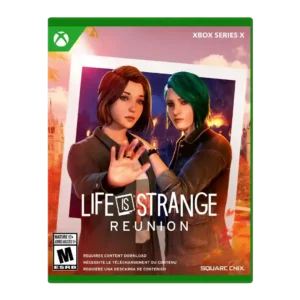
Compare Life is Strange: Reunion vs Rivage

Life is Strange: Reunion

Life is Strange: Reunion

Overall score 3.5 / 5

Based on 57 scored reviews

vs
Rivage

Rivage

Overall score 3.5 / 5

Based on 18 scored reviews

How we score

Scorata scores summarize analyzed review evidence on a 1–5 scale; they are not laboratory measurements or a simple average of customer star ratings. Feature scores summarize the reviews covering that feature. The overall score averages feature scores within each review, then combines review averages. When both expert and customer evidence are available, those two groups receive equal weight. Products can have different review coverage, so small score gaps do not establish a winner.

Recommendations prioritize important features for the category, with a score of at least 3.5, a gap of at least 0.25 points and at least two supporting reviews per product. Features with widely varying scores or broad connectivity contexts are excluded from recommendations. These safeguards do not establish statistical significance.

Quick verdict

What each product is best for

The review evidence points to a tradeoff: replay value and art direction versus content variety and innovation. Choose according to which strengths matter more to you; the overall score alone does not settle that choice.

Choose Life is Strange: Reunion for replay value and art direction.

Choose Rivage for content variety and innovation.

Why these recommendations?

Life is Strange: Reunion

Where It Has the Edge

  • replay value is 4.4 vs 3.7. Missable clues, multiple endings, relationship variations, and character fates give committed players solid reasons to revisit the story.
  • art direction is 4.8 vs 4.5. The warm autumn palette and lightly painterly presentation preserve the series’ distinctive visual identity while giving Caledon an...

Rivage

Where It Has the Edge

  • content variety is 5.0 vs 1.9. A broad mix of logic, mechanical, auditory and environmental puzzles keeps the small station busy.
  • innovation is 4.5 vs 2.0. Randomized codes resist copied solutions, while the time loop and clue tracking give the familiar station mystery its...
Life is Strange: Reunion 3.5 overall score
Rivage 3.5 overall score

Compare features

Scores are out of 5. Missing scores mean missing review evidence, not a missing feature.

Scored on both products

Other features

Accessibility options
Life is Strange: Reunion
5.0

The accessibility suite is unusually broad, combining profile presets with extensive subtitle, timing, interaction-highlight, sequence-skip, and content-warning controls.

Rivage
1.0

Color based puzzles create a serious barrier without color blind settings, a gap noted in both PC and Xbox coverage.

Originality
Life is Strange: Reunion
1.8

Familiar settings, restored powers, and heavy reliance on Max and Chloe make the game feel more like nostalgic course correction than a fresh direction.

Rivage
5.0

Randomized codes give each playthrough its own answers, an uncommon choice for a puzzle game.

Content variety
Life is Strange: Reunion
1.9

Reused Caledon locations, a small number of new spaces, and a narrow set of activities make the adventure feel condensed and repetitive.

Rivage
5.0

A broad mix of logic, mechanical, auditory and environmental puzzles keeps the small station busy.

Environmental detail
Life is Strange: Reunion
2.0

Some spaces feel rushed and under-detailed, reinforcing the impression that the reused setting did not receive a full finishing pass.

Rivage
5.0

Personal rooms, notes and everyday objects give A.R.E.S. a convincing history and often carry useful clues.

Innovation
Life is Strange: Reunion
2.0

This finale stays close to the established formula and introduces little that feels genuinely new, even when the dual-protagonist setup works well.

Rivage
4.5

Randomized codes resist copied solutions, while the time loop and clue tracking give the familiar station mystery its own identity.

Character development
Life is Strange: Reunion
3.9

Older versions of Max and Chloe feel more mature and emotionally layered to many players, while dissenting voices think they remain too close to their teenage selves or skip needed growth.

Rivage
2.8

Some find the crew more human as their histories unfold, while others see thin, one-note personalities.

Immersion
Life is Strange: Reunion
3.7

The warm setting and central relationship can be absorbing, but public secret conversations, reused spaces, and sparse interaction sometimes expose the game’s artificiality.

Rivage
4.8

Detailed rooms, first-person inspection and the isolated soundscape draw players into the station despite interface friction.

Difficulty balance
Life is Strange: Reunion
2.7

Most puzzles and decisions are easy to read, with Chloe’s irreversible Backtalk exchanges supplying more pressure than Max’s forgiving rewind ability.

Rivage
3.4

The puzzles can be gratifyingly demanding, but their steepest barriers will test anyone who wants consistent guidance.

Fun factor
Life is Strange: Reunion
4.4

Players invested in the characters generally have a very good time, especially when swapping protagonists or using Backtalk, despite the limited action.

Rivage
3.8

Players who enjoy patient deduction often find the game absorbing; repeated searches and resets frustrate others.

Exploration quality
Life is Strange: Reunion
3.2

Optional clues and dense interactables can reward careful investigation, but condensed or reused spaces limit discovery and leave some areas feeling stale.

Rivage
2.7

The station rewards inspection, though unclear objectives and power limits can turn discovery into backtracking.

Onboarding experience
Life is Strange: Reunion
2.0

The opening recap is dense and confusing, so newcomers may understand the basic setup without gaining the character history needed for the emotional payoff.

Rivage
1.5

The game introduces its central loop with little explanation, leaving the first steps more confusing than they need to be.

Writing quality
Life is Strange: Reunion
3.1

Lead-character scenes can be tender, funny, and emotionally precise, but the wider script draws criticism for retcon-heavy exposition, forced exchanges, and uneven plotting.

Rivage
2.7

Written logs can give the crew and their isolation texture, but other critics find the characterization and time-loop premise underdeveloped.

Atmosphere
Life is Strange: Reunion
4.3

The cozy fall setting, intimate pauses, and indie music create a strong sense of place for most players, though a few found some environments sterile or emotionally flat.

Rivage
4.6

The empty station balances lived-in warmth with eerie isolation; its strange phenomena deepen the mystery.

Emotional impact
Life is Strange: Reunion
4.3

The reunion consistently lands hardest in quiet conversations, reconciliations, and the final farewell, producing warmth, sadness, and closure even for some otherwise critical players.

Rivage
4.0

Solving difficult puzzles can create a welcome sense of achievement amid the isolation.

Art direction
Life is Strange: Reunion
4.8

The warm autumn palette and lightly painterly presentation preserve the series’ distinctive visual identity while giving Caledon an inviting, bittersweet look.

Rivage
4.5

The station has a clean, consistent sci-fi identity, though one critic finds some visual details suspect.

Core gameplay loop
Life is Strange: Reunion
2.6

The familiar loop of walking, talking, investigating, and rewinding is approachable and story-focused, but players seeking active or demanding gameplay may find it too passive.

Rivage
2.8

Saving knowledge between loops can make each reset purposeful, but power limits also cause repeated routes and wasted attempts.

Polish
Life is Strange: Reunion
2.3

Lighting errors, clipping, texture loading, missing-feeling scenes, and other rough edges make the production feel hurried despite its strong artistic moments.

Rivage
2.0

Critics point to uneven puzzle implementation and PS5 technical roughness around an otherwise carefully built station.

Frame rate stability
Life is Strange: Reunion
1.8

Scene transitions and busy areas can stutter or dip noticeably, especially on PS5, adding to the sense of uneven technical preparation.

Rivage
2.0

One PS5 assessment reports inconsistent frame rates in parts of the station.

Side character depth
Life is Strange: Reunion
2.9

Moses, Amanda, Safi, and several returning faces earn praise in individual moments, but much of the supporting cast is sidelined, flattened, or used mainly to move the mystery forward.

Rivage
3.0

Crew portrayals divide opinion: some see rounded personalities emerging from the logs, others find them thin.

Pacing
Life is Strange: Reunion
2.5

Some find the roughly eight-to-ten-hour length focused and well judged; others experience a slow opening, rushed explanations, dull stretches, or an abrupt finale.

Rivage
2.7

Unhurried deduction suits the setting, while extra puzzle steps and frequent resets disrupt momentum for others.

Narrative quality
Life is Strange: Reunion
3.4

The story is the main fault line: admirers find a focused, heartfelt mystery and satisfying farewell, while detractors see retcons, thin subplots, and an underdeveloped central fire investigation.

Rivage
3.3

The missing-crew mystery draws some players onward, but pacing, character depth and the ending divide opinion.

Graphics quality
Life is Strange: Reunion
3.8

Autumn color, lighting, and character models can look gorgeous, but texture pop-in, oversaturation bugs, clipping, and low-detail assets make visual quality inconsistent.

Rivage
3.7

Many praise the station’s looks, while critics report grainy or blurry rendering that makes text difficult to read.

Comfort and build

World-building
Life is Strange: Reunion
1.0

One especially negative assessment finds Caledon lifeless and its conversations narrowly devoted to exposition, making the setting feel populated by plot devices rather than people.

Rivage
5.0

Personal rooms and everyday clutter make A.R.E.S. feel like a place people lived in.

Sound design
Life is Strange: Reunion
5.0

The overall audio presentation is rich and cohesive, supporting the intimate tone beyond the individual strengths of the music and performances.

Rivage
4.5

Quiet machinery and other restrained effects support isolation, with sound-based puzzles adding variety.

Puzzle design
Life is Strange: Reunion
3.3

Rewind-based investigation occasionally produces clever, satisfying problems, but most puzzles are simple, sparse, and rarely test the player for long.

Rivage
3.6

The best puzzles connect machinery, clues and station spaces in satisfying ways; guesswork and obscure steps make the quality uneven.

Level design
Life is Strange: Reunion
5.0

The previewed locations stand out for environmental storytelling, charm, and personality-rich visual composition.

Rivage
4.8

A.R.E.S. is compact but distinctive, with rooms that reveal the people who occupied them.

Performance

Performance optimization
Life is Strange: Reunion
4.0

A few playthroughs ran smoothly with few problems, but others report conspicuous performance and presentation faults, making platform experience inconsistent.

Rivage
1.0

One PC assessment reports grainy rendering that resists settings changes.

Soundtrack quality
Life is Strange: Reunion
4.8

The hazy indie soundtrack is one of the strongest points of agreement, enhancing reflective scenes and delivering several memorable emotional peaks.

Rivage
3.7

Some admire the music, while another finds it too soft during long puzzle stalls.

Ownership and support

Value for money
Life is Strange: Reunion
3.0

The lower launch price and replay paths feel fair to dedicated fans, but the short runtime and technical roughness make the purchase harder to justify for others.

Rivage
4.5

Players who enjoy lengthy logic puzzles generally consider the asking price fair for the content.

Replay value
Life is Strange: Reunion
4.4

Missable clues, multiple endings, relationship variations, and character fates give committed players solid reasons to revisit the story.

Rivage
3.7

The mystery loses some surprise after one run, but alternate endings and low-loop challenges offer a reason to return.

Controls and connectivity

Voice acting
Life is Strange: Reunion
4.8

The cast is consistently praised, with Hannah Telle and Rhianna DeVries giving Max and Chloe warmth, humor, vulnerability, and believable chemistry.

Rivage
3.5

One reviewer praises the exhausted audio performances, another finds logs stilted, and a PS5 assessment calls the work serviceable.

Evidence available for one product

Other features

Achievement list quality
Life is Strange: ReunionNo score yet
Rivage
5.0

The achievement list rewards steady puzzle progress and adds optional goals, including a run under 25 loops.

Animation quality
Life is Strange: Reunion
2.3

Character movement often lacks finish: secondary characters can look stiff, and several accounts mention clipping or awkward motion even when the leads fare better.

RivageNo score yet
Bug frequency
Life is Strange: Reunion
2.2

Technical experiences vary, but pop-in, blown-out lighting, face-rig glitches, clipping, and occasional restart-worthy problems recur too often to ignore.

RivageNo score yet
Choice impact
Life is Strange: Reunion
3.5

Choice consequences divide opinion sharply. Some paths, clues, and failures can alter endings or character fates, while other decisions feel obvious, performative, or vulnerable to later retconning.

RivageNo score yet
Dialogue quality
Life is Strange: Reunion
3.1

Max and Chloe’s tender exchanges are often a highlight, yet the broader script swings between charmingly corny and awkward, repetitive, or overly expository.

RivageNo score yet
Economy and resource balance
Life is Strange: ReunionNo score yet
Rivage
1.7

Door and machine power forces route planning, yet its scarcity can make exploration feel constrained or stressful.

Facial animations
Life is Strange: Reunion
3.9

The leads’ expressions are frequently praised for carrying subtle emotion, although face-rig glitches and plasticky side characters create conspicuous low points.

RivageNo score yet
Faithfulness to franchise
Life is Strange: Reunion
4.2

For many longtime fans, the tone, music, and Max-Chloe bond restore the series’ heart and provide fitting closure. Critics see the same approach as fan service that compromises earlier choices.

RivageNo score yet
Game length
Life is Strange: ReunionNo score yet
Rivage
5.0

Reported completion times vary with puzzle skill, but reviewers who discuss duration generally find it worthwhile.

Gameplay mechanics
Life is Strange: Reunion
3.7

Max’s rewind is welcomed back and often used cleverly in conversations, while Chloe’s Backtalk adds contrast; both systems are enjoyable but underused and mechanically shallow.

RivageNo score yet
Generative AI concerns
Life is Strange: ReunionNo score yet
Rivage
1.5

A few critics say uncertainty about early AI use undermined their trust in the presentation; the reviews do not establish whether generated assets remain.

Haptic feedback integration
Life is Strange: Reunion
1.0

The PS5 version offers no meaningful DualSense support, missing an easy opportunity to strengthen the rewind and investigation mechanics.

RivageNo score yet
Hint system
Life is Strange: ReunionNo score yet
Rivage
3.0

The absence of hints preserves the challenge for some, but leaves others stranded after missing a small clue.

Horror tension
Life is Strange: ReunionNo score yet
Rivage
4.0

Subtle horror colors some discoveries without making this an overt horror game.

HUD clarity
Life is Strange: ReunionNo score yet
Rivage
3.0

Saved screenshot access helps on PC, but console overlay controls and small details can hamper clue reading.

Learning curve
Life is Strange: ReunionNo score yet
Rivage
2.0

Prior comfort with demanding narrative puzzles helps; players who rely on clear direction may struggle.

World interactivity
Life is Strange: ReunionNo score yet
Rivage
4.5

Many station objects can be picked up and examined, often linking small details to later puzzles.

Controls and connectivity

Controls responsiveness
Life is Strange: ReunionNo score yet
Rivage
2.1

Keyboard and mouse suit computer puzzles better; controller object manipulation and text entry often feel fiddly.

Menu usability
Life is Strange: ReunionNo score yet
Rivage
2.0

K9 is useful as a reference but awkward to navigate while moving through the station on a controller.

Protagonist appeal
Life is Strange: Reunion
4.9

Max and Chloe are the clearest success. Their chemistry, contrasting personalities, and vulnerable reconnection carry the game for supporters and soften many of its broader weaknesses.

RivageNo score yet

Comfort and build

Mission design
Life is Strange: ReunionNo score yet
Rivage
1.7

Poor signposting is a recurring complaint, particularly when the next clue or puzzle trigger is obscure.

QTE design
Life is Strange: Reunion
1.5

Action prompts are scarce, with very few true QTEs or action sequences to break up the conversation-heavy structure.

RivageNo score yet
User interface design
Life is Strange: ReunionNo score yet
Rivage
4.3

K9’s retained passwords, cards and screenshots are useful across loops, though console navigation and simultaneous controls can be awkward.

Other Top Video Games to Consider

#1 Well Dweller
4.7

Best for fluid traversal, rewarding exploration, striking art, and forgiving quality-of-life features. Skip it if you want deep combat, radical genre innovation, or consistently demanding bosses.

Pros: difficulty balance, boss design

Cons: innovation, sandbox freedom

#2 Hades II

4.5

Best for superb combat, inventive builds, and richly voiced characters. Skip it if repeated runs, resource gathering, or visually busy battles outweigh the appeal of steady progress.

Pros: overall quality, combat system

Cons: pacing, grind level

#3 Valheim

4.5

Good if you want a beautiful, demanding survival sandbox built around exploration, building, progression, and memorable co-op. Skip it if long resource runs, harsh death recovery, and deliberate pacing sound...

Pros: town-building system, exploration quality

Cons: grind level, fast travel convenience

#4 Grand Theft Auto VI

4.5

Leonida is a breathtakingly alive crime sandbox with memorable protagonists, spectacular heists, and extraordinary detail. The tradeoff is a 30 fps ceiling, occasional control awkwardness, and some progression friction.

Pros: immersion, graphics quality

Cons: grind level, controls responsiveness