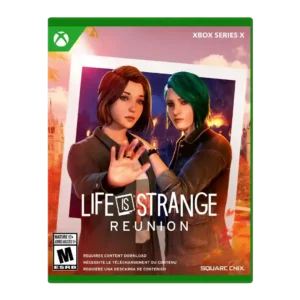
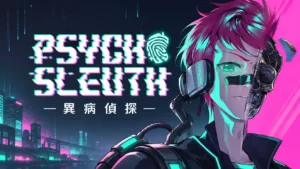
Life is Strange: Reunion
Where It Has the Edge
- art direction is 4.8 vs 4.3. The warm autumn palette and lightly painterly presentation preserve the series’ distinctive visual identity while giving Caledon an...

Scorata scores summarize analyzed review evidence on a 1–5 scale; they are not laboratory measurements or a simple average of customer star ratings. Feature scores summarize the reviews covering that feature. The overall score averages feature scores within each review, then combines review averages. When both expert and customer evidence are available, those two groups receive equal weight. Products can have different review coverage, so small score gaps do not establish a winner.
Recommendations prioritize important features for the category, with a score of at least 3.5, a gap of at least 0.25 points and at least two supporting reviews per product. Features with widely varying scores or broad connectivity contexts are excluded from recommendations. These safeguards do not establish statistical significance.
Quick verdict
The review evidence points to a tradeoff: art direction versus content variety and innovation. Choose according to which strengths matter more to you; the overall score alone does not settle that choice.
Choose Life is Strange: Reunion for art direction.
Choose Psycho-Sleuth for content variety and innovation.
Scores are out of 5. Missing scores mean missing review evidence, not a missing feature.
Reused Caledon locations, a small number of new spaces, and a narrow set of activities make the adventure feel condensed and repetitive.
New roles change the rules and relationships between chapters, helping the repeated death-game structure stay fresh.
This finale stays close to the established formula and introduces little that feels genuinely new, even when the dual-protagonist setup works well.
Cognitive distortions become inventive puzzle rules, creating unusual murder scenarios while refreshing familiar trial mechanics.
Familiar settings, restored powers, and heavy reliance on Max and Chloe make the game feel more like nostalgic course correction than a fresh direction.
The death-game setup has obvious influences, but perception-altering Pathosync abilities give its mysteries a distinctive identity.
Moses, Amanda, Safi, and several returning faces earn praise in individual moments, but much of the supporting cast is sidelined, flattened, or used mainly to move the mystery forward.
Supporting characters receive meaningful screen time and personal stories, making them more than disposable death-game participants.
Some find the roughly eight-to-ten-hour length focused and well judged; others experience a slow opening, rushed explanations, dull stretches, or an abrupt finale.
Despite minor annoyances, the story rarely becomes boring and sustains interest across its elaborate plot.
The story is the main fault line: admirers find a focused, heartfelt mystery and satisfying farewell, while detractors see retcons, thin subplots, and an underdeveloped central fire investigation.
An engrossing death game builds toward purposeful twists and a satisfying emotional payoff. Its cast and carefully constructed scenarios carry the experience.
The leads’ expressions are frequently praised for carrying subtle emotion, although face-rig glitches and plasticky side characters create conspicuous low points.
Characters’ unmoving mouths can distract from the Live2D presentation, although the small production team softens that criticism.
The familiar loop of walking, talking, investigating, and rewinding is approachable and story-focused, but players seeking active or demanding gameplay may find it too passive.
Investigating and solving trials is generally fun, though the case-summary segments can hold the player’s hand too much.
The warm setting and central relationship can be absorbing, but public secret conversations, reused spaces, and sparse interaction sometimes expose the game’s artificiality.
The unfolding mysteries encourage strong investment, with a story that can linger after the credits.
Older versions of Max and Chloe feel more mature and emotionally layered to many players, while dissenting voices think they remain too close to their teenage selves or skip needed growth.
Eccentric first impressions give way to emotional backstories and substantial depth, including for characters who initially seem like comic relief.
Lead-character scenes can be tender, funny, and emotionally precise, but the wider script draws criticism for retcon-heavy exposition, forced exchanges, and uneven plotting.
Thoughtful scenarios and strong character writing earn praise, though some gags wear thin. The cognitive-disorder premise functions more as supernatural powers than as a deep exploration of psychology.
Max and Chloe’s tender exchanges are often a highlight, yet the broader script swings between charmingly corny and awkward, repetitive, or overly expository.
Trial explanations spell out why an answer is correct, sometimes making the player feel like a spectator.
Max’s rewind is welcomed back and often used cleverly in conversations, while Chloe’s Backtalk adds contrast; both systems are enjoyable but underused and mechanically shallow.
Pathosync makes deduction inventive and engaging, but unclear power limits can cause frustration. Excessive guidance and penalties with little consequence sometimes reduce the sense of involvement and risk.
Character movement often lacks finish: secondary characters can look stiff, and several accounts mention clipping or awkward motion even when the leads fare better.
Live2D portraits can look uncanny, particularly before the artwork grows on you. Unmoving mouths are another small distraction.
The warm autumn palette and lightly painterly presentation preserve the series’ distinctive visual identity while giving Caledon an inviting, bittersweet look.
Character artwork can win you over after an initially uncanny impression. Background illustrations and anime-style visuals also help establish the atmosphere.
Choice consequences divide opinion sharply. Some paths, clues, and failures can alter endings or character fates, while other decisions feel obvious, performative, or vulnerable to later retconning.
A few short bad endings give some decisions welcome consequences. Outside those branches, the scope for meaningful choice is limited.
Players invested in the characters generally have a very good time, especially when swapping protagonists or using Backtalk, despite the limited action.
Twists, emotional character stories and enjoyable mystery solving make this an exciting, entertaining visual novel.
Most puzzles and decisions are easy to read, with Chloe’s irreversible Backtalk exchanges supplying more pressure than Max’s forgiving rewind ability.
Large health reserves make mistakes forgiving, but that leniency can drain trials of risk. Strict chapter grades sit awkwardly beside the generous survival allowance.
Autumn color, lighting, and character models can look gorgeous, but texture pop-in, oversaturation bugs, clipping, and low-detail assets make visual quality inconsistent.
The visuals help build atmosphere, but background quality is uneven. Some environments with greater 3D depth are particularly unattractive.
Lighting errors, clipping, texture loading, missing-feeling scenes, and other rough edges make the production feel hurried despite its strong artistic moments.
Technical bumps, including controller trouble and a serious pre-release bug, detract from the otherwise compelling story.
The cozy fall setting, intimate pauses, and indie music create a strong sense of place for most players, though a few found some environments sterile or emotionally flat.
Background art, cinematics, graphic imagery and voice performances combine to give the game a stronger atmosphere.
The reunion consistently lands hardest in quiet conversations, reconciliations, and the final farewell, producing warmth, sadness, and closure even for some otherwise critical players.
The characters inspire strong attachment, and the ending can be tearful. It remains affecting even beside a more emotionally poignant visual novel.
Technical experiences vary, but pop-in, blown-out lighting, face-rig glitches, clipping, and occasional restart-worthy problems recur too often to ignore.
One progress-blocking bug was encountered shortly before release. It was fixed promptly, but its severity remains a concern.
Some spaces feel rushed and under-detailed, reinforcing the impression that the reused setting did not receive a full finishing pass.
Some environments with greater 3D depth are also among the least attractive, weakening the setting’s visual appeal.
Missable clues, multiple endings, relationship variations, and character fates give committed players solid reasons to revisit the story.
The first journey is fulfilling, but solved mysteries lose their surprise. Chapter rankings offer only a limited reason to return.
The overall audio presentation is rich and cohesive, supporting the intimate tone beyond the individual strengths of the music and performances.
The overall audio presentation is serviceable rather than outstanding.
Rewind-based investigation occasionally produces clever, satisfying problems, but most puzzles are simple, sparse, and rarely test the player for long.
Perception-bending mysteries offer satisfying logical deductions, though unclear power limits can make some cases frustrating. Trials can also feel restrictive when they require a clue at one specific statement or give away too much of the solution.
The hazy indie soundtrack is one of the strongest points of agreement, enhancing reflective scenes and delivering several memorable emotional peaks.
The background music suits the scenes but is unlikely to leave a lasting impression.
Max and Chloe are the clearest success. Their chemistry, contrasting personalities, and vulnerable reconnection carry the game for supporters and soften many of its broader weaknesses.
Lyle’s secrets, manipulative tendencies and devotion to his sister make him more intriguing than a generic heroic lead.
The cast is consistently praised, with Hannah Telle and Rhianna DeVries giving Max and Chloe warmth, humor, vulnerability, and believable chemistry.
Voice performances strengthen both the characters and the broader atmosphere.
The accessibility suite is unusually broad, combining profile presets with extensive subtitle, timing, interaction-highlight, sequence-skip, and content-warning controls.
The ensemble is a major attraction, with enough attention spread across the cast to make choosing a favorite difficult.
Anime-style cutscenes and CG scenes strengthen the presentation and atmosphere. The animation can look better than the rest of the game while feeling stylistically inconsistent.
Optional clues and dense interactables can reward careful investigation, but condensed or reused spaces limit discovery and leave some areas feeling stale.
For many longtime fans, the tone, music, and Max-Chloe bond restore the series’ heart and provide fitting closure. Critics see the same approach as fan service that compromises earlier choices.
Scene transitions and busy areas can stutter or dip noticeably, especially on PS5, adding to the sense of uneven technical preparation.
A roughly twenty-hour playthrough gives the elaborate plot room to develop without overstaying its welcome.
The PS5 version offers no meaningful DualSense support, missing an easy opportunity to strengthen the rewind and investigation mechanics.
Dialogue can reveal what is wrong before the trial begins, leaving too little room for independent deduction.
The quick shifts from uplifting scenes to graphic darkness maintain a sense of unease and deny easy comfort.
Comedy breaks up the dark story, but recurring gags sometimes get pushed too far.
Abrupt jumps from humor to gruesome events create whiplash. That discomfort also appears to be a deliberate way of keeping the player unsettled.
The opening recap is dense and confusing, so newcomers may understand the basic setup without gaining the character history needed for the emotional payoff.
Compelling mysteries and an engaging ensemble make a strong impression. Technical roughness and uneven presentation temper the recommendation.
The use of blood and brutality earns praise for strengthening the atmosphere and characters.
Controller button presses do not always select clues reliably, interrupting investigations.
The previewed locations stand out for environmental storytelling, charm, and personality-rich visual composition.
Action prompts are scarce, with very few true QTEs or action sequences to break up the conversation-heavy structure.
One especially negative assessment finds Caledon lifeless and its conversations narrowly devoted to exposition, making the setting feel populated by plot devices rather than people.
A few playthroughs ran smoothly with few problems, but others report conspicuous performance and presentation faults, making platform experience inconsistent.
Reloading a previous save makes recovering from a serious mistake straightforward.
The lower launch price and replay paths feel fair to dedicated fans, but the short runtime and technical roughness make the purchase harder to justify for others.
Best for fluid traversal, rewarding exploration, striking art, and forgiving quality-of-life features. Skip it if you want deep combat, radical genre innovation, or consistently demanding bosses.
Pros: difficulty balance, boss design
Cons: innovation, sandbox freedom
Best for superb combat, inventive builds, and richly voiced characters. Skip it if repeated runs, resource gathering, or visually busy battles outweigh the appeal of steady progress.
Pros: overall quality, combat system
Cons: pacing, grind level
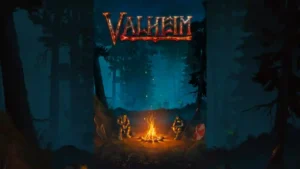
Good if you want a beautiful, demanding survival sandbox built around exploration, building, progression, and memorable co-op. Skip it if long resource runs, harsh death recovery, and deliberate pacing sound...
Pros: town-building system, exploration quality
Cons: grind level, fast travel convenience
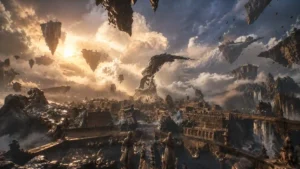
Choose Clair Obscur if you want a story-rich RPG with thrilling timed combat, gorgeous art, and standout music. Skip it if poor maps, tight parry timing, or occasional bugs and...
Pros: narrative quality, combat system
Cons: map and navigation design, menu usability