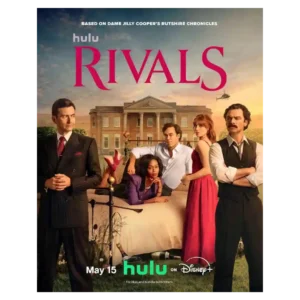
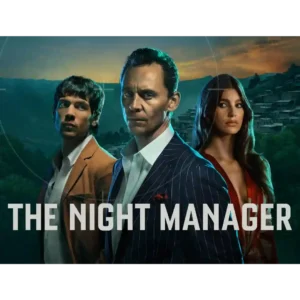
Rivals, Season 2
Where It Has the Edge
No clear scored advantage over the other product.

Scorata scores summarize analyzed review evidence on a 1–5 scale; they are not laboratory measurements or a simple average of customer star ratings. Feature scores summarize the reviews covering that feature. The overall score averages feature scores within each review, then combines review averages. When both expert and customer evidence are available, those two groups receive equal weight. Products can have different review coverage, so small score gaps do not establish a winner.
Recommendations prioritize important features for the category, with a score of at least 3.5, a gap of at least 0.25 points and at least two supporting reviews per product. Features with widely varying scores or broad connectivity contexts are excluded from recommendations. These safeguards do not establish statistical significance.
Quick verdict
The available evidence supports the recommendation below, but does not establish an overall winner. Check the remaining features against your priorities.
There is not enough comparable review evidence to recommend Rivals, Season 2 over the other product.
Choose The Night Manager, Season 2 for modern political framing and drama quality.
No clear scored advantage over the other product.
Scores are out of 5. Missing scores mean missing review evidence, not a missing feature.
The playful operatic vocal score gives the show a distinctive comic voice that comments on the onscreen excess.
The music helps heighten tension for some, but critics who mention it directly can find it overly loud or too insistent in telling viewers what to feel.
Its unusual blend of 1980s broadcasting politics, country-house soap, sexual farce, and social commentary gives the series a distinctive identity.
This is one of the most disputed areas. Fans enjoy the new complications and bold twists, but critics frequently call the season a rehash of Season 1 or a collection of familiar spy-thriller devices.
Most characters retain recognizable flaws while gaining depth, though Taggie’s repeated pining can feel tiresome and overly static.
Pine’s ability to slip rapidly into new identities still feels convincingly in character and remains part of the fun of watching him operate.
The dialogue is consistently witty, cheeky, and packed with knowingly outrageous period jokes.
At its best, restrained conversations create more tension than gunfire. At its weakest, critics call out corny lines, ominous half-sentences and clumsy foreshadowing.
Most scenes move briskly, but one ambitious dinner-party sequence interrupts its own rhythm with distracting asides.
Editing receives direct praise for keeping the intrigue tight and maintaining momentum through shifting identities, locations and parallel operations.
The season generally deepens its moral stakes by making selfish choices carry consequences. Monica’s abrupt death, however, is criticized for cutting off her agency rather than completing her arc.
The lack of consequences for the villains frustrated viewers who wanted the season’s elaborate setup to deliver a clearer sense of justice.
The show gives women and marginalized characters more space while engaging with period sexism and homophobia. Monica’s death is a major exception, criticized as a dated queer-character trope.
The Colombian setting is visually striking, but some critics object to drug-trade stereotypes or inaccuracies in how the country is portrayed.
Enthusiasm for more episodes is very high, with several critics eager for the second half and a future season.
Many viewers are eager for Season 3, especially after the cliffhanger. Others say the unresolved ending actively convinced them not to continue.
Season 2 resumes the established feuds, romances, and Rutshire tone smoothly, making the expanded story feel like a confident continuation.
The premiere reconnects smoothly to the original series, using returning characters and past consequences without making the decade-long gap feel insurmountable.
The show is knowingly cartoonish and occasionally implausible, but most critics see that unreality as part of its charm rather than a flaw.
Realism is mixed. Some critics praise the grounded atmosphere and authentic-feeling tension, while others point to disguise logic, financial details and implausibly easy infiltration as credibility problems.
The strongest romantic pairings feel unexpectedly tender and emotionally charged, especially Lizzie and Freddie and the scenes between Rupert and Taggie.
Chemistry is a major talking point. Pine and Teddy are widely praised for a charged, complicated dynamic, while Pine and Roxana draw much more divided reactions.
The adaptation preserves Jilly Cooper’s wit, sensuality, class satire, and larger-than-life characters while making thoughtful modernizing changes.
Opinion is sharply split on moving beyond le Carré’s novel. Some see a convincing continuation of his themes and moral ambiguity, while others think the Bond-like action and plotting lose his subtlety and realism.
The 1987 election, class hierarchy, workplace sexism, and Thatcher-era prejudice add context and sharper stakes, though the satire can remain soft.
The Colombia and regime-change storyline feels strikingly current to several critics, who praise the way the espionage plot echoes modern geopolitical anxieties.
The season creates strong anticipation and memorable shocks, but Monica’s episode-six ending is criticized as harmful and dramatically unjustified.
Cliffhangers reliably create anticipation episode to episode, but the season-ending cliffhanger is much more polarizing because so many major threads remain unresolved.
Escalating revenge, political scandal, and unresolved relationships keep the season tense and leave viewers eager for the remaining episodes.
Suspense is one of the clearest strengths. Reviewers repeatedly praise the tense conversations, dangerous missions and late-season set pieces for keeping the show gripping.
The scripts balance sharp dialogue, eccentric jokes, emotional turns, and complicated ensemble plotting with considerable skill.
The screenplay earns praise for tight intrigue and smart construction from fans, while detractors criticize contrivances and a less disciplined feel than Season 1.
The corporate feud, affairs, betrayals, and emotional fallout create rich soapy drama without abandoning the show’s playful tone.
The season delivers strong dramatic tension and emotional stakes, with several reviewers calling the relationships and betrayals genuinely gripping.
The expanded episode order gives the story more room to deepen characters and broaden Rutshire beyond the first season.
The six-episode run is praised for compactness, with one critic noting that the limited length helps each chapter feel important.
Greater vulnerability and consequence give the season more heart, especially in its romances and family conflicts. Monica’s death lands as anger and disappointment rather than satisfying tragedy.
The season can hit hard, especially in its final stretch. Deaths, betrayals and the villains’ victory create powerful reactions, though that impact is often anger or frustration rather than satisfaction.
As a glossy bonkbuster and heightened prime-time soap, the season delivers sex, scandal, comedy, romance, and melodrama with confidence.
As a spy thriller, the season is usually praised as polished, tense and above average. Detractors argue that familiar Bond-style tropes make it more conventional than the original.
The many affairs, business loyalties, family histories, and new characters can be difficult to track. The central Tony-Rupert-Cameron conflict remains clear enough to anchor the chaos.
The season rewards attention and often trusts viewers to connect the dots, which many appreciate. Others find the aliases, conspiracies and abrupt pivots needlessly confusing.
Hints from the wider Rutshire Chronicles suggest an appealing path toward a broader Jilly Cooper television universe.
Season 2 is deeply tied to the original, often to good effect. Some reviewers love how the past returns and gains new meaning, while others think the sequel leans too heavily on recreating Season 1.
Story momentum is generally strong, but the hybrid weekly and split-season release pattern is repeatedly criticized as confusing and frustrating.
The first half is the most common pacing complaint. Many reviewers say the season takes too long to heat up, but also agree that the back half becomes faster, tighter and more gripping.
Reversals, betrayals, scandals, and romantic shifts remain juicy and frequently jaw-dropping.
Twists are a major source of excitement, especially once the second half accelerates. Some are predictable, but many viewers still enjoy how quickly loyalties and plans reverse.
Rupert, Monica, Maud, Taggie, Sarah, and several supporting women receive richer, more mature arcs. The season is strongest when it lets the glamorous surface give way to vulnerability and consequence.
Pine’s trauma and emotional isolation add welcome depth, and Teddy grows more compelling as his vulnerability emerges. Roxana’s arc is more divisive, with some finding her layered and others underwritten or contradictory.
Large comic set pieces, interlocking secrets, and multiple revelations are handled with impressive control, particularly in the dinner-party episode.
The compact episodic structure is praised for making later chapters feel purposeful and tightly connected to the larger operation.
The ensemble is widely praised for committing fully to the show’s heightened tone while keeping its characters human. One sharply negative take found some performances embarrassed by the material.
Performances are one of the season’s strongest points. Hiddleston, Laurie, Calva, Colman, Squires and the broader ensemble repeatedly earn praise even from reviewers who dislike the plotting.
The comedy ranges from sharp dialogue to full physical farce, with many critics highlighting the season’s relentless laughs and eccentric English silliness.
The show largely avoids frivolous comedy, and at least one critic sees that straight-faced seriousness as exactly the right choice for Pine’s world.
Beneath the glossy debauchery, the season explores class, power, sexism, hidden sexuality, loyalty, consequences, and the fragility of love.
The season reaches beyond espionage mechanics into identity, loyalty, imperial power, exploitation and the cost of doing good. Some critics find those ideas rich; others think the political themes lack subtlety.
The central rivalry moves well, but some secondary relationships are rushed or denied enough screen time.
Individual episodes often move well once the mission is underway, but several reviewers find the earliest chapters plodding or overloaded with setup.
The abundant sex and nudity are central to the show’s comic identity and are often embraced as part of the fun. Some critics find the excess tiring, while others miss the first season’s freer erotic energy.
The season’s erotic charge is praised by some as a welcome part of the spy drama, while others feel the promised sexual tension never becomes convincing enough.
The best set pieces, especially the crowded dinner-party farce, are staged with precise comic timing and escalating visual chaos.
Georgi Banks-Davies earns strong praise for brisk suspense, controlled dialogue scenes and cinematic scale, though a few viewers miss Susanne Bier’s sharper visual sparkle.
The tangled romances and escalating feuds are highly compulsive. The fragmented release schedule makes the season less satisfying to consume week by week.
Many viewers found the season hard to stop watching, with cliffhangers and escalating intrigue pulling them quickly from one episode to the next.
The season is widely regarded as a confident, richer continuation that adds darker consequences and more complex relationships. A few critics find it looser or less substantial.
The new story earns strong praise for intrigue and emotional stakes, but it also draws criticism for repetition, generic spy mechanics and an incomplete arc.
Inventive camera movement and bold compositions add energy and emotional emphasis. A few flourishes are so obvious that they feel heavy-handed.
The cinematography remains polished and attractive, with Colombia, luxury interiors and international locations giving the season a premium look.
Rutshire feels expansive and lived-in, with interlocking homes, companies, political circles, and social hierarchies that support the sprawling ensemble.
The expanded network of countries, intelligence factions and power players makes the world feel bigger, though that added scale also makes the story heavier and more complex.
Big hair, crushed velvet, bright florals, and deliberately tacky fashion make the 1980s setting vivid, funny, and instantly recognizable.
Tailored suits, crisp shirts and luxury styling are part of the show’s seductive appeal and help preserve its distinctive high-end spy-thriller identity.
The hyper-saturated palette, sweeping countryside, playful camerawork, and extravagant interiors create a bold look, though some flourishes can be too much.
Glamorous locations, moody lighting and luxury surfaces remain signature strengths. Even negative reviews often concede that Season 2 looks polished and expensive.
Lavish estates, pastel pools, polo fields, television studios, and tactile period details create an immersive, affluent 1980s world.
Luxury interiors, international locations and high production values keep the series looking expensive and distinctive even when the story divides opinion.
The leads bring swagger, menace, vulnerability, romance, and comic warmth to an intentionally exaggerated world. David Tennant and Alex Hassell receive especially strong praise.
Tom Hiddleston remains the central draw for most reviewers, with his quieter, more haunted Pine praised as controlled and magnetic. A minority finds the character too dour or wooden.
The expanded ensemble is a major strength, with Claire Rushbrook, Emily Atack, Lisa McGrillis, Bella Maclean, and others turning quieter roles into memorable highlights.
The supporting ensemble is frequently excellent, with Hayley Squires, Olivia Colman, Paul Chahidi and others adding warmth, menace and texture even when their screen time is limited.
This is exuberant grown-up escapism for viewers who enjoy glamorous soap, broad comedy, and unapologetic excess.
The return is praised as rare cross-generational Sunday-night viewing, with enough polish and intrigue to appeal beyond hard-core spy-thriller fans.
Most critics find the season irresistibly funny, glamorous, and addictive. A small minority sees the same excess as vapid, exhausting, or empty.
Most reviewers find the season highly watchable despite its flaws. Strong performances, luxury locations and mounting intrigue carry even stretches that feel repetitive or slow.
Hayley Atwell fits Helen well, but her American accent is inconsistent and occasionally slips.
The action is often tense, stylish and energetic, especially later in the season. A smaller group feels the more Bond-like action pushes the show away from its grounded roots.
Some critics feel the season underuses strong supporting performers, particularly Olivia Colman and Indira Varma, while keeping Jonathan Pine overwhelmingly central.
Pine’s charm and cool still work strongly for some viewers, but other critics find this older, more withdrawn version less enjoyable or memorable.
The finale is the season’s biggest fault line. Its bold villain victory thrills some viewers, but many more resent the lack of closure and feel the season ends as half a story.
Rutshire expands beyond the central feud, adding new histories, families, social layers, and links to other Cooper stories.
Rupert’s public destruction shows how scandal, broadcasting, and political image can be weaponized to dismantle a person’s career and relationships.
The Season 2 premiere is praised as a confident return that reestablishes Pine’s world, trauma and new mission while quickly restoring danger.
The initial multi-episode drop helps viewers reacclimate, but long waits between seasons remain a frequent frustration. Weekly releases also generated strong anticipation for some viewers.
As craft, the finale can be thrilling, shocking and tightly executed. As a season ending, however, many viewers dislike its lack of resolution and abrupt handoff to Season 3.
The sequel keeps much of the original’s elegance and brooding polish, though some viewers think it has shifted toward a less sophisticated, more action-heavy tone.
Teddy is magnetic and vulnerable for many reviewers, while others see him as a generic Roper substitute. Roper’s return restores menace for some but becomes cartoonish for others.
The violence raises the stakes, but some viewers find it graphic or gratuitous, especially when the season’s darker turn piles up deaths.
The season drew overwhelmingly enthusiastic notices, including several maximum-score reactions and claims that it improves on the first season.
Carefully chosen 1980s songs reinforce the period, sharpen jokes, and heighten romance and conflict.

Best for sharp adult humor, magnetic chemistry and a deeply satisfying farewell. Skip it if familiar will-they-won’t-they plotting or deliberately messy leads are dealbreakers.
Pros: humor, writing quality

Choose Season 15 for warm, character-driven comedy, meaningful growth, and a finale that rewards longtime fans. Skip it if the short binge format, uneven replacement voices, or occasional clumsy commentary...
Pros: franchise connection, character development

Choose The Pitt Season 2 for a gripping, realistic medical drama with superb acting and emotional depth. Skip it if graphic procedures, unresolved arcs, or slower character-driven pacing bother you.
Pros: realism, emotional impact

Best for powerhouse performances, thorny character work, and a tense revenge mystery that grows richer as it goes. Skip it if abuse, trafficking, graphic violence, or deliberately messy moral questions...
Pros: main cast performance, character development
Cons: pilot episode quality