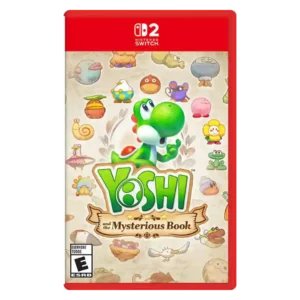

Yoshi and the Mysterious Book
Where It Has the Edge
- replay value is 4.2 vs 3.0. Revisited pages gain new creatures, interactions, collectibles, and postgame objectives, giving completionists substantial extra work. Players focused only...

Scorata scores summarize analyzed review evidence on a 1–5 scale; they are not laboratory measurements or a simple average of customer star ratings. Feature scores summarize the reviews covering that feature. The overall score averages feature scores within each review, then combines review averages. When both expert and customer evidence are available, those two groups receive equal weight. Products can have different review coverage, so small score gaps do not establish a winner.
Recommendations prioritize important features for the category, with a score of at least 3.5, a gap of at least 0.25 points and at least two supporting reviews per product. Features with widely varying scores or broad connectivity contexts are excluded from recommendations. These safeguards do not establish statistical significance.
Quick verdict
The review evidence points to a tradeoff: replay value versus pacing and animation quality. Choose according to which strengths matter more to you; the overall score alone does not settle that choice.
Choose Yoshi and the Mysterious Book for replay value.
Choose Sonic Pico Park for pacing and animation quality.
Scores are out of 5. Missing scores mean missing review evidence, not a missing feature.
The complete absence of co-op was a recurring disappointment, especially for families who enjoyed earlier Yoshi games together. One reviewer appreciated the focused single-player design, but the broader response favored having an option.
The shared problem-solving is the star: coordinating jumps, switches and character skills creates laughter even when a simple stage falls apart. Small teams work well, but bigger parties bring even more mischief.
The relaxed rhythm works well in short sessions and suits the bedtime-story atmosphere. For some reviewers, repeated dialogue, backtracking, or stop-start puzzle solving made the adventure drag.
The short stages introduce a mechanic, explore it and move on before it grows stale. Several appreciate the tight design even while wanting more total playtime.
The bright storybook imagery looks attractive and distinctive, particularly in docked mode. A minority of reviewers thought handheld image quality looked softer than expected.
The characters look appealing, but frequently repeated blue backdrops can make the worlds feel less distinct. The minimalist aesthetic comes with some visual monotony.
The single-player focus lets stages avoid multiplayer compromises, but families looking for local cooperative play receive no couch co-op mode.
Sitting together to solve the full campaign makes for a thoroughly enjoyable shared evening. Short levels and straightforward inputs keep local sessions moving.
Yoshi’s familiar moves, cheerful personality, and visual nostalgia remain intact, but the structure is a major departure from traditional stage-based platforming. That reinvention delighted many reviewers and disappointed some series purists.
Rings, springs, spin dashes, classic sounds and character powers make the crossover feel lovingly Sonic rather than merely reskinned. One dissenting view misses the series' usual speed, and heavy nostalgia is not for everyone.
The main story is extremely forgiving, with no meaningful death penalty and little platforming pressure. Hidden discoveries and completion goals add thoughtfulness, but challenge-focused players may still feel underserved.
The early stages are easy to grasp, but coordinating two to eight people can turn simple actions into entertaining setbacks. Experienced two-player teams may finish quickly, while larger groups face more coordination headaches.
New creatures continually introduce different abilities, interactions, and level gimmicks, so the adventure rarely runs out of ideas. Some reviewers wished the best mechanics were developed across more stages.
The 60 short stages introduce new gimmicks across their worlds, with Battle and Endless providing alternatives. The variations are welcome, but a few find the overall selection too thin for extended play.
Creature abilities transform Yoshi’s familiar moves into a wide range of playful experiments and puzzle solutions. A few mechanics feel underdeveloped or awkward, but the overall system is inventive.
The basic Pico Park puzzle flow gets lively additions from dashes, gliding, flight, rings and loops. Reviewers enjoy the faster-feeling, unmistakably Sonic spin on cooperation.
Frame-skipped, stop-motion-like animation gives Yoshi and the creatures a handmade personality that fits the living-book theme. Character reactions are expressive and often part of the charm.
Tiny expressive idle animations help the blocky Sonic cast feel recognizable and individual. Their goofy personalities are a major part of the visual charm.
Stars, discoveries, and newly appearing creatures provide frequent rewards and steadily open more chapters. Revisiting earlier pages with new knowledge adds satisfying layers, though late completion can require persistence.
New stage mechanics build on earlier ideas to give the brief adventure a satisfying forward rhythm. The growing puzzle vocabulary helps the levels stay fresh.
The hand-drawn, watercolor storybook presentation is one of the game’s clearest strengths. Reviewers repeatedly praised its bright environments, imaginative creatures, and warm illustrated look.
Small, blocky Sonic sprites and bright minimalist stages give the game a cheerful identity. The characters shine, even though repeated plain backgrounds can feel sparse.
The gentle tone, absence of harsh failure, and playful experimentation make this a strong family-friendly choice. It is especially welcoming for younger or less experienced players.
The approachable controls, colorful presentation and forgiving restarts make this an inviting family game. Children can contribute real solutions rather than simply follow adults.
Revisited pages gain new creatures, interactions, collectibles, and postgame objectives, giving completionists substantial extra work. Players focused only on the main story will finish much sooner.
Changing group size and dipping into Battle or Endless can extend the fun. Some expect the appeal to fade after the puzzle solutions are known and the limited side modes are exhausted.
The inventive concept and extensive completion goals can justify the purchase for cozy-game fans and completionists. The short, easy main story may feel light for players judging value by campaign length or challenge.
The roughly $10 asking price is widely considered fair for the amount of laughter and Sonic flavor on offer. Short completion times remain the tradeoff.
Yoshi generally feels smooth, familiar, and responsive, especially during ordinary movement and flutter jumping. Certain physics-heavy creatures, throws, and ground-pound inputs can feel finicky or chaotic.
Running, jumping and spin dashing are easy to understand, whether using Joy-Con or another controller. Reviewers appreciate the responsive, simple inputs that let coordination supply the challenge.
Cheerful creature noises, discovery cues, and familiar Yoshi effects reinforce the playful tone. The audio feedback gives interactions extra personality.
Signature rings, springs and other classic Sega sound cues deliver a satisfying nostalgic touch. They help the stripped-down visuals retain Sonic's personality.
Most stages work as compact, open-ended sandboxes filled with interactions rather than simple left-to-right courses. The best pages feel dense and clever, while weaker ones can seem small, empty, or unclear.
Worlds introduce focused ideas such as tethering, springs, ring sharing and synchronized switches. Most find the compact challenges inventive, though some stages are basic and the overall package is small.
The strongest puzzles reward observation, experimentation, and lateral thinking rather than reflexes. Some solutions are overly specific or poorly hinted, creating occasional frustration.
Short puzzles squeeze clever twists out of teamwork, timing and the need for everyone to finish together. The approachable difficulty is a plus for many, though some trial-and-error solutions and simpler stages divide opinion.
The music is gentle, cheerful, and well matched to the cozy environments. Several reviewers felt the recurring themes or short loops became repetitive during longer searches.
Cheerful chiptunes evoke classic Sonic and fit the lighthearted mood. Their limited variation becomes noticeable over the short campaign.
The no-fail structure, optional hints, and multiple control layouts make the game unusually approachable. Some reviewers still wanted stronger visual accessibility options and clearer guidance when puzzles become obscure.
This is a cozy, whimsical, low-pressure adventure designed for relaxed play. Its sweetness is comforting for most reviewers, though a few found the tone overly sugary or sleepy.
Ring-collecting and other competitive variants can be lively, especially with a fuller room. Reactions are split: some love these diversions, while others would only play them briefly.
Tails' flight, Knuckles' glide and other specialized movements genuinely matter to certain puzzles. Their presence adds depth beyond a cosmetic Sonic character swap.
The cast extends well beyond the core Sonic quartet, with recognizable favorites given playful miniature designs. Having different abilities also makes the choice of character matter.
When a puzzle calls for an absent character's skill, a swap doorway keeps the stage solvable. That flexibility makes the cast's distinctive powers practical.
Failure seldom causes significant lost progress, with stages resetting nearly instantly. Quick retries encourage playful experimentation instead of turning repeated mistakes into a slog.
Planning moves and calling out timing are essential to getting everyone across the finish line. The conversation can get loud or occasionally frustrating, but making a plan work together is deeply satisfying.
Flying and gliding characters provide helpful differences without overwhelming the group puzzles. Cooperative roles feel purposeful rather than cosmetic.
Experimenting with creatures, earning discoveries, and revisiting pages creates a rewarding feedback loop. Players who do not enjoy repeated trial-and-error or collectathon structure may find it repetitive.
Short cooperative survival tests put coordination and timing to work, with leaderboards encouraging another attempt. Several find this a particularly entertaining bonus mode.
Exploration is the heart of the game, rewarding curiosity with secrets, creature reactions, and unexpected solutions. Reviewers consistently found the discovery process satisfying and inviting.
Performance is generally smooth, including busy scenes with many creatures. Reviewers noted only rare dips, with docked play usually presenting the most consistent results.
For players who enjoy curiosity-driven play, the constant small surprises are joyful and frequently smile-inducing. The fun is quieter and more experimental than a traditional action platformer.
Playthrough estimates range from roughly an hour and a half to four or five hours depending on the team. Many enjoy every minute but still wish the main game lasted longer.
Optional exploration tools can expose useful information and help track secrets, with flexible placement on screen. They arrive late and can make the display feel cluttered if too many are enabled.
Mistakes and friendly sabotage regularly produce the biggest laughs. Missing a jump or sending the team into a spring is often funny rather than punishing.
The game boldly reframes a Yoshi platformer as an interactive creature study built around experimentation. Reviewers widely praised its willingness to prioritize discovery over conventional stage completion.
The basic controls and puzzle rules are understandable almost immediately. Players can focus on collaboration instead of learning a complex system.
Loading is quick and unobtrusive, helping the game maintain its relaxed flow between pages and discoveries.
Pinball, Blue Sphere-inspired challenges and other competitive side activities supply extra Sonic nostalgia. The small number of diversions may limit how long they entertain.
The cooperative action uses familiar jumps and spin dashes, and some appreciate the classic Sonic feel. Others find the methodical pace too slow to capture the blue blur's usual speed.
The story is light and secondary to the creature experiments, offering just enough context to connect the chapters. Players seeking a strong plot or dramatic stakes may find it thin.
A quick introduction teaches jumping, spin dashing and teamwork through simple early stages. The game gets groups collaborating within minutes.
The creature-research concept gives the game a distinctive identity within both the Yoshi series and 2D platformers. Its unusual mix of sandbox play, puzzles, and observation feels genuinely fresh.
This is a charming, highly enjoyable little party puzzler rather than a sprawling Sonic adventure. Its crowd-pleasing co-op and presentation make up for much of its brevity.
Basic movement and flutter jumping feel dependable and rarely cause frustration. Precision is intentionally de-emphasized, though a few specialized interactions can be awkward.
Challenges adjust for the number of active players instead of simply adding more avatars. That flexibility helps the same idea work with a pair or a much bigger group.
The presentation, character reactions, and discovery feedback show considerable care and Nintendo-style polish. Even critical reviewers often acknowledged the game’s crafted charm.
Sharing rings to absorb hazards adds a clever coordination wrinkle. Hoarding them can doom everyone, making both cooperation and accidental comedy possible.
There is no single-player route through these team-based puzzles. Even reviewers who love the cooperative focus wish a solo option existed.
One reviewer finds that Sonic rarely reaches his signature velocity, even in familiar-looking loops. Careful puzzle timing replaces the breakneck movement of the classic platformers.
Creatures, foods, terrain, water, temperature, and other systems combine in surprising ways, making pages feel reactive. Occasional physics problems keep the interactions from feeling consistently seamless.
Creature names, visual jokes, and gentle humor add personality throughout the book. Dialogue and plot writing are simple, serving the playful experiments rather than carrying the experience.
The forgiving main path and playful creature experiments are well suited to children, while hidden discoveries give curious adults more to do. A few puzzles may still require help from an older player.
Choosing Yoshi colors and naming discovered creatures adds a playful personal touch. Customization is charming but relatively limited beyond those options and a few interface settings.
Yoshi remains exceptionally expressive, adorable, and easy to root for. His reactions to creatures and discoveries give the otherwise light story much of its personality.
Boss encounters provide colorful action breaks and inventive creature-based set pieces. Their impact is softened by the lack of real danger or failure, making some finales feel anticlimactic.
The two-to-eight-player framework and local or online formats give groups ways to join in. Challenges flex for different team sizes, making the core concept unusually adaptable.
The living encyclopedia and its connected ecosystems create an inviting storybook world with memorable creatures. Lore and dramatic context remain intentionally light.
The lightweight pixel-art game was reported to run without performance trouble. Its restrained presentation helps keep the experience smooth.
Docked play benefits from sharp presentation, smooth performance, and strong use of the Switch 2 display output. Handheld mode remains playable but drew occasional criticism for softer visuals or minor dips.

Best for fluid traversal, rewarding exploration, striking art, and forgiving quality-of-life features. Skip it if you want deep combat, radical genre innovation, or consistently demanding bosses.
Pros: difficulty balance, boss design
Cons: innovation, sandbox freedom

Best for superb combat, inventive builds, and richly voiced characters. Skip it if repeated runs, resource gathering, or visually busy battles outweigh the appeal of steady progress.
Pros: overall quality, combat system
Cons: pacing, grind level

Good if you want a beautiful, demanding survival sandbox built around exploration, building, progression, and memorable co-op. Skip it if long resource runs, harsh death recovery, and deliberate pacing sound...
Pros: town-building system, exploration quality
Cons: grind level, fast travel convenience

Choose Clair Obscur if you want a story-rich RPG with thrilling timed combat, gorgeous art, and standout music. Skip it if poor maps, tight parry timing, or occasional bugs and...
Pros: narrative quality, combat system
Cons: map and navigation design, menu usability