House of Marley Smile Jamaica
Where It Has the Edge
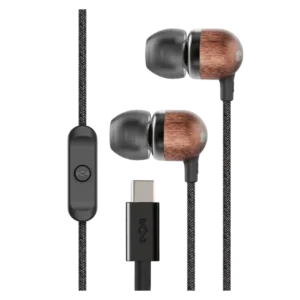
- Design and aesthetics is 4.7 vs 4.3. Wood, aluminum, braided fabric, and colorful finishes give these earbuds a distinctive look that feels more premium than...

Scorata scores summarize analyzed review evidence on a 1–5 scale; they are not laboratory measurements or a simple average of customer star ratings. Feature scores summarize the reviews covering that feature. The overall score averages feature scores within each review, then combines review averages. When both expert and customer evidence are available, those two groups receive equal weight. Products can have different review coverage, so small score gaps do not establish a winner.
Recommendations prioritize important features for the category, with a score of at least 3.5, a gap of at least 0.25 points and at least two supporting reviews per product. Features with widely varying scores or broad connectivity contexts are excluded from recommendations. These safeguards do not establish statistical significance.
Quick verdict
The review evidence points to a tradeoff: Design and aesthetics versus Instrument separation and Soundstage width. Choose according to which strengths matter more to you; the overall score alone does not settle that choice.
Choose House of Marley Smile Jamaica for Design and aesthetics.
Choose Sony Inzone E9 for Instrument separation and Soundstage width.
Scores are out of 5. Missing scores mean missing review evidence, not a missing feature.
Most listeners find the sound clear, lively, and unusually enjoyable for the price across many genres. A smaller group reports thin, noisy, defective, or less-refined playback, so consistency is not perfect.
Sound quality depends heavily on the use case. Competitive games get repeated praise for clarity and detail, but music and cinematic titles often sound flat, hollow, bass-light, or clinical; a handful of listeners instead find the tuning rich and enjoyable.
The earbuds can create a pleasing sense of space with percussion and simpler arrangements. Larger or more symphonic recordings may feel somewhat constrained.
The E9 generally presents a wide, precise stage that helps locate sounds across the field. It is more tactical than atmospheric, prioritizing positional awareness over a lush sense of musical space.
Bass is the most divisive part of the tuning: some hear deep, punchy lows, while others find it bloated, blended, or too weak. The older 3.5mm versions are more often described as bass-heavy than the newer USB-C model.
Bass is the most divisive part of the tuning. Many find it restrained, hollow, or lacking punch for music and cinematic games, while a smaller group likes the cleaner low end or gets fuller bass with the right seal, dongle, or EQ.
The tuning is generally clean and consumer-friendly rather than studio-neutral. Depending on the version and listener, elevated bass can make the balance feel less accurate.
Tonal accuracy is disputed. One reviewer hears honest, natural timbres, while another considers the dongle-driven tuning far from accurate and overly shaped for gaming.
The in-ear seal does a good job reducing office chatter, gym noise, and higher-frequency distractions. Deep rumbles still pass through, but isolation is strong for an inexpensive wired earbud.
Passive isolation is one of the E9’s clearest strengths, especially with the dedicated isolation tips and a good seal. Most users report substantial blocking of voices, keyboards, and room noise without active noise cancellation.
The USB-C package reviewed here includes no carry case, leaving the earbuds to travel loose in a pocket or small bag.
The included case is one of the most consistently liked extras, with useful organization for the earbuds and dongle. A minority finds it bulkier than necessary, but most consider it practical for travel or tournaments.
Fit stability depends heavily on ear shape and tip choice. Some users report a secure gym-ready seal, while others say the earbuds repeatedly fall out.
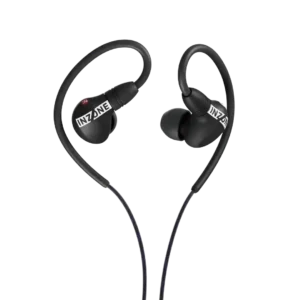
The earhook design usually keeps the lightweight buds securely in place, even during long sessions. One owner reported earpiece parts coming off in the ear, making stability less uniformly positive than comfort.
One older remote is reported to work with both iOS and Android, but the USB-C instructions restrict some commands to iPhone. Android users should expect basic audio support but potentially limited controls.
The USB-C audio box worked successfully with Android in hands-on use, including a Samsung Galaxy phone. Android users can get audio through the dongle even though the full Hub app experience remains PC-focused.
Individual instruments remain reasonably distinct for budget earbuds, and guitar lines can stay clean instead of blending together. Fine separation and intricate detail still trail more expensive models.
Separation is a standout competitive strength. Reviewers repeatedly say individual footsteps, voices, effects, and layers remain distinguishable even in dense firefights or busy mixes.
The braided cable is widely praised for resisting tangles, looking good, and sometimes surviving rough use. Complaints center on cable-borne noise, thin or fragile wires, tangling on some units, and failures near the connector.
The long cable is usually a strength for desktop PC setups and is often described as practical or well made. It can become cumbersome on controllers or phones, and a few users disagree on whether its length suits their setup.
The USB-C version connects easily to smartphones and many modern devices. Its broad plug-and-play compatibility is a practical advantage.
The E9 works across a wide mix of PCs, consoles, phones, and other USB-C or 3.5mm devices. The hardware is broadly compatible, but Windows has the strongest software support and console users lose some tuning options.
Most buyers and experts consider these attractive, comfortable, good-sounding earbuds that deliver excellent value. Satisfaction becomes sharply negative when fit, cable noise, connector reliability, or early failure problems appear.
The E9 earns strong praise when judged as a specialized competitive-FPS tool, especially for positioning, isolation, and comfort. Satisfaction drops sharply among listeners wanting one pair for music, cinematic games, chat, or a warmer all-purpose sound.
Vocals and instruments are usually clean and easy to follow, especially for inexpensive earbuds. Heavy bass can push lower vocals backward or reduce definition in some tracks.
Midrange performance is generally strong, with dialogue, voices, footsteps, and other critical cues sounding clean and forward. One review finds the mids somewhat hollow or overemphasized, but clarity remains a core competitive advantage.
The small wired design is easy to carry in a pocket or bag and works well for travel. The cable also prevents either earbud from being easily lost.
The compact wired IEM format is easy to stow and much easier to travel with than a full headset. The protective case further improves portability for tournaments and handheld gaming.
USB-C versions are convenient, adapter-free, and immediately usable with many modern phones and devices. A few buyers report connector failure or audio dropping back to the phone, raising consistency concerns.
The included USB-C adapter broadens device support and can make the wired E9 convenient with modern phones and computers. It is useful, though some older PCs may still need another adapter.
Highs are often crisp and free from harshness, with good clarity for the price. Some listeners notice mild sibilance, limited sparkle, or a thin, tinny edge.
Treble opinions are mixed but lean critical. Some hear crisp, detailed highs, while many find the top end subdued, lacking brilliance, or—at the other extreme—too sharp and fatiguing.
Tip selection varies by package, ranging from one spare pair to three sizes. Several reviewers say the limited sets may not suit unusually large or small ears without aftermarket tips.
Sony’s generous mix of tip sizes and styles is consistently praised. The range makes it easier to find a secure seal and choose between general-use and stronger-isolation tips.
Many users get a snug, secure seal, including people with small ears, and some wear them confidently at the gym. Others need deeper insertion or report that the earbuds fall out easily.
Most users can find a secure, comfortable seal thanks to the broad tip selection, and a good seal can materially improve bass and isolation. Fit is still personal, with some needing aftermarket or alternate tips to get comfortable.
Experts often praise the solid wood-and-aluminum construction, reinforced plugs, and premium feel. Customer durability is much more mixed, with reports of separated wires, dead channels, defective units, and early connector failure.
Build impressions range from excellent to concerning. Several owners describe the hardware as high quality, but others report cheap-feeling plastic, a defective first unit, earpiece issues, or an immediate failure.
Wood, aluminum, braided fabric, and colorful finishes give these earbuds a distinctive look that feels more premium than the price suggests. Appearance is one of the most consistently praised qualities.
The E9’s look is understated, compact, and functional rather than flashy. Most like the subtle, lightweight styling, though some find the buds plain or parts of the construction visually cheap.
Most reviewers find the small, rounded, lightweight earbuds comfortable, including during hours of listening. Users who dislike deep in-ear tips may experience pressure or pain after extended wear.
Comfort is a major strength for most users, with many wearing the E9 for several hours without irritation or fatigue. A smaller group reports stiff earhooks, tip sensitivity, or ear discomfort after extended sessions.
The compact, lightweight housings sit comfortably without adding noticeable weight. Their low mass is especially helpful for longer listening sessions.
The earbuds are repeatedly praised for feeling very light. Their low weight helps reduce awareness and fatigue during long sessions.
External EQ can add bass punch, midrange energy, brightness, and detail. Pushing it too far also increases boominess, sibilance, and upper-mid harshness.
The 10-band EQ and profile controls are useful for tailoring the E9, especially when adding bass or emphasizing competitive cues. Results are limited by the underlying tuning, and customization is most complete on Windows through the dongle.
The wired connection is genuinely plug-and-play, with no pairing, app setup, or charging routine. It is a straightforward backup for users tired of wireless maintenance.
Setup is usually straightforward, from plug-and-play use to the clean single-screen Hub interface. Complexity rises when users juggle the dongle, separate microphone, per-app profiles, or platform-specific limitations.
Sound, comfort, style, and materials frequently exceed expectations at the low asking price. The value drops sharply when a unit suffers early cable or connector failure.
Value is highly use-case dependent. Dedicated competitive players often consider the price justified by positioning, comfort, accessories, and software, while generalists and several owners think $150 is too much for weak versatility or no microphone.
INZONE Hub is generally easy to use and adds useful profiles, EQ, spatial sound, and app-sync features. The main frustration is platform support: Windows gets the full experience while consoles, Mac, Linux, and mobile lose customization.
The basic play, pause, track, and call functions are usable, but the missing volume buttons are a repeated frustration. Some versions also limit commands by phone platform.
Call quality is usually clear and easy to understand, and several buyers describe the microphone as excellent for the price. A few units produce feedback or perform poorly for calls.
The wired connection was praised for eliminating latency and audio lag. That direct path suits competitive play where timing matters.
One reviewer specifically praised the wired path for avoiding data loss. The direct connection also supports the E9’s low-latency competitive focus.
Positional accuracy is the E9’s defining strength: most reviewers can locate footsteps, gunfire, distance, and movement with exceptional precision. A small minority strongly disagrees, but the dominant pattern is excellent competitive directionality.
Leakage is generally well controlled for normal listening and busy environments. In very quiet places, sound may still escape at levels some people find noticeable.
Depth cues are strong enough to distinguish whether action is far away, mid-range, close, or nearby. Spatial processing can add further depth, although it may trade some tonal naturalness for competitive information.
Spatial processing is usually praised for improving direction, distance, and immersion, and several users consider it exceptionally accurate. A few find it filtered, muffled, or less natural, so its value depends on the listener and mode.
Cable replaceability gets mixed reports and mixed reactions. Where reviewers describe the cable as detachable, they appreciate easier replacement but note connector limitations; others describe their unit as fixed and see that as a durability drawback.
The USB-C audio box is widely seen as a valuable part of the package because it unlocks Hub features, spatial processing, EQ, and broader device connections. Some dislike needing it for the best experience, and one listener strongly criticized its stock tuning.
One customer reported the earbuds sent shocks into their ears on first use, making that unit unusable. This is an isolated but serious safety complaint.
The matte finish hides fingerprints very well. It keeps the understated shells looking cleaner during regular handling.
The E9 is generally considered well equipped, with multiple tip sets, a USB-C audio box, case, and small cable-management extras. The bundle helps it feel ready for PC and travel use out of the box.
The lack of a built-in microphone is a recurring drawback. Competitive players with a separate mic may not care, but headset users who expect one-device game chat often see it as an inconvenience or value problem.
Several tests found the earbuds remain controlled at high volume, with little distortion and no obvious harshness or tinniness. That is an impressive strength for this price class.
One owner liked the overall unboxing but criticized the paper ear-tip holder as flimsy and cheap. The packaging itself is therefore less convincing than the included case and accessories.
Preset quality is mixed. Some competitive profiles help emphasize useful cues, while others add little, sound unnatural, or are considered excessive compared with simply using a custom EQ.
Volume feedback is mixed: one reviewer calls the E9 detailed and loud, another says it is loud enough, while one customer finds the output too low. Output level may therefore depend on source and personal preference.
Replacement tips should be easy to source because the included styles come from Sony’s established tip lines. That makes long-term replacement less troublesome.
Certified wood, recycled PET, recyclable aluminum, and low-plastic design make these stand out among cheap earbuds. Reviewers consistently value the eco-conscious materials and brand mission.
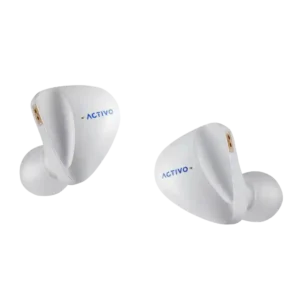
Best for detailed, natural wired sound, three connector options, and standout value around $99. Skip it if you need wireless features, stronger bass, softer treble, or a compact fit for...
Pros: Value for money, Multi-platform compatibility
Clear calls and a remarkably comfortable, secure fit make these compact earbuds an appealing value. Wind handling and touch-control convenience are less consistent, while ANC performance varies more than the...
Pros: Integrated microphone, Microphone quality for calls
Cons: Spatial audio
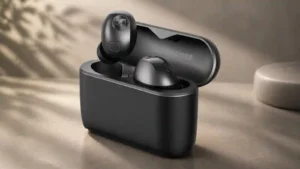
Choose these for excellent, balanced sound, a comfortable redesign, deep EQ tools and uniquely replaceable batteries. Skip them if you need class-leading ANC, consistently great calls or the smoothest treble...
Pros: User-replaceable batteries, Overall satisfaction
Cons: Auracast support, Sensors

Choose the AirPods 5 for strong open-ear ANC, clearer sound, easy Apple-device switching, and excellent value. Skip them if you need all-day battery, a very secure workout fit, or full...
Pros: Overall satisfaction, Sound quality
Cons: Battery, Eartips fit