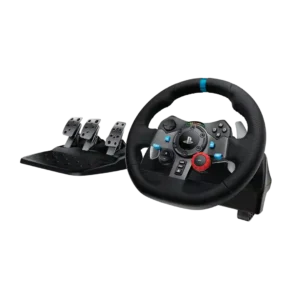
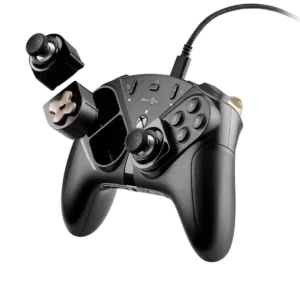
Logitech G29
Where It Has the Edge
- wired performance is 4.3 vs 4.0. The wired USB connection is reliable and responsive across supported systems. Most connection problems come from game profiles...

Scorata scores summarize analyzed review evidence on a 1–5 scale; they are not laboratory measurements or a simple average of customer star ratings. Feature scores summarize the reviews covering that feature. The overall score averages feature scores within each review, then combines review averages. When both expert and customer evidence are available, those two groups receive equal weight. Products can have different review coverage, so small score gaps do not establish a winner.
Recommendations prioritize important features for the category, with a score of at least 3.5, a gap of at least 0.25 points and at least two supporting reviews per product. Features with widely varying scores or broad connectivity contexts are excluded from recommendations. These safeguards do not establish statistical significance.
Quick verdict
The review evidence points to a tradeoff: wired performance versus button quality and premium feel. Choose according to which strengths matter more to you; the overall score alone does not settle that choice.
Choose Logitech G29 for wired performance.
Choose Thrustmaster eSwap X2 H.E. for button quality and premium feel.
Scores are out of 5. Missing scores mean missing review evidence, not a missing feature.
Setup is nearly plug-and-play: connect the pedals and power, attach the wheel, install Logitech software on PC, and start driving. Beginners repeatedly found the process quick and uncomplicated.
One customer had a very poor setup experience, reporting repeated failed attempts to make the desired controller-to-keyboard mapping work.
At common sale or used prices, the G29 offers excellent value through its durable wheel, three pedals, broad compatibility, and easy setup. Value drops sharply near its original premium launch price.
Value is one of the biggest tradeoffs. The controller can feel worth it for its performance and customization, but the high price, paid add-ons, and wired-only design draw repeated criticism.
The G29 is a good starting platform but a weak upgrade for owners of a working G27 or similar wheel. Buyers seeking a major improvement should move to direct drive rather than the closely related G923.
Upgrade value is limited for owners of earlier eSwap models because the new Hall effect modules can often be bought separately. New buyers get the strongest case for choosing the H.E. version.
The G29 is exceptionally well suited to casual racers and first-time wheel buyers. It is easy to learn, widely supported, and delivers a large jump in immersion without requiring a permanent rig.
Casual players may find the controller excessive for the money, especially if they mainly want drift-resistant sticks and can get that more cheaply elsewhere.
The stitched leather rim provides a secure, breathable, car-like grip. It stays more comfortable than rubber-coated alternatives during longer sessions.
Grip treatment is mixed. Rubberized side pads add purchase, but another take found the grips and removable panels too slick and sub-par.
Cable reach is generous enough for most layouts, but routing can become messy in temporary setups. The front-exiting pedal cable is awkward when space is tight.
The included cable is long enough for most setups, with the H.E. version extending the leash compared with an earlier model.
New users usually adapt quickly, though the two-stage brake and slower self-centering require some practice. Once adjusted, drivers can become comfortable within a few sessions.
The extra lower buttons require a short adjustment period before they feel natural.
Strong settings can tire the arms during extended races. Lowering force-feedback strength helps, but the wheel can still feel physically demanding over time.
The substantial heft can wear on the hands over longer sessions; after a few hours, the weight is hard to ignore.
The G29 works very well for road, circuit, and casual simulation racing, with broad title support and useful feedback. Dirt, drifting, and advanced competitive use reveal its slower self-centering and limited detail.
Racing performance is excellent, with Hall effect sticks providing especially precise steering in Forza.
The leather-wrapped rim, metal spokes, and stainless-steel controls look and feel more premium than most budget wheels. The plastic base and colorful styling keep it from matching higher-end equipment.
Firmness, heft, and sturdy construction give the controller a convincing premium feel, even when the design itself stays understated.
The G29 remains a highly satisfying first wheel because it is reliable, easy to use, and much more immersive than a controller. Its age and mechanical roughness are accepted as reasonable compromises at the right price.
The controller earns strong praise for precision, build quality, customization, and mechanical inputs. Price, wired-only operation, size, and the D-pad are the main reservations.
The G29 can support genuinely competitive lap times after a short adjustment period. Higher-end gear offers more detail and consistency, but the wheel itself is not a major speed barrier.
Competitive play is a core strength thanks to low wired latency, fast mechanical buttons, rear inputs, Hall effect precision, and effective trigger stops.
PC compatibility is excellent across popular racing and truck simulators. Most titles recognize the wheel quickly, and community profiles make unsupported setups easier to dial in.
PC use is a strong fit; the controller was tested as a daily driver and described as a tremendous PC controller.
In well-supported games, steering response feels immediate with effectively no perceptible delay. Input speed is not a practical concern for most racing use.
Input lag is a major strength of the wired design, with near-zero latency and quick USB-C response repeatedly highlighted.
Metal paddles, a steel shaft, and leather-like touch points give the wheel a high-quality feel. Plastic remains visible in the base and pedal housing, but the parts users touch feel substantial.
The sturdy black-plastic construction feels robust and appropriate for a premium wired controller.
The Hall-effect steering sensor delivers accurate, dependable input. Fine corrections register cleanly even though the gear mechanism can add a slight center gap or granular feel.
Hall effect sticks are particularly effective for racing, giving fine, confident steering control in Forza.
The directional pad is one of the weaker controls. Some find it easy to reach, but others describe it as mushy or prone to registering unintended directions.
The D-pad performs accurately even when its shape is disliked; functionally, it was described as matching the high performance of the other inputs.
The wired USB connection is reliable and responsive across supported systems. Most connection problems come from game profiles or software rather than the cable link itself.
Wired performance is excellent for latency and competitive response, but the tether remains restrictive and inconvenient for living-room use.
The compact sports-wheel shape keeps buttons and paddles close to the hands. Its layout feels natural for racing, although the small diameter will not suit everyone.
The bulky shape favors big-handed players and can feel unwieldy for others, so the ergonomics are not universally accommodating.
The compact rim keeps controls within easy reach, but some adults find it noticeably smaller than a real car wheel. Larger hands may need time to adjust.
The controller's large, chunky body strongly favors bigger hands. Smaller-handed players can adapt, but several found the size less natural or more cumbersome.
The leather rim remains grippy and relatively cool during long sessions, and the compact controls are easy to reach. Rough stitching or strong feedback can still cause discomfort for some users.
Comfort is best with larger hands: the chunky body can feel very comfortable there, while smaller hands may need time to adapt.
Long-term reliability is outstanding, with several owners reporting years of frequent use and little deterioration. The leather, motors, and controls generally hold up well.
Durability is a major strength. The controller and its magnetic modules are described as sturdy, dependable, and capable of holding up through heavy use.
The leather-wrapped metal wheel, sturdy shaft, and metal controls feel unusually solid for an entry-level bundle. Construction is one of the G29’s clearest strengths.
Build quality is a standout strength, repeatedly described as sturdy, solid, reliable, and even 'bombproof.' The modular parts still feel secure rather than flimsy.
G Hub provides useful control over rotation, sensitivity, profiles, and button assignments. Some older reviews found force-feedback tuning limited or software behavior inconsistent.
Software customization is deep, covering stick curves and dead zones, trigger behavior, button mapping, profiles, and other detailed settings.
Most buttons are responsive, plentiful, and useful for in-race adjustments. The feel is inconsistent across controls, and the crowded layout can cause occasional mispresses.
Mechanical buttons are one of the controller's clearest strengths, with clicky, tactile, satisfying presses that feel robust and fast.
The fixed wheel is not modular out of the box, yet a broad aftermarket offers replacement rims, pedal springs, brake inserts, and other upgrades. Tinkerers have plenty of ways to tailor the setup.
Modularity is one of the product's defining strengths, allowing fast stick/D-pad rearrangement, alternate modules, and extensive per-game customization.
The wheel offers plenty of assignable controls for vehicle settings, menus, and PC shortcuts. The extra PlayStation buttons and rotary dial are especially useful in games that support custom mapping.
Four programmable rear inputs add meaningful competitive flexibility and can be customized to suit different games.
The modular layout is especially helpful for accessibility, letting players quickly rearrange stick and D-pad positions around different needs and preferences.
Stick precision is excellent, with Hall effect models delivering extremely accurate movement, aiming, and steering and earlier sticks also praised for precise control.
Stick movement feels notably smooth and slick, with the Hall effect modules drawing especially strong praise for their feel.
The analog triggers work, but the lack of Hall effect trigger sensors is a missed opportunity for better precision and long-term reliability.
The bumpers have a satisfying clicky feel that matches the controller's strong mechanical-button quality.
Bumpers are consistently fast and clicky, with the mechanical shoulder controls contributing to the controller's immediate response.
PlayStation support is a major advantage, with straightforward operation across supported PS3, PS4, and PS5 titles. Plug-and-play behavior is consistently praised.
Xbox use is equally strong, with the controller praised as a tremendous Xbox pad and designed around the familiar Xbox control layout.
Long-term consistency looks strong, with the controller described as remaining reliable and precise through extended play.
The main inputs and rear buttons are positioned clearly and comfortably, keeping key controls easy to reach.
D-pad feel is divisive. Some praise its crisp mechanical click, while others find the raised, blobby shape uncomfortable and indistinct under the thumb.
Fighting-game suitability is mixed. Some praise the mechanical D-pad and optional fight-focused layouts, while others find the D-pad shape uncomfortable enough to avoid for fighters.
Force feedback is strong enough to communicate grip loss, curbs, impacts, and road texture, making it a dramatic upgrade from a controller. Its gear-driven delivery is less detailed, slower, and rougher than modern belt or direct-drive systems.
Haptic feedback feels satisfying in normal play, with the revised rumble praised for being more controlled and enjoyable.
The package is mixed: Hall effect sticks and alternate caps add value, but the lack of a proper hard case and extra modules feels stingy at this price.
The integrated clamps are convenient and usually secure on a sturdy desk, while hard-mount holes work well for rigs. Thick desks and aggressive steering can expose some clamp movement.
Two personalized profiles can be stored on the controller and switched with dedicated controls, making different game setups easy to keep ready.
The metal paddle shifters are widely praised for their crisp click, responsive action, and solid feel. A few users note excess travel or slightly mushy engagement.
The included three-pedal set is a strong value with metal faces and distinct throttle, clutch, and brake resistance. It is capable for beginners, though serious racers will eventually want a load-cell brake.
Pedal stability depends heavily on the surface. The carpet grip works well, but hard-floor users often need a wall, mat, stand, or hard mount to prevent sliding under braking.
Platformer control is mixed because stick precision is excellent, but the D-pad's uncomfortable shape can make directional platforming less pleasant.
Drift resistance is one of the strongest reasons to choose the H.E. version. Hall effect sticks are repeatedly credited with eliminating or greatly reducing drift risk.
The magnetic modules make a symmetrical PlayStation-style stick layout quick and easy to adopt, and players who prefer that arrangement value the flexibility.
Trigger response is excellent when the physical locks are engaged, cutting travel and making presses faster for shooters and other quick-input games.
Physical trigger stops are highly effective, sharply reducing travel and making the triggers quick and easy to activate.
USB-C is a welcome modernization over the older connection and helps make the wired setup more current and convenient.
Rumble is much improved over the earlier overly intense tuning, settling into a more traditional and deeply satisfying vibration feel.
At around 300g, the controller has reassuring heft without a battery, but its weight becomes more noticeable during long play.
The wheel can feel reasonably smooth once tuned, but the geared mechanism remains notchy and less fluid than belt or direct-drive alternatives. A small center dead zone and occasional gear skipping are common caveats.
Wireless connectivity is the clearest missing feature. Multiple accounts criticize the controller for remaining wired-only at a premium price.
Rear-button placement is polarizing: it fits some hands naturally, while smaller-handed users can struggle with the central position or trigger buttons accidentally.
Rear-button usefulness depends heavily on hand fit. They can provide a competitive edge, but some players find them less intuitive or prone to accidental presses.
Logitech’s software support is generally dependable, though G Hub can be temperamental on some systems. The older Logitech Gaming Software worked better for at least one long-term user.
The mechanical buttons are satisfyingly clicky but can be loud enough to bother a roommate in the same room.
Remapping is powerful when it works, with rear buttons and other inputs configurable through software or onboard controls. One customer, however, could not get the desired keyboard mapping to function.
ThrustmapperX gives broad access to controller tuning, making it a capable companion for players who want to fine-tune inputs.
Face buttons are consistently praised for crisp, immediate response, with short actuation that makes inputs feel fast and precise.
The face buttons use very short actuation travel, helping inputs register quickly and giving the controls a snappy feel.
Dedicated onboard volume controls beside the headset jack are a welcome convenience that keeps common audio adjustments off external menus.
The Share button is prominent and easy to locate alongside the other Xbox function controls.
The progressive brake can feel realistic once learned, but opinions vary sharply on its stock resistance. Some find it too soft, while others say it becomes excessively stiff and can push the pedal base away.
Shooter performance is strong, helped by precise sticks, short trigger travel, and fast buttons; several accounts found aiming or reaction-heavy play easier.
The Hall effect sticks are the headline upgrade, bringing excellent precision, smooth feel, strong tracking, and much better long-term drift resistance.
Gear-driven feedback is the most repeated complaint, producing rattling, clanking, chatter, and desk vibration over curbs or rough surfaces. Headphones can mask it for the driver, but nearby people may still hear it.
The understated black design feels mature and premium, although mixed matte and glossy surfaces create a little visual inconsistency.
The View and Menu controls are more prominent than on some related Thrustmaster designs, making them easier to find in play.
Firmware support drew a severe complaint from one customer, who called the firmware useless during failed mapping attempts.
The optional H-pattern shifter is affordable, easy to connect, and adds immersion, but it is not included with the standard bundle. Dedicated handbrake support is less straightforward and usually requires third-party hardware.
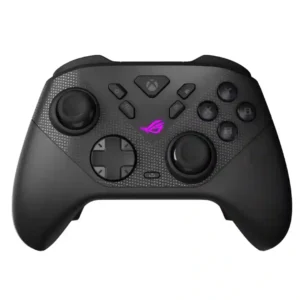
Best for precise TMR sticks, fast trigger stops, low-latency 2.4GHz play, and deep tuning. Skip it if you want a cheaper all-rounder, softer buttons for long sessions, or painless console-only...
Pros: overall satisfaction, button quality
Cons: d-pad accuracy, charging dock support
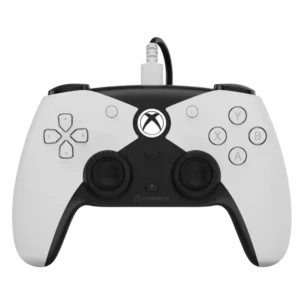
Best for a comfortable, affordable Xbox/PC pad with precise Hall sticks, a PlayStation-style layout, and useful rear buttons. Skip it if wireless play, deep software tuning, or consistently top-tier D-pad...
Pros: overall satisfaction, value for money
Cons: wired performance, vibration quality
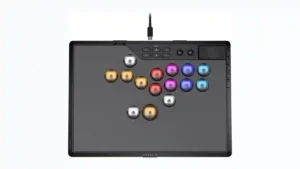
Choose it if you want a premium, tournament-ready leverless controller with excellent 2.4GHz wireless, deep actuation tuning, and sturdy construction. Skip it if loud, tall buttons, a heavy chassis, or...
Pros: overall satisfaction, button quality
Cons: control placement, button noise
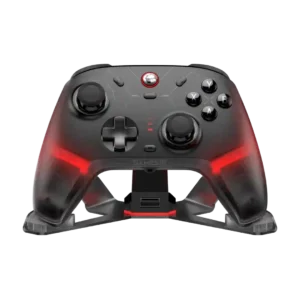
Choose the GameSir Cyclone 2 if you want a low-cost PC/Switch/mobile controller with precise sticks, deep customization, and a dock. Skip it if Xbox/PS5 support, premium buttons, or flawless dock/battery...
Pros: value for money, charging dock support
Cons: d-pad feel, compatibility with Xbox