Scorata scores summarize analyzed review evidence on a 1–5 scale; they are not laboratory measurements or a simple average of customer star ratings. Feature scores summarize the reviews covering that feature. The overall score averages feature scores within each review, then combines review averages. When both expert and customer evidence are available, those two groups receive equal weight. Products can have different review coverage, so small score gaps do not establish a winner.
Recommendations prioritize important features for the category, with a score of at least 3.5, a gap of at least 0.25 points and at least two supporting reviews per product. Features with widely varying scores or broad connectivity contexts are excluded from recommendations. These safeguards do not establish statistical significance.
Quick verdict
What each product is best for
The available evidence supports the recommendation below, but does not establish an overall winner. Check the remaining features against your priorities.
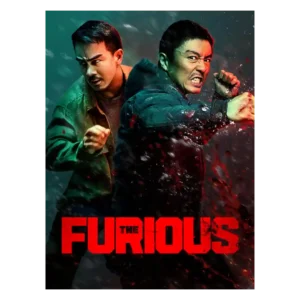
Choose The Furious for rewatch value and sound design.
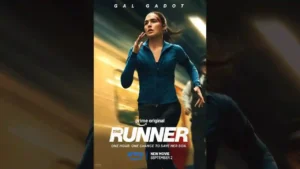
There is not enough comparable review evidence to recommend The Runner over the other product.
Why these recommendations?
The Furious
Where It Has the Edge
rewatch value is 5.0 vs 1.4. The intricate choreography and dense physical detail give the movie strong repeat-viewing appeal. Favorite fights contain enough layered...
sound design is 4.9 vs 1.5. Every punch, break, and impact is reinforced by aggressive, detailed sound design. The crunches and thuds make the...
realism is 4.8 vs 1.5. Long takes and visible physical effort make the fights feel tactile and authentic despite wildly unrealistic durability. Scrappy...
The Runner
Where It Has the Edge
No clear scored advantage over the other product.
The Furious4.0 overall score
The Runner2.0 overall score
Compare features
Scores are out of 5. Missing scores mean missing review evidence, not a missing feature.
Scored on both products
Controls and connectivity
Critic appeal
The Furious
5.0
The Runner
1.0
Details and evidence for critic appeal
The Furious
Enthusiasm is exceptionally high, with the film widely positioned as the year’s best action release and one of the strongest martial-arts movies in years.
Critical reception is overwhelmingly negative, with multiple sources noting single-digit or near-single-digit Rotten Tomatoes scores and a large majority of unfavorable notices.
The PG-13 material is viewed as typical for an action thriller, but violence, bloody images, strong language, and some sexual material make it better suited to teens than younger children.
The movie is built for a loud communal experience, with applause, laughter, gasps, and cheering enhancing its impact. It plays like a raucous crowd-pleaser.
Broad appeal looks weak despite early streaming interest. The movie may work for undemanding chase-thriller fans or viewers seeking a bad-movie group watch, but many find it forgettable.
The intricate choreography and dense physical detail give the movie strong repeat-viewing appeal. Favorite fights contain enough layered movement to reveal new details on another watch.
Reviewers frequently call the movie forgettable and disposable, with little expectation that it will linger after the credits. Its best rewatch case is as an accidental-comedy or group hate-watch.
For action fans, the film is an exhilarating, funny, and highly satisfying ride. Its weak writing rarely diminishes the sheer pleasure of the physical spectacle.
Most reviewers are bored or frustrated despite the short runtime, but some find genuine amusement in its accidental comedy or enjoy it as undemanding, silly streaming fare.
Every punch, break, and impact is reinforced by aggressive, detailed sound design. The crunches and thuds make the fights more immersive, frightening, and satisfying.
The smartphone-heavy soundscape is criticized as screechy or distracting in some reviews, while other commentary notes rough or artificial-sounding audio choices.
The film has a gritty, kinetic look that favors full-body movement, industrial spaces, and oily urban textures. Its visual approach makes the action feel distinctive rather than polished into generic spectacle.
The film commits hard to frantic, close, stylized imagery, and some reviewers appreciate the energy. More often, the shaky camera, blur, color choices, aspect ratio, and visual gimmicks are called distracting or ugly.
Industrial freezers, crowded clubs, tenements, streets, and a battered police station give each fight a distinct physical playground. The environments actively shape the choreography.
Real London locations are one of the more consistently appreciated production choices, giving the chase texture and scale. The slick surface, however, does not compensate for the story weaknesses.
As a race-against-time thriller, the film is broadly seen as failing to deliver enough suspense or payoff. A small minority enjoy its old-school, low-ambition chase-movie simplicity.
Long takes and visible physical effort make the fights feel tactile and authentic despite wildly unrealistic durability. Scrappy movement and practical execution sell the impact even when the physics become cartoonish.
Plausibility is a major weakness: the villain’s plan, surveillance powers, bystander behavior, injuries, and final twist repeatedly strain credibility. A rare positive note praises the geographic accuracy of the London route.
The basic plot is familiar, but the action language feels genuinely fresh. Props, bodies, styles, and group movement combine in ways that rarely resemble standard modern action filmmaking.
The film is repeatedly described as derivative, familiar, or cut-and-paste, with frequent comparisons to earlier phone-call and ticking-clock thrillers. Even positive reviews admit it is not trying to reinvent the genre.
The ticking-clock premise should create natural tension, yet most reviewers say the movie rarely becomes genuinely suspenseful. A handful of sequences and more positive reviews do find moments of urgency.
Kenji Tanigaki’s direction is a major strength, presenting complicated movement with confidence and clarity. He turns a basic premise into a showcase for world-class physical filmmaking.
Kevin Macdonald’s direction draws sharply split reactions. A few reviewers praise the pace and London movement, while most think the frantic tricks overwhelm rather than intensify the material.
Details and evidence for chemistry between characters
The Furious
The central pair works well because their contrasting styles and shared purpose make them feel complementary. The father-daughter relationship also gives the action a convincing emotional anchor.
The phone-based Maia/Caller dynamic rarely develops enough personality or tension to carry the film. One more favorable take finds Damian Lewis’s taunting energy helps keep the two-hander moving.
The central rescue mission is straightforward and easy to follow. Its clarity keeps the movie moving, though the minimal plotting can feel underdeveloped.
The central scheme and its rules are widely criticized for inconsistent logic. Reviewers repeatedly question why Maia must run, how the Caller’s surveillance works, and how the final plan could plausibly succeed.
Editing is generally clear and rhythmic, letting completed moves land instead of hiding them behind frantic cuts. The sped-up look of the final fight is a rare visual misstep.
Rapid cutting keeps the movie moving, and one review specifically praises the brisk edit, but the broader reaction is that the choppy, hyperactive cutting becomes exhausting and distracting.
The movie moves with relentless, high-energy momentum and rarely allows the action to cool down. A few viewers found the sustained intensity exhausting or thought the first two-thirds held back before the finale.
The movie moves quickly on paper, and several reviewers praise its brisk propulsion, but many say frantic motion cannot hide repetition or weak suspense. Some even find the short film slow or exhausting.
The film balances bleak subject matter with cartoonish physical excess and grim humor surprisingly well. The contrast can be jarring, but it usually feels energizing rather than careless.
The movie often aims for a serious thriller tone while its logic and staging strike reviewers as silly or unintentionally funny. A few viewers enjoy that mismatch as part of the bad-movie appeal.
The camera moves with the fighters while preserving spatial clarity, often using wide shots and energetic long takes. A few moments feel slippery, but the visual coverage is overwhelmingly praised.
The London photography earns occasional praise for kinetic street-level energy and real locations, but the close-ups, shaky camera, blur, and frantic techniques are more often called distracting or cheap-looking.
The anti-trafficking message is direct, emotionally accessible, and fueled by anger at corrupt institutions. Some find it simplistic, while others appreciate the cathartic call for protection and accountability.
The phone-addiction, AI, surveillance, control, and parental-sacrifice ideas are usually judged shallow or heavy-handed. One ending analysis sees a stronger idea in Maia turning the Caller’s obsession with control against him.
Beneath the mayhem, the film shows sympathy for exploited children and anger at wealthy, protected criminals. The social perspective adds weight, even though the themes remain direct rather than deeply explored.
Ideas about technology, control, trauma, parental love, and surveillance are present, but most critics find them shallow or underdeveloped. A few readings find more substance in the control-versus-deception theme.
The father-daughter bond and anger at the traffickers give the action real emotional force. Some dramatic beats land less effectively, especially when the dubbing or late-story structure gets in the way.
The mother-son stakes seldom land with the intended force. Critics repeatedly describe the emotion as stiff, shallow, manufactured, or unearned, though a few find Gadot reasonably convincing in isolated moments.
The climactic combat is spectacular, but the surrounding resolution is uneven. The rushed wrap-up, extra epilogue, and fading dramatic stakes may leave the ending less satisfying than the final fight.
The climax is the most consistent deal-breaker: reviewers call the twist contrived, implausible, overexplained, or a cheat. One detailed ending analysis is much more positive about how the deception reframes Maia’s actions.
The fight sequences are exceptional: inventive, punishing, clearly staged, and constantly escalating. Prop-based combat, layered group choreography, and the five-way finale make the action feel genre-leading.
The running-heavy action has a few effective set pieces, especially the subway chase, but most critics find the constant motion repetitive rather than exciting. A minority enjoy the stripped-down chase-thriller momentum.
The story is intentionally simple and often effective as a launchpad for the fights, but it becomes thin, messy, or poorly organized whenever the action pauses.
The setup is easy to grasp and initially promising, but most reviewers feel the story is thin, repetitive, illogical, or too shallow to sustain a feature. A minority enjoys its stripped-down simplicity.
This is not family-friendly viewing despite its focus on parents and children. Graphic beatings, child endangerment, gore, and relentless brutality make it unsuitable for younger audiences.
Parents are warned about violence, bloody images, strong language, sexual material, and a drug reference. The content is not described as extreme for PG-13, but it is not positioned as a family-first choice.
The practical action is impressive, but a few digital and low-budget effects look cheap, especially near the climax. These flaws are brief and rarely distract for long.
Character work is one of the weaker areas, with the adults often feeling thin or barely developed. Distinct personalities and family relationships still provide enough investment for the action.
Maia’s backstory and the villain’s motives are repeatedly described as thin, rushed, or insufficiently developed. One ending-focused piece finds more value in Maia’s strategic arc than most critics do.
Awkward English dialogue, conspicuous ADR, and clunky dubbing are persistent distractions. The next fight usually arrives quickly enough to keep these flaws from sinking the movie.
Dialogue is one of the most consistent complaints: stiff delivery, exposition-heavy exchanges, corny villain lines, and melodramatic moments frequently weaken the tension.
The movie finds grim humor inside its brutal fights, using absurd props, exaggerated durability, and sudden comic reversals. That dark playfulness helps keep the carnage from becoming monotonous.
Much of the laughter is unintentional. Several video reviewers find the absurd logic, odd staging, and exaggerated choices genuinely funny, while others say the bad-movie laughs are too sparse to save it.
The violence is extreme, graphic, and nearly constant. Genre fans often embrace its outrageous brutality, but sensitive or squeamish viewers are likely to find the level overwhelming.
Violence and bloody imagery are meaningful family-content cautions, but one parent-focused review says the material is not over the top for PG-13. Approval is therefore mixed rather than uniformly negative.
The nearly two-hour length can feel excessive, especially after the rescue plot reaches an earlier emotional peak. The extended final act may test anyone less invested in pure combat.
The lean 80-to-90-minute length is sometimes praised for getting in and out quickly, but many critics say it still feels too long because the central gimmick cannot sustain itself.
The kidnapping-and-revenge setup is familiar and predictable, with little novelty in the plot itself. The tradeoff is easier to accept because the combat presentation feels fresh.
The basic concept is considered heavily familiar, borrowing recognizable elements from other real-time, phone-controlled thrillers. Its strongest supporters still frame the appeal as execution of an old-school formula rather than novelty.
The screenplay is widely viewed as functional at best, with thin plotting, blunt dialogue, and obvious dramatic shortcuts. It succeeds mainly by creating reasons for the next elaborate confrontation.
The screenplay is one of the clearest consensus weaknesses: critics call it shoddy, thin, gimmicky, predictable, exposition-heavy, and riddled with logic problems.
The core hostage setup has natural dramatic potential, but the film rarely converts it into convincing drama because character emotion and escalation feel manufactured.
Xie Miao’s wordless intensity and physical presence carry the film, while Joe Taslim provides charisma and a complementary style. Their control, athleticism, and expressive action work are exceptional.
Gal Gadot’s physical commitment and athleticism are regularly acknowledged, but most reviewers find her emotional range, line delivery, and ability to carry the film lacking. A few more favorable reviews call her fine or committed.
The cast earns strong marks for physical commitment, while traditional dramatic acting receives more mixed reactions. Performances are most convincing when emotion is expressed through movement rather than dialogue.
Performances are widely criticized as flat or underpowered, with the film often struggling to sell panic and emotional stakes. A few reviewers give credit to the physical commitment and Damian Lewis’s energy.
Details and evidence for supporting cast performance
The Furious
The supporting performers add memorable personality and varied fighting styles. Brian Le and Yang Enyou receive particular praise for making their roles more vivid than the thin script requires.
Damian Lewis earns some praise for voice-driven menace and energy, but many reviewers think he is underused or saddled with a generic villain. Other supporting players have little room to register.
The hard-driving music adds momentum and gives the fights a charged, theatrical pulse. The forceful soundtrack is a strong companion to the nonstop movement.
Music and needle drops occasionally add energy, especially in a few chase sequences, but several reviewers find the soundtrack overbearing or unable to rescue the film.
CGI quality is inconsistent: some blood effects look credible, while other blood, lip-sync work, and isolated digital shots appear obvious or crude. The physical stunt work remains strong enough to overshadow most of it.
The international cast and mixture of Chinese, Indonesian, Japanese, Thai, and Hong Kong action traditions give the film a distinctive Pan-Asian identity. The blend remains compelling even when the vague setting feels artificial.
Strong or coarse language is flagged in the family-focused reviews. It is described as present rather than extreme, but still reduces suitability for younger viewers.
Details and evidence for practical effects quality
The Furious
The reliance on trained performers, long takes, and visible in-camera movement is one of the film’s biggest attractions. Very little of the action feels dependent on doubles or glossy digital fakery.
Family-focused coverage flags some sexual material, chiefly suggestive or lingerie imagery. It is a caution rather than a dominant element, but lowers approval for younger audiences.
One commentator says the movie matched what the trailer led them to expect, while another expected a fun bad-movie watch and found the finished film less enjoyable than advertised.
The unnamed Southeast Asian setting creates a broad Pan-Asian backdrop, but it can feel vague and frustrating. The world functions more as action scaffolding than a fully realized place.