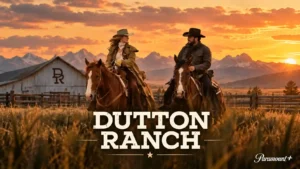
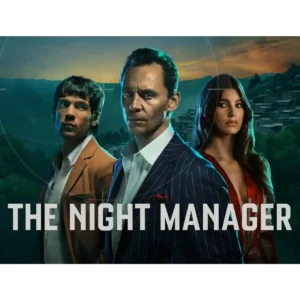
Dutton Ranch, Season 1
Where It Has the Edge
- score quality is 4.7 vs 1.8. The sweeping, string-led Western score and rousing opening theme preserve the grand emotional register of the parent series.

Scorata scores summarize analyzed review evidence on a 1–5 scale; they are not laboratory measurements or a simple average of customer star ratings. Feature scores summarize the reviews covering that feature. The overall score averages feature scores within each review, then combines review averages. When both expert and customer evidence are available, those two groups receive equal weight. Products can have different review coverage, so small score gaps do not establish a winner.
Recommendations prioritize important features for the category, with a score of at least 3.5, a gap of at least 0.25 points and at least two supporting reviews per product. Features with widely varying scores or broad connectivity contexts are excluded from recommendations. These safeguards do not establish statistical significance.
Quick verdict
The review evidence points to a tradeoff: score quality versus plot twists and production design. Choose according to which strengths matter more to you; the overall score alone does not settle that choice.
Choose Dutton Ranch, Season 1 for score quality.
Choose The Night Manager, Season 2 for plot twists and production design.
Scores are out of 5. Missing scores mean missing review evidence, not a missing feature.
An anticipated Ed Harris singing moment cuts away before it can play, an especially frustrating missed opportunity.
Editing receives direct praise for keeping the intrigue tight and maintaining momentum through shifting identities, locations and parallel operations.
The sweeping, string-led Western score and rousing opening theme preserve the grand emotional register of the parent series.
The music helps heighten tension for some, but critics who mention it directly can find it overly loud or too insistent in telling viewers what to feel.
The stubborn individualism at the story’s heart is criticized for treating hostility as virtue rather than exploring a richer conflict.
The season reaches beyond espionage mechanics into identity, loyalty, imperial power, exploitation and the cost of doing good. Some critics find those ideas rich; others think the political themes lack subtlety.
Some montage staging feels rushed and poorly integrated with the surrounding ranch drama.
Georgi Banks-Davies earns strong praise for brisk suspense, controlled dialogue scenes and cinematic scale, though a few viewers miss Susanne Bier’s sharper visual sparkle.
The harsh Western violence is considered dramatically effective when it punctuates ranching conflicts and their consequences.
The violence raises the stakes, but some viewers find it graphic or gratuitous, especially when the season’s darker turn piles up deaths.
The season juggles numerous concurrent conflicts, with some deft character revelations offset by abrupt exits and missing follow-through.
The compact episodic structure is praised for making later chapters feel purposeful and tightly connected to the larger operation.
The suffering of animals and a cowboy’s tragic past provide moving scenes beneath the swagger and territorial battles.
The season can hit hard, especially in its final stretch. Deaths, betrayals and the villains’ victory create powerful reactions, though that impact is often anger or frustration rather than satisfaction.
The fourth episode promises an explosive turn, but not all escalating threads achieve satisfying follow-through in the early stretch.
Twists are a major source of excitement, especially once the second half accelerates. Some are predictable, but many viewers still enjoy how quickly loyalties and plans reverse.
The Texan newcomers get promising introductions, but Beth often gets the richer scenes while Rip and Carter sometimes feel less well served.
Some critics feel the season underuses strong supporting performers, particularly Olivia Colman and Indira Varma, while keeping Jonathan Pine overwhelmingly central.
Beth and Rip retain their well-established chemistry, while Beulah’s confrontations and Everett’s calmer rapport give the cast new sparks.
Chemistry is a major talking point. Pine and Teddy are widely praised for a charged, complicated dynamic, while Pine and Roxana draw much more divided reactions.
Some motivations and the wildfire relocation are underexplained, while the expanding subplots make the central conflict difficult to identify.
The season rewards attention and often trusts viewers to connect the dots, which many appreciate. Others find the aliases, conspiracies and abrupt pivots needlessly confusing.
Early storylines take time to build, and some stretches feel slow even when later confrontations provide a payoff.
Individual episodes often move well once the mission is underway, but several reviewers find the earliest chapters plodding or overloaded with setup.
Less culture-war lecturing is widely welcomed, even as the relocation loses some of the parent show’s political and Indigenous context.
The Colombia and regime-change storyline feels strikingly current to several critics, who praise the way the espionage plot echoes modern geopolitical anxieties.
Land rivalries, family tensions, and livestock disasters create solid Western melodrama, although some consider the results tired or inert.
The season delivers strong dramatic tension and emotional stakes, with several reviewers calling the relationships and betrayals genuinely gripping.
The move to Texas creates promising survival stakes and rivals, but the early stories sometimes feel scattered, repetitive, or underpowered.
The new story earns strong praise for intrigue and emotional stakes, but it also draws criticism for repetition, generic spy mechanics and an incomplete arc.
Repeated ranch crises and a strong early escalation maintain tension for some, while others feel the stakes fade after the setup.
Suspense is one of the clearest strengths. Reviewers repeatedly praise the tense conversations, dangerous missions and late-season set pieces for keeping the show gripping.
Texas sunrises and wide-open ranch scenes are consistently beautiful, though a critic found the montage photography overly hurried.
The cinematography remains polished and attractive, with Colombia, luxury interiors and international locations giving the season a premium look.
A slow-burn approach gives characters room to breathe, but multiple critics want the season to get to its central conflict sooner.
The first half is the most common pacing complaint. Many reviewers say the season takes too long to heat up, but also agree that the back half becomes faster, tighter and more gripping.
The script handles certain introductions and quieter bonds well, but familiar speeches and recycled conflicts hinder the overall effect.
The screenplay earns praise for tight intrigue and smart construction from fans, while detractors criticize contrivances and a less disciplined feel than Season 1.
The premiere swiftly establishes a new home and fresh adversaries, creating immediate stakes while remaining understandable to newcomers.
The Season 2 premiere is praised as a confident return that reestablishes Pine’s world, trauma and new mission while quickly restoring danger.
Beulah is a formidable, layered rival with strong scenes against Beth; her family’s feuds take longer to ignite.
Teddy is magnetic and vulnerable for many reviewers, while others see him as a generic Roper substitute. Roper’s return restores menace for some but becomes cartoonish for others.
An unapologetic mix of modern Western, family soap, and ranch warfare mostly fulfills genre expectations without reaching the flagship’s epic scale.
As a spy thriller, the season is usually praised as polished, tense and above average. Detractors argue that familiar Bond-style tropes make it more conventional than the original.
Moving the Duttons to Texas and turning them into outsiders brings novelty, but old rivalries and narrative machinery are very recognizable.
This is one of the most disputed areas. Fans enjoy the new complications and bold twists, but critics frequently call the season a rehash of Season 1 or a collection of familiar spy-thriller devices.
The couple still has its familiar edge and devotion, even as Texas demands a little more patience and humility from Beth.
Pine’s ability to slip rapidly into new identities still feels convincingly in character and remains part of the fun of watching him operate.
Beth gains softer shades, and new ranch hands receive personal histories; some find the antagonists shallow or Carter’s growth uneven.
Pine’s trauma and emotional isolation add welcome depth, and Teddy grows more compelling as his vulnerability emerges. Roxana’s arc is more divisive, with some finding her layered and others underwritten or contradictory.
Horseback danger and tough confrontations supply memorable bursts of Western action, particularly amid the wildfire.
The action is often tense, stylish and energetic, especially later in the season. A smaller group feels the more Bond-like action pushes the show away from its grounded roots.
Terse Western sayings can be flavorful and eloquent, but others hear clichéd aphorisms, obvious motives, and flat exchanges.
At its best, restrained conversations create more tension than gunfire. At its weakest, critics call out corny lines, ominous half-sentences and clumsy foreshadowing.
The show closely preserves Yellowstone’s characters, score, Western style, and familial power struggles. That familiarity reassures fans but risks repetition.
Season 2 is deeply tied to the original, often to good effect. Some reviewers love how the past returns and gains new meaning, while others think the sequel leans too heavily on recreating Season 1.
The established Western-soap sensibility remains recognizable, but quick shifts between murder, ranch business, and teen romance can jar.
The sequel keeps much of the original’s elegance and brooding polish, though some viewers think it has shifted toward a less sophisticated, more action-heavy tone.
Beth and Rip remain engaging leads, and the outspoken women and newer ranch hands have memorable personalities. A softer Beth divides a few viewers.
Pine’s charm and cool still work strongly for some viewers, but other critics find this older, more withdrawn version less enjoyable or memorable.
The cattle ranch and Texas fields are attractively realized, maintaining the tactile visual fantasy of dusty ranch life.
Luxury interiors, international locations and high production values keep the series looking expensive and distinctive even when the story divides opinion.
Texas introduces a richer supporting community and changes the leads’ status from powerful insiders to vulnerable newcomers.
The expanded network of countries, intelligence factions and power players makes the world feel bigger, though that added scale also makes the story heavier and more complex.
Broad landscapes, slow-motion imagery, and dusty working-ranch textures recreate the stylish visual identity of Yellowstone.
Glamorous locations, moody lighting and luxury surfaces remain signature strengths. Even negative reviews often concede that Season 2 looks polished and expensive.
Some call it irresistible Western comfort food; others see a merely passable continuation or question why the story needs to exist.
Most reviewers find the season highly watchable despite its flaws. Strong performances, luxury locations and mounting intrigue carry even stretches that feel repetitive or slow.
The performances keep familiar plots watchable, with the lead duo and veteran newcomers offering particular strength.
Performances are one of the season’s strongest points. Hiddleston, Laurie, Calva, Colman, Squires and the broader ensemble repeatedly earn praise even from reviewers who dislike the plotting.
The returning leads remain assured, though some argue Reilly is considerably more compelling than Hauser in these episodes.
Tom Hiddleston remains the central draw for most reviewers, with his quieter, more haunted Pine praised as controlled and magnetic. A minority finds the character too dour or wooden.
Bening and Harris command attention, while the ranch hands add warmth and distinct personalities to the expanded cast.
The supporting ensemble is frequently excellent, with Hayley Squires, Olivia Colman, Paul Chahidi and others adding warmth, menace and texture even when their screen time is limited.
Beulah’s Texas twang is occasionally singled out as the weak link in an otherwise commanding portrayal.
The lack of consequences for the villains frustrated viewers who wanted the season’s elaborate setup to deliver a clearer sense of justice.
The injured horse and devastating cattle outbreak receive surprising compassion and weight, making animal vulnerability a standout part of the drama.
Sun-soaked vistas, ranch bars, and a harsher Texas palette capture the immersive feeling of life on the range.
Many viewers found the season hard to stop watching, with cliffhangers and escalating intrigue pulling them quickly from one episode to the next.
Annette Bening and Ed Harris bring heavyweight talent to an already charismatic central pair; the expanded roster is a consistent attraction.
Cliffhangers reliably create anticipation episode to episode, but the season-ending cliffhanger is much more polarizing because so many major threads remain unresolved.
The premiere reconnects smoothly to the original series, using returning characters and past consequences without making the decade-long gap feel insurmountable.
The Colombian setting is visually striking, but some critics object to drug-trade stereotypes or inaccuracies in how the country is portrayed.
The finale is the season’s biggest fault line. Its bold villain victory thrills some viewers, but many more resent the lack of closure and feel the season ends as half a story.
Opinion is sharply split on moving beyond le Carré’s novel. Some see a convincing continuation of his themes and moral ambiguity, while others think the Bond-like action and plotting lose his subtlety and realism.
The show largely avoids frivolous comedy, and at least one critic sees that straight-faced seriousness as exactly the right choice for Pine’s world.
The shift to Texas leaves behind the Native perspectives that supplied some of the original series’ nuance.
Beth’s business instincts and Beulah’s commanding leadership make the women active drivers of the story rather than bystanders.
Daily livestock work, herd disease, and cattle-market negotiations make ranching feel central to the story instead of mere scenery.
Realism is mixed. Some critics praise the grounded atmosphere and authentic-feeling tension, while others point to disguise logic, financial details and implausibly easy infiltration as credibility problems.
The initial multi-episode drop helps viewers reacclimate, but long waits between seasons remain a frequent frustration. Weekly releases also generated strong anticipation for some viewers.
Many viewers are eager for Season 3, especially after the cliffhanger. Others say the unresolved ending actively convinced them not to continue.
Beth and Rip’s steady devotion is widely loved; Carter and Oreana’s younger love story is much more divisive and often deemed underwritten.
As craft, the finale can be thrilling, shocking and tightly executed. As a season ending, however, many viewers dislike its lack of resolution and abrupt handoff to Season 3.
The six-episode run is praised for compactness, with one critic noting that the limited length helps each chapter feel important.
The season’s erotic charge is praised by some as a welcome part of the spy drama, while others feel the promised sexual tension never becomes convincing enough.
Most find a worthwhile return to the core Yellowstone flavor, though dissenters question how much has truly changed.
Atmospheric neo-Western imagery combines effectively with a rousing theme to set the mood immediately.
The return is praised as rare cross-generational Sunday-night viewing, with enough polish and intrigue to appeal beyond hard-core spy-thriller fans.
Morgan Wade’s bartender appearance is a pleasant touch for interested viewers, although her part has little room to grow.
Tailored suits, crisp shirts and luxury styling are part of the show’s seductive appeal and help preserve its distinctive high-end spy-thriller identity.
A staged musical moment frustratingly drops out of the audible scene, a small but noticeable missed opportunity.

Best for sharp adult humor, magnetic chemistry and a deeply satisfying farewell. Skip it if familiar will-they-won’t-they plotting or deliberately messy leads are dealbreakers.
Pros: humor, writing quality

Choose Widow’s Bay for its dark laughs, richly haunted island and memorable ensemble. Skip it if you need straightforward scares, rapid answers to every mystery or a completely resolved finale.
Pros: humor, genre satisfaction
Cons: ending satisfaction, season pacing

Choose Season 15 for warm, character-driven comedy, meaningful growth, and a finale that rewards longtime fans. Skip it if the short binge format, uneven replacement voices, or occasional clumsy commentary...
Pros: franchise connection, character development

Best for sharply acted, compassionate, high-pressure hospital drama. Skip it if graphic procedures unsettle you or you need a neatly resolved season finale.
Pros: character development, acting performance
Cons: character consistency, dialogue quality