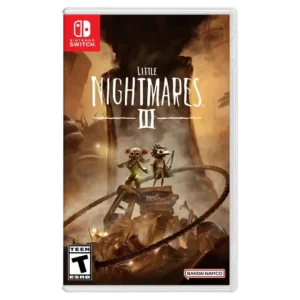
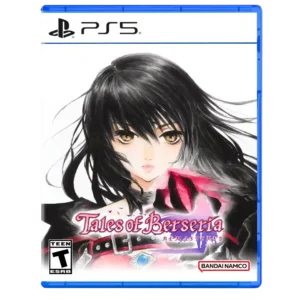
Little Nightmares III
Where It Has the Edge
- environmental detail is 4.1 vs 1.5. Environmental detail was generally praised for rich, vivid, or meticulously realized spaces, though one reviewer found some rooms...

Scorata scores summarize analyzed review evidence on a 1–5 scale; they are not laboratory measurements or a simple average of customer star ratings. Feature scores summarize the reviews covering that feature. The overall score averages feature scores within each review, then combines review averages. When both expert and customer evidence are available, those two groups receive equal weight. Products can have different review coverage, so small score gaps do not establish a winner.
Recommendations prioritize important features for the category, with a score of at least 3.5, a gap of at least 0.25 points and at least two supporting reviews per product. Features with widely varying scores or broad connectivity contexts are excluded from recommendations. These safeguards do not establish statistical significance.
Quick verdict
The review evidence points to a tradeoff: environmental detail versus originality and character development. Choose according to which strengths matter more to you; the overall score alone does not settle that choice.
Choose Little Nightmares III for environmental detail.
Choose Tales of Berseria Remastered for originality and character development.
Scores are out of 5. Missing scores mean missing review evidence, not a missing feature.
Save system reliability received strong negative evidence from a bug that forced replaying an entire chapter.
Autosave is a welcome modern convenience that reduces the risk of lost progress and makes the long RPG easier to play casually.
DLC value drew negative evidence where the base game’s abruptness made paid extra chapters feel like more game held back.
Bundled DLC is one of the remaster’s clearest wins: most reviewers liked getting the original costumes and extras included, especially for newcomers.
Platform-specific feature support received strong evidence from the same DualSense implementation praise.
Bringing Berseria to Switch and Xbox expands access, but missing upgrade paths, sparse PC options, screenshot restrictions, and no native Switch 2 version disappointed some reviewers.
Replay value leaned weak: a few saw some reason to replay roles, but most cited low replay value, similar characters, or uninteresting secrets.
One repeat player felt the magic faded on subsequent runs and explicitly recommended experiencing Berseria once rather than replaying it repeatedly.
Value for money was mixed to negative, balancing Friend Pass and lower price praise against short length, paid extras, and sale recommendations.
Value depends heavily on ownership: newcomers often get the best package with bundled DLC and QoL upgrades, while existing PS4/PC owners repeatedly see little reason to pay again.
Lore depth drew negative evidence from a reviewer who felt understanding the story depended too much on outside material.
The story’s moral ambiguity, revenge themes, free-will questions, and philosophical framing give reviewers more to think about than a typical straightforward hero narrative.
Originality leaned negative, with many reviewers calling it formulaic, familiar, or a retread rather than a fresh sequel.
The anti-hero revenge structure and morally gray party help Berseria stand apart from the brighter, more traditional hero stories associated with the series.
Character development was criticized for giving Low and Alone too little personality or relationship development.
Character growth is one of Berseria’s strongest qualities, especially Velvet’s arc and the way major party members evolve across the story.
Environmental detail was generally praised for rich, vivid, or meticulously realized spaces, though one reviewer found some rooms empty or uninteresting.
Environments are widely criticized as bland, sparse, low-detail, or dated, especially beside the stronger character models and art direction.
Emotional impact was mixed to negative: companionship could be touching, but several reviewers felt the game lacked emotional depth or resonance.
The revenge story repeatedly lands with real emotional force; reviewers describe tears, goosebumps, poignancy, and a strong attachment to Velvet’s journey.
World interactivity was criticized for unclear visual rules around what could be climbed, smashed, or used.
Collectibles, Katz rewards, treasure, and other field pickups add small reasons to explore otherwise straightforward spaces.
Innovation leaned negative overall: reviewers noted a few smart ideas but repeatedly said the sequel played too safe or lacked new mechanics.
Berseria’s anti-hero lead, darker story, and freer combat represented meaningful departures from older Tales conventions that several reviewers still appreciate.
Reviews frequently criticized the mechanics as safe, shallow, or underused, though a few found the simple loop acceptable for the mood-driven design.
Soul management, Break Souls, combo trees, and character-specific systems can create satisfying tactical depth, though some critics think the systems do not always harmonize.
Narrative quality was mixed to negative overall, with recurring complaints about slight, disjointed, ambiguous, or abrupt storytelling despite a few positive reads.
The revenge story is the clearest consensus strength, praised for its darker perspective, twists, emotional weight, and willingness to center morally gray characters.
Couch co-op quality was consistently criticized because reviewers repeatedly called the lack of local/couch co-op a missed or baffling opportunity.
Local battle co-op is functional and welcome for players who want to share fights, but it is not presented as a major reason to buy.
Camera behavior was criticized for depth perception and camera angles that interfered with jumps and survival.
The combat camera was described as mostly well behaved, helping the fast battle system keep a cohesive flow.
Family friendliness received similar limited evidence, tempered by the game’s disturbing but stylized imagery.
The revenge plot’s violence, mature themes, and occasional revealing costumes make this a less family-friendly Tales entry than the series’ lighter adventures.
Enemy variety received limited positive evidence, with one reviewer simply finding the monsters scary.
Enemy variety is a recurring weakness in dungeons, with repeated foes and samey encounter waves undercutting otherwise lively combat.
Tutorial quality was criticized by reviewers who felt the game barely explained itself and left players lost early.
Some reviewers think the game teaches its mechanics well, while others find the explanations confusing or insufficient for the combat’s complexity.
Content variety was mixed, with some praise for visual/thematic variety but complaints that enemies or chapter beats became wearyingly familiar.
Minigames, battle arenas, collectibles, exploration rewards, and other side activities help break up the main loop and give the package welcome variety.
Exploration was praised in selected areas, especially Carnavale and less railroaded spaces, but evidence was limited.
Exploration is often dragged down by backtracking, long corridors, repetitive dungeons, and repeated fights, although faster movement and encounter toggles improve it in the remaster.
Visual effects quality was mixed, with praise for depth of field but criticism that darkness made details hard to read.
Battle effects and flashy ultimate attacks add energy and spectacle to the real-time combat.
Fun factor was highly mixed, ranging from good fun and worthwhile playthroughs to chore-like or frustrating experiences.
Even reviewers who criticize the remaster often still call Berseria itself fun, entertaining, or a must-play first experience.
Faithfulness to franchise was mixed but often positive: reviewers agreed it looks and feels like Little Nightmares, while some felt it fell short of prior entries.
Despite its darker tone, Berseria still feels recognizably Tales, retaining the series’ charm, party chemistry, visual identity, and action-RPG character.
Movement feel was mixed to negative: the umbrella added a small wrinkle, but mechanical clunkiness and sluggish movement remained common caveats.
The 20% movement-speed boost is one of the most appreciated QoL changes, though some reviewers still find traversal floaty, sluggish, or detached from the world.
Atmosphere was widely praised for menace, mood, and tension, though a few reviews felt co-op or frustration weakened it.
Berseria’s darker, morally gray tone is a standout strength, giving the familiar Tales formula a more mature and emotionally charged identity.
Companion AI was one of the most divided areas: some reviewers found it competent or responsive, while others said it caused deaths, waiting, or frustration.
Companion AI is a weak spot, with basic behavior and unreliable healing leaving the player to handle much of the important decision-making.
Learning curve evidence was negative because unclear direction and minimal tutorialization made the game easy to feel lost in.
Combat can be approachable at first yet overwhelming as systems stack up; reviewers disagree on whether the tutorials and gradual introductions make that complexity manageable.
Animation quality received positive evidence for selling fragility, tenderness, and wordless character detail.
Character and battle animation was praised as smooth and effective, even when other visual elements still showed the game’s age.
Bug frequency was criticized, especially around AI, broken sequences, and game-breaking or reload-forcing issues.
Technical polish varies sharply by platform. PS5 reports are often smooth, while Switch reviews repeatedly mention pop-in, flicker, shimmering, and other visual glitches.
Co-op experience was heavily discussed and mixed: several reviewers enjoyed shared puzzle tension, but many felt co-op was underused, burdensome, or tension-draining.
Local battle multiplayer is welcomed as a useful extra, though it is described as serviceable rather than essential.
Polish was mixed: some reviews called it well built or visually polished, while others cited buggy, inconsistent, or clumsy execution.
Quality-of-life tweaks add welcome smoothness, but dated assets, unresolved rough edges, and the small scale of the update keep the remaster from feeling comprehensively polished.
Writing quality was mixed, with praise for wordless environmental storytelling but criticism that some story construction felt hollow or unsatisfying.
Characterization and emotional writing are often excellent, especially around Velvet and the party, but a few reviewers criticize tropey sections, weaker villains, or missed thematic opportunities.
Handheld play suitability was mixed, with Switch 2 handheld play described as rougher due to blur and swallowed shadow detail.
Portable Berseria is a major selling point for some reviewers, but Switch-specific image quality, 30fps limits, and one severe input-lag report make handheld recommendations platform-sensitive.
Dialogue quality received limited positive evidence because the absence of dialogue was viewed as appropriate to the game’s storytelling style.
Skits, banter, and party conversations are often funny, warm, and character-rich, though one remaster review noticed awkwardly compressed dialogue timing.
Immersion was praised by one reviewer who found the world atmospheric, transportive, and imaginative.
Strong art and music can bring Midgand to life, but pop-in and dated environmental presentation can noticeably break immersion.
Onboarding evidence was negative, with one reviewer saying newcomers are thrown in without enough guidance.
The opening combat hours can feel overwhelming as Artes and interconnected systems arrive before every player feels comfortable with them.
Pacing was divisive: some reviewers liked the tight or smoother flow, but many cited repetition, a weak first half, abrupt ending, or hollow stretches.
Story pacing is often strong, but repetitive dungeons and backtracking can interrupt emotional highs; the remaster’s faster travel helps without eliminating the issue.
Frame rate stability was mixed: several reviews found it steady or acceptable, while others reported drops or severe Beauty-mode chugging.
Performance is strong on PS5 in several reviews, but Switch impressions are much less consistent, with 30fps caps and occasional dips drawing criticism.
Accessibility options were praised, especially broad aids, full accessibility claims, object outlines, and brightness/font support.
Encounter toggles, difficulty controls, Grade Shop modifiers, button mapping, and other conveniences give players strong control over how demanding or time-consuming the journey feels, though one review noted the lack of colorblind modes.
Load times received limited but strong praise from one reviewer who reported virtually none.
Modern versions generally load faster, with several reviewers calling the improvements noticeable or nicely brisk.
Combat drew limited but positive notice when Carnavale forced the pair into tense teamwork against doll enemies.
Combat is the biggest point of disagreement: many reviewers love its speed, combo freedom, and risk-reward systems, while others find it button-mashy, overcomplicated, poorly balanced, or repetitive.
Graphics quality was mixed but often positive: reviewers praised the visuals and set pieces while some criticized darkness and clarity problems.
The visual picture is mixed: the anime style still looks appealing and some remaster versions are crisp, but many reviewers see only minor upgrades and Switch can look noticeably worse.
AI behavior leaned negative due to glitches, slow combat responses, and partner mistakes, though a few reviews described only mild clunkiness.
Party and enemy AI drew criticism for being basic, with players often expected to do most of the meaningful work themselves.
Difficulty balance was mostly criticized for trial-and-error deaths and co-op compounding mistakes, though one reviewer found the game approachable.
Difficulty can swing too far toward easy when Grade Shop bonuses or Velvet’s strongest loops are used, while harder settings do a better job exposing the combat’s strategic depth.
Art direction was one of the strongest areas, repeatedly praised as fantastic, phenomenal, breathtaking, or visually distinctive.
The anime and watercolor-inspired art direction continues to hold up well, with reviewers praising its style even when textures and environments look dated.
Core loop evidence was negative, with one reviewer saying the repeated motions made the short journey feel mindless.
One reviewer felt the long combat-exploration-upgrade cycle stopped introducing enough new systems to stay fresh through the full runtime.
Soundtrack quality was criticized by negative reviewers who found the music forgettable or lacking identity.
The soundtrack divides reviewers more than the story or voice acting: some rank it highly, while others call most of it average or forgettable outside standout themes.
Performance optimization was generally positive, with multiple reviewers reporting smooth or consistent performance and no major issues.
PS5 performance is usually smooth, while PC and especially Switch reports are more variable; the harshest Switch review described serious input-lag and image-quality problems.
Age appropriateness received limited positive evidence suggesting the violent imagery is unlikely to be excessive for younger teens.
The darker story includes death, killing, child-directed violence, and revealing costumes, making it a more mature Tales entry than some reviewers expected.
Controls were a recurring complaint, with several reviewers calling them clunky, woolly, or intermittently unresponsive, though one found them acceptable.
Most versions feel smooth and responsive in combat, but one Switch review reported severe input lag that made both fighting and exploration unwieldy.
Protagonist appeal was positive where mentioned, with reviewers liking the designs and fragile duo.
Velvet is overwhelmingly praised as a distinctive, compelling anti-heroine whose anger, vulnerability, and growth give the story its identity.
Map and navigation design leaned negative, with reviewers citing unclear paths, poor visibility, and missed exits.
New objective markers, collectible icons, and minimap changes are genuinely useful, although a few reviewers found them inconsistent or absent when most needed.
Sound design was strongly praised for syncing with art, building tension, and enhancing atmosphere.
Audio opinions are mixed: battle effects can be excellent, but some remaster versions have distracting menu mixing or unusually loud effects.
Multiplayer design was criticized for online-only limits, no drop-in switching, and difficult co-op setup despite the feature’s prominence.
Battle multiplayer was described as serviceable but superfluous: usable for shared play, yet far from central to the experience.
Level design was mixed, with praise for standout locations and fair layouts offset by criticism that some design felt lacking or overly linear.
Dungeon design is one of the clearest weaknesses, repeatedly described as linear, bland, maze-like, repetitive, or too long.
World-building was mixed, with praise for a compelling or aesthetically told world but criticism that it lacked context or misunderstood the series’ mystery.
Midgand’s moral conflicts, regional stories, and changing societies give the setting a stronger sense of history and consequence than its plain environments suggest.
Boss design was polarized, ranging from praise for standout monsters and highlight fights to criticism that bosses were straightforward or disappointing.
Boss opinions were split: several reviewers enjoyed the stronger encounters, while another found boss battles uninspired.
Puzzle design split reviewers sharply but leaned negative overall: some praised clarity or co-op richness, while many found puzzles obvious, repetitive, or overly simple.
Dungeon puzzles are usually considered simple or underdeveloped, with only occasional later sections standing out positively.
Aiming precision was criticized because bow and melee interactions felt automatic, unclear, or hard to line up rather than skillful.
Reviewers who clicked with the battle system found fights fast, satisfying, and highly engaging, with especially strong moment-to-moment action.
The cast is the most consistently praised element after the story, with strong chemistry, memorable personalities, and unusually compelling anti-hero dynamics.
Checkpoint system was mixed: some found checkpointing generous, but others said reloads wasted time or sent them too far back.
Velvet’s power is a recurring balance problem in the more critical combat takes, where her Break Soul loop can make other party members feel unnecessary.
Equipment enhancement earned praise for making dropped materials useful and giving gear management a satisfying purpose between battles.
The Soul system’s give-and-take creates an enjoyable resource rhythm when earning and spending Souls is working well.
One detailed review found the endgame side content rushed, typo-heavy, and noticeably less polished than the main story.
Facial models can still look stiff, one of several presentation details that make the game’s older technical foundation visible.
Earlier and less restrictive travel tools are a meaningful improvement, though some reviewers still found warping limited or awkwardly structured.
Encounter toggles and Grade Shop XP boosts make grinding far easier to control, a widely appreciated convenience for story-focused or returning players.
Haptic feedback integration was praised strongly for making a monster’s presence felt through the DualSense.
Horror tension was mixed: many praised chills and chase intensity, but several reviewers found it less scary than past games.
New objective and collectible indicators make the minimap more useful and reduce friction when tracking goals and pickups.
One review specifically criticized repeated tasks and story padding for making the adventure feel longer than its central conflict needed.
One PC-focused review went beyond calling the remaster unnecessary and described the commercial proposition as potentially predatory for existing owners.
Platforming precision was one of the more consistent frustrations, with depth perception, camera angle, and visibility causing repeated deaths.
Progression has useful depth through equipment, Grade Shop options, and evolving combat choices, but some reviewers feel growth is muted because the game can be too easy or bonuses too incremental.
The dominant complaint is that this feels more like a port or convenience-focused rerelease than a transformative remaster. The QoL work is useful, but many existing owners see too little reason to rebuy.
The supporting party is praised for distinct motivations, chemistry, banter, and storylines that make them more than simple companions to Velvet.
Arte and combo customization gives combat meaningful flexibility, letting players experiment with large move sets and different strings.
Split-screen quality received negative evidence because the lack of single-screen co-op was described as an oversight.
Stealth received split reactions: some reviewers enjoyed the scares and thrills, while others found trial-and-error stealth tiring.
Gear and ability systems can support steady growth, but several critics see them as shallow, overly menu-heavy, or unnecessary because combat can be trivialized.
Costumes and cosmetic options are fun and plentiful, but deeper build customization can feel limited or inflexible in places.
A physical release with extra presentation value was specifically appreciated by a longtime Tales fan.
Menu impressions are mixed: new item indicators can help, but build management, DLC claiming, and some older interfaces are still cumbersome.
Voice work is a major strength, especially the performances behind Velvet and the main cast, though one reviewer strongly preferred Japanese audio over the English dub.
Cross-play support was criticized in review-thread evidence as part of the multiplayer feature omissions.
The lack of PS4 save transfer was called a missed opportunity for returning players considering the remaster.
Repeated objectives and forced backtracking can turn progression into a routine trek through already visited maps.
Berseria is notably linear rather than truly open, and a couple of reviewers felt the zones were smaller or more constrained than they first appeared.
One review specifically lamented the absence of a meaningful side-quest system alongside the game’s uninspired dungeon structure.
New icons and clearer indicators improve navigation and inventory clarity, but older build menus can still feel convoluted.

Best for fluid traversal, rewarding exploration, striking art, and forgiving quality-of-life features. Skip it if you want deep combat, radical genre innovation, or consistently demanding bosses.
Pros: difficulty balance, boss design
Cons: innovation, sandbox freedom

Best for superb combat, inventive builds, and richly voiced characters. Skip it if repeated runs, resource gathering, or visually busy battles outweigh the appeal of steady progress.
Pros: overall quality, combat system
Cons: pacing, grind level

Good if you want a beautiful, demanding survival sandbox built around exploration, building, progression, and memorable co-op. Skip it if long resource runs, harsh death recovery, and deliberate pacing sound...
Pros: town-building system, exploration quality
Cons: grind level, fast travel convenience

Leonida is a breathtakingly alive crime sandbox with memorable protagonists, spectacular heists, and extraordinary detail. The tradeoff is a 30 fps ceiling, occasional control awkwardness, and some progression friction.
Pros: immersion, graphics quality
Cons: grind level, controls responsiveness