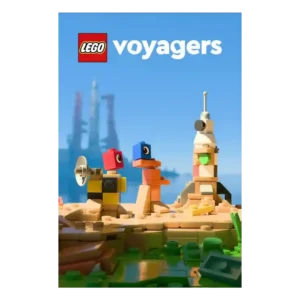
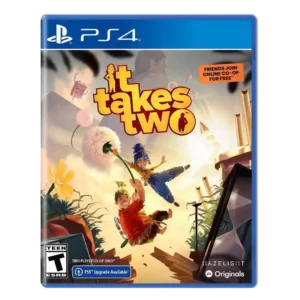
Lego Voyagers
Where It Has the Edge
- difficulty balance is 3.7 vs 3.2. Difficulty was generally seen as gentle and approachable, though several reviews noted uneven spikes, tricky tasks, or challenges...

Scorata scores summarize analyzed review evidence on a 1–5 scale; they are not laboratory measurements or a simple average of customer star ratings. Feature scores summarize the reviews covering that feature. The overall score averages feature scores within each review, then combines review averages. When both expert and customer evidence are available, those two groups receive equal weight. Products can have different review coverage, so small score gaps do not establish a winner.
Recommendations prioritize important features for the category, with a score of at least 3.5, a gap of at least 0.25 points and at least two supporting reviews per product. Features with widely varying scores or broad connectivity contexts are excluded from recommendations. These safeguards do not establish statistical significance.
Quick verdict
The review evidence points to a tradeoff: difficulty balance versus frame rate stability and movement feel. Choose according to which strengths matter more to you; the overall score alone does not settle that choice.
Choose Lego Voyagers for difficulty balance.
Choose It Takes Two for frame rate stability and movement feel.
Scores are out of 5. Missing scores mean missing review evidence, not a missing feature.
The loop of hauling pieces, building routes, and solving co-op obstacles split opinion, with some enjoying its calm rhythm and one finding it busywork.
The core loop is described as a well-crafted platforming foundation that supports the game's cooperative variety.
Onboarding could be sparse; at least one reviewer noted early annoyance from little explanation about what to do or where to go.
The onboarding is praised for welcoming new or non-gamer partners without heavy-handed teaching.
Frame rate was mixed, with some reports of temporary hiccups and Switch 2 drops that were noticeable but usually not gameplay-breaking.
Frame rate stability is praised across PC/console/Switch coverage, with reviewers noting steady or smooth performance.
Family friendliness was a recurring strength, especially for parents, kids, partners, and mixed-skill co-op pairs.
Family friendliness is limited by language and teen-rated content despite the otherwise loved cooperative experience.
Camera behavior was a repeated frustration because fixed, distant, or angled views made some platforming and depth judgment harder.
Camera behavior receives a positive note for keeping up with fast, dynamic action.
Rolling a cuboid brick was often charming and fitting, but reviewers also noted odd cadence, clumsiness, and occasional frustration.
Movement is repeatedly described as freeing, smooth, delightful, and enjoyable across jumping, dashing, and traversal.
The snap system helps platforming, yet depth perception, small ledges, and inconsistent latching still caused frustration for some players.
Platforming precision receives strong praise, with reviewers calling it responsive, precise, and effortless.
Writing quality stood out through the friendship theme, with one reviewer calling it one of the best video game depictions of friendship.
Writing quality is split between praise for snappy, excellent writing and criticism that the tone is uneven or disappointing beside the gameplay.
Polish was mixed: some praised smooth presentation, while one review cited screen tearing and another broader technical rough edges.
Polish is praised through comments about thoughtful production, virtual glitch-free execution, and masterful construction.
Content variety was praised for different environments, but criticized for having little side content beyond the main path.
Content variety is one of the strongest consensus points, with reviewers praising constant new mechanics, tools, genres, settings, and minigames.
Pacing was mixed: some felt the short runtime kept momentum brisk, while many felt the adventure ended just as it was getting going.
Pacing is mostly praised as breakneck, fantastic, and expertly paced, though one reviewer felt the game overstayed its welcome and another noted one section ran long.
Fun factor was generally high for positive reviewers, though a few felt the experience became forgettable, repetitive, or not worth the time.
Fun factor is exceptionally strong, with most reviewers calling it joyful, blast-like, highly enjoyable, or one of their most fun recent games.
The basic mechanics are approachable and playful, though several reviewers framed them as simple rather than deep.
Reviewers overwhelmingly praise the mechanics as simple to grasp yet constantly inventive, with several genres and toolsets executed well.
Exploration was praised when side sights, distractions, and small world details encouraged players to linger beyond the main path.
Exploration is praised where reviewers emphasize that playful, interactive spaces reward looking around and traversing levels.
Handheld play was acceptable on Steam Deck, but local co-op around a small screen was not the preferred setup.
Handheld suitability is positive overall, with similar handheld and docked performance, though controller and visual compromises remain.
The wordless narrative was often praised as wholesome, coherent, touching, and surprisingly emotional, though a few reviewers found it vague or confusing.
Narrative quality is divisive: some reviewers found the relationship story moving or healthy, while others called it shallow, predictable, or poorly told.
Difficulty was generally seen as gentle and approachable, though several reviews noted uneven spikes, tricky tasks, or challenges for younger players.
Difficulty is mixed: several reviewers found it forgiving or not very challenging, while others noted frustration or a gradual, approachable curve.
Co-op was the central strength overall, with reviewers praising teamwork, shared problem-solving, Friend Pass access, and two-player bonding.
Co-op experience is the clearest strength, with every review praising how essential, joyful, collaborative, or unusually strong the cooperative play feels.
Graphics received broad praise for gorgeous plastic materials, reflections, lighting, water, and convincing LEGO environments.
Graphics are praised on stronger hardware but notably compromised on Switch, where reviewers describe rough visuals and graphical tradeoffs.
Originality was praised in the way the game treats LEGO as creative expression rather than another licensed slapstick formula.
Originality is praised through reviewers calling the game rare and among the most creative co-op experiences they have played.
Bug frequency appeared low overall, though reviewers did mention minor glitches, hitches, or rare awkward respawn behavior.
Bug frequency appears low in the evidence, with one review reporting only minor graphical bugs plus one checkpoint-reset issue.
Small interactive moments such as flowers, benches, swings, and environmental toys helped the world feel playful and worth engaging with.
Interactive spaces are a major strength, with reviewers praising playful objects, rewarded curiosity, and dense environmental interactions.
Atmosphere was consistently praised as cozy, relaxing, childlike, serene, and warmly inviting.
Atmosphere is praised for wonder, warmth, and imaginative environmental mood.
Couch co-op was praised as a natural fit, especially for partners, family, and playing together in the same room.
Couch co-op is repeatedly praised as a natural or superior way to experience the game.
Immersion came from getting lost in the atmosphere, puzzle flow, lighting, and shared world moments.
Immersion is praised through absorbing environments and gameplay that reinforces the couple/co-op premise.
The game was repeatedly described as a good entry point for children, partners, and newer players, despite some motor-control challenges.
The learning curve is viewed positively, especially for non-gamers, with gradual skill development and inclusive design.
Environmental detail was a strength, with reviewers pointing to handcrafted worlds, intricate LEGO construction, and richly designed areas.
Environmental detail is praised in both character materials and intricate level spaces.
Emotional impact was one of the strongest areas, with several reviewers citing tears, sadness, heartstrings, or lasting story moments.
The emotional impact is often strong, especially around relationship reflection, ending moments, and co-op connection, though divorce sensitivity is a caveat.
Art direction was consistently praised for authentic, realistic, warmly lit LEGO dioramas and strong visual identity.
Art direction is widely praised as remarkable, gorgeous, imaginative, and strong enough to survive Switch visual compromises.
The checkpoint and respawn system was strongly praised for instant, forgiving recovery with almost no penalty for mistakes.
Checkpointing is praised as extremely generous or instant, making experimentation and deaths less punishing.
The red and blue 1x1 bricks were repeatedly described as cute, likable, and emotionally expressive despite their minimal design.
Protagonist appeal is polarized: some reviewers found Cody and May real or excellent, while others found them irritating, bitter, or unlikeable.
Controls were a recurring caveat: many found the basics workable, but building, snapping, hitboxes, and fine movement could feel fiddly.
Controls are widely praised as responsive, tight, natural, and accessible, with only the Switch Joy-Con feel drawing a mild caveat.
Age appropriateness was mixed, with broad all-ages appeal but caveats about tricky puzzles, platforming, and younger children's motor skills.
Age appropriateness is mixed-to-cautious: reviewers note mature themes, marriage metaphors, and challenge that may not fit younger children.
Replay value was a common weakness because the campaign is short, linear, and light on collectibles, side content, or reasons to return.
Replay value is generally positive due to swapped characters and replayable minigames, though one reviewer personally had no desire to replay.
Value for money was split: several praised the Friend Pass and modest price, while others felt the short length made full price steep.
Value for money is praised due to long runtime, Friend Pass, replay value, sale pricing, and perceived worth.
Puzzle design drew the widest split: many praised cooperative, elegant, rewarding ideas, while others found bridge-building repetitive or underwhelming.
Puzzle design is praised for making both players collaborate, with tools and level setups creating satisfying shared problem solving.
World-building was praised for its lonely, toy-like LEGO spaces and sense of childhood wonder, though one review questioned who built the world.
World-building is praised for imagination and character shining through the whole adventure.
Reviewers praised level design for its handcrafted worlds, co-op readability, and sense of wonder, with a few comments on unclear routes.
Level design is consistently praised as creative, intricate, masterfully mapped out, and varied across imaginative environments.
Sound design was praised for cute brick vocalizations, satisfying LEGO noises, and music/sound cues that convey character.
Sound design is repeatedly praised as outstanding, top-notch, rich, whimsical, and technically impressive.
The soundtrack was widely praised as mellow, ambient, emotional, memorable, and well-suited to the calm co-op tone.
The soundtrack is usually praised as fitting, cinematic, and emotionally effective, though one reviewer found some music generic.
Performance was platform-dependent: one PS5 review reported excellent optimization, while Switch-focused reviews noted noticeable drops.
Performance optimization is mostly positive in the cited review, with only occasional frame-rate dips in heavier scenes.
Animation is praised for Pixar-like presentation, squash-and-stretch style, and strong mocap-style character work.
Character development draws criticism from two reviews that felt May and Cody's marital issues were not explored deeply enough.
Competitive balance is mixed: core roles are praised as equal, but some minigames or character roles are described as one-sided.
Dialogue quality is mixed, with some humorous or realistic dialogue but repeated criticism of Dr. Hakim as cringy or uncomfortable.
Vehicle sequences were often singled out as cooperative highlights, especially when each player controlled part of a boat or vehicle.
Faithfulness to LEGO was strong, with reviewers admiring authentic brick-built worlds and real LEGO construction logic.
Innovation is strongly praised for its original, constantly changing co-op mechanics and creative approach.
Mission variety was mixed: reviewers liked vehicles and set pieces, but some found standout moments limited or repetitive.
Monetization fairness is praised because Friend Pass/pro-consumer ownership rules let two people play without both buying full copies.
Online stability is mostly positive but not perfect, with rare rubberbanding or server drops not erasing much progress.
Side characters are generally praised for providing laughs and inventive background flavor.
Split-screen quality is praised for companionship and smooth two-window play, especially despite Switch limitations.
Tutorialization was praised for trusting players and avoiding heavy spoon-feeding while still keeping puzzles understandable.
Visual effects were a notable downside in some reviews, especially bright glare, screen shake, and washed-out lighting that affected playability.
Bosses are praised as fun, challenging, cinematic, and sometimes wonderful, with checkpoints supporting the tougher encounters.
Navigation was mixed because some reviewers liked organic discovery, while others found objectives or next steps unclear.
One reviewer criticized the broader mission structure for lacking clear direction and goals.
Multiplayer design is praised as fully built around two players, with local, online, and cooperative structure central to the experience.
Interface clarity was criticized where the game's visual language made interactable options or progress less obvious.
Menu usability had a clear complaint from one reviewer who found the selected main-menu option hard to distinguish.
Voice acting is strongly praised across reviews as fantastic, phenomenal, well acted, and top-tier.
Platform-specific support on Switch is praised for multiple play options, though practical compromises remain.
Autosave was praised as frequent and almost constant, supporting the short pick-up-and-play structure.
Server reliability is mixed in the Switch evidence because online play was mostly solid but had a couple of server drops.

Best for fluid traversal, rewarding exploration, striking art, and forgiving quality-of-life features. Skip it if you want deep combat, radical genre innovation, or consistently demanding bosses.
Pros: difficulty balance, boss design
Cons: innovation, sandbox freedom

Good if you want fast, tactical roguelite combat with huge progression depth, striking art, and standout music. Skip it if repetition, resource micromanagement, or a less emotionally satisfying sequel story...
Pros: combat system, progression system
Cons: originality

Good if you want a beautiful, demanding survival sandbox built around exploration, building, progression, and memorable co-op. Skip it if long resource runs, harsh death recovery, and deliberate pacing sound...
Pros: town-building system, exploration quality
Cons: grind level, fast travel convenience

Best for joyful destruction, dense exploration, and a charming DK-Pauline adventure. Skip it if camera quirks, frame-rate dips, easy bosses, or premium Switch 2 pricing are dealbreakers.
Pros: fun factor, world interactivity
Cons: frame rate stability, boss design