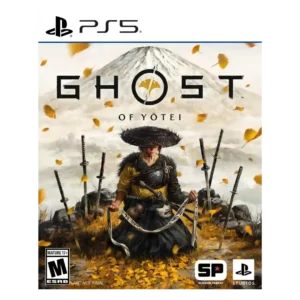
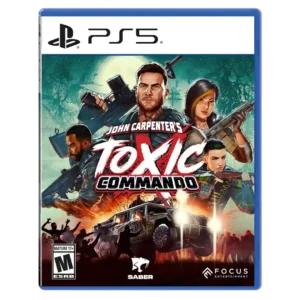
Compare Ghost of Yōtei vs John Carpenter’s Toxic Commando

Ghost of Yōtei

Ghost of Yōtei

Overall score 4.4 / 5

Based on 30 scored reviews

vs
John Carpenter’s Toxic Commando

John Carpenter’s Toxic Commando

Overall score 3.5 / 5

Based on 57 scored reviews

How we score

Scorata scores summarize analyzed review evidence on a 1–5 scale; they are not laboratory measurements or a simple average of customer star ratings. Feature scores summarize the reviews covering that feature. The overall score averages feature scores within each review, then combines review averages. When both expert and customer evidence are available, those two groups receive equal weight. Products can have different review coverage, so small score gaps do not establish a winner.

Recommendations prioritize important features for the category, with a score of at least 3.5, a gap of at least 0.25 points and at least two supporting reviews per product. Features with widely varying scores or broad connectivity contexts are excluded from recommendations. These safeguards do not establish statistical significance.

Quick verdict

What each product is best for

The review evidence points to a tradeoff: load times and content variety versus gameplay mechanics. Choose according to which strengths matter more to you; the overall score alone does not settle that choice.

Choose Ghost of Yōtei for load times and content variety.

Choose John Carpenter’s Toxic Commando for gameplay mechanics.

Why these recommendations?

Ghost of Yōtei

Where It Has the Edge

  • load times is 5.0 vs 2.3. Load times are one of the clearest technical wins, with reviewers calling travel and boot-to-game transitions near-instant.
  • content variety is 4.3 vs 1.6. Reviewers praise the amount of meaningful activities and handcrafted diversions, while a few note that repeated open-world tasks...
  • character development is 4.8 vs 2.3. Atsu’s arc is praised for emotional clarity, redemption, growth, and a more intimate character focus than the predecessor.

John Carpenter’s Toxic Commando

Where It Has the Edge

  • gameplay mechanics is 5.0 vs 4.3. Reviewers who focus on the broader mechanical package like how shooting, classes, vehicles, exploration, and horde defenses interlock...
Ghost of Yōtei 4.4 overall score
John Carpenter’s Toxic Commando 3.5 overall score

Compare features

Scores are out of 5. Missing scores mean missing review evidence, not a missing feature.

Scored on both products

Other features

Emotional impact
Ghost of Yōtei
4.9

Reviewers frequently describe the story as moving, affecting, and emotionally rich, including moments that brought tears or strong sympathy.

John Carpenter’s Toxic Commando
1.5

Emotional depth is not a selling point; one reviewer explicitly warns not to expect an emotional rollercoaster from the thin, absurd narrative.

Movement feel
Ghost of Yōtei
5.0

Movement is praised for fluidity, especially in combat flow and traversal compared with the predecessor.

John Carpenter’s Toxic Commando
1.8

On-foot movement receives some criticism for lacking conveniences such as a slide or dodge and for feeling laborious across large maps, making vehicles feel almost mandatory.

Load times
Ghost of Yōtei
5.0

Load times are one of the clearest technical wins, with reviewers calling travel and boot-to-game transitions near-instant.

John Carpenter’s Toxic Commando
2.3

Loading can be a nuisance: reviewers mention longer-than-expected waits, including multiplayer loads that depend on the slowest machine in the group.

Content variety
Ghost of Yōtei
4.3

Reviewers praise the amount of meaningful activities and handcrafted diversions, while a few note that repeated open-world tasks can become chores.

John Carpenter’s Toxic Commando
1.6

The launch package is relatively lean, with a short campaign and few modes beyond it. Randomized details and progression add mileage, but several reviewers still want more maps or activities.

Character development
Ghost of Yōtei
4.8

Atsu’s arc is praised for emotional clarity, redemption, growth, and a more intimate character focus than the predecessor.

John Carpenter’s Toxic Commando
2.3

The commandos have recognizable personalities and banter, but most reviewers see them as lightly sketched rather than deeply developed characters.

Economy and resource balance
Ghost of Yōtei
4.5

Resource balance is praised where simplified material categories and less strict upgrade paths encourage more engagement.

John Carpenter’s Toxic Commando
2.1

Resource and currency design is a common friction point. Upgrade costs and multiple currencies can feel excessive, even though higher difficulties and exploration provide ways to accelerate earnings.

Narrative quality
Ghost of Yōtei
4.4

The narrative is generally praised as emotional, well-executed, and compelling, but some reviewers criticize predictability, structure, or linear revenge beats.

John Carpenter’s Toxic Commando
2.4

The story provides enough campy context to move the campaign along, but most reviewers consider it thin, forgettable, or poorly developed rather than a reason to play.

Camera behavior
Ghost of Yōtei
3.3

Camera feedback is mixed: one reviewer says it is improved, while others cite visibility problems or off-screen/camera-management friction.

John Carpenter’s Toxic Commando
1.5

Camera comfort is a weak spot for some players: missing or limited FOV options and first-person vehicle movement can feel claustrophobic or even cause motion sickness.

Immersion
Ghost of Yōtei
3.8

Immersion is a major strength through world navigation, sound, and minimal HUD, though occasional technical or duel design issues can break it.

John Carpenter’s Toxic Commando
2.0

A reviewer found that a noticeable glitch briefly broke immersion, even though it was not severe enough to ruin the broader experience.

Companion AI
Ghost of Yōtei
4.0

The wolf companion is generally appreciated as a useful and flavorful aid, but some reviewers expected it to be more impactful or frequent.

John Carpenter’s Toxic Commando
2.2

Bots can handle basic combat and sometimes perform respectably, but the recurring complaint is that they struggle with objectives, driving, interactions, and harder difficulties, making solo play noticeably weaker.

Art direction
Ghost of Yōtei
4.9

Reviewers strongly praise the painterly visual identity, lighting, color, and intentional environmental effects, with only mild familiarity concerns.

John Carpenter’s Toxic Commando
3.2

The sludge-soaked eldritch look lands well for many reviewers, especially its creepy monsters and 1980s horror styling, although some find the dark palette bland or visually noisy.

Mission variety
Ghost of Yōtei
4.0

Mission variety is lightly positive, with praise for varied missions in different places and diverse objectives.

John Carpenter’s Toxic Commando
2.3

Randomized locations and occasional objective twists help, yet the repeated pattern of traveling, collecting or activating something, then defending against a final horde is one of the most consistent criticisms.

Upgrade system
Ghost of Yōtei
4.5

Upgrades are praised for being tied to exploration, weapons, armor, charms, and mastery activities rather than pure XP grinding.

John Carpenter’s Toxic Commando
2.9

Attachments, weapon tiers, and prestige give guns substantial tuning depth, but high costs and some underwhelming stat boosts can make the upgrade chase feel more restrictive than empowering.

Bug frequency
Ghost of Yōtei
4.2

Most reviewers report few or no serious bugs, though some mention an odd freeze, minor technical issues, or rare late-game disruptions.

John Carpenter’s Toxic Commando
2.6

Launch-era glitches show up in several accounts, ranging from a fair share of quirks to bugs that noticeably hurt moments, while other reports describe the odd issue as minor.

Aiming precision
Ghost of Yōtei
2.5

The only scored aiming-related evidence is negative, with one reviewer saying auto-targeting hindered them and contributed to deaths.

John Carpenter’s Toxic Commando
3.9

Gun aiming is usually described as precise and satisfying, with proper aim-down-sights and convincing recoil, though one console-focused review reported aiming problems when online responsiveness faltered.

Endgame content
Ghost of Yōtei
3.3

Endgame evidence is mixed: there are post-story tasks and challenge reasons to return, but one review notes no new game plus and another says late content can feel samey.

John Carpenter’s Toxic Commando
2.0

Endgame depth is a recurring concern: after the campaign, most of the incentive comes from replaying familiar missions, raising difficulty, and continuing class or weapon progression.

Writing quality
Ghost of Yōtei
4.3

Writing is praised for creative freshness and emotional ambition, but one dissenting review calls it conventional blockbuster material.

John Carpenter’s Toxic Commando
3.0

Writing is a major split: a few reviewers enjoy the knowingly campy script, while others call the dialogue and narrative writing shallow, grating, or outright awful.

Skill tree depth
Ghost of Yōtei
4.5

Skill depth is praised where charms, loadouts, weapon skills, and spirit attacks allow specialized builds and granular tuning.

John Carpenter’s Toxic Commando
3.3

Skill trees can meaningfully reshape class abilities and support different builds, but some reviewers find parts of the trees shallow, stat-heavy, or uninspired.

Frame rate stability
Ghost of Yōtei
5.0

Frame-rate evidence is very positive, including stable pacing, smooth transitions, and rock-solid 60 FPS in PS5 Pro modes.

John Carpenter’s Toxic Commando
3.8

Frame-rate results depend heavily on hardware. Strong 30 FPS handheld targets and smooth high-end performance are reported, but the largest hordes can produce sharp dips on weaker systems.

Checkpoint system
Ghost of Yōtei
4.0

Checkpoint evidence is limited but positive for convenience, with one reviewer noting instant respawns and mid-fight boss checkpoints that reduce punishment.

John Carpenter’s Toxic Commando
2.8

Checkpoint impressions vary by mode and source: frequent checkpoints are appreciated where available, while reviewers criticize situations where long solo runs can be lost without a useful checkpoint.

Difficulty balance
Ghost of Yōtei
4.0

Difficulty is mostly praised for rewarding patience and offering customization, though critics cite easy challenge, high damage, or artificial duel constraints.

John Carpenter’s Toxic Commando
2.9

Difficulty generally scales into a satisfying co-op challenge, with Hard earning praise from experienced shooter players, but solo runs can become disproportionately punishing when bots cannot keep up.

Exploration quality
Ghost of Yōtei
4.7

Exploration is one of the strongest areas, often called rewarding, organic, and meaningful, though one dissenting review finds it over-guided.

John Carpenter’s Toxic Commando
3.6

Exploration is usually rewarding because detours can uncover parts, weapons, ammo, and progression items, though a few reviewers think repeated points of interest become tedious.

Progression system
Ghost of Yōtei
4.4

Progression is praised for tying upgrades to exploration and skill shrines, though some reviewers want more depth or nuance.

John Carpenter’s Toxic Commando
3.3

Class and weapon progression can be motivating and give builds ownership, but the same systems become a grind for players who want to switch classes or fully upgrade several guns.

Polish
Ghost of Yōtei
4.8

Polish is a recurring strength, with reviewers calling the release premium, cinematic, and impressively crafted despite a few bugs or animation rough edges.

John Carpenter’s Toxic Commando
3.7

The polished core shooting and horde technology impress several reviewers, but bot behavior, cutscene roughness, and occasional launch issues keep the overall finish from feeling uniformly refined.

Character roster
Ghost of Yōtei
4.5

The supporting ensemble is viewed positively in several reviews, though some reviewers find side figures underused or shallow.

John Carpenter’s Toxic Commando
3.5

The small cast is viewed as more memorable than Saber's previous co-op roster, even though it remains compact and not especially deep.

Core gameplay loop
Ghost of Yōtei
4.8

The core loop is repeatedly described as compelling, hard to put down, and more fruitful than Tsushima for some reviewers.

John Carpenter’s Toxic Commando
3.8

The explore-scavenge-drive-defend loop creates an addictive rhythm at first, especially with friends, but its repeated structure becomes easier to see after several missions.

Weapon balance
Ghost of Yōtei
4.1

Weapon balance is praised for distinct tools and effective counters, but mixed overall because several reviewers find weapons too situational or favorite weapons underpowered outside matchups.

John Carpenter’s Toxic Commando
3.1

Most weapons are useful and feel distinct, but a few reviewers argue high-capacity or explosive options fit horde combat much better than shotguns or sniper rifles.

Atmosphere
Ghost of Yōtei
5.0

The atmosphere is consistently framed as a major strength, emphasizing contemplative tone, environmental mood, and cinematic immersion.

John Carpenter’s Toxic Commando
4.2

The campy 1980s horror atmosphere is one of the clearest strengths, combining sludge-covered locations, schlocky humor, synth music, and Carpenter-inspired framing into a distinctive mood.

Family friendliness
Ghost of Yōtei
2.0

The family-friendliness score is low because the only explicit family guidance warns against younger gamers due to violence and mature content.

John Carpenter’s Toxic Commando
1.3

This is not family-friendly material: reviewers explicitly point to mature-rated gore, dismemberment, brutal violence, and strong language.

Gameplay mechanics
Ghost of Yōtei
4.3

General mechanics are praised as refined and improved, though some reviewers call them reused rather than evolutionary.

John Carpenter’s Toxic Commando
5.0

Reviewers who focus on the broader mechanical package like how shooting, classes, vehicles, exploration, and horde defenses interlock into an easy-to-grasp action game.

Sandbox freedom
Ghost of Yōtei
3.8

Freedom is moderate: reviewers appreciate loose target order and player-directed wandering, but note that some freedom is an illusion.

John Carpenter’s Toxic Commando
4.5

The semi-open maps let squads wander off the critical path and explore without penalties, a freedom reviewers appreciate compared with more linear horde shooters.

Innovation
Ghost of Yōtei
3.2

Innovation scores trend moderate because reviewers describe Yōtei as refinement rather than reinvention, with familiar systems made better.

John Carpenter’s Toxic Commando
3.9

Vehicles, mud physics, and semi-open maps give the formula a fresh wrinkle, but reviewers broadly agree the game evolves familiar horde-shooter ideas rather than reinventing the genre.

Animation quality
Ghost of Yōtei
4.0

Combat animation is often praised for brutality and style, but several reviewers note repetition or less-polished NPC/casual dialogue animation.

John Carpenter’s Toxic Commando
3.3

Moment-to-moment animation often sells the horde spectacle and weapon handling, but cutscenes and some character movement can look floaty, dated, or rough.

Faithfulness to franchise
Ghost of Yōtei
4.7

Yōtei is viewed as a worthy successor that preserves Ghost of Tsushima’s best ideas while refining them around Atsu.

John Carpenter’s Toxic Commando
4.0

Most reviewers feel the synth score, camp, gore, and B-movie tone make good use of the Carpenter connection, while a minority think the writing and presentation do not fully earn the name.

Learning curve
Ghost of Yōtei
4.0

Learning curve evidence is positive but modest, emphasizing learn-by-doing design that mirrors Atsu’s practice and attention rather than heavy explanation.

John Carpenter’s Toxic Commando
4.7

The familiar structure and straightforward mechanics make the game easy for shooter veterans to understand quickly, with several reviewers describing it as simple to jump into.

Visual effects quality
Ghost of Yōtei
4.0

Visual-effects evidence is positive but limited, with reviewers appreciating enhanced particles, blood, mud, wind, and cinematic environmental effects.

John Carpenter’s Toxic Commando
4.7

Huge swarms, dismemberment, explosions, particles, and gore create the game's strongest visual spectacle, with set-piece defenses repeatedly earning praise.

Graphics quality
Ghost of Yōtei
4.9

Visuals receive near-universal praise, from stunning fidelity and landscapes to screenshot-worthy environments and color.

John Carpenter’s Toxic Commando
4.3

Visual quality is generally attractive and clean enough to sell the apocalypse, with detailed hordes and effects, though some sources call the character models, palette, or overall fidelity less impressive.

Accessibility options
Ghost of Yōtei
3.0

Accessibility evidence is limited and mixed: TechRadar notes helpful subtitles, visibility, control simplification, and combat assists, but says the suite is lighter than some PS5 peers and lacks colorblind options.

John Carpenter’s Toxic Commando
3.6

Subtitles, resize options, aim assist, control remapping, and other useful settings help, but several reviewers note the absence of a dedicated accessibility suite or common extras such as colorblind modes.

Crash stability
Ghost of Yōtei
3.0

Crash evidence is limited to one reviewer reporting two late-game crashes, while most other technical impressions lean stable.

John Carpenter’s Toxic Commando
2.4

Crash reports are inconsistent: some reviewers encountered frustrating mission-ending crashes, while others completed extensive sessions without a single crash.

Environmental detail
Ghost of Yōtei
5.0

Environmental detail earns strong praise for realistic items, dense foliage, weather, light, and painstakingly crafted spaces.

John Carpenter’s Toxic Commando
4.4

Mud, sludge, ruined facilities, debris, and weapon wear give the environments convincing texture, even when the broader scenery and palette do not always stand out.

Grind level
Ghost of Yōtei
2.8

Grind sentiment is mixed-to-negative where repeated side activities, collectibles, or checklist tasks create fatigue over time.

John Carpenter’s Toxic Commando
2.3

Grind is one of the most disputed areas. Some reviewers find weapon and class leveling well paced, while others say attachment costs and repeated campaign runs make experimentation needlessly laborious.

Combat system
Ghost of Yōtei
4.7

Combat is the most broadly praised system, with fluid parries, weapon-swapping, violent impact, and strong duels; criticisms focus on rigidity or fatigue in the rock-paper-scissors weapon setup.

John Carpenter’s Toxic Commando
4.1

Gunplay is widely praised for punchy feedback, satisfying hits, and a strong first-person feel, although a minority describe it as merely serviceable or a little light.

Lore depth
Ghost of Yōtei
4.5

Lore depth receives positive but limited support through mythic tales and storytelling sequences that expand the world’s legends.

John Carpenter’s Toxic Commando
4.0

One reviewer specifically enjoys the strange Sludge God lore and darker setup, even though the wider critical consensus treats the narrative as lightweight.

Originality
Ghost of Yōtei
3.0

Originality is moderate: reviewers repeatedly say Yōtei does not revolutionize the formula, but many accept that as focused refinement.

John Carpenter’s Toxic Commando
3.4

The game wears its Left 4 Dead and World War Z influences openly. Vehicles and open maps give it some identity, but reviewers rarely consider the overall package truly original.

Dialogue quality
Ghost of Yōtei
2.8

Dialogue and delivery are mixed: some conversations carry emotion well, but several reviewers call line delivery stilted or conversations dated.

John Carpenter’s Toxic Commando
3.1

The deliberately cheesy banter is divisive. Some reviewers enjoy its well-timed jokes and campy tone, while others find the quipping grating, generic, or outright awful.

Fun factor
Ghost of Yōtei
4.7

Reviewers repeatedly describe the game as enjoyable, addictive, and fun from start to finish, even when noting formulaic elements.

John Carpenter’s Toxic Commando
4.4

The dominant verdict is that the game is simply fun, especially when a squad is mowing through enormous hordes or improvising with vehicles, even if repetition limits how long that excitement lasts for some reviewers.

Enemy variety
Ghost of Yōtei
4.3

Enemy variety is positively noted through more weapon matchups, multiple factions, and a better range of enemies than before.

John Carpenter’s Toxic Commando
4.0

Special enemies keep fights readable and dangerous, but opinions split on originality; several reviewers call the roster effective yet familiar compared with other horde shooters.

HUD clarity
Ghost of Yōtei
4.8

HUD and marker restraint are praised for keeping the view clear and helping exploration feel less like a checklist.

John Carpenter’s Toxic Commando
5.0

The HUD is praised for staying clear and readable, with useful indicators and markers that communicate threats and objectives without overwhelming the screen.

Pacing
Ghost of Yōtei
3.6

Pacing is divisive: Game Informer praises it as a triumph, while several reviewers cite predictability, prolonged beats, or odd act structure.

John Carpenter’s Toxic Commando
3.5

Pacing is highly context-dependent: compact points of interest can keep the action flowing, while long missions, resource detours, mud, and repeated objectives can slow the experience considerably.

Haptic feedback integration
Ghost of Yōtei
5.0

DualSense haptics and touchpad integrations are widely praised, especially wind, riding, rain, music, and activity feedback.

John Carpenter’s Toxic Commando
5.0

One PlayStation-focused review praises the DualSense adaptive-trigger and vibration treatment for adding useful tactile feedback to the shooting.

Loot system
Ghost of Yōtei
4.5

Loot evidence is positive where quests and conflicts reward Atsu with valuable loot, information, and clues that feed exploration.

John Carpenter’s Toxic Commando
4.5

Heavy weapons and loot found around the maps are a highlight, giving exploration a satisfying payoff with railguns, grenade launchers, and other temporary power spikes.

Controls and connectivity

Voice acting
Ghost of Yōtei
4.9

Voice acting receives strong praise, especially Erika Ishii’s performance and the English/Japanese voice casts.

John Carpenter’s Toxic Commando
2.9

Voice acting divides reviewers almost as much as the dialogue: some praise convincing or excellent performances, while others hear generic delivery that adds little personality.

Protagonist appeal
Ghost of Yōtei
4.8

Atsu is widely praised as a compelling, complex, fiery, and memorable lead who gives the sequel a stronger identity.

John Carpenter’s Toxic Commando
2.9

The commandos' appeal depends on tolerance for dumb, campy personalities: some reviewers find them charming, while others call them bland or too shallow to care about.

Age appropriateness
Ghost of Yōtei
2.0

The only explicit age-appropriateness judgment warns against younger players because of bloody violence, mature themes, language, drug use, frightening scenes, and slight nudity.

John Carpenter’s Toxic Commando
1.0

The game is squarely aimed at mature players: one reviewer emphasizes its relentless gore, brutal violence, and frequent strong language rather than broad age suitability.

Controls responsiveness
Ghost of Yōtei
4.3

Parrying, quick selection, and combat inputs are praised, but one review flags the overall control system as demanding.

John Carpenter’s Toxic Commando
4.1

Basic shooting controls are usually responsive, yet a few reviews call out awkward interaction inputs, missing movement conveniences, or online response problems.

Ownership and support

Replay value
Ghost of Yōtei
4.5

Replay value is supported by a large map, many activities, and difficulty-based return reasons, but lack of new game plus limits the endgame.

John Carpenter’s Toxic Commando
3.0

Replay value is sharply divided. Randomized spawns, classes, difficulties, and upgrade goals invite repeat runs, but unchanged maps and repeated mission structures make others lose interest after the campaign.

Platform-specific feature support
Ghost of Yōtei
4.2

PS5-specific features are mostly praised, especially PS5 Pro modes and DualSense use, though some touchpad/motion gimmicks are considered distracting.

John Carpenter’s Toxic Commando
3.3

Platform-specific impressions split: DualSense features add value on PlayStation, while one Xbox review says the always-online design does not cooperate well with Quick Resume.

Value for money
Ghost of Yōtei
4.8

Value sentiment is positive where reviewers call the game worth buying or a must-play, supported by long playtime and substantial content.

John Carpenter’s Toxic Commando
3.9

Value depends on the group: several reviewers call the roughly $40 launch price fair for the campaign and replay systems, while others see it as a tough ask when every friend needs a copy.

Comfort and build

Quest design
Ghost of Yōtei
4.5

Quest design is a major strength in many reviews thanks to memorable tales, bounties, organic side stories, and worthwhile rewards, though Eurogamer sharply dislikes the formulaic sidequests.

John Carpenter’s Toxic Commando
3.0

Side objectives can make scavenging useful and occasionally fun, but one review specifically wants more compelling side quests and meaningful optional goals.

Level design
Ghost of Yōtei
2.5

The only scored level-design evidence is critical, describing certain mission spaces as single-route and overly linear.

John Carpenter’s Toxic Commando
3.9

Open, vehicle-sized maps are a major point of differentiation and can make exploration feel freeing, but some reviewers think the larger spaces dilute pacing and memorable encounter design.

Mission design
Ghost of Yōtei
4.3

Mission design is generally positive for diverse objectives and strong campaign structure, though some side mission design is criticized elsewhere.

John Carpenter’s Toxic Commando
3.3

Mission design can produce excellent set-piece defenses and a few clever objectives, but some reviewers criticize the broader structure as overlong, predictable, or poorly arranged.

User interface design
Ghost of Yōtei
3.5

UI evidence is mixed: restrained maps and menus are praised, but one reviewer reports low-contrast text and hard-to-see map elements.

John Carpenter’s Toxic Commando
4.5

The interface is generally praised for being clean, minimal, and easy to read, keeping loadouts and combat information understandable without clutter.

Boss design
Ghost of Yōtei
4.1

Duels and boss-style encounters are usually exciting and memorable, though one reviewer criticizes duel advantages as artificial.

John Carpenter’s Toxic Commando
5.0

The climactic Sludge God encounter is singled out as a fun, spectacle-heavy payoff rather than a mechanically deep boss showcase.

Sound design
Ghost of Yōtei
4.9

Sound design is consistently praised for environmental audio, combat effects, and the way it supports immersion.

John Carpenter’s Toxic Commando
4.3

Sound effects are a strong contributor to game feel: guns hit with punch, impacts read clearly, and positional audio often helps parse the chaos, despite a few audio glitches.

Map and navigation design
Ghost of Yōtei
4.8

Navigation is strongly praised for wind guidance, readable maps, organic discovery, spyglass/map ideas, and low UI clutter.

John Carpenter’s Toxic Commando
4.3

Map markers and points of interest generally make objectives and resources easy to track, while route planning adds a useful tactical layer to larger stages.

World-building
Ghost of Yōtei
3.8

World-building is mixed-to-positive: Ezo’s culture and social context are compelling, but some reviewers wanted broader supporting context.

John Carpenter’s Toxic Commando
3.3

The Carpenter-inspired setting and Sludge God concept can give the world a fun identity, but some reviewers find the actual mission locations too bland to sustain that promise.

Open-world design
Ghost of Yōtei
4.4

The open world is widely praised for beauty, density, organic discovery, and restraint, with dissenting notes about repetition, over-guidance, or familiar structure.

John Carpenter’s Toxic Commando
4.1

The semi-open structure is widely seen as a refreshing change from linear horde shooters, adding exploration and routing freedom, though critics argue it can make missions feel flabby or repetitive.

Performance

Performance optimization
Ghost of Yōtei
4.9

Performance feedback is very positive overall, with strong PS5/PS5 Pro stability, polished execution, and few performance complaints.

John Carpenter’s Toxic Commando
3.8

Performance ranges from impressively stable under huge hordes to rough on specific PCs or builds. Hardware, settings, and launch-period patches make this one of the more variable findings.

Soundtrack quality
Ghost of Yōtei
4.8

The soundtrack receives strong praise for atmospheric Japanese instrumentation, shamisen motifs, memorable songs, and cinematic tension.

John Carpenter’s Toxic Commando
4.3

The synth-heavy score is one of the most consistent presentation highlights and fits the Carpenter-inspired action well, though a minority find the music less distinctive than expected.

Evidence available for one product

Other features

AI behavior
Ghost of Yōtei
4.5

Enemy perception receives positive attention where stealth is described as sound-driven, with enemies reacting to audio as well as sight.

John Carpenter’s Toxic CommandoNo score yet
Class balance
Ghost of YōteiNo score yet
John Carpenter’s Toxic Commando
3.5

The four classes cover clear damage, healing, defense, and support roles and generally complement a squad well, though some reviewers find specific classes less engaging or their cooldowns and trees uneven.

Co-op experience
Ghost of YōteiNo score yet
John Carpenter’s Toxic Commando
4.0

Co-op is the game at its best. Coordinating classes, vehicles, defenses, and huge hordes with friends repeatedly turns the straightforward shooting into memorable chaotic teamwork.

Couch co-op quality
Ghost of YōteiNo score yet
John Carpenter’s Toxic Commando
2.0

There is no couch co-op, which limits the appeal for households that want to share the multiplayer experience on one system.

Crafting system
Ghost of Yōtei
4.0

Crafting/resource gathering is lightly but positively scored because materials are more generalized, making upgrades easier to engage with.

John Carpenter’s Toxic CommandoNo score yet
Driving mechanics
Ghost of YōteiNo score yet
John Carpenter’s Toxic Commando
4.2

Vehicles are one of the signature ideas and are frequently great fun to drive, especially with mud and winches creating emergencies, though some reviewers find the off-road friction slow or frustrating.

Facial animations
Ghost of Yōtei
4.5

Facial animation is praised in cutscenes and Atsu’s expressions, with reviewers noting visible emotion and strong performance capture.

John Carpenter’s Toxic CommandoNo score yet
Fast travel convenience
Ghost of Yōtei
5.0

Fast travel is strongly praised as instantaneous or highly respectful of the player’s time.

John Carpenter’s Toxic CommandoNo score yet
Handheld play suitability
Ghost of YōteiNo score yet
John Carpenter’s Toxic Commando
3.0

Handheld play is surprisingly viable, particularly on Steam Deck and ROG Ally, but it requires lower settings, occasional tuning, and acceptance of frame-rate or battery compromises.

Horror tension
Ghost of YōteiNo score yet
John Carpenter’s Toxic Commando
4.5

Creepy special infected, huge swarms, and stressful objective setups can create genuine tension even though the overall tone remains more campy action than serious horror.

Matchmaking quality
Ghost of YōteiNo score yet
John Carpenter’s Toxic Commando
4.5

Matchmaking is described as refreshingly simple, with the option to keep customizing in the hub and fall back to bots if a queue takes too long.

Microtransaction impact
Ghost of YōteiNo score yet
John Carpenter’s Toxic Commando
5.0

At launch, reviewers appreciate that there are no microtransactions and that cosmetics and progression rewards can be earned through play.

Monetization fairness
Ghost of YōteiNo score yet
John Carpenter’s Toxic Commando
5.0

Monetization earns positive marks at launch because progression is not locked behind premium systems and earnable rewards remain tied to play.

Onboarding experience
Ghost of Yōtei
4.0

Onboarding is initially intimidating for some, but reviewers say the discovery and indicator systems become enjoyable once learned.

John Carpenter’s Toxic CommandoNo score yet
Online stability
Ghost of YōteiNo score yet
John Carpenter’s Toxic Commando
1.8

Always-online requirements are a repeated complaint, especially for solo play and pausing, although at least one review reports excellent netcode even across long-distance co-op sessions.

Platforming precision
Ghost of Yōtei
3.7

Platforming and climbing are mixed: one review says climbing is improved, while others call it awkward or overly gamified.

John Carpenter’s Toxic CommandoNo score yet
Side character depth
Ghost of Yōtei
3.7

Side character depth is mixed, with praise for strong companions and villains but criticism that many allies or supporting figures lack involvement.

John Carpenter’s Toxic CommandoNo score yet
Split-screen quality
Ghost of YōteiNo score yet
John Carpenter’s Toxic Commando
2.0

Split-screen is absent, so local players cannot share a console for the co-op campaign.

Stealth mechanics
Ghost of Yōtei
3.9

Stealth is enjoyable and viable, especially with chain assassinations and tools, but several reviewers call it basic or largely unchanged.

John Carpenter’s Toxic CommandoNo score yet
Tutorial quality
Ghost of Yōtei
4.0

Tutorial/onboarding evidence is modestly positive, praising learn-by-doing design and seamless early teaching.

John Carpenter’s Toxic CommandoNo score yet
Vehicle roster
Ghost of YōteiNo score yet
John Carpenter’s Toxic Commando
4.3

The vehicle lineup adds real tactical variety through healing, turrets, EMPs, boosts, and other roles, making the choice of ride more meaningful than simple transportation.

World interactivity
Ghost of YōteiNo score yet
John Carpenter’s Toxic Commando
4.4

Mud deformation, winches, destructible obstacles, and vehicle interactions make the world unusually tactile for a horde shooter and create many of its most memorable emergent moments.

Controls and connectivity

Character customization
Ghost of YōteiNo score yet
John Carpenter’s Toxic Commando
2.1

Weapon cosmetics offer much more freedom than the characters themselves. Reviewers like granular gun styling, while character outfits and skins are repeatedly described as basic or poor value.

Menu usability
Ghost of Yōtei
2.5

Menu usability has a specific criticism around a hard-to-see reticule and low-contrast text.

John Carpenter’s Toxic CommandoNo score yet

Ownership and support

Cross-play support
Ghost of YōteiNo score yet
John Carpenter’s Toxic Commando
4.0

Seamless cross-play is praised for making it easy to assemble a four-player squad across supported platforms.

Cross-save support
Ghost of YōteiNo score yet
John Carpenter’s Toxic Commando
2.5

Steam cloud saves work, but one handheld review found that graphics settings also followed the save, forcing unwanted low-resolution settings onto a desktop PC.

Save system reliability
Ghost of YōteiNo score yet
John Carpenter’s Toxic Commando
1.8

Save-related friction comes from cloud-synced graphics settings on Steam and the lack of useful mid-mission save points in some long stages.

Server reliability
Ghost of YōteiNo score yet
John Carpenter’s Toxic Commando
4.8

Server impressions are mostly positive where directly discussed, with reviewers reporting stable netcode and little lag, although the mandatory online connection remains a separate concern.

Comfort and build

Multiplayer design
Ghost of YōteiNo score yet
John Carpenter’s Toxic Commando
3.9

The multiplayer design favors straightforward squad play over competitive complexity, and reviewers generally like how easy it is to coordinate roles and share the chaos.

Puzzle design
Ghost of Yōtei
1.5

Puzzle design receives a low score from a reviewer who calls several puzzles overly simple and almost pointless.

John Carpenter’s Toxic CommandoNo score yet

Other Top Video Games to Consider

#1 Well Dweller
4.7

Best for fluid traversal, rewarding exploration, striking art, and forgiving quality-of-life features. Skip it if you want deep combat, radical genre innovation, or consistently demanding bosses.

Pros: difficulty balance, boss design

Cons: innovation, sandbox freedom

#2 Hades II
4.5

Best for superb combat, inventive builds, and richly voiced characters. Skip it if repeated runs, resource gathering, or visually busy battles outweigh the appeal of steady progress.

Pros: overall quality, combat system

Cons: pacing, grind level

#3 Valheim
4.5

Good if you want a beautiful, demanding survival sandbox built around exploration, building, progression, and memorable co-op. Skip it if long resource runs, harsh death recovery, and deliberate pacing sound...

Pros: town-building system, exploration quality

Cons: grind level, fast travel convenience

#4 Grand Theft Auto VI
4.5

Leonida is a breathtakingly alive crime sandbox with memorable protagonists, spectacular heists, and extraordinary detail. The tradeoff is a 30 fps ceiling, occasional control awkwardness, and some progression friction.

Pros: immersion, graphics quality

Cons: grind level, controls responsiveness