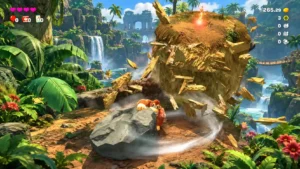
Donkey Kong Bananza
Where It Has the Edge
- difficulty balance is 3.6 vs 2.7. The main route and early bosses are often easy, especially with powerful transformations. Later layers, optional rooms, and...

Scorata scores summarize analyzed review evidence on a 1–5 scale; they are not laboratory measurements or a simple average of customer star ratings. Feature scores summarize the reviews covering that feature. The overall score averages feature scores within each review, then combines review averages. When both expert and customer evidence are available, those two groups receive equal weight. Products can have different review coverage, so small score gaps do not establish a winner.
Recommendations prioritize important features for the category, with a score of at least 3.5, a gap of at least 0.25 points and at least two supporting reviews per product. Features with widely varying scores or broad connectivity contexts are excluded from recommendations. These safeguards do not establish statistical significance.
Quick verdict
The review evidence points to a tradeoff: difficulty balance versus frame rate stability and performance optimization. Choose according to which strengths matter more to you; the overall score alone does not settle that choice.
Choose Donkey Kong Bananza for difficulty balance.
Choose TOEM 2 for frame rate stability and performance optimization.
Scores are out of 5. Missing scores mean missing review evidence, not a missing feature.
Familiar Kongs are welcome, but limited appearances by Diddy and Dixie and the absence of other favorites leave some fans wanting more.
A large cast of oddball townsfolk and creatures keeps each stop lively. The sheer number of characters supports the game’s dense, personable world.
The opening is divisive: some appreciate immediate access to the core moves, while others find an extended stretch of basic smashing slow and unrepresentative.
New traversal abilities are introduced naturally through the opening sequence, letting players learn by doing instead of stopping for heavy instruction.
Opinions split between sharp optional challenges and movement that makes careful platforming feel awkward. Exploration and power often matter more than precise jumps.
The light platforming stays easy and unobtrusive rather than demanding exact execution. It adds vertical exploration without becoming cumbersome.
Teaching the basic moves is effective for some players but slow and drawn out for others, particularly before the more inventive layers appear.
The opening teaches movement and climbing through a simple in-world task, making the new controls feel immediately understandable.
Busy destruction and certain bosses trigger noticeable frame drops. Many tolerate the brief hitches, but some scenes produce more sustained and distracting slowdown.
Performance impressions are excellent where frame rate is discussed, including smooth 60 fps play on Switch 2 and no frame-rate issues in another full playthrough.
The destructible world and flexible material interactions give the familiar collectathon format a fresh direction. The ambition often feels like a genuine showcase for new hardware.
TOEM 2 adds useful refinements, but the sequel rarely feels transformative. Its new tools and movement options work well enough, yet several players wanted bolder ideas or deeper use of the new mechanics.
The game confidently reinterprets DK through destructive exploration, unusual worlds, and unexpected combinations of familiar ideas.
The sequel’s personality is still distinctive within cozy games, especially visually, but its structure and premise remain extremely close to the first TOEM. Returning players may feel the novelty has diminished.
One response finds the colorful settings difficult to become immersed in, despite enjoying DK's personality and the gameplay.
The photographic travel format can strongly evoke the feeling of wandering through a real trip and collecting memories. The main drawback is that the newer 2D-character/3D-world blend can look less cohesive to some players.
Postgame gauntlets and extra challenges give the mechanics another workout. Enthusiasm varies, with one assessment finding the offering thin compared with Odyssey.
There is little structured challenge after the main journey, with no New Game+ or notable postgame test highlighted. Completion is driven more by cleanup and collecting than by a substantial endgame.
The adventure generally builds toward stronger late levels and a memorable finale. Sluggish openings, uneven layer lengths, and distracting optional collection sometimes disrupt its momentum.
The relaxed concept is appealing, yet the low challenge can make areas pass too quickly for a game about slowing down and observing. New tools occasionally break up the walking, but the adventure can still feel breezier than intended.
New materials, transformations, side rooms, and distinctive layers keep the adventure fresh. Most find enough variety to sustain the repeated smashing.
New traversal and camera tools broaden the activities, and some players find the missions more varied than before. Others feel the area-specific tool tasks become gimmicky and do not create enough meaningful variety.
Pauline, the rock inhabitants, and the villains give the world much of its personality. Companion charm and lively antagonists often matter more than deep characterization.
Most townsfolk are charming, weird, and fun to talk with, helping the world feel personable. One notably negative take finds the cast flatter and more forgettable than the original.
The main route and early bosses are often easy, especially with powerful transformations. Later layers, optional rooms, and postgame gauntlets offer more resistance.
The relaxed difficulty is welcoming, but this is also one of the most consistent criticisms. Many puzzles and platforming sections are so forgiving that experienced players may miss the stronger observation challenges of the original.
The unusual layout takes brief adjustment, but the movement can be easy to start using while still leaving room for mastery.
Straightforward puzzles, forgiving progression, and easy-to-read interactions make TOEM 2 unusually approachable for younger or inexperienced players.
Optional conversations give Pauline warmth and help develop her bond with DK. Constant incidental chatter is charming to some and excessive to others.
Dialogue stays concise and playful, using short exchanges and cute jokes without bogging down the pace. It communicates quest goals while preserving the game’s whimsical personality.
Handheld presentation is generally attractive and sometimes looks cleaner than docked play. Portable mode improves some rough edges but does not eliminate every frame drop.
The compact sessions and relaxed pace fit portable play especially well. Both Switch 2 and Steam Deck use are described as natural ways to settle into the game.
The adventure offers a substantial amount to explore and collect beyond a direct story run. Its size can feel overwhelming when trying to finish every optional task.
The three-to-five-hour runtime is the most divisive trait. Some love the concise, one-afternoon format, while others feel the adventure ends just as it finds its groove and want another area or two.
The camera divides opinion: some find its underground views remarkably intuitive, while others struggle with close angles, sluggish tracking, or restricted challenge-room views.
The camera usually feels tactile and smooth, especially when switching viewpoints or lining up shots. Tool use can become awkward when movement is restricted while the camera is raised.
The broad appeal, approachable opening, and playful presentation make the adventure enjoyable across ages.
The low-stakes stories, violence-free ethos, cute characters, and forgiving structure make this especially easy to enjoy with children. It also works well as a shared game for newer players.
Optional collectible maps make cleanup less tedious, letting players choose how much searching to do unaided.
Optional cleanup and collecting rarely feel like busywork because discoveries are compact, playful, and naturally woven into exploration.
Dense scenery, expressive materials, and small environmental details reward close attention before everything gets smashed apart.
Areas are dense with tiny visual touches, hidden objects, creatures, and incidental scenes. That detail rewards players who swing the camera away from the obvious path just to see what is there.
The underground journey mixes whimsy with strange, sometimes claustrophobic spaces. Music and local characters give individual layers distinct moods.
TOEM 2 excels as a calm, cozy escape built around whimsy, kindness, and unhurried wandering. Its low-stress tone consistently complements the photography-focused play.
Bananas, fossils, and other finds make exploration consistently rewarding for most players. A minority find the sheer volume or weakening late-game incentives tiring.
Critters, outfits, cassettes, photos, and hidden items make completion feel playful rather than like busywork. The collectibles are frequently tucked into clever spots and give curious players strong reasons to keep exploring.
The controls and interaction systems usually fit together with impressive polish, despite occasional camera or technical roughness.
TOEM 2 is repeatedly singled out as exceptionally polished, from presentation and controls to performance and general flow. It feels finished and carefully refined at launch.
Callbacks to the arcade, Country games, and earlier 3D adventures give longtime fans plenty to recognize. The game generally blends that affection with a confident new direction.
The sequel deliberately preserves the original’s cozy photography identity, gentle structure, and whimsical tone. Fans wanting more TOEM are likely to appreciate how carefully it builds on the same formula.
Colorful environments and appealing characters impress broadly. Softer image quality, poor shadows, pop-in, and occasional plain areas keep it from looking uniformly cutting edge.
The move toward richer 3D environments makes the sequel look cleaner, sharper, and more detailed while preserving its monochrome identity. Visual presentation is widely treated as an upgrade.
Rolling, jumping, surfing, and climbing can flow into wonderfully expressive movement. Some encounters with corners and climbing surfaces feel less reliable.
Jumping and climbing make the world freer, more vertical, and more enjoyable to traverse. Movement is generally described as smooth, light, and well matched to the exploratory pace.
Quirky dialogue, comic details, and small pieces of world-building enrich the adventure without needing a complicated plot.
Warm, funny, economical writing gives small quests personality without overexplaining them. Character moments and community themes land with surprising sincerity for such a light adventure.
Goofy transformations, expressive reactions, and playful dialogue give the adventure an energetic sense of humor.
Cute jokes, absurd requests, oddball NPCs, and visual gags give the adventure a steady stream of gentle laughs. The humor stays warm and playful rather than disruptive.
DK's toolkit and animal forms create many satisfying ways to move, fight, and solve problems. Some forms feel underused or powerful enough to bypass the best challenges.
Photography remains intuitive and fun, while jumping, climbing, focus actions, drones, and regional tools add new ways to interact. The tradeoff is that several tools feel underused, overly simple, or less interesting than photography-driven problem solving.
Expressive poses, lively reactions, and small touches such as wet fur bring DK and the surrounding cast to life.
Small character motions add an outsized amount of personality, from playful traversal flourishes to expressive NPC movement. The animation helps the monochrome world feel lively rather than static.
Rumble combines with crunchy sound and visible debris to make smashing different materials feel distinct and unusually satisfying.
DualSense haptics make zooming and taking photos feel more tactile, adding a pleasant physical response to the camera interactions.
Carving routes, mixing materials, and choosing unconventional solutions create an unusually generous sense of freedom. That freedom can sometimes bypass satisfying intended challenges.
Each area gives players room to wander and tackle tasks in a flexible order. The freedom is modest rather than truly open-ended, but it fits the relaxed structure well.
Smashing, revealing treasure, and spending rewards form a powerful loop that many find hard to stop. Constant button mashing or indiscriminate clearing can eventually feel tiring.
Helping townsfolk, taking photos, earning stamps, and roaming to the next destination remains highly satisfying. The main reservation is that photography sometimes feels less central than it did in the original.
Bold colors and playful character designs give the underground worlds a striking identity. A few reactions find the palette overly garish.
The black-and-white diorama look remains one of the game’s defining strengths, with richer 3D depth and playful detail. A minority preference for the flatter original style makes the visual upgrade slightly divisive, but praise is otherwise overwhelming.
Exploration is a defining strength: promising landmarks, buried finds, and secret routes continually pull players away from the main objective.
Wandering is one of TOEM 2’s strongest pleasures, with compact areas packed with optional discoveries and reasons to inspect every corner. New vertical movement makes the spaces more rewarding to roam.
Turning bananas into skill points gives collecting a useful short-term purpose. Some find that incentive weakens once the tree is largely filled.
Stamp-based progression gives clear goals while allowing players to move on before completing every task. That freedom fits the low-pressure philosophy and still encourages completionists to keep filling the journal.
The central friendship and climactic sequences can be surprisingly moving for a game about smashing rocks. Several reactions describe genuine tears or lasting affection.
Despite its small scale, the game lands several thoughtful and moving moments about community, attention, and everyday wonder. Its themes can linger well beyond the short runtime.
The light story gains warmth from DK and Pauline and builds toward a widely celebrated finale. A few find the setup unengaging or want the characters' arcs to go further.
The central plot stays simple, but small friendship stories and themes of community give the journey warmth and meaning. Some find the final payoff too similar to the original or the main story too thin.
Tearing apart terrain feels unusually immediate, physical, and rewarding. The destructible world supports exploration, combat, and experimentation rather than serving only as spectacle.
The sequel gives the environment more ways to react to the camera through tools, focus actions, and perspective changes. These interactions help the small spaces feel lively and responsive.
Most reactions describe sustained joy, strong compulsions to keep exploring, and unusually satisfying moment-to-moment play.
The game is consistently described as joyful, charming, and easy to smile through. Even critics of its simplicity tend to enjoy the time spent photographing, helping characters, and poking around the world.
The mix of optional challenges, environmental tasks, and short diversions gives players plenty of different things to tackle.
Mission variety benefits from the expanded camera tools, platforming, and playful side objectives. The broader assortment helps individual areas feel more distinct.
Long sessions of repeated punching can leave thumbs sore, even when the player otherwise loves the experience.
On Switch 2, the GameCube controller was singled out as an especially natural match for the camera controls, including the shutter placement.
Challenge rooms mix combat, platforming, and puzzles, with some containing the game's best ideas. Repeated fights and derivative early tasks are less successful.
Side missions are compact and varied enough to keep the journey moving, mixing photography, traversal, and small environmental interactions without much downtime.
Distinct underground communities and local themes make the impossible setting feel rich and playful. The layered journey provides a strong sense of place despite its deliberate absurdity.
The towns feel full of affection, personality, and quirky everyday life, giving the small journey a strong sense of place. The sequel’s world is often seen as richer and more interesting than before.
Side quests offer a steady supply of useful goals and rewards between main-story objectives.
Quests are often funny, inventive, and rewarding, with memorable requests that encourage close observation. A minority of the game leans too heavily on straightforward fetch-style or tool-based tasks, creating a noticeable quality split.
Maps and collection displays make progress easy to understand, particularly when returning to finish a layer.
The interface keeps the original’s friendly identity while feeling cleaner and more polished. Menus, journals, and presentation details fit smoothly into the handmade aesthetic.
The live 3D map, collectible lists, and musical guidance help make complicated spaces understandable. A few find individual worlds confusing despite those tools.
The new minimap is a major quality-of-life improvement and usually makes compact towns easy to understand. A few frustrations remain when trying to relocate specific quest givers because character markers are limited.
Crunchy, material-specific effects make impacts feel distinct and powerful. Some mixes let effects obscure the music, while another response finds the music too dominant.
Ambient noises, tactile menu sounds, camera feedback, and small environmental details make the monochrome world feel alive. Audio design consistently supports the calm, playful mood.
Material interactions produce inventive puzzles and rewarding alternative solutions. Overpowered forms, accidental shortcuts, and underdeveloped physics ideas can weaken the challenge.
The best puzzles use perspective, observation, and playful photography ideas to create satisfying little discoveries. The recurring weakness is simplicity: many solutions are obvious enough that experienced puzzle players may want more depth.
Dense vertical spaces combine designed routes with opportunities to carve your own path. Later layers receive particular praise, though some sections feel underdeveloped or like filler.
Compact towns are dense, visually distinct, and built to reward curiosity, with stronger verticality and memorable themes. A few comparisons to the original note slightly reduced density or complexity, but the overall level work is highly regarded.
The sheer amount of destructible terrain is impressive on portable hardware. Frame drops, image-quality compromises, and other rough edges remain the cost of that ambition.
Across the versions discussed, TOEM 2 is repeatedly praised for smooth, polished performance. Reports highlight strong frame delivery, clean presentation, and very few technical distractions.
Pauline's transformation songs and classic remixes are frequent highlights. Opinions vary more on the atmospheric background score and whether it matches the franchise's musical peaks.
The laid-back score is one of the strongest points of agreement, with relaxed, catchy tracks that suit each area without overwhelming exploration. Several players treat the music as a standout they would happily listen to outside the game.
The early adventure is accessible to children, while the final layers demand more confident use of DK's abilities.
The gentle structure and approachable objectives make this easy to share with younger players or newcomers. Its low-pressure design avoids the intensity found in many adventure games.
Collection tracking and destruction statistics make menus useful for cleanup. Finding which layer shop sells a particular outfit perk is less convenient.
Menus are enjoyable to navigate, with responsive presentation and sound feedback that makes even routine interface use feel playful.
Actions usually chain smoothly into expressive combinations. Unfamiliar button assignments, unreliable climbing transitions, or accidental transformations occasionally interrupt that flow.
Basic movement and interaction controls are easy to grasp, intuitive, and responsive. That simplicity supports the relaxed tone without making navigation feel sluggish.
Outfits add appealing visual variety and practical perks. Their bonuses can feel too situational, and layer-specific shops sometimes make useful gear inconvenient to obtain.
Outfits, hats, masks, and crossover-style accessories make the protagonist fun to personalize. Cosmetic rewards give exploration and gift-box hunting a satisfying extra payoff.
The redesigned DK is expressive, funny, and powerfully physical, winning over even some initially hesitant reactions.
The small sheep-like photographer remains an adorable, lovable presence. Cute poses and customization strengthen the character’s charm without needing extensive dialogue.
Large collections, return visits with new abilities, and postgame challenges keep many players engaged for hours beyond the story. Emerald Rush adds another compelling reason to return for those who enjoy its format.
Completion cleanup and dense optional discoveries give the short adventure reasons to revisit, and its cozy format suits repeat play. The absence of meaningful postgame challenge limits replay incentives for players who finish everything.
Many find the substantial, inventive adventure worth its price. Others still see the high upfront cost as a meaningful concern despite enjoying the game.
The one direct value judgment is strongly positive, with the complete experience considered worth buying despite its short length.
GameShare makes the helper mode easier to share across systems, while mouse-controlled sculpting is an appealing optional extra. Audio features also contribute to the presentation.
DualSense haptics add a worthwhile tactile layer to zooming and photography on PS5, giving the camera interactions extra physical feedback.
Assist Mode, guidance, and control options help less experienced players keep moving without removing the optional tougher challenges.
Most completion goals are approachable, but at least one photo challenge can be obscure enough to leave the achievement set frustratingly unfinished.
Technical issues appear uncommon, with multiple playthroughs reporting no meaningful bugs. One launch-era glitch caused a restart, but another earlier save issue was said to be fixed after an update.
DK and Pauline's growing friendship is a major source of charm, especially in their bedtime conversations. Some wish Pauline's confidence developed further instead of repeatedly returning to stage fright.
The gender-neutral protagonist supports an inclusive, open-ended way for players to identify with the character. That design choice is presented as a meaningful strength.
Getaways provide valuable recovery and temporary health benefits, becoming especially helpful as the later challenges intensify.
Co-op works best as a main player plus helper arrangement, with Pauline firing vocal projectiles. Its limited second-player role suits some pairs better than others.
Tiny remnants of dangerous terrain can be hard to spot during chaotic fights, leading to frustrating damage or deaths.
Punching enemies and using chunks of terrain as weapons feel satisfyingly forceful. Repeated battle-room enemies and easy encounters can limit the tactical interest.
The biggest content complaint is that the adventure feels underfilled for a full sequel, with fewer areas than some expected and an ending that arrives quickly. Even positive takes often wish there were another region or more quests.
Local co-op is useful for letting a child help with attacks and collecting. Adults expecting equal control may find the supporting role too limited.
At least one full playthrough reported no crashes at all, supporting a very stable launch experience on that setup.
Most resources feed useful upgrades and purchases, but the balance is uneven. Gold and chips can feel excessive early on, while late expenses and layer-specific fossil requirements create constraints.
Enemy variety improves over time but still feels limited, especially when battle rooms repeatedly reuse the same foes.
DK's wide range of expressions makes him more personable and gives cutscenes much of their comic energy.
Fast travel is convenient to have, although the pleasure of moving through the layers can make taking the scenic route more attractive.
Sonar, Pauline's singing, and purchasable maps keep hidden finds and main objectives within reach. They help focus the search without requiring aimless digging.
Loading is consistently praised as quick, helping the short adventure maintain a smooth, uninterrupted flow.
Hidden chests, gold, fossils, and useful upgrades turn destructive exploration into a rewarding cycle of finding and spending loot.
The broad response is exceptionally enthusiastic, with frequent must-play recommendations. Camera friction, easy bosses, and technical compromises keep that praise from being unanimous on every detail.
Selfie tools, floating camera setups, focus, and flexible framing make taking pictures enjoyable even when a perfect shot is not required. Photography works as a toy as much as a quest mechanic.
Having the complete game on the physical cartridge is a welcome advantage of the boxed release.
The skill tree usually makes bananas worth pursuing through useful abilities and stronger forms. A few find it unsurprising, unnecessary, or padded with weak transformation upgrades.
Upgrades often make a tangible difference to power, traversal, and available techniques. The strongest praise goes to improvements that make collecting feed directly into better play.
The violence-free, low-threat design is treated as a positive part of the game’s mellow identity, reinforcing its suitability as a gentle adventure.
Flying debris, exaggerated impacts, and material-specific reactions make destruction visually satisfying and full of weight.
Bosses often look inventive but end too quickly or repeat too often for some tastes. Others enjoy their spectacle, and the final encounters attract particularly strong praise.
The strange creatures and material-based enemies add personality and connect combat to the environment's properties.
Multiplayer offers a deliberately asymmetrical way to share the adventure. It is most convincing when one player wants to assist rather than control an equal hero.
The open layers support freeform exploration and alternate solutions while retaining a clear main route through the adventure.
Emerald Rush offers enjoyable repeatable runs and meaningful perk choices for players who want more smashing. Its value is much less convincing if you want a substantial new campaign or many new worlds.
Autosave can effectively protect progress when a glitch occurs, though one earlier build reportedly had a save-file problem that was later fixed.
Pauline's speaking and singing add warmth and personality. The performances are widely liked, even where the amount of chatter draws complaints.

Best for fluid traversal, rewarding exploration, striking art, and forgiving quality-of-life features. Skip it if you want deep combat, radical genre innovation, or consistently demanding bosses.
Pros: difficulty balance, boss design
Cons: innovation, sandbox freedom

Best for superb combat, inventive builds, and richly voiced characters. Skip it if repeated runs, resource gathering, or visually busy battles outweigh the appeal of steady progress.
Pros: overall quality, combat system
Cons: pacing, grind level

Good if you want a beautiful, demanding survival sandbox built around exploration, building, progression, and memorable co-op. Skip it if long resource runs, harsh death recovery, and deliberate pacing sound...
Pros: town-building system, exploration quality
Cons: grind level, fast travel convenience

Leonida is a breathtakingly alive crime sandbox with memorable protagonists, spectacular heists, and extraordinary detail. The tradeoff is a 30 fps ceiling, occasional control awkwardness, and some progression friction.
Pros: immersion, graphics quality
Cons: grind level, controls responsiveness