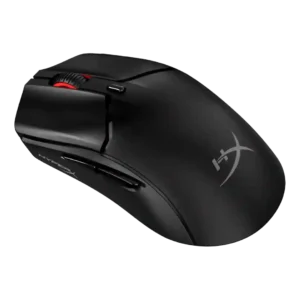
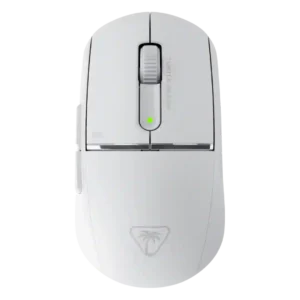
HyperX Pulsefire Haste 2 Mini
Where It Has the Edge
- value for money is 4.4 vs 3.9. Value was generally positive, especially at lower street prices, though one review framed the market as competitive.

Scorata scores summarize analyzed review evidence on a 1–5 scale; they are not laboratory measurements or a simple average of customer star ratings. Feature scores summarize the reviews covering that feature. The overall score averages feature scores within each review, then combines review averages. When both expert and customer evidence are available, those two groups receive equal weight. Products can have different review coverage, so small score gaps do not establish a winner.
Recommendations prioritize important features for the category, with a score of at least 3.5, a gap of at least 0.25 points and at least two supporting reviews per product. Features with widely varying scores or broad connectivity contexts are excluded from recommendations. These safeguards do not establish statistical significance.
Quick verdict
The review evidence points to a tradeoff: value for money versus programmable buttons and button customization. Choose according to which strengths matter more to you; the overall score alone does not settle that choice.
Choose HyperX Pulsefire Haste 2 Mini for value for money.
Choose Turtle Beach Burst II Pro for programmable buttons and button customization.
Scores are out of 5. Missing scores mean missing review evidence, not a missing feature.
Battery life was a clear strength, with multiple reviewers saying the 100-hour claim held up over long use.
Battery life was broadly praised, especially at 1K and even with several days of 8K use, though one review noted the high-polling compromise.
Charging convenience was positive because the mouse can be used while charging from a front USB-C port.
Charging convenience was positive overall thanks to USB-C quick charging and the ability to use the mouse while plugged in.
Motion consistency was hurt in one review by stock-skate wobble that could create occasional sensor issues.
Motion consistency was praised for smooth flicks, stable micro-adjustments, and little to no stuttering in faster movement.
The cable was praised as light and malleable with little drag in wired mode.
Cable flexibility was a weak spot, with reviewers noting stiffness or tugging even while acknowledging acceptable quality.
RGB was understated and liked as a small personality touch, but reviewers did not describe it as feature-rich.
RGB features were limited; one reviewer said users looking for flashy gamer lighting would be underwhelmed.
Ecosystem integration was limited by confusing control between mouse settings and HyperX light sync.
Ecosystem integration was praised for Swarm II acting as one hub for multiple Turtle Beach devices.
Weight was divisive: some liked the sturdy, compact lightness, while others felt 59-60g was dense for the small shell.
Low weight was one of the clearest strengths, repeatedly praised for speed, control, and easy movement.
Weight distribution was split, with one reviewer finding it balanced and another saying it felt center-heavy.
Balance and weight distribution were praised in reviews that found the mouse well-balanced and drag-free.
FPS suitability was highly disputed, from strong gaming performance to concerns about polling, weight, and click issues for competitive play.
FPS gaming suitability was generally positive because of speed, tracking, and control, though duplicate reviews disliked it for Fortnite due to shape.
Surface compatibility was good on mousepads and hard surfaces for some reviewers, but hard-pad wobble hurt one reviewer's experience.
Surface compatibility was excellent in the evidence, with reviewers reporting strong performance on cloth, hard pads, glass, wood, and other surfaces.
Latency evidence was split by mode: Bluetooth was cautioned as higher latency in one review, while another called it lag free.
Wireless latency was one of the strongest attributes, with reviewers praising extremely responsive 8K wireless behavior and low-latency test results.
Grip texture was praised for grippiness and finger security but criticized in humid use for becoming swampy.
Grip texture and included grip tape were repeatedly praised for control, especially during long or sweaty sessions.
Glide was often excellent, especially on PTFE feet, though two reviewers were lukewarm or negative on stock skates.
Glide smoothness was a consistent strength, helped by PTFE feet and a low-friction feel.
Premium feel came from the compact density and understated RGB/design touches.
Premium feel was strong where discussed, with reviewers praising the premium look, solidity, and quality feedback.
Switch feel split reviewers: some liked the crisp, reliable feel, while others found weight, inconsistency, wobble, or grind.
Switch feel was divisive: some reviewers praised crisp, stable, satisfying clicks, while others disliked the padded or deep feel.
The 1,000Hz polling rate was acceptable for value-focused play, but a limitation for esports-grade expectations.
Polling-rate impressions were mixed: the 8K headline impressed some reviewers, while others called the benefit subtle or mostly box-ticking.
The scroll wheel was usually considered reliable or good, but one reviewer struggled with consistent actuation.
The scroll wheel earned positive comments for quiet operation, tension, and responsiveness, despite one reviewer noting softer notches.
Left and right click quality was highly praised by some reviewers but criticized by others for heavy feel, wobble, and grind.
Main left and right clicks were mixed, ranging from solid and tactile to too padded or unsatisfying for some testers.
Portability was a strength thanks to compact size, Bluetooth, device switching, and onboard dongle storage.
Portability was supported by the mouse’s light, convenient, hand-disappearing feel and endurance-focused design.
The 2.4GHz connection received direct praise as the best-feeling mode in one review.
2.4GHz connectivity was praised as a fast, stable wireless option.
Connection stability was praised, with reports of no drops or missed beats.
Connection stability was strong, with no-disconnect, stable-connection, and locked-in comments.
The 26,000 DPI ceiling was treated as more than enough and even described as fantastic.
The high DPI range was treated as fast and capable, with reviewers tying it to broad sensitivity coverage rather than everyday necessity.
Palm grip comfort was weak for larger hands, with partial dangling or limited palm contact reported.
Palm grip comfort was praised by one reviewer who found the wider body supportive for relaxed palm use.
Long-session comfort split reviewers: one was comfortable for hours, while another developed hand pain after about an hour.
Long-session comfort was strongly positive, with reviewers praising marathon comfort, long gaming sessions, and reduced hand fatigue.
Build quality was a consistent strength, with reviewers citing sturdy feel, no flex, and topnotch construction.
Build quality was split: some reviewers found it solid and creak-free, while others reported creaking or fragility worries.
Claw grip comfort was praised by one reviewer but criticized by another for lacking enough hump contact.
Claw grip comfort was mostly positive for medium hands, but duplicate reviews found the shape awkward for a claw-palm hybrid.
Materials felt solid and mostly pleasant, though one review was more mixed due to coating behavior.
Materials quality was generally positive, with praise for solid construction and non-plasticky feel, offset by fingerprint-prone finish.
Shape comfort depended heavily on hand size, from joy and comfort in small-hand use to poor fit and pain for larger hands.
Shape comfort was the most polarizing comfort attribute: some found it controlled and neutral, while duplicate reviews found the rear flare awkward.
Ergonomic design drew praise for finger alignment, concave sides, and small-hand fit.
Ergonomic design was praised for a natural thumb rest and comfortable feel.
Fingertip comfort was strong for smaller hands but poor for at least one larger-hand relaxed fingertip user.
Fingertip comfort was split, with some suitability claims but one reviewer saying the shape strains fingertips.
Programmable button support covers basic reassignment, but reviewers found the binding depth limited.
Programmable controls were viewed as useful, with reviewers praising the breadth of remapping and per-control customization.
Button customization was described as basic, with missing system-level and media shortcut options limiting depth.
Button customization was a clear strength, with several reviewers noting easy remapping and broad control options.
Software stability had one clear issue where DPI reverted to 800 after idle time on one Windows machine.
Software stability was mixed: one reviewer said it never failed, while another found Easy Shift flaky.
Software usability was a recurring weakness, described as confusing, limited, and barebones.
Software usability was mostly positive for clear controls and depth, but duplicate reviews found one update/setup flow confusing.
Button response ranged from faultless inputs to concerns that heavy clicks and click grind reduced rapid firing.
Button responsiveness was generally strong, with fast clicks and accessible side controls, though main-click tactility split reviewers.
Bluetooth support was widely valued for portability and multi-device use, with generally reliable behavior.
Bluetooth support was considered useful and convenient, especially for device switching or alternate connection modes.
Side buttons were generally usable and well placed, with disagreement over sponginess, wiggle, and post-travel.
Side buttons were mostly well received for access and precision, with some notes that they were louder or more traditional than the mains.
Click sound was praised in one review as sharp, precise, and satisfying.
Click noise was mixed to negative overall, with loud-switch complaints offset by quieter or controlled sound in one review.
Sensor performance was broadly positive, with reviewers calling the sensor good or performance fine across gaming use.
Sensor performance was a major strength, with praise for smooth, stable, accurate tracking and only minor caveats in one review at low battery.
Wireless performance was strong overall, with reviewers reporting flawless, lag-free, or non-stuttering use.
Wireless performance was praised for responsiveness and reliability across several reviews.
Reviewers praised precise tracking and high-control movement, though one noted the 800 DPI setting felt a little fast.
Reviewers consistently found tracking accurate, with no major precision complaints across standard and unusual surfaces.
Value was generally positive, especially at lower street prices, though one review framed the market as competitive.
Value for money was mixed: reviewers liked the feature set versus some flagships, but several still considered it pricey or not the cheapest.
Click latency evidence was strongly positive, with optical-switch and debounce comments pointing to fast, responsive inputs.
Cross-platform compatibility was supported by onboard memory comments about settings carrying across systems.
Lift-off distance tuning was viewed positively as part of the deeper sensor customization set.
MMO suitability was positive in one review because the mouse's issues mattered less outside shooters.
Onboard memory was valued because settings appeared to persist on the device and could carry across systems.
Debounce customization was viewed positively as a useful control for click behavior.
Durability over time was inferred positively in one review from tight, compact, long-lasting-feeling construction.
Firmware/update reliability was a weak point in the duplicate reviews because setup around the required update was confusing.
Macro support was useful overall, but one reviewer found the included game macro list outdated for the latest Battlefield.
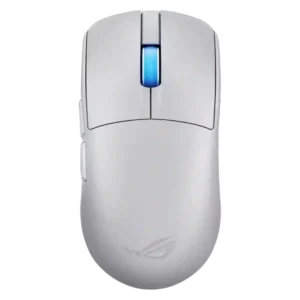
Choose the ROG Harpe II Ace for ultralight FPS play, precise tracking, smooth glide, and web-based tuning. Skip it if you need palm-grip support, MMO buttons, onboard profiles, or long...
Pros: glide smoothness, weight
Cons: handedness options
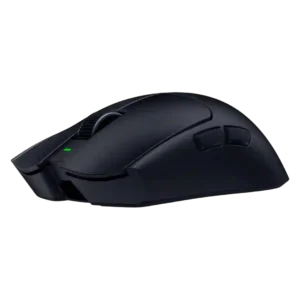
Best for ultra-light, competition-focused speed, precise tracking, stable wireless, and long battery life. Skip it if you need quieter clicks, left-handed support, Bluetooth, more buttons, or better value for casual...
Pros: value for money, weight
Cons: click noise, RGB features
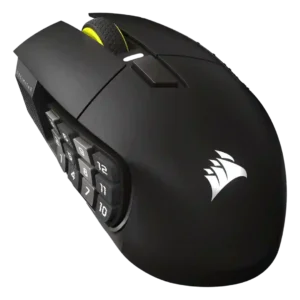
Choose it if you want a premium MMO/productivity mouse with 12 adjustable side buttons, strong battery life, and Stream Deck integration. Skip it if you need an ultralight FPS mouse,...
Pros: button customization, MMO gaming suitability
Cons: FPS gaming suitability
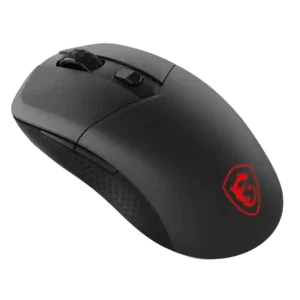
Best for precise wireless tracking, smooth glide, strong battery life, and unusually good 8K value. Skip it if you need polished software, quiet snappy clicks, true left-handed controls, or gentle...
Pros: software usability, sensor performance
Cons: RGB features, scroll wheel quality