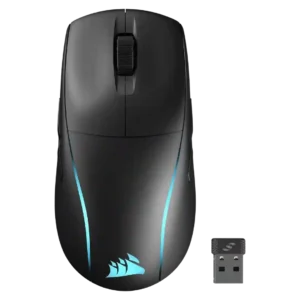
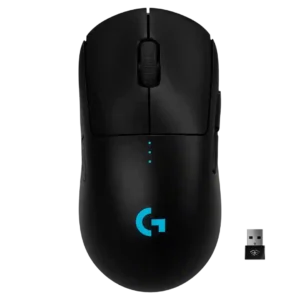
Corsair M75 Wireless
Where It Has the Edge
- Bluetooth support is 4.0 vs 2.3. Bluetooth support was useful for battery life and device switching, but it was also described as slower than...

Scorata scores summarize analyzed review evidence on a 1–5 scale; they are not laboratory measurements or a simple average of customer star ratings. Feature scores summarize the reviews covering that feature. The overall score averages feature scores within each review, then combines review averages. When both expert and customer evidence are available, those two groups receive equal weight. Products can have different review coverage, so small score gaps do not establish a winner.
Recommendations prioritize important features for the category, with a score of at least 3.5, a gap of at least 0.25 points and at least two supporting reviews per product. Features with widely varying scores or broad connectivity contexts are excluded from recommendations. These safeguards do not establish statistical significance.
Quick verdict
The review evidence points to a tradeoff: Bluetooth support versus click noise and weight. Choose according to which strengths matter more to you; the overall score alone does not settle that choice.
Choose Corsair M75 Wireless for Bluetooth support.
Choose Logitech G Pro Wireless for click noise and weight.
Scores are out of 5. Missing scores mean missing review evidence, not a missing feature.
Battery life was one of the strongest consensus positives, with many reviewers reporting impressive or accurate endurance.
Battery life was broadly praised as excellent for a rechargeable wireless gaming mouse, though one long-term reviewer found it needed charging too often.
Charging convenience was positive thanks to fast recharge and easy USB-C top-ups.
Charging convenience was mostly positive, helped by fast charging, wired-use capability, and PowerPlay support, though micro-USB was viewed as dated.
MOBA gaming suitability was positive in one review, which found it delightful and responsive for League of Legends.
MOBA suitability received limited negative evidence because the mouse lacks extra buttons for that genre.
Weight distribution was a concern for some reviewers, especially imbalance toward the front or back, though one liked the added control for sniping.
Weight distribution was generally praised as even, central, or perfectly balanced, supporting the mouse's light and controlled feel.
Profile and DPI switching drew mixed reactions: one reviewer liked on-device tuning, but several disliked the underside DPI control or missing automatic profile switching.
Profile and DPI switching were useful when remapped, but bottom placement made quick switching less convenient for some users.
Weight was polarizing, with some calling it lightweight enough and others finding it chunky, sluggish, or too heavy for FPS-first play.
Weight was a major strength; most reviewers praised the 80g class as exceptionally light, though ultralight trends made it less dominant later.
Polling rate was viewed as adequate for most gamers, but several reviewers criticized it for lagging behind 4,000Hz and 8,000Hz rivals.
Polling/report-rate evidence was positive where reviewers connected 1ms reporting with smooth, responsive cursor behavior.
Surface compatibility was mostly positive across varied surfaces, but one reviewer noticed hitching on imperfect surfaces.
Surface compatibility was positive where discussed, with calibration or pad testing producing strong sensor behavior.
FPS gaming suitability was mixed: casual and general FPS play worked well, but pure competitive or solo FPS users may prefer lighter/faster mice.
FPS suitability was one of the strongest themes, with reviewers praising the mouse for fast-paced shooters, tracking, flicks, and competitive play.
Main click quality was mostly praised for tactile feedback and responsiveness, though one reviewer found the feel cheap or off.
Left and right click quality was a standout strength, often described as crisp, satisfying, light, and precise.
Scroll wheel quality was mixed, ranging from tactile and pleasant to too stiff, sluggish, or loud.
Scroll wheel quality was generally positive, praised for tactile, quiet, precise steps, although one reviewer wanted more defined steps.
Connection stability was mostly reliable, but one review reported update-time spikes that undercut confidence.
Connection stability was usually excellent, with several reviewers reporting no stutter or dropouts, though one long-term owner noted past dropouts.
Grip texture was mixed: the coating handled marks well, but the smooth sides caused grip problems or finger discomfort for some.
Grip texture was mixed: the matte plastic was comfortable and sometimes grippy enough, but several reviewers wanted more texture or noticed slipping.
Wireless latency was praised where tested, especially the sub-millisecond 2.4GHz response.
Wireless latency was consistently praised as wired-like, lag-free, or impossible to notice in play.
Click latency was usually praised as essentially instant, although one reviewer felt longer travel slightly slowed actuation.
Click latency was consistently praised as imperceptible or effectively wired-like.
Switch feel was praised for tactile, premium, crisp, and fast feedback.
Switch feel evidence was very positive in the PvP review, emphasizing unusually light mechanical switches.
Motion consistency was praised for responding naturally to hand movement and keeping up with both micro-movements and frantic play.
Motion consistency was excellent in testing, with reviewers reporting no spinouts and smooth, consistent tracking.
The DPI ceiling was considered strong for most players, though one reviewer noted it is not the highest available.
DPI range and adjustment were praised as broad and easy to customize, even if bottom-button placement was divisive.
MMO gaming suitability was limited by button count, despite one reviewer saying it could work across varied titles.
MMO suitability was mixed-to-negative: extra functions are possible, but several reviewers said the limited button count is not ideal for MMO users.
Acceleration handling was judged more than sufficient, with reviewers saying rapid movements were tracked accurately.
Reviewers who discussed acceleration were positive, repeatedly describing no acceleration or prediction and framing this as part of the sensor's clean competitive tracking.
Ecosystem integration was supported by Corsair lighting-link syncing across multiple Corsair devices.
Ecosystem integration evidence was limited but positive where Logitech device lighting sync was demonstrated.
RGB features were highly mixed: customization and desktop style were praised, but hidden zones, weak underglow, and battery drain drew criticism.
RGB features were usually considered basic or restrained, with some appreciating battery savings and others wishing for more or none at all.
Onboard memory was appreciated because settings could be saved and iCUE avoided after setup, though only one profile was noted.
Onboard memory was useful for carrying profiles and settings between computers or tournament setups.
Cable flexibility was mixed: one reviewer liked the braided cable, while another reported cable drag during charging.
Cable feedback was mixed: some liked its flexibility or quality, while others complained it dragged, felt sticky, or was heavy and stiff.
Handedness options were a core strength, with reviewers repeatedly praising true ambidextrous support and left-handed usefulness.
Handedness options were consistently praised because the mouse is truly ambidextrous with swappable side buttons.
Glide smoothness was broadly praised due to PTFE feet, though some reviewers felt weight or skate slipperiness held it back.
Glide smoothness was mostly positive, though one reviewer found the stock feet less impressive than competitor PTFE skates.
Portability was helped by the dongle storage slot, which one reviewer called a nice touch.
Portability was helped by receiver storage and travel-friendly design, which reviewers found convenient.
Lift-off behavior received positive remarks, with reviewers noting strong lift and a nice low-distance feel.
Lift-off distance was praised as low and unobtrusive where tested, though software adjustment was absent.
Premium feel was divided between an elegant, measured design and complaints that the mouse felt cheap.
Premium feel was mixed: some called it luxurious, while others felt the plain plastic design lacked polish for the price.
Durability over time had limited but positive short-term evidence from one reviewer saying it still looked new after days of use.
Durability over time was mixed: the shell and long-term use often held up, but double-click, middle-click, coating, and skate wear concerns appeared.
Fingertip grip comfort was weak, with reviewers describing the mouse as unwieldy or stiff in fingertip use.
Fingertip comfort was mixed, with some reviewers finding it tailor-made and others finding taper or size less ideal.
Skate durability received one positive mention for resisting dust and fluff on mouse mats.
Skate durability had limited mixed evidence, with long-term wear or movement noted but replacements considered easy.
Build quality leaned positive for solidity and finish, but several reviewers noted looseness, cheap feel, or disappointment.
Build quality drew strong praise for a light shell that still felt robust, solid, and free of flex, with a few durability caveats elsewhere.
Palm grip support was mostly strong thanks to the high back and hand-filling body, with one reviewer finding it less natural than claw grip.
Palm grip comfort was strong for some hand sizes, though larger-hand palm users may not find the low profile ideal.
Long-session comfort was positive, with reviewers citing low fatigue and extended-session comfort.
Long-session comfort was repeatedly praised, with reviewers reporting no fatigue, cramping, or discomfort after extended sessions.
Shape comfort was generally positive for palm/claw and larger hands, but a few reviewers found the shape generic, uncomfortable, or not ideal.
Shape comfort was broadly praised as safe, comfortable, and adaptable, though a few reviewers wanted different hump, width, or taper details.
Ergonomic design was praised for comfort, control, and avoiding awkward wrist or hand angles.
Ergonomic design was praised for a safe, adaptable shape that does not force one grip style.
Materials quality was mixed, with plastic feeling sturdy in one review but RGB-frame gaps and dust concerns in another.
Materials quality was not strongly separated from build, but plastic material comments supported a mixed view of smooth lightweight materials versus limited premium finish.
Claw grip comfort was praised by reviewers who found the hump and control well-suited to that grip.
Claw grip comfort was strong, with reviewers saying the mouse suited claw grips well and caused little discomfort during long play.
Click noise was a drawback in multiple reviews, with louder or noisier clicks than expected.
Click noise was viewed favorably in the few reviews that addressed it, with comments about quiet or pleasant-sounding clicks.
Wireless performance was usually praised as responsive and dependable, though one reviewer found Corsair's connection less flawless than Razer's.
Wireless performance was one of the strongest areas, with reviewers repeatedly saying the connection felt flawless, responsive, and liberating.
The Marksman sensor was broadly described as reliable, responsive, and precise, with only isolated surface-related reservations.
Sensor performance was one of the clearest strengths, repeatedly described as flawless, high tier, accurate, and responsive.
Bluetooth support was useful for battery life and device switching, but it was also described as slower than 2.4GHz.
Bluetooth support was a limitation where discussed; reviewers noted the mouse relies on its receiver and wished Bluetooth were included.
Side button quality was the most divided area: some praised easy swapping and placement, while many criticized looseness, low profiles, and fiddly use.
Side button quality was highly praised for placement, click feel, modularity, and ambidextrous flexibility.
Software stability had one clear negative report: iCUE reset Windows mouse settings when launched.
Software stability was mixed because G Hub was useful but described as buggy or needing fixes.
Reviewers found the programmable button count limiting for a gaming mouse, especially at the price.
Programmable buttons were praised for useful remapping and G-Shift style layers, though minimalist button count limited some use cases.
Button responsiveness was a strength, with reviewers reporting responsive switches, solid performance, and no missed clicks.
Button responsiveness was rated highly, with reviewers repeatedly describing crisp, stable, light, and precise clicks.
Button customization was consistently praised for flexible remapping and personalized layouts.
Button customization was a consistent strength thanks to removable side buttons and software remapping options.
Software usability was generally positive for iCUE customization and layout, though Bluetooth limitations and learning curve were noted.
Software usability was generally praised as easy, functional, and flexible for DPI, macros, lighting, and profiles.
Value for money was sharply split, with praise at discounted prices or for lefties but criticism at full premium pricing.
Value for money was mixed: many reviewers felt performance justified the price or sale value, but the premium launch price drew repeated criticism.
Macro support was viewed positively where mentioned, with iCUE allowing shortcuts, media controls, app launches, and macros.
Macro support was positively mentioned through Logitech software and G-Shift style customization.
Reviewers repeatedly praised accurate tracking and precise aiming, including smooth shot lining and strong control over 2.4GHz and Bluetooth.
Tracking accuracy was a major strength across reviews, with reviewers calling it extremely accurate, outstanding, and precise in real gameplay.
2.4GHz connectivity was praised for speed, responsiveness, and practical wireless switching.
Cross-platform compatibility was only lightly covered but positively described when the software and OS range were mentioned.
PowerPlay or wireless-charging compatibility was treated as a useful convenience, though micro-USB charging itself felt dated to one reviewer.
Weight tuning evidence was mixed, with one review wishing for added weights and another noting a 10g weight option.
Firmware reliability received a positive mention for seamless firmware updates.
Switch durability was sharply mixed: several reviewers had no double-clicking, while others reported or emphasized double-click failures.
Tilt gesture controls were a weakness because one reviewer specifically expressed disappointment that tilt controls were absent.
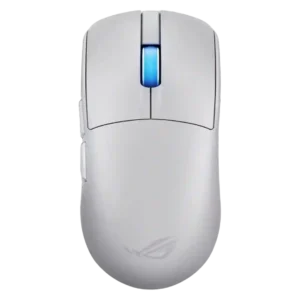
Choose the ROG Harpe II Ace for ultralight FPS play, precise tracking, smooth glide, and web-based tuning. Skip it if you need palm-grip support, MMO buttons, onboard profiles, or long...
Pros: glide smoothness, weight
Cons: handedness options
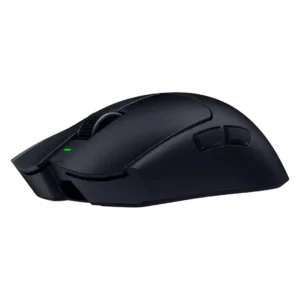
Best for ultra-light, competition-focused speed, precise tracking, stable wireless, and long battery life. Skip it if you need quieter clicks, left-handed support, Bluetooth, more buttons, or better value for casual...
Pros: value for money, weight
Cons: click noise, RGB features
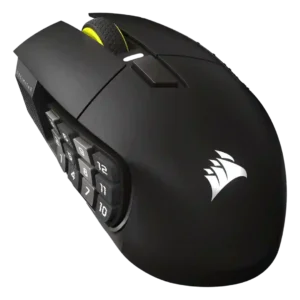
Choose it if you want a premium MMO/productivity mouse with 12 adjustable side buttons, strong battery life, and Stream Deck integration. Skip it if you need an ultralight FPS mouse,...
Pros: button customization, MMO gaming suitability
Cons: FPS gaming suitability
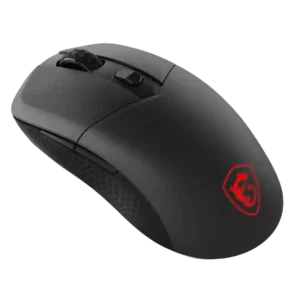
Best for precise wireless tracking, smooth glide, strong battery life, and unusually good 8K value. Skip it if you need polished software, quiet snappy clicks, true left-handed controls, or gentle...
Pros: software usability, sensor performance
Cons: RGB features, scroll wheel quality