Scorata scores summarize analyzed review evidence on a 1–5 scale; they are not laboratory measurements or a simple average of customer star ratings. Feature scores summarize the reviews covering that feature. The overall score averages feature scores within each review, then combines review averages. When both expert and customer evidence are available, those two groups receive equal weight. Products can have different review coverage, so small score gaps do not establish a winner.
Recommendations prioritize important features for the category, with a score of at least 3.5, a gap of at least 0.25 points and at least two supporting reviews per product. Features with widely varying scores or broad connectivity contexts are excluded from recommendations. These safeguards do not establish statistical significance.
Quick verdict
What each product is best for
The review evidence points to a tradeoff: claw grip comfort and materials quality versus palm grip comfort and premium feel. Choose according to which strengths matter more to you; the overall score alone does not settle that choice.
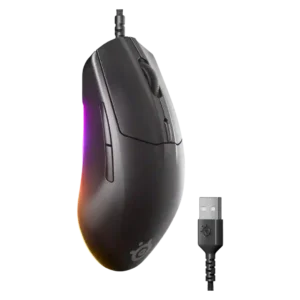
Choose SteelSeries Rival 3 Gen 2 Wired for claw grip comfort and materials quality.
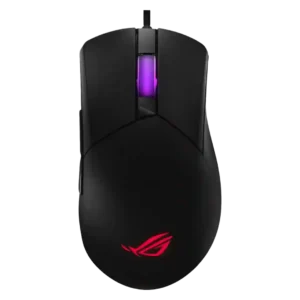
Choose ASUS ROG Gladius III Wired for palm grip comfort and premium feel.
Why these recommendations?
SteelSeries Rival 3 Gen 2 Wired
Where It Has the Edge
claw grip comfort is 4.5 vs 3.8. Claw grip users were well served, with multiple reviewers calling the shape comfortable or ideal for claw-style handling.
materials quality is 4.5 vs 3.9. Materials were praised as thick, textured matte plastic, with another review describing improved build materials.
FPS gaming suitability is 4.3 vs 3.8. FPS gaming suitability was strong across reviews, with positive examples from Call of Duty, Counter-Strike 2, Valorant, and...
ASUS ROG Gladius III Wired
Where It Has the Edge
palm grip comfort is 4.3 vs 2.3. Palm grip comfort was generally positive, with reviewers saying the mouse suited palm users or caused no problems...
premium feel is 4.3 vs 3.2. Premium feel was generally positive, with praise for quality ROG branding, standout looks, and an aesthetically pleasing design.
switch durability is 4.5 vs 3.8. Switch durability scored well because reviewers valued improved switches, easy replacement, and the ability to extend the mouse’s...
SteelSeries Rival 3 Gen 2 Wired4.1 overall score
ASUS ROG Gladius III Wired4.2 overall score
Compare features
Scores are out of 5. Missing scores mean missing review evidence, not a missing feature.
Scored on both products
Comfort and build
Palm grip comfort
SteelSeries Rival 3 Gen 2 Wired
2.3
Palm grip comfort was the clearest fit issue, with reviewers saying palm users may find it too small or should look elsewhere.
ASUS ROG Gladius III Wired
4.3
Palm grip comfort was generally positive, with reviewers saying the mouse suited palm users or caused no problems for palm and fingertip users.
Switch durability
SteelSeries Rival 3 Gen 2 Wired
3.8
Switch durability evidence was mixed: one review reported a lodged switch issue, while another described consistent long-term performance.
ASUS ROG Gladius III Wired
4.5
Switch durability scored well because reviewers valued improved switches, easy replacement, and the ability to extend the mouse’s useful life.
Claw grip comfort
SteelSeries Rival 3 Gen 2 Wired
4.5
Claw grip users were well served, with multiple reviewers calling the shape comfortable or ideal for claw-style handling.
ASUS ROG Gladius III Wired
3.8
Claw grip comfort was mostly positive but more qualified, with one review saying claw use worked only to a certain extent.
Materials quality
SteelSeries Rival 3 Gen 2 Wired
4.5
Materials were praised as thick, textured matte plastic, with another review describing improved build materials.
ASUS ROG Gladius III Wired
3.9
Materials were mostly solid, but evidence was mixed by oil-prone shiny plastic and praise for sturdy or grippy hard plastic construction.
Fingertip grip comfort
SteelSeries Rival 3 Gen 2 Wired
4.5
Fingertip grip comfort was strong, with the low-profile shape repeatedly described as comfortable or ideal for that style.
ASUS ROG Gladius III Wired
4.0
Fingertip grip comfort was acceptable to positive, ranging from possible to no-problem depending on hand size and review context.
Ergonomic design
SteelSeries Rival 3 Gen 2 Wired
4.5
Ergonomics were mostly positive, with reviewers describing the wired mouse as comfortable and improved, though not highly sculpted.
ASUS ROG Gladius III Wired
4.1
Ergonomics were often praised for comfort and shape, though one review emphasized that the chunky shape is not for everyone.
Build quality
SteelSeries Rival 3 Gen 2 Wired
4.8
Build quality was praised as sturdy and solid, including zero flex or creaking in one hands-on teardown-oriented review.
ASUS ROG Gladius III Wired
4.4
Build quality was a consistent strength, with reviewers praising sturdy, monolithic construction, lack of creaks, and solid assembly.
Long-session comfort
SteelSeries Rival 3 Gen 2 Wired
4.3
Long-session comfort was repeatedly positive for workday use, prolonged use, and reduced sweat or fatigue.
ASUS ROG Gladius III Wired
4.2
Long-session comfort was positive, with reviewers describing comfort after hours, fatigue-free gaming, and planted extended swipes.
Shape comfort
SteelSeries Rival 3 Gen 2 Wired
3.8
Shape comfort was generally good but not universal: reviewers liked the in-hand feel while noting limited contouring for some grips.
ASUS ROG Gladius III Wired
3.8
Shape comfort depended heavily on hand size and preference, with praise for the signature ergonomic shape but complaints that it was chunky or not ideal for wider hands.
Durability over time
SteelSeries Rival 3 Gen 2 Wired
4.5
Durability over time was supported by comments about consistent switch performance in long-term use.
ASUS ROG Gladius III Wired
4.5
Durability over time was praised through hot-swappable repairability, longer useful life, and long-term value language.
Skate durability
SteelSeries Rival 3 Gen 2 Wired
4.0
Skate durability and serviceability were mildly positive because divots helped remove the feet without damage.
ASUS ROG Gladius III Wired
4.0
Skate durability was supported by positive evidence around included replacement skates and accessories helping keep the mouse in better shape.
Controls and connectivity
Software stability
SteelSeries Rival 3 Gen 2 Wired
3.8
Software stability and performance were acceptable, with comments that GG was not resource-heavy and functioned well at its core.
ASUS ROG Gladius III Wired
5.0
Software stability was praised in the Gear Link review for running quickly and reliably.
Button customization
SteelSeries Rival 3 Gen 2 Wired
4.0
Button customization was seen as giving useful flexibility and control over play style through software adjustments.
ASUS ROG Gladius III Wired
4.6
Button customization was a major strength across reviews, especially hot-swappable switches, second-layer inputs, and broad button reassignment.
Software usability
SteelSeries Rival 3 Gen 2 Wired
3.5
Software usability was mixed: GG was praised by some, but other reviewers found it cluttered or unintuitive.
ASUS ROG Gladius III Wired
4.0
Software usability was mostly positive for helpful diagrams and Gear Link convenience, but some reviewers found Armoury Crate less slick or mixed.
Programmable buttons
SteelSeries Rival 3 Gen 2 Wired
4.0
Programmable buttons were seen as adding practical flexibility and control when customized in software.
ASUS ROG Gladius III Wired
4.4
Programmable controls were praised through remapping, SpeedShift, macro-related options, and customizable side buttons.
Button responsiveness
SteelSeries Rival 3 Gen 2 Wired
4.3
Buttons were generally satisfying and responsive, with reviewers praising rapid tapping, quick rebound, and a lack of accidental presses.
ASUS ROG Gladius III Wired
4.6
Button responsiveness was a clear strength, with reviews praising instant registration, precise clicks, tactile response, and easy activation.
Side button quality
SteelSeries Rival 3 Gen 2 Wired
3.6
Side button quality was mixed, ranging from thin and less premium to easily accessible and functional.
ASUS ROG Gladius III Wired
3.9
Side button quality was context-dependent, with praise for tactile feedback and convenient placement but a left-hand usability complaint.
Other features
Premium feel
SteelSeries Rival 3 Gen 2 Wired
3.2
Premium feel was mixed: reviewers liked the fundamentals but said it lacked higher-end flair or felt less premium than Aerox models.
ASUS ROG Gladius III Wired
4.3
Premium feel was generally positive, with praise for quality ROG branding, standout looks, and an aesthetically pleasing design.
Left and right click quality
SteelSeries Rival 3 Gen 2 Wired
4.8
Primary click quality was praised as firm, balanced, and close to best-in-class for feel and performance.
ASUS ROG Gladius III Wired
3.7
Main click quality was mixed: some reviews praised crisp, quiet clicks, while others reported tightness or main-button wobble.
Connection stability
SteelSeries Rival 3 Gen 2 Wired
5.0
The wired setup was praised for stable, consistent performance without connection drops or battery-related interruptions.
ASUS ROG Gladius III Wired
4.0
Connection stability was supported by praise for better reception and reliability in the review discussing dongle placement.
Profile switching
SteelSeries Rival 3 Gen 2 Wired
3.0
Profile switching was somewhat limited because there is no dedicated profile button by default, though remapping is possible.
ASUS ROG Gladius III Wired
4.0
Profile switching was supported by positive on-the-fly profile-switching evidence from the Gear Link review.
DPI range
SteelSeries Rival 3 Gen 2 Wired
3.8
The 8,500 DPI ceiling was usually considered enough for gaming, though one reviewer warned the lower peak sensitivity could matter to some users.
ASUS ROG Gladius III Wired
4.5
Reviewers praised the high DPI ceiling and sensitivity, saying it made movement easier across screens and placed the mouse among very sensitive options.
FPS gaming suitability
SteelSeries Rival 3 Gen 2 Wired
4.3
FPS gaming suitability was strong across reviews, with positive examples from Call of Duty, Counter-Strike 2, Valorant, and similar aim-focused testing.
ASUS ROG Gladius III Wired
3.8
FPS suitability was mixed: reviewers praised gaming capability and arm aiming but noted weight, shape adjustment, or missing DPI clutch caveats.
Ecosystem integration
SteelSeries Rival 3 Gen 2 Wired
4.0
SteelSeries GG and Prism integration was treated as a useful bonus for adding personal RGB and settings touches.
ASUS ROG Gladius III Wired
4.5
Ecosystem integration was positive where the mouse was described as an excellent entry point into the ROG ecosystem.
Grip texture
SteelSeries Rival 3 Gen 2 Wired
4.0
Grip texture was mostly positive for matte, grippy plastic, though one review wished the side grooves were deeper.
ASUS ROG Gladius III Wired
4.5
Grip texture was consistently praised where reviewed, with grippy matte panels and side patterns that actually helped control.
Handedness options
SteelSeries Rival 3 Gen 2 Wired
3.0
Handedness support was mixed because the shape is symmetrical but one review said it is optimized for right-handed use.
ASUS ROG Gladius III Wired
2.5
Handedness evidence was negative where a reviewer found the side buttons hard to hit with the left hand.
Onboard memory
SteelSeries Rival 3 Gen 2 Wired
4.5
Onboard memory was useful for preserving settings across computers without relying on local software.
ASUS ROG Gladius III Wired
5.0
Onboard memory was praised because configured settings could carry to another PC without needing the software again.
Polling rate
SteelSeries Rival 3 Gen 2 Wired
4.0
Polling-rate feedback was mixed but generally adequate: 1,000Hz was called standard or delay-free, while PCMag called it low but acceptable.
ASUS ROG Gladius III Wired
3.5
Polling evidence was split: one review found average performance with jitter, while another did not notice significant inconsistencies.
Scroll wheel quality
SteelSeries Rival 3 Gen 2 Wired
4.0
The scroll wheel was considered simple but well suited, with distinct notches and usable firmness.
ASUS ROG Gladius III Wired
3.5
Scroll wheel feedback was mixed, combining praise for detents and tactile stability with complaints about wobble or squeaking.
Weight
SteelSeries Rival 3 Gen 2 Wired
4.3
Weight was generally praised for quick movements and reduced fatigue, though reviewers noted it is not ultralight compared with some rivals.
ASUS ROG Gladius III Wired
3.8
Weight opinions were mixed: some reviewers liked the lighter feel, while others still found it heavy versus ultralight or FPS-focused mice.
Cable flexibility
SteelSeries Rival 3 Gen 2 Wired
4.6
The braided/paracord-style cable drew consistent praise for staying unobtrusive, avoiding friction, and feeling almost unnoticeable in fast play.
ASUS ROG Gladius III Wired
4.2
Cable impressions were positive overall, especially the flexible, lightweight paracord, though one review noted occasional tangling.
Motion consistency
SteelSeries Rival 3 Gen 2 Wired
4.5
Motion consistency was strong, with easy recoil control and predictable responses in low-DPI/high-sensitivity play.
ASUS ROG Gladius III Wired
4.1
Motion consistency was generally praised for no lag, stutter, velocity drops, or unwanted movement, though one review saw jitter at flick peaks.
Switch feel
SteelSeries Rival 3 Gen 2 Wired
4.5
Switch feel was praised as crisp, clicky, balanced, and responsive without being too heavy.
ASUS ROG Gladius III Wired
4.9
Switch feel was one of the strongest themes, with reviewers praising tactile, crisp, clicky, snappy, and customizable switch behavior.
Click latency
SteelSeries Rival 3 Gen 2 Wired
4.5
Latency impressions were positive, with reviewers reporting no lag or missed inputs and direct, delay-free movement response.
ASUS ROG Gladius III Wired
4.8
Click and wired latency impressions were very strong, with reviewers repeatedly describing instant registration or no meaningful lag.
Glide smoothness
SteelSeries Rival 3 Gen 2 Wired
4.5
Glide was consistently praised, with PTFE feet and smooth skates keeping movement low-friction across mousepads and surfaces.
ASUS ROG Gladius III Wired
4.7
Glide smoothness was one of the strongest areas, with multiple reviews praising smooth, effortless, sublime, or unobstructed movement.
RGB features
SteelSeries Rival 3 Gen 2 Wired
4.4
RGB was a consistent wired-model strength, with praise for tasteful underglow and extensive customization.
ASUS ROG Gladius III Wired
4.2
RGB was generally praised as stylish, subtle, bright, and configurable, though the Core review described a more limited two-zone setup.
Cross-platform compatibility
SteelSeries Rival 3 Gen 2 Wired
4.5
Cross-system use was supported by onboard settings, with one review calling personal settings seamless across different computers.
ASUS ROG Gladius III Wired
4.5
Cross-platform compatibility was scored from the review saying settings work on another PC without needing software.
Tracking and training
Accuracy and tracking precision
SteelSeries Rival 3 Gen 2 Wired
4.4
Accuracy was a major strength: reviewers reported precise swipes, strong aim-trainer results, and little practical impact from the modest sensor ceiling.
ASUS ROG Gladius III Wired
4.1
Tracking was usually described as steady, accurate, or perfect in games, though one wired test observed jitter during repetitive flicks.
Performance
Click noise
SteelSeries Rival 3 Gen 2 Wired
4.0
Click noise was acceptable: the switches were described as crisp without being overly loud or heavy.
ASUS ROG Gladius III Wired
3.8
Click noise was mixed, with quiet main clicks in one review but squeaking called out in another.
Sensor performance
SteelSeries Rival 3 Gen 2 Wired
4.3
Sensor performance was broadly positive for a budget mouse, with snappy response, smooth tracking, and satisfying gaming performance.
ASUS ROG Gladius III Wired
4.1
Sensor sentiment was mostly positive, ranging from steady and lag-free to more than sufficient or flawless, with one wired review noting lower sensor performance.
Ownership and support
Macro support
SteelSeries Rival 3 Gen 2 Wired
4.0
Macro support was viewed as flexible, with side buttons able to be macroed through SteelSeries software.
ASUS ROG Gladius III Wired
4.2
Macro support received positive evidence where reviewers described helpful macro assignment or macro recording within the software feature set.
Value for money
SteelSeries Rival 3 Gen 2 Wired
4.6
Value was the strongest consensus point, with reviewers repeatedly praising the mouse as budget-friendly, cost-effective, and a strong class option.
ASUS ROG Gladius III Wired
4.6
Value for money was repeatedly praised through reasonable pricing, affordability, strong feature set, and getting a lot for the money.
Evidence available for one product
Other features
2.4GHz connectivity
SteelSeries Rival 3 Gen 2 WiredNo score yet
ASUS ROG Gladius III Wired
4.0
2.4GHz connectivity was scored from the review that tied the dongle setup to better reception and reliability.
Acceleration control
SteelSeries Rival 3 Gen 2 Wired
4.0
Acceleration settings were considered easy to understand in SteelSeries GG, with clear graphs and sliders.
ASUS ROG Gladius III WiredNo score yet
Balance and weight distribution
SteelSeries Rival 3 Gen 2 WiredNo score yet
ASUS ROG Gladius III Wired
4.0
Weight distribution was praised in one wired review for being biased around the middle, helping swipes feel easier.
Lift-off distance
SteelSeries Rival 3 Gen 2 WiredNo score yet
ASUS ROG Gladius III Wired
4.5
Lift-off distance control was praised as a software luxury because it could reduce the effect of lifting during play.
MMO gaming suitability
SteelSeries Rival 3 Gen 2 WiredNo score yet
ASUS ROG Gladius III Wired
5.0
MMO suitability was strongly praised in the Gear Link review because SpeedShift was described as perfect for MMO players.
Portability
SteelSeries Rival 3 Gen 2 Wired
4.0
Portability was a plus for users who value a smaller mouse, even if that is a performance tradeoff for some.
ASUS ROG Gladius III WiredNo score yet
Surface compatibility
SteelSeries Rival 3 Gen 2 Wired
4.5
Surface compatibility was positive, with smooth feet described as gliding across most surfaces.
ASUS ROG Gladius III WiredNo score yet
Controls and connectivity
Bluetooth support
SteelSeries Rival 3 Gen 2 WiredNo score yet
ASUS ROG Gladius III Wired
4.0
Bluetooth support was scored from a review that praised the breadth of the connectivity options including Bluetooth.
Performance
Wireless performance
SteelSeries Rival 3 Gen 2 WiredNo score yet
ASUS ROG Gladius III Wired
4.5
Wireless performance was praised in the review that discussed tri-mode connectivity as outstanding with more options than needed.
Choose the ROG Harpe II Ace for ultralight FPS play, precise tracking, smooth glide, and web-based tuning. Skip it if you need palm-grip support, MMO buttons, onboard profiles, or long...
Excellent tracking, comfortable right-handed ergonomics and a versatile scroll wheel make the Basilisk V3 a strong gaming and productivity mouse. Its substantial weight, fixed cable and sometimes over-sensitive automatic scrolling...
The L7 Pro delivers remarkably light handling, precise aiming and a grippy shell at a budget price. Stock skates are less impressive, and conflicting click-latency measurements warrant caution for latency-sensitive...
Best for ultra-light, competition-focused speed, precise tracking, stable wireless, and long battery life. Skip it if you need quieter clicks, left-handed support, Bluetooth, more buttons, or better value for casual...