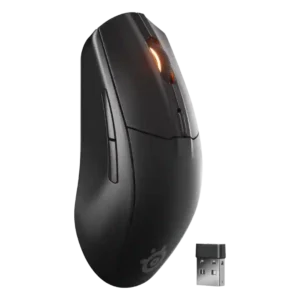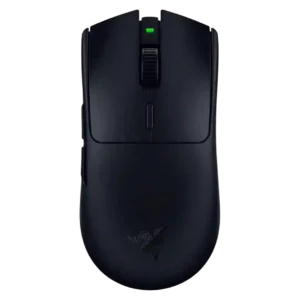
Compare SteelSeries Rival 3 Gen 2 Wireless vs Razer Viper V3 HyperSpeed

SteelSeries Rival 3 Gen 2 Wireless

SteelSeries Rival 3 Gen 2 Wireless

Overall score 3.9 / 5

Based on 19 scored reviews

vs
Razer Viper V3 HyperSpeed

Razer Viper V3 HyperSpeed

Overall score 4.1 / 5

Based on 20 scored reviews

How we score

Scorata scores summarize analyzed review evidence on a 1–5 scale; they are not laboratory measurements or a simple average of customer star ratings. Feature scores summarize the reviews covering that feature. The overall score averages feature scores within each review, then combines review averages. When both expert and customer evidence are available, those two groups receive equal weight. Products can have different review coverage, so small score gaps do not establish a winner.

Recommendations prioritize important features for the category, with a score of at least 3.5, a gap of at least 0.25 points and at least two supporting reviews per product. Features with widely varying scores or broad connectivity contexts are excluded from recommendations. These safeguards do not establish statistical significance.

Quick verdict

What each product is best for

The review evidence points to a tradeoff: battery life and onboard memory versus lift-off distance and side button quality. Choose according to which strengths matter more to you; the overall score alone does not settle that choice.

Choose SteelSeries Rival 3 Gen 2 Wireless for battery life and onboard memory.

Choose Razer Viper V3 HyperSpeed for lift-off distance and side button quality.

Why these recommendations?

SteelSeries Rival 3 Gen 2 Wireless

Where It Has the Edge

  • battery life is 4.5 vs 4.1. Battery life drew some of the strongest praise, with reviewers highlighting hundreds of hours of use, rechargeable AAA...
  • onboard memory is 4.4 vs 2.3. Reviewers liked that settings or DPI profiles could be saved to the mouse and carried between devices.
  • macro support is 4.3 vs 3.3. Macro setup was generally praised as simple, useful, and available through SteelSeries GG or Engine.

Razer Viper V3 HyperSpeed

Where It Has the Edge

  • lift-off distance is 4.7 vs 2.5. Lift-off and landing customization earned strong praise where reviewed, especially asymmetric cut-off and granular height adjustment.
  • side button quality is 4.7 vs 2.8. Side buttons were one of the most consistent positives, with reviewers calling them easier to reach, premium, and...
  • connection stability is 5.0 vs 3.6. Connection stability was a strong positive, with reviewers reporting no lag, jitter, signal loss, or testing issues.
SteelSeries Rival 3 Gen 2 Wireless 3.9 overall score
Razer Viper V3 HyperSpeed 4.1 overall score

Compare features

Scores are out of 5. Missing scores mean missing review evidence, not a missing feature.

Scored on both products

Battery and charging

Battery life
SteelSeries Rival 3 Gen 2 Wireless
4.5

Battery life drew some of the strongest praise, with reviewers highlighting hundreds of hours of use, rechargeable AAA compatibility, and strong endurance despite a few cost caveats.

Razer Viper V3 HyperSpeed
4.1

Battery life was generally praised as long, sometimes mindblowing, but higher polling rates and AA dependence created caveats.

Charging convenience
SteelSeries Rival 3 Gen 2 Wireless
3.0

Opinions were mixed: reviewers liked avoiding charging cables and using rechargeable AAAs, but disliked being dependent on replacement batteries when they die.

Razer Viper V3 HyperSpeed
2.5

Charging and power convenience was a major tradeoff: reviewers disliked AA dependence and no wired fallback, though some liked quick battery swaps.

Other features

Lift-off distance
SteelSeries Rival 3 Gen 2 Wireless
2.5

Reviewers considered the fixed lift-off distance a drawback compared with newer sensors that allow finer adjustment.

Razer Viper V3 HyperSpeed
4.7

Lift-off and landing customization earned strong praise where reviewed, especially asymmetric cut-off and granular height adjustment.

Onboard memory
SteelSeries Rival 3 Gen 2 Wireless
4.4

Reviewers liked that settings or DPI profiles could be saved to the mouse and carried between devices.

Razer Viper V3 HyperSpeed
2.3

Onboard memory was a recurring limitation because reviewers noted it stores only one profile or one preset slot.

Profile switching
SteelSeries Rival 3 Gen 2 Wireless
3.0

Profile handling was seen as limited because switching configurations depends on software or requires remapping a button.

Razer Viper V3 HyperSpeed
4.5

Profile switching was praised when the reviewer could quickly see or cycle DPI/profile states, though evidence was limited.

Connection stability
SteelSeries Rival 3 Gen 2 Wireless
3.6

Most reviewers had stable wireless connections, but several noted wake-up delays, Bluetooth setup trouble, or interference/dropout issues in some setups.

Razer Viper V3 HyperSpeed
5.0

Connection stability was a strong positive, with reviewers reporting no lag, jitter, signal loss, or testing issues.

Motion consistency
SteelSeries Rival 3 Gen 2 Wireless
3.6

Tracking consistency was mostly good in ordinary use, but a few reviewers noted jitter or tracking deviation at higher expectations.

Razer Viper V3 HyperSpeed
5.0

Motion consistency was praised where reviewed, especially consistent tracking and stable performance during play.

Surface compatibility
SteelSeries Rival 3 Gen 2 Wireless
3.6

Surface performance was generally solid across common materials, but reviewers noted missing glass support and one failure on faux leather.

Razer Viper V3 HyperSpeed
4.6

Surface compatibility was a strong positive where tested, including smooth tracking across desks, mats, wood, and glass.

Scroll wheel quality
SteelSeries Rival 3 Gen 2 Wireless
3.4

Scroll wheel feedback was split: some found it responsive or nicely notched, while others reported looseness, mushiness, cheap feel, or squeaking.

Razer Viper V3 HyperSpeed
4.4

The scroll wheel drew mostly positive notes for tactile steps, grip, and control, with a few reviewers calling it merely fine or muted.

Balance and weight distribution
SteelSeries Rival 3 Gen 2 Wireless
2.6

Several reviewers criticized the rear-biased battery weight, saying it created drag or made fine adjustments require extra effort.

Razer Viper V3 HyperSpeed
3.3

Balance evidence was mixed, ranging from even and predictable to rear-heavy, unbalanced, or affected by battery inertia.

FPS gaming suitability
SteelSeries Rival 3 Gen 2 Wireless
3.8

The mouse handled casual FPS and general shooters well, but reviewers repeatedly warned that weight and sensor limits make it less ideal for competitive esports.

Razer Viper V3 HyperSpeed
4.5

FPS gaming suitability was strong overall, especially for competitive shooters, though weight and click speed were caveats for elite players.

Weight tuning
SteelSeries Rival 3 Gen 2 Wireless
4.1

Reviewers liked the ability to use one or two AAA batteries to trade weight against battery life.

Razer Viper V3 HyperSpeed
4.8

Weight tuning received positive evidence from reviewers using AAA/lithium battery mods to cut substantial weight.

RGB features
SteelSeries Rival 3 Gen 2 Wireless
2.5

Reviewers mostly saw the wireless RGB as limited or absent, with only indicator lighting, though some accepted the tradeoff for longer battery life.

Razer Viper V3 HyperSpeed
3.1

RGB opinions were mostly neutral: reviewers noted the no-RGB design as minimalist or acceptable, not a major functional loss.

Polling rate
SteelSeries Rival 3 Gen 2 Wireless
3.8

The 1,000Hz cap was considered perfectly fine for most casual players, though below the 4,000Hz or 8,000Hz modes found in pricier mice.

Razer Viper V3 HyperSpeed
4.3

Polling was generally viewed positively: 1,000Hz was enough for most, while 4K/8K support was valuable but battery-hungry or dongle-dependent.

Wireless latency
SteelSeries Rival 3 Gen 2 Wireless
4.5

Wireless latency was generally described as negligible, low-latency, or effectively indistinguishable from wired use in normal play.

Razer Viper V3 HyperSpeed
5.0

Wireless latency received limited but strong praise, especially around low-latency 2.4GHz use.

2.4GHz connectivity
SteelSeries Rival 3 Gen 2 Wireless
4.4

Reviewers generally found the 2.4GHz mode reliable, low-latency, and best for gaming, with occasional notes that dongle placement or switches could affect ease.

Razer Viper V3 HyperSpeed
4.0

2.4GHz connectivity was seen as simple and effective, with limited but positive opinionated evidence.

Click latency
SteelSeries Rival 3 Gen 2 Wireless
4.2

Click latency was generally seen as low enough not to be noticeable and suitable for casual or even some competitive play.

Razer Viper V3 HyperSpeed
3.8

Click latency evidence was mixed: reviewers found the clicks usable and often fast, but some noticed slower actuation than optical-switch competitors.

Premium feel
SteelSeries Rival 3 Gen 2 Wireless
4.0

Many reviewers said the mouse felt better or more premium than its price, though side buttons and other cheaper-feeling parts tempered that praise.

Razer Viper V3 HyperSpeed
3.7

Premium feel was mixed: several reviewers said it felt high-end or more expensive than it was, while others said it lacked true Pro feel.

Glide smoothness
SteelSeries Rival 3 Gen 2 Wireless
4.3

The PTFE feet were widely praised for smooth, effortless glide across mousepads, desks, and other surfaces.

Razer Viper V3 HyperSpeed
4.6

Glide smoothness was consistently praised, with reviewers noting smooth motion, strong feet/skates, and effortless movement.

Portability
SteelSeries Rival 3 Gen 2 Wireless
4.2

Reviewers liked the travel potential from the compact body, dongle storage, Bluetooth, and the ability to avoid carrying a charging cable.

Razer Viper V3 HyperSpeed
4.0

Portability evidence was limited but positive, mainly that the receiver can be stored safely in the mouse.

Switch feel
SteelSeries Rival 3 Gen 2 Wireless
4.1

Switch feel was generally crisp, clicky, and satisfying, though a few reviewers wanted a crisper or less dampened response.

Razer Viper V3 HyperSpeed
3.9

Switch feel split reviewers: many liked the crisp or snappy Gen-2 mechanical feel, while others found it mushy or less sharp than premium opticals.

Weight
SteelSeries Rival 3 Gen 2 Wireless
2.9

Weight was the most common complaint: some found it manageable or even comfortable, but many called it heavy for modern wireless gaming.

Razer Viper V3 HyperSpeed
3.0

Weight was the most divisive physical trait: some liked the controlled mid-weight feel, while others found the AA-battery weight heavy or brick-like.

Handedness options
SteelSeries Rival 3 Gen 2 Wireless
2.2

Reviewers criticized the lack of a true left-handed version, despite the mostly symmetrical shell.

Razer Viper V3 HyperSpeed
2.0

Handedness was a negative where discussed because the design is effectively right-handed and could be a problem for left-handed players.

Left and right click quality
SteelSeries Rival 3 Gen 2 Wireless
4.4

Primary clicks were usually praised as snappy, responsive, tactile, bouncy, or satisfying for the price.

Razer Viper V3 HyperSpeed
4.3

Left and right clicks were often praised for crispness and solidity, though a few units or grip positions felt mushy or merely average.

Grip texture
SteelSeries Rival 3 Gen 2 Wireless
4.4

Reviewers liked the matte, textured plastic for grip, comfort, and avoiding slippery or sweaty feel.

Razer Viper V3 HyperSpeed
4.5

Grip texture/coating was strongly praised for grippiness, though reviewers often noted fingerprints, sweat marks, or preference for rubber sides.

DPI range
SteelSeries Rival 3 Gen 2 Wireless
4.1

The 18,000 DPI range was considered more than enough for most users, with several reviewers noting that very high DPI numbers matter less outside pro-level play.

Razer Viper V3 HyperSpeed
4.0

The 30K DPI ceiling was considered powerful for FPS use, though one reviewer viewed extreme DPI as more buzzword than necessity.

Ecosystem integration
SteelSeries Rival 3 Gen 2 Wireless
4.0

One reviewer called it a strong option for users already invested in SteelSeries gear and software.

Razer Viper V3 HyperSpeed
4.0

Ecosystem integration was positive but narrow, focused on HyperSpeed multi-device dongle sharing and saving USB ports.

Controls and connectivity

Side button quality
SteelSeries Rival 3 Gen 2 Wireless
2.8

Side buttons were the most repeated control complaint, often described as thin, finicky, hard to hit, or easy to mis-click, though one reviewer found them improved.

Razer Viper V3 HyperSpeed
4.7

Side buttons were one of the most consistent positives, with reviewers calling them easier to reach, premium, and among Razer's best.

Bluetooth support
SteelSeries Rival 3 Gen 2 Wireless
4.2

Bluetooth was widely valued for device switching, travel, and battery savings, but one reviewer had pairing problems and others treated it as less suitable for serious gaming.

Razer Viper V3 HyperSpeed
2.5

Bluetooth support was weak because reviewers noted its absence, though at least one said it was unlikely to be a dealbreaker.

Software usability
SteelSeries Rival 3 Gen 2 Wireless
4.1

SteelSeries GG was often considered useful and straightforward for mouse settings, though some reviewers found it cluttered, dated, or less intuitive than rivals.

Razer Viper V3 HyperSpeed
3.3

Software usability was mixed: Synapse enabled useful customization and was often straightforward, but battery readings and setup requirements frustrated some reviewers.

Button responsiveness
SteelSeries Rival 3 Gen 2 Wireless
4.2

Main inputs were generally described as responsive and satisfying, with little complaint about missed inputs or delay in normal use.

Razer Viper V3 HyperSpeed
4.6

Button response was typically praised as snappy, responsive, satisfying, and reliable in play.

Programmable buttons
SteelSeries Rival 3 Gen 2 Wireless
4.1

Reviewers valued the remappable side buttons and macro-capable controls, especially for a budget mouse.

Razer Viper V3 HyperSpeed
4.3

Programmable controls were easy to reach and sufficient for most reviewers, reinforcing the mouse's simple FPS-first layout.

Button customization
SteelSeries Rival 3 Gen 2 Wireless
4.3

Reviewers liked the ability to remap buttons and adjust controls in SteelSeries GG, although Bluetooth mode and profile switching added some limitations.

Razer Viper V3 HyperSpeed
4.3

Button customization through Synapse was seen as useful and accessible, including remapping and DPI-related controls.

Comfort and build

Durability over time
SteelSeries Rival 3 Gen 2 Wireless
4.2

One review linked the redesigned click mechanism to better longevity, but long-term durability evidence was otherwise limited.

Razer Viper V3 HyperSpeed
2.5

Durability over time evidence was limited and slightly negative, focused on click grinding after some use.

Palm grip comfort
SteelSeries Rival 3 Gen 2 Wireless
3.0

Palm grip comfort was weaker than claw or fingertip comfort, with multiple reviewers calling the mouse too low, short, narrow, or awkward for full palm support.

Razer Viper V3 HyperSpeed
4.2

Palm grip comfort improved versus flatter Viper shapes and suited many reviewers, though not every hand size or palm style was ideal.

Build quality
SteelSeries Rival 3 Gen 2 Wireless
4.6

Build quality was consistently praised as sturdy, solid, and better than the budget price suggests, with little flex or creaking reported.

Razer Viper V3 HyperSpeed
3.9

Build quality was mostly solid, but several reviewers reported rattles, a lopsided base, or less-than-Pro feel.

Fingertip grip comfort
SteelSeries Rival 3 Gen 2 Wireless
4.3

Fingertip grip users generally had positive experiences, including no fatigue during extended use.

Razer Viper V3 HyperSpeed
3.6

Fingertip grip comfort was more mixed: some found it workable or comfortable, while others preferred smaller/lighter Viper-style shapes.

Skate durability
SteelSeries Rival 3 Gen 2 Wireless
4.0

Evidence was limited but positive, with reviewers noting durable PTFE feet and removable skates that could be handled without damage.

Razer Viper V3 HyperSpeed
4.5

Skate durability/quality evidence was limited but positive, with reviewers saying the PTFE feet felt smooth, great, or long-lasting.

Switch durability
SteelSeries Rival 3 Gen 2 Wireless
3.8

Switch durability was mostly praised through 60-million-click ratings, but one reviewer reported a switch issue during disassembly testing.

Razer Viper V3 HyperSpeed
3.5

Switch durability evidence was mixed: rated lifecycle was considered respectable for the price, but one reviewer warned mechanical switches can develop double-clicks.

Materials quality
SteelSeries Rival 3 Gen 2 Wireless
4.4

Reviewers praised the plastic and polymer materials as high-quality, durable, and pleasant for the price.

Razer Viper V3 HyperSpeed
4.1

Materials and finish felt premium to many reviewers, though the coating could show marks or smudges.

Shape comfort
SteelSeries Rival 3 Gen 2 Wireless
4.3

The shell was broadly praised as comfortable, simple, and effective, especially for smaller hands or non-palm grips.

Razer Viper V3 HyperSpeed
4.3

Shape comfort was broadly praised for the redesigned hump and fuller support, though a few reviewers disliked it for their grip or game style.

Claw grip comfort
SteelSeries Rival 3 Gen 2 Wireless
4.2

The low, symmetrical shape was consistently described as comfortable or well-suited for claw grip users.

Razer Viper V3 HyperSpeed
4.2

Claw grip comfort was usually positive, with the revised hump and shell fitting relaxed claw users well.

Ergonomic design
SteelSeries Rival 3 Gen 2 Wireless
4.5

One reviewer praised the shape for fitting naturally without forcing the hand into an awkward twist.

Razer Viper V3 HyperSpeed
4.5

Ergonomic design was generally praised for the revised hump, curves, and hand support, with some caveats around side support.

Long-session comfort
SteelSeries Rival 3 Gen 2 Wireless
4.5

Several reviewers reported comfort across long workdays, gaming sessions, or extended use without hand or wrist fatigue.

Razer Viper V3 HyperSpeed
4.5

Long-session comfort was supported by praise for palm support and comfort over extended play, though it overlapped with shape and grip evidence.

Ownership and support

Macro support
SteelSeries Rival 3 Gen 2 Wireless
4.3

Macro setup was generally praised as simple, useful, and available through SteelSeries GG or Engine.

Razer Viper V3 HyperSpeed
3.3

Macro support was limited by the simple button layout, but HyperShift expanded options for reviewers who wanted extra commands.

Value for money
SteelSeries Rival 3 Gen 2 Wireless
4.4

Reviewers strongly agreed the mouse offers good budget value, especially on sale, while some argued similar money can buy lighter or higher-performance alternatives.

Razer Viper V3 HyperSpeed
4.5

Value for money was one of the strongest positives, with reviewers repeatedly calling the mouse affordable, budget-friendly, or outstanding for its specs.

Performance

Sensor performance
SteelSeries Rival 3 Gen 2 Wireless
3.9

The sensor was usually judged good enough and responsive for casual gaming, but several reviewers called it older, average, or behind higher-end sensors.

Razer Viper V3 HyperSpeed
4.9

The Focus Pro 30K sensor was one of the strongest consensus positives, described as accurate, reliable, snappy, and premium-grade.

Click noise
SteelSeries Rival 3 Gen 2 Wireless
4.0

Click sound was mixed, ranging from barely audible or satisfying to loud, echoey, and cheap when pressed hard.

Razer Viper V3 HyperSpeed
3.5

Click noise was mixed but generally acceptable: one reviewer found the click louder, while another said the mouse kept noise muted.

Wireless performance
SteelSeries Rival 3 Gen 2 Wireless
4.3

Overall wireless performance was widely seen as reliable and strong for the price, though not ideal for every competitive or battery-sensitive user.

Razer Viper V3 HyperSpeed
4.7

Wireless performance was widely praised for cable-free use, reliability, and professional-level responsiveness.

Tracking and training

Accuracy and tracking precision
SteelSeries Rival 3 Gen 2 Wireless
4.2

Most reviewers said aiming and tracking felt precise enough for casual gaming and daily use, though some noted limits for high-level competitive play.

Razer Viper V3 HyperSpeed
4.7

Reviewers repeatedly praised tracking accuracy, with only a few preference-based caveats around the forward sensor placement.

Evidence available for one product

Other features

Acceleration control
SteelSeries Rival 3 Gen 2 Wireless
4.2

SteelSeries GG was praised for offering unusually broad tuning, including acceleration and deceleration controls, especially for a budget mouse.

Razer Viper V3 HyperSpeedNo score yet
Cross-platform compatibility
SteelSeries Rival 3 Gen 2 Wireless
4.4

Reviewers valued quick switching across PC, consoles, tablets, phones, and other devices, especially when using Bluetooth alongside the dongle.

Razer Viper V3 HyperSpeedNo score yet
MMO gaming suitability
SteelSeries Rival 3 Gen 2 Wireless
2.8

The beginner-focused review found the mouse usable for many games but too basic for serious MMO players who need more buttons and customization.

Razer Viper V3 HyperSpeedNo score yet
MOBA gaming suitability
SteelSeries Rival 3 Gen 2 Wireless
2.8

The beginner-focused review treated it as serviceable for MOBAs, but said serious players would likely want more buttons and customization.

Razer Viper V3 HyperSpeedNo score yet

Controls and connectivity

Software stability
SteelSeries Rival 3 Gen 2 WirelessNo score yet
Razer Viper V3 HyperSpeed
3.5

Software stability evidence was limited and mixed, with one reviewer saying Synapse improved but still had hiccups.

Other Top Gaming Mice to Consider

#1 ASUS ROG Harpe II Ace
4.6

Choose the ROG Harpe II Ace for ultralight FPS play, precise tracking, smooth glide, and web-based tuning. Skip it if you need palm-grip support, MMO buttons, onboard profiles, or long...

Pros: glide smoothness, weight

Cons: handedness options

#2 Razer Viper V4 Pro
4.4

Best for ultra-light, competition-focused speed, precise tracking, stable wireless, and long battery life. Skip it if you need quieter clicks, left-handed support, Bluetooth, more buttons, or better value for casual...

Pros: value for money, weight

Cons: click noise, RGB features

#3 Corsair Scimitar Elite Wireless SE
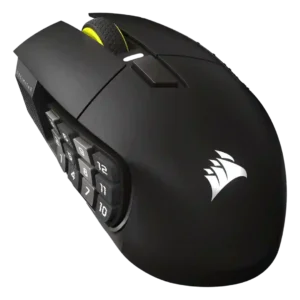
4.4

Choose it if you want a premium MMO/productivity mouse with 12 adjustable side buttons, strong battery life, and Stream Deck integration. Skip it if you need an ultralight FPS mouse,...

Pros: button customization, MMO gaming suitability

Cons: FPS gaming suitability

#4 MSI Versa 300 Wireless 8K
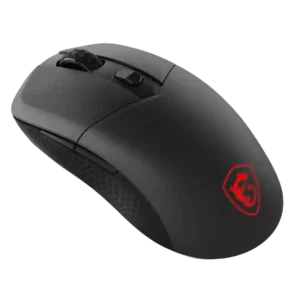
4.4

Best for precise wireless tracking, smooth glide, strong battery life, and unusually good 8K value. Skip it if you need polished software, quiet snappy clicks, true left-handed controls, or gentle...

Pros: software usability, sensor performance

Cons: RGB features, scroll wheel quality