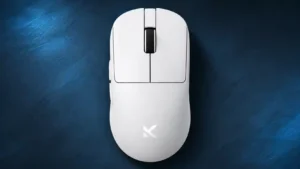
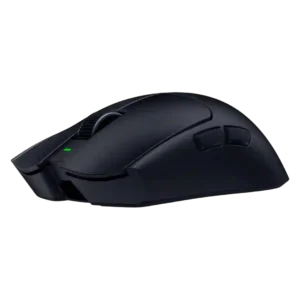
Scorata scores summarize analyzed review evidence on a 1–5 scale; they are not laboratory measurements or a simple average of customer star ratings. Feature scores summarize the reviews covering that feature. The overall score averages feature scores within each review, then combines review averages. When both expert and customer evidence are available, those two groups receive equal weight. Products can have different review coverage, so small score gaps do not establish a winner.
Recommendations prioritize important features for the category, with a score of at least 3.5, a gap of at least 0.25 points and at least two supporting reviews per product. Features with widely varying scores or broad connectivity contexts are excluded from recommendations. These safeguards do not establish statistical significance.
Quick verdict
What each product is best for
The review evidence points to a tradeoff: weight and side button quality versus materials quality and value for money. Choose according to which strengths matter more to you; the overall score alone does not settle that choice.
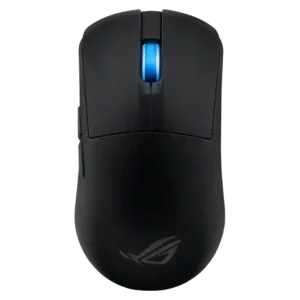
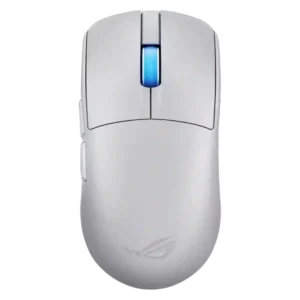
Choose ASUS ROG Harpe Ace Mini for weight and side button quality.
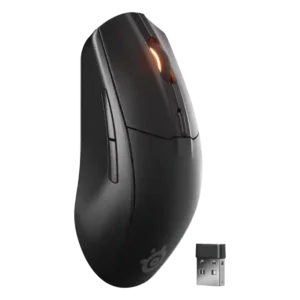
Choose SteelSeries Rival 3 Gen 2 Wireless for materials quality and value for money.
Why these recommendations?
ASUS ROG Harpe Ace Mini
Where It Has the Edge
weight is 4.7 vs 2.9. Weight was one of the clearest strengths, repeatedly praised as extremely light, flingable, and competitive.
side button quality is 4.4 vs 2.8. Side button quality was generally praised, with reviewers noting satisfying side clicks, easy thumb access, and good in-game...
balance and weight distribution is 4.2 vs 2.6. Balance evidence was split: one reviewer felt rear weighting, while another said balance felt spot-on.
SteelSeries Rival 3 Gen 2 Wireless
Where It Has the Edge
materials quality is 4.4 vs 3.7. Reviewers praised the plastic and polymer materials as high-quality, durable, and pleasant for the price.
value for money is 4.4 vs 3.9. Reviewers strongly agreed the mouse offers good budget value, especially on sale, while some argued similar money can...
polling rate is 3.8 vs 3.6. The 1,000Hz cap was considered perfectly fine for most casual players, though below the 4,000Hz or 8,000Hz modes...
ASUS ROG Harpe Ace Mini4.2 overall score
SteelSeries Rival 3 Gen 2 Wireless3.9 overall score
Compare features
Scores are out of 5. Missing scores mean missing review evidence, not a missing feature.
Scored on both products
Battery and charging
Battery life
ASUS ROG Harpe Ace Mini
4.6
Battery life was one of the strongest consensus wins, repeatedly described as impressive, fantastic, accurate, or better than expected.
SteelSeries Rival 3 Gen 2 Wireless
4.5
Battery life drew some of the strongest praise, with reviewers highlighting hundreds of hours of use, rechargeable AAA compatibility, and strong endurance despite a few cost caveats.
Charging convenience
ASUS ROG Harpe Ace Mini
4.4
Charging convenience had limited but positive evidence, especially around USB-C fast charging and quick top-ups.
SteelSeries Rival 3 Gen 2 Wireless
3.0
Opinions were mixed: reviewers liked avoiding charging cables and using rechargeable AAAs, but disliked being dependent on replacement batteries when they die.
Other features
Weight
ASUS ROG Harpe Ace Mini
4.7
Weight was one of the clearest strengths, repeatedly praised as extremely light, flingable, and competitive.
SteelSeries Rival 3 Gen 2 Wireless
2.9
Weight was the most common complaint: some found it manageable or even comfortable, but many called it heavy for modern wireless gaming.
Lift-off distance
ASUS ROG Harpe Ace Mini
4.3
Lift-off distance received limited but positive evidence through one reviewer praising the software adjustment options.
SteelSeries Rival 3 Gen 2 Wireless
2.5
Reviewers considered the fixed lift-off distance a drawback compared with newer sensors that allow finer adjustment.
MMO gaming suitability
ASUS ROG Harpe Ace Mini
4.5
MMO gaming suitability had limited positive evidence from one review that named MMORPG use as a fit.
SteelSeries Rival 3 Gen 2 Wireless
2.8
The beginner-focused review found the mouse usable for many games but too basic for serious MMO players who need more buttons and customization.
MOBA gaming suitability
ASUS ROG Harpe Ace Mini
4.5
MOBA gaming suitability had limited positive evidence from one review that named MOBA use as a fit.
SteelSeries Rival 3 Gen 2 Wireless
2.8
The beginner-focused review treated it as serviceable for MOBAs, but said serious players would likely want more buttons and customization.
Balance and weight distribution
ASUS ROG Harpe Ace Mini
4.2
Balance evidence was split: one reviewer felt rear weighting, while another said balance felt spot-on.
SteelSeries Rival 3 Gen 2 Wireless
2.6
Several reviewers criticized the rear-biased battery weight, saying it created drag or made fine adjustments require extra effort.
RGB features
ASUS ROG Harpe Ace Mini
4.0
RGB features were generally seen as tasteful and minimal, though the lighting is limited to subtle scroll-wheel effects.
SteelSeries Rival 3 Gen 2 Wireless
2.5
Reviewers mostly saw the wireless RGB as limited or absent, with only indicator lighting, though some accepted the tradeoff for longer battery life.
Motion consistency
ASUS ROG Harpe Ace Mini
4.7
Motion consistency scored very well where tested, with reviewers describing reliable tracking and no acceleration or jitter.
SteelSeries Rival 3 Gen 2 Wireless
3.6
Tracking consistency was mostly good in ordinary use, but a few reviewers noted jitter or tracking deviation at higher expectations.
Surface compatibility
ASUS ROG Harpe Ace Mini
4.6
Surface compatibility scored well where tested, with reviewers praising calibration usefulness or trouble-free tracking across many surfaces.
SteelSeries Rival 3 Gen 2 Wireless
3.6
Surface performance was generally solid across common materials, but reviewers noted missing glass support and one failure on faux leather.
Connection stability
ASUS ROG Harpe Ace Mini
4.5
Connection stability was broadly positive across wired, Bluetooth, and 2.4GHz modes, with reviewers reporting easy, reliable, or trouble-free use.
SteelSeries Rival 3 Gen 2 Wireless
3.6
Most reviewers had stable wireless connections, but several noted wake-up delays, Bluetooth setup trouble, or interference/dropout issues in some setups.
FPS gaming suitability
ASUS ROG Harpe Ace Mini
4.7
FPS gaming suitability was strongly supported by repeated esports, aiming, shooting-game, and competitive-player praise.
SteelSeries Rival 3 Gen 2 Wireless
3.8
The mouse handled casual FPS and general shooters well, but reviewers repeatedly warned that weight and sensor limits make it less ideal for competitive esports.
Profile switching
ASUS ROG Harpe Ace Mini
3.5
Profile switching was useful in principle, but one reviewer found the onboard controls clunky.
SteelSeries Rival 3 Gen 2 Wireless
3.0
Profile handling was seen as limited because switching configurations depends on software or requires remapping a button.
Premium feel
ASUS ROG Harpe Ace Mini
4.5
Premium feel was praised, with reviewers describing the mouse as not cheap, masterful, premium, or solid.
SteelSeries Rival 3 Gen 2 Wireless
4.0
Many reviewers said the mouse felt better or more premium than its price, though side buttons and other cheaper-feeling parts tempered that praise.
DPI range
ASUS ROG Harpe Ace Mini
4.5
DPI range was treated as a strength where reviewers evaluated sensitivity, especially versus smaller or older rivals.
SteelSeries Rival 3 Gen 2 Wireless
4.1
The 18,000 DPI range was considered more than enough for most users, with several reviewers noting that very high DPI numbers matter less outside pro-level play.
Handedness options
ASUS ROG Harpe Ace Mini
2.6
Handedness options were a weakness because multiple reviewers noted the right-hand-biased side-button layout and lack of true left-handed support.
SteelSeries Rival 3 Gen 2 Wireless
2.2
Reviewers criticized the lack of a true left-handed version, despite the mostly symmetrical shell.
Switch feel
ASUS ROG Harpe Ace Mini
4.5
Switch feel was viewed positively, especially for tactile optical switches and spam-click friendliness.
SteelSeries Rival 3 Gen 2 Wireless
4.1
Switch feel was generally crisp, clicky, and satisfying, though a few reviewers wanted a crisper or less dampened response.
Click latency
ASUS ROG Harpe Ace Mini
4.6
Click latency was praised in the reviews that addressed it, especially around optical switches and low-latency performance.
SteelSeries Rival 3 Gen 2 Wireless
4.2
Click latency was generally seen as low enough not to be noticeable and suitable for casual or even some competitive play.
Scroll wheel quality
ASUS ROG Harpe Ace Mini
3.8
Scroll wheel feedback was mixed-positive: several liked the resistance or easy actuation, while others found it stiff or soft.
SteelSeries Rival 3 Gen 2 Wireless
3.4
Scroll wheel feedback was split: some found it responsive or nicely notched, while others reported looseness, mushiness, cheap feel, or squeaking.
Glide smoothness
ASUS ROG Harpe Ace Mini
4.6
Glide smoothness was a repeated strength, with PTFE feet and skates described as smooth, easy, or excellent.
SteelSeries Rival 3 Gen 2 Wireless
4.3
The PTFE feet were widely praised for smooth, effortless glide across mousepads, desks, and other surfaces.
Portability
ASUS ROG Harpe Ace Mini
4.6
Portability was a clear advantage due to the compact, light design and travel-friendly use.
SteelSeries Rival 3 Gen 2 Wireless
4.2
Reviewers liked the travel potential from the compact body, dongle storage, Bluetooth, and the ability to avoid carrying a charging cable.
Ecosystem integration
ASUS ROG Harpe Ace Mini
4.3
Ecosystem integration was positively received where reviewers mentioned the Omni receiver and multi-device ASUS setup support.
SteelSeries Rival 3 Gen 2 Wireless
4.0
One reviewer called it a strong option for users already invested in SteelSeries gear and software.
Polling rate
ASUS ROG Harpe Ace Mini
3.6
Polling feedback was mixed: 1000Hz was acceptable for many, but reviewers disliked needing a separate booster for easy 8000Hz.
SteelSeries Rival 3 Gen 2 Wireless
3.8
The 1,000Hz cap was considered perfectly fine for most casual players, though below the 4,000Hz or 8,000Hz modes found in pricier mice.
Acceleration control
ASUS ROG Harpe Ace Mini
4.4
Acceleration behavior was positive in limited evidence, with reviewers saying it felt sufficient or showed zero unwanted acceleration.
SteelSeries Rival 3 Gen 2 Wireless
4.2
SteelSeries GG was praised for offering unusually broad tuning, including acceleration and deceleration controls, especially for a budget mouse.
2.4GHz connectivity
ASUS ROG Harpe Ace Mini
4.5
2.4GHz connectivity was praised for easy setup, SpeedNova precision, reliable performance, and top-notch wireless behavior.
SteelSeries Rival 3 Gen 2 Wireless
4.4
Reviewers generally found the 2.4GHz mode reliable, low-latency, and best for gaming, with occasional notes that dongle placement or switches could affect ease.
Grip texture
ASUS ROG Harpe Ace Mini
4.3
Grip texture was generally praised for coatings, ridges, grips, and grippy surfaces, with only minor reservations about finish marking.
SteelSeries Rival 3 Gen 2 Wireless
4.4
Reviewers liked the matte, textured plastic for grip, comfort, and avoiding slippery or sweaty feel.
Wireless latency
ASUS ROG Harpe Ace Mini
4.6
Wireless latency was praised where tested, especially for lag-free connectivity or low-latency performance.
SteelSeries Rival 3 Gen 2 Wireless
4.5
Wireless latency was generally described as negligible, low-latency, or effectively indistinguishable from wired use in normal play.
Cross-platform compatibility
ASUS ROG Harpe Ace Mini
4.4
Cross-platform compatibility was positive in limited evidence, especially Windows/Mac Bluetooth use and flexible multi-platform operation.
SteelSeries Rival 3 Gen 2 Wireless
4.4
Reviewers valued quick switching across PC, consoles, tablets, phones, and other devices, especially when using Bluetooth alongside the dongle.
Left and right click quality
ASUS ROG Harpe Ace Mini
4.4
Left and right click quality had limited but positive evidence from a reviewer who liked the click implementation.
SteelSeries Rival 3 Gen 2 Wireless
4.4
Primary clicks were usually praised as snappy, responsive, tactile, bouncy, or satisfying for the price.
Onboard memory
ASUS ROG Harpe Ace Mini
4.4
Onboard memory had limited positive evidence, with one reviewer praising memory profiles for use on the go.
SteelSeries Rival 3 Gen 2 Wireless
4.4
Reviewers liked that settings or DPI profiles could be saved to the mouse and carried between devices.
Controls and connectivity
Side button quality
ASUS ROG Harpe Ace Mini
4.4
Side button quality was generally praised, with reviewers noting satisfying side clicks, easy thumb access, and good in-game feel.
SteelSeries Rival 3 Gen 2 Wireless
2.8
Side buttons were the most repeated control complaint, often described as thin, finicky, hard to hit, or easy to mis-click, though one reviewer found them improved.
Software usability
ASUS ROG Harpe Ace Mini
3.5
Software usability was the most divided software attribute: some liked the simplified or clean app, while others found it clunky, difficult, or outdated.
SteelSeries Rival 3 Gen 2 Wireless
4.1
SteelSeries GG was often considered useful and straightforward for mouse settings, though some reviewers found it cluttered, dated, or less intuitive than rivals.
Button responsiveness
ASUS ROG Harpe Ace Mini
4.5
Button responsiveness was a repeated strength, with clicks described as satisfying, tactile, crisp, clear, and responsive.
SteelSeries Rival 3 Gen 2 Wireless
4.2
Main inputs were generally described as responsive and satisfying, with little complaint about missed inputs or delay in normal use.
Programmable buttons
ASUS ROG Harpe Ace Mini
4.4
Programmable buttons were viewed as useful and easy to configure in the reviews that judged button programming.
SteelSeries Rival 3 Gen 2 Wireless
4.1
Reviewers valued the remappable side buttons and macro-capable controls, especially for a budget mouse.
Bluetooth support
ASUS ROG Harpe Ace Mini
4.5
Bluetooth support was positively received for easy pairing, useful productivity support, and painless mode switching.
SteelSeries Rival 3 Gen 2 Wireless
4.2
Bluetooth was widely valued for device switching, travel, and battery savings, but one reviewer had pairing problems and others treated it as less suitable for serious gaming.
Button customization
ASUS ROG Harpe Ace Mini
4.5
Button customization was praised for easy programming and broad finetuning options.
SteelSeries Rival 3 Gen 2 Wireless
4.3
Reviewers liked the ability to remap buttons and adjust controls in SteelSeries GG, although Bluetooth mode and profile switching added some limitations.
Ownership and support
Macro support
ASUS ROG Harpe Ace Mini
2.8
Macro support had limited negative evidence because one reviewer disliked needing the large Armoury Crate suite for macros.
SteelSeries Rival 3 Gen 2 Wireless
4.3
Macro setup was generally praised as simple, useful, and available through SteelSeries GG or Engine.
Value for money
ASUS ROG Harpe Ace Mini
3.9
Value was mixed: reviewers liked the performance for the price, but the high base price and separate polling booster drew criticism.
SteelSeries Rival 3 Gen 2 Wireless
4.4
Reviewers strongly agreed the mouse offers good budget value, especially on sale, while some argued similar money can buy lighter or higher-performance alternatives.
Comfort and build
Palm grip comfort
ASUS ROG Harpe Ace Mini
4.2
Palm grip comfort was acceptable for some reviewers with smaller hands, though evidence was less broad than for claw and fingertip use.
SteelSeries Rival 3 Gen 2 Wireless
3.0
Palm grip comfort was weaker than claw or fingertip comfort, with multiple reviewers calling the mouse too low, short, narrow, or awkward for full palm support.
Switch durability
ASUS ROG Harpe Ace Mini
4.5
Switch durability evidence was positive, with optical switches framed as durable, long-lived, and safer against double-click concerns.
SteelSeries Rival 3 Gen 2 Wireless
3.8
Switch durability was mostly praised through 60-million-click ratings, but one reviewer reported a switch issue during disassembly testing.
Materials quality
ASUS ROG Harpe Ace Mini
3.7
Materials quality was mostly positive for sturdy plastics, premium feel, and coating, but one reviewer criticized the finish marking and another questioned the material.
SteelSeries Rival 3 Gen 2 Wireless
4.4
Reviewers praised the plastic and polymer materials as high-quality, durable, and pleasant for the price.
Ergonomic design
ASUS ROG Harpe Ace Mini
4.1
Ergonomic design was context-dependent: the compact shape pleased smaller-hand users but was less ideal for large hands or ergonomic-specific preferences.
SteelSeries Rival 3 Gen 2 Wireless
4.5
One reviewer praised the shape for fitting naturally without forcing the hand into an awkward twist.
Durability over time
ASUS ROG Harpe Ace Mini
3.9
Durability over time was mixed-positive: switches and build were praised, but one travel-use review criticized finish scuffing.
SteelSeries Rival 3 Gen 2 Wireless
4.2
One review linked the redesigned click mechanism to better longevity, but long-term durability evidence was otherwise limited.
Claw grip comfort
ASUS ROG Harpe Ace Mini
4.5
Claw grip comfort was a major strength, repeatedly tied to the compact esports shape.
SteelSeries Rival 3 Gen 2 Wireless
4.2
The low, symmetrical shape was consistently described as comfortable or well-suited for claw grip users.
Long-session comfort
ASUS ROG Harpe Ace Mini
4.7
Long-session comfort had limited but positive evidence for extended gaming sessions.
SteelSeries Rival 3 Gen 2 Wireless
4.5
Several reviewers reported comfort across long workdays, gaming sessions, or extended use without hand or wrist fatigue.
Fingertip grip comfort
ASUS ROG Harpe Ace Mini
4.5
Fingertip grip comfort was positive in the few reviews that addressed it directly.
SteelSeries Rival 3 Gen 2 Wireless
4.3
Fingertip grip users generally had positive experiences, including no fatigue during extended use.
Build quality
ASUS ROG Harpe Ace Mini
4.5
Build quality was consistently positive, with reviewers calling it sturdy, solid, well-built, and able to go the distance.
SteelSeries Rival 3 Gen 2 Wireless
4.6
Build quality was consistently praised as sturdy, solid, and better than the budget price suggests, with little flex or creaking reported.
Shape comfort
ASUS ROG Harpe Ace Mini
4.3
Shape comfort was mostly praised for smaller hands and compact preferences, but larger-hand comfort was a recurring limitation.
SteelSeries Rival 3 Gen 2 Wireless
4.3
The shell was broadly praised as comfortable, simple, and effective, especially for smaller hands or non-palm grips.
Performance
Sensor performance
ASUS ROG Harpe Ace Mini
4.6
Sensor feedback was strongly positive overall, with reviewers calling it potent, precise, reliable, stellar, rock-solid, or one of the best.
SteelSeries Rival 3 Gen 2 Wireless
3.9
The sensor was usually judged good enough and responsive for casual gaming, but several reviewers called it older, average, or behind higher-end sensors.
Wireless performance
ASUS ROG Harpe Ace Mini
4.6
Wireless performance was well regarded, with reviewers describing reliable, flexible, lag-free, or top-notch wireless use.
SteelSeries Rival 3 Gen 2 Wireless
4.3
Overall wireless performance was widely seen as reliable and strong for the price, though not ideal for every competitive or battery-sensitive user.
Tracking and training
Accuracy and tracking precision
ASUS ROG Harpe Ace Mini
4.7
Reviewers consistently praised the mouse as accurate and precise, with only one review noting high-DPI jitter in unrealistic upper ranges.
SteelSeries Rival 3 Gen 2 Wireless
4.2
Most reviewers said aiming and tracking felt precise enough for casual gaming and daily use, though some noted limits for high-level competitive play.
Evidence available for one product
Other features
Cable flexibility
ASUS ROG Harpe Ace Mini
4.8
Cable flexibility was strongly positive where mentioned, with reviewers praising the paracord as highly flexible and low-friction.
SteelSeries Rival 3 Gen 2 WirelessNo score yet
Weight tuning
ASUS ROG Harpe Ace MiniNo score yet
SteelSeries Rival 3 Gen 2 Wireless
4.1
Reviewers liked the ability to use one or two AAA batteries to trade weight against battery life.
Performance
Click noise
ASUS ROG Harpe Ace MiniNo score yet
SteelSeries Rival 3 Gen 2 Wireless
4.0
Click sound was mixed, ranging from barely audible or satisfying to loud, echoey, and cheap when pressed hard.
Comfort and build
Skate durability
ASUS ROG Harpe Ace MiniNo score yet
SteelSeries Rival 3 Gen 2 Wireless
4.0
Evidence was limited but positive, with reviewers noting durable PTFE feet and removable skates that could be handled without damage.
Controls and connectivity
Software stability
ASUS ROG Harpe Ace Mini
2.2
Software stability had limited but negative evidence from one reviewer who reported errors and restarts.
Choose the ROG Harpe II Ace for ultralight FPS play, precise tracking, smooth glide, and web-based tuning. Skip it if you need palm-grip support, MMO buttons, onboard profiles, or long...
Excellent tracking, comfortable right-handed ergonomics and a versatile scroll wheel make the Basilisk V3 a strong gaming and productivity mouse. Its substantial weight, fixed cable and sometimes over-sensitive automatic scrolling...
The L7 Pro delivers remarkably light handling, precise aiming and a grippy shell at a budget price. Stock skates are less impressive, and conflicting click-latency measurements warrant caution for latency-sensitive...
Best for ultra-light, competition-focused speed, precise tracking, stable wireless, and long battery life. Skip it if you need quieter clicks, left-handed support, Bluetooth, more buttons, or better value for casual...