Scorata scores summarize analyzed review evidence on a 1–5 scale; they are not laboratory measurements or a simple average of customer star ratings. Feature scores summarize the reviews covering that feature. The overall score averages feature scores within each review, then combines review averages. When both expert and customer evidence are available, those two groups receive equal weight. Products can have different review coverage, so small score gaps do not establish a winner.
Recommendations prioritize important features for the category, with a score of at least 3.5, a gap of at least 0.25 points and at least two supporting reviews per product. Features with widely varying scores or broad connectivity contexts are excluded from recommendations. These safeguards do not establish statistical significance.
Quick verdict
What each product is best for
The review evidence points to a tradeoff: handedness options and materials quality versus connection stability and palm grip comfort. Choose according to which strengths matter more to you; the overall score alone does not settle that choice.
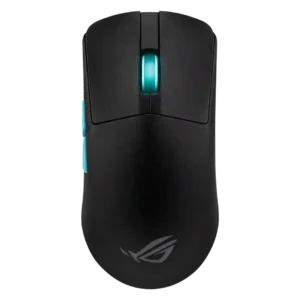
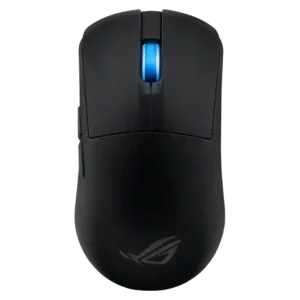
Choose ASUS ROG Harpe Ace Aim Lab for handedness options and materials quality.
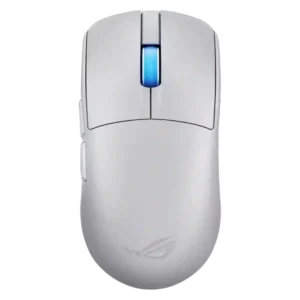
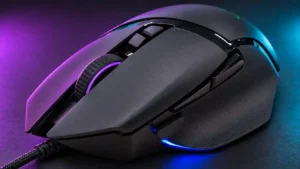
Choose ASUS ROG Harpe Ace Mini for connection stability and palm grip comfort.
Why these recommendations?
ASUS ROG Harpe Ace Aim Lab
Where It Has the Edge
handedness options is 3.9 vs 2.6. Handedness support was useful but imperfect, since the symmetrical body helps left-handers while left-side thumb buttons remain right-hand-biased.
materials quality is 4.7 vs 3.7. Materials quality was praised for strong nylon, sturdy shell feel, and pleasant hand feel despite the low weight.
charging convenience is 5.0 vs 4.4. Charging convenience was praised, with reviewers noting quick top-ups from under 30 minutes to about an hour.
ASUS ROG Harpe Ace Mini
Where It Has the Edge
connection stability is 4.5 vs 3.3. Connection stability was broadly positive across wired, Bluetooth, and 2.4GHz modes, with reviewers reporting easy, reliable, or trouble-free...
palm grip comfort is 4.2 vs 3.1. Palm grip comfort was acceptable for some reviewers with smaller hands, though evidence was less broad than for...
side button quality is 4.4 vs 3.5. Side button quality was generally praised, with reviewers noting satisfying side clicks, easy thumb access, and good in-game...
ASUS ROG Harpe Ace Aim Lab4.1 overall score
ASUS ROG Harpe Ace Mini4.2 overall score
Compare features
Scores are out of 5. Missing scores mean missing review evidence, not a missing feature.
Scored on both products
Battery and charging
Battery life
ASUS ROG Harpe Ace Aim Lab
4.7
Battery life was consistently praised, with reviewers describing multi-day, fortnight, or even month-like usage and validating the long runtime claims.
ASUS ROG Harpe Ace Mini
4.6
Battery life was one of the strongest consensus wins, repeatedly described as impressive, fantastic, accurate, or better than expected.
Charging convenience
ASUS ROG Harpe Ace Aim Lab
5.0
Charging convenience was praised, with reviewers noting quick top-ups from under 30 minutes to about an hour.
ASUS ROG Harpe Ace Mini
4.4
Charging convenience had limited but positive evidence, especially around USB-C fast charging and quick top-ups.
Other features
MMO gaming suitability
ASUS ROG Harpe Ace Aim Lab
2.0
MMO suitability was limited by the pared-back button set, making it less ideal for input-heavy games.
ASUS ROG Harpe Ace Mini
4.5
MMO gaming suitability had limited positive evidence from one review that named MMORPG use as a fit.
Handedness options
ASUS ROG Harpe Ace Aim Lab
3.9
Handedness support was useful but imperfect, since the symmetrical body helps left-handers while left-side thumb buttons remain right-hand-biased.
ASUS ROG Harpe Ace Mini
2.6
Handedness options were a weakness because multiple reviewers noted the right-hand-biased side-button layout and lack of true left-handed support.
Connection stability
ASUS ROG Harpe Ace Aim Lab
3.3
Connection stability was mostly acceptable but not flawless, with reviewers mentioning brief interference, wake delay, or minor lag events.
ASUS ROG Harpe Ace Mini
4.5
Connection stability was broadly positive across wired, Bluetooth, and 2.4GHz modes, with reviewers reporting easy, reliable, or trouble-free use.
Profile switching
ASUS ROG Harpe Ace Aim Lab
2.8
Profile switching and DPI access were one of the main pain points because several reviewers disliked the underside DPI button, despite onboard profiles being easy once configured.
ASUS ROG Harpe Ace Mini
3.5
Profile switching was useful in principle, but one reviewer found the onboard controls clunky.
Lift-off distance
ASUS ROG Harpe Ace Aim Lab
3.8
Lift-off distance customization was useful but sometimes limited compared with rival software.
ASUS ROG Harpe Ace Mini
4.3
Lift-off distance received limited but positive evidence through one reviewer praising the software adjustment options.
Surface compatibility
ASUS ROG Harpe Ace Aim Lab
5.0
Surface compatibility was praised where reviewers highlighted mousepad calibration as a useful tuning tool.
ASUS ROG Harpe Ace Mini
4.6
Surface compatibility scored well where tested, with reviewers praising calibration usefulness or trouble-free tracking across many surfaces.
Premium feel
ASUS ROG Harpe Ace Aim Lab
4.1
Premium feel was generally positive for specs and quality, but some reviewers found the look plain or unspectacular.
ASUS ROG Harpe Ace Mini
4.5
Premium feel was praised, with reviewers describing the mouse as not cheap, masterful, premium, or solid.
DPI range
ASUS ROG Harpe Ace Aim Lab
4.9
The 36,000 DPI range was repeatedly praised as extremely high-end and more than enough for competitive sensitivity needs.
ASUS ROG Harpe Ace Mini
4.5
DPI range was treated as a strength where reviewers evaluated sensitivity, especially versus smaller or older rivals.
Ecosystem integration
ASUS ROG Harpe Ace Aim Lab
4.7
ROG ecosystem integration was praised because the Omni receiver could connect compatible ROG peripherals together.
ASUS ROG Harpe Ace Mini
4.3
Ecosystem integration was positively received where reviewers mentioned the Omni receiver and multi-device ASUS setup support.
Cross-platform compatibility
ASUS ROG Harpe Ace Aim Lab
4.8
Cross-platform flexibility was praised for users switching among PCs, laptops, Macs, handhelds, tablets, or other devices.
ASUS ROG Harpe Ace Mini
4.4
Cross-platform compatibility was positive in limited evidence, especially Windows/Mac Bluetooth use and flexible multi-platform operation.
Wireless latency
ASUS ROG Harpe Ace Aim Lab
4.2
Wireless latency was mostly praised as unnoticeable or very low, though a few reviewers observed occasional lag or jitter.
ASUS ROG Harpe Ace Mini
4.6
Wireless latency was praised where tested, especially for lag-free connectivity or low-latency performance.
2.4GHz connectivity
ASUS ROG Harpe Ace Aim Lab
4.8
Reviewers liked the low-latency 2.4GHz mode and receiver setup, especially when it reduced aim-related latency or supported a shared ROG receiver.
ASUS ROG Harpe Ace Mini
4.5
2.4GHz connectivity was praised for easy setup, SpeedNova precision, reliable performance, and top-notch wireless behavior.
Cable flexibility
ASUS ROG Harpe Ace Aim Lab
5.0
The included cable was praised as light and flexible enough not to get in the way during wired use.
ASUS ROG Harpe Ace Mini
4.8
Cable flexibility was strongly positive where mentioned, with reviewers praising the paracord as highly flexible and low-friction.
RGB features
ASUS ROG Harpe Ace Aim Lab
3.8
RGB was modest but useful to some reviewers for DPI or battery indicators; others found it superfluous or noticed uneven lighting.
ASUS ROG Harpe Ace Mini
4.0
RGB features were generally seen as tasteful and minimal, though the lighting is limited to subtle scroll-wheel effects.
Portability
ASUS ROG Harpe Ace Aim Lab
4.8
Portability was praised because the light body, dongle storage, and multi-device receiver made it easy to travel with.
ASUS ROG Harpe Ace Mini
4.6
Portability was a clear advantage due to the compact, light design and travel-friendly use.
Weight
ASUS ROG Harpe Ace Aim Lab
5.0
Weight was the most consistently praised physical attribute, with reviewers repeatedly emphasizing the 54g body as extremely light and easy to control.
ASUS ROG Harpe Ace Mini
4.7
Weight was one of the clearest strengths, repeatedly praised as extremely light, flingable, and competitive.
Glide smoothness
ASUS ROG Harpe Ace Aim Lab
4.8
Glide smoothness was highly praised thanks to PTFE feet, low weight, and smooth movement across surfaces.
ASUS ROG Harpe Ace Mini
4.6
Glide smoothness was a repeated strength, with PTFE feet and skates described as smooth, easy, or excellent.
Grip texture
ASUS ROG Harpe Ace Aim Lab
4.1
Grip texture was mixed: many liked the grippy finish or tape, but some found the sides slippery, oily, or under-coated.
ASUS ROG Harpe Ace Mini
4.3
Grip texture was generally praised for coatings, ridges, grips, and grippy surfaces, with only minor reservations about finish marking.
Click latency
ASUS ROG Harpe Ace Aim Lab
4.8
Click latency and immediate actuation were rated highly where reviewers mentioned minimal pre-travel, no travel delay, or fatigue-free resistance.
ASUS ROG Harpe Ace Mini
4.6
Click latency was praised in the reviews that addressed it, especially around optical switches and low-latency performance.
FPS gaming suitability
ASUS ROG Harpe Ace Aim Lab
4.8
FPS suitability was a major strength, with reviewers repeatedly calling it excellent, esports-ready, and especially suited to fast shooters.
ASUS ROG Harpe Ace Mini
4.7
FPS gaming suitability was strongly supported by repeated esports, aiming, shooting-game, and competitive-player praise.
Left and right click quality
ASUS ROG Harpe Ace Aim Lab
4.3
Main click quality was generally positive for tactility, though one reviewer found the switches slightly stiff.
ASUS ROG Harpe Ace Mini
4.4
Left and right click quality had limited but positive evidence from a reviewer who liked the click implementation.
Switch feel
ASUS ROG Harpe Ace Aim Lab
4.7
Switch feel was broadly praised for satisfying, tactile, responsive clicks, though some felt the switches were heavier than ideal.
ASUS ROG Harpe Ace Mini
4.5
Switch feel was viewed positively, especially for tactile optical switches and spam-click friendliness.
Motion consistency
ASUS ROG Harpe Ace Aim Lab
4.8
Motion consistency was praised when reviewers noted consistent shots, stable firing, and no jitter in slow tracking.
ASUS ROG Harpe Ace Mini
4.7
Motion consistency scored very well where tested, with reviewers describing reliable tracking and no acceleration or jitter.
Polling rate
ASUS ROG Harpe Ace Aim Lab
3.5
Polling rate opinions were mixed: 1,000Hz was often enough, but several reviewers wanted higher rates for modern competitive mice.
ASUS ROG Harpe Ace Mini
3.6
Polling feedback was mixed: 1000Hz was acceptable for many, but reviewers disliked needing a separate booster for easy 8000Hz.
Onboard memory
ASUS ROG Harpe Ace Aim Lab
4.3
Onboard memory was useful for profile storage and for reducing dependence on software after setup.
ASUS ROG Harpe Ace Mini
4.4
Onboard memory had limited positive evidence, with one reviewer praising memory profiles for use on the go.
Scroll wheel quality
ASUS ROG Harpe Ace Aim Lab
3.8
Scroll wheel quality was mixed, ranging from tactile and nice-stepped to merely okay or missing adjustable resistance.
ASUS ROG Harpe Ace Mini
3.8
Scroll wheel feedback was mixed-positive: several liked the resistance or easy actuation, while others found it stiff or soft.
Controls and connectivity
Programmable buttons
ASUS ROG Harpe Ace Aim Lab
2.5
Programmable button coverage was mixed, with minimalist controls helping FPS focus but feeling too feature-light for users wanting more inputs.
ASUS ROG Harpe Ace Mini
4.4
Programmable buttons were viewed as useful and easy to configure in the reviews that judged button programming.
Side button quality
ASUS ROG Harpe Ace Aim Lab
3.5
Side button quality was mixed, with some reviewers liking reach and tactility while others found the buttons small or mushy.
ASUS ROG Harpe Ace Mini
4.4
Side button quality was generally praised, with reviewers noting satisfying side clicks, easy thumb access, and good in-game feel.
Button responsiveness
ASUS ROG Harpe Ace Aim Lab
5.0
Button responsiveness was praised for fast, clean, responsive actuation that kept up with esports-style play.
ASUS ROG Harpe Ace Mini
4.5
Button responsiveness was a repeated strength, with clicks described as satisfying, tactile, crisp, clear, and responsive.
Software usability
ASUS ROG Harpe Ace Aim Lab
3.2
Software usability split reviewers: Aim Lab tools were often useful, while Armoury Crate drew criticism for complexity, updates, missing premium features, or instability.
ASUS ROG Harpe Ace Mini
3.5
Software usability was the most divided software attribute: some liked the simplified or clean app, while others found it clunky, difficult, or outdated.
Bluetooth support
ASUS ROG Harpe Ace Aim Lab
4.7
Bluetooth was valued as a convenient secondary mode for non-competitive use and multi-device flexibility, even when 2.4GHz remained preferred for gaming.
ASUS ROG Harpe Ace Mini
4.5
Bluetooth support was positively received for easy pairing, useful productivity support, and painless mode switching.
Button customization
ASUS ROG Harpe Ace Aim Lab
4.4
Customization was praised when reviewers focused on deep performance tuning and highly configurable buttons, but criticized when the physical button layout felt too sparse.
ASUS ROG Harpe Ace Mini
4.5
Button customization was praised for easy programming and broad finetuning options.
Software stability
ASUS ROG Harpe Ace Aim Lab
2.2
Software stability was a recurring concern, with installation trouble, forced updates, and Armoury Crate issues reported.
ASUS ROG Harpe Ace Mini
2.2
Software stability had limited but negative evidence from one reviewer who reported errors and restarts.
Comfort and build
Palm grip comfort
ASUS ROG Harpe Ace Aim Lab
3.1
Palm grip comfort was mixed, with some reviewers comfortable using palm grip and others finding the narrow or long shape challenging.
ASUS ROG Harpe Ace Mini
4.2
Palm grip comfort was acceptable for some reviewers with smaller hands, though evidence was less broad than for claw and fingertip use.
Materials quality
ASUS ROG Harpe Ace Aim Lab
4.7
Materials quality was praised for strong nylon, sturdy shell feel, and pleasant hand feel despite the low weight.
ASUS ROG Harpe Ace Mini
3.7
Materials quality was mostly positive for sturdy plastics, premium feel, and coating, but one reviewer criticized the finish marking and another questioned the material.
Switch durability
ASUS ROG Harpe Ace Aim Lab
3.7
Switch durability was mixed: reviewers liked the rated lifespan and reliability claims, but later feedback flagged double-clicking cases.
ASUS ROG Harpe Ace Mini
4.5
Switch durability evidence was positive, with optical switches framed as durable, long-lived, and safer against double-click concerns.
Shape comfort
ASUS ROG Harpe Ace Aim Lab
3.7
Shape comfort was highly divisive, praised by some for FPS control and criticized by others for its hump, narrowness, length, or personal fit.
ASUS ROG Harpe Ace Mini
4.3
Shape comfort was mostly praised for smaller hands and compact preferences, but larger-hand comfort was a recurring limitation.
Claw grip comfort
ASUS ROG Harpe Ace Aim Lab
3.9
Claw grip comfort was split: some reviewers found the mouse useful or comfortable for claw grip, while others disliked the length or rear hump.
ASUS ROG Harpe Ace Mini
4.5
Claw grip comfort was a major strength, repeatedly tied to the compact esports shape.
Durability over time
ASUS ROG Harpe Ace Aim Lab
4.3
Durability over time was mixed: some reviewers found daily-use durability solid, while later comparison feedback flagged double-clicking cases.
ASUS ROG Harpe Ace Mini
3.9
Durability over time was mixed-positive: switches and build were praised, but one travel-use review criticized finish scuffing.
Ergonomic design
ASUS ROG Harpe Ace Aim Lab
3.8
Ergonomics were divisive: some reviewers praised comfort and control, while others found the hump, narrowness, or larger-hand fit awkward.
ASUS ROG Harpe Ace Mini
4.1
Ergonomic design was context-dependent: the compact shape pleased smaller-hand users but was less ideal for large hands or ergonomic-specific preferences.
Fingertip grip comfort
ASUS ROG Harpe Ace Aim Lab
4.3
Fingertip comfort was mostly positive where reviewers felt the shape and light weight worked well for fingertip or hybrid fingertip use.
ASUS ROG Harpe Ace Mini
4.5
Fingertip grip comfort was positive in the few reviews that addressed it directly.
Build quality
ASUS ROG Harpe Ace Aim Lab
4.6
Build quality was generally strong, with many reviewers citing solid shells and no creaking, though one noted the lightweight plastic could feel cheap.
ASUS ROG Harpe Ace Mini
4.5
Build quality was consistently positive, with reviewers calling it sturdy, solid, well-built, and able to go the distance.
Long-session comfort
ASUS ROG Harpe Ace Aim Lab
4.8
Long-session comfort was praised where reviewers noted relaxed fingers or comfortable longer play, but this depended on grip and hand size.
ASUS ROG Harpe Ace Mini
4.7
Long-session comfort had limited but positive evidence for extended gaming sessions.
Performance
Sensor performance
ASUS ROG Harpe Ace Aim Lab
4.9
Sensor performance was a standout strength, with reviewers repeatedly describing it as fast, accurate, responsive, or top-notch.
ASUS ROG Harpe Ace Mini
4.6
Sensor feedback was strongly positive overall, with reviewers calling it potent, precise, reliable, stellar, rock-solid, or one of the best.
Wireless performance
ASUS ROG Harpe Ace Aim Lab
4.8
Wireless performance was praised for feeling close to wired performance, but a few caveats around jitter or sleep wake-up remained.
ASUS ROG Harpe Ace Mini
4.6
Wireless performance was well regarded, with reviewers describing reliable, flexible, lag-free, or top-notch wireless use.
Tracking and training
Accuracy and tracking precision
ASUS ROG Harpe Ace Aim Lab
4.5
Accuracy was one of the strongest themes, with reviewers repeatedly praising precise tracking, consistent shots, and strong aim performance, though one Aim Lab optimization test only produced a minor improvement.
ASUS ROG Harpe Ace Mini
4.7
Reviewers consistently praised the mouse as accurate and precise, with only one review noting high-DPI jitter in unrealistic upper ranges.
Ownership and support
Value for money
ASUS ROG Harpe Ace Aim Lab
3.8
Value was mixed-to-positive: many felt the performance justified the premium, while casual users and feature-heavy buyers saw the price as steep.
ASUS ROG Harpe Ace Mini
3.9
Value was mixed: reviewers liked the performance for the price, but the high base price and separate polling booster drew criticism.
Evidence available for one product
Other features
Acceleration control
ASUS ROG Harpe Ace Aim LabNo score yet
ASUS ROG Harpe Ace Mini
4.4
Acceleration behavior was positive in limited evidence, with reviewers saying it felt sufficient or showed zero unwanted acceleration.
Balance and weight distribution
ASUS ROG Harpe Ace Aim LabNo score yet
ASUS ROG Harpe Ace Mini
4.2
Balance evidence was split: one reviewer felt rear weighting, while another said balance felt spot-on.
MOBA gaming suitability
ASUS ROG Harpe Ace Aim LabNo score yet
ASUS ROG Harpe Ace Mini
4.5
MOBA gaming suitability had limited positive evidence from one review that named MOBA use as a fit.
Performance
Click noise
ASUS ROG Harpe Ace Aim Lab
3.9
Click noise was mixed, ranging from consistent and satisfying sound to louder, deeper switches or clicks that were less audible than some competitors.
ASUS ROG Harpe Ace MiniNo score yet
Ownership and support
Firmware reliability
ASUS ROG Harpe Ace Aim Lab
2.0
Firmware/update reliability was criticized because updates could require awkward dongle-and-mouse connection steps.
ASUS ROG Harpe Ace MiniNo score yet
Macro support
ASUS ROG Harpe Ace Aim LabNo score yet
ASUS ROG Harpe Ace Mini
2.8
Macro support had limited negative evidence because one reviewer disliked needing the large Armoury Crate suite for macros.
Comfort and build
Skate durability
ASUS ROG Harpe Ace Aim Lab
4.5
Skate durability and maintenance were helped by high-quality PTFE feet and included replacements, reducing downtime after wear.
ASUS ROG Harpe Ace MiniNo score yet
Reviews Comparing These Products
These are a few of the reviews included in our analysis.
Choose the ROG Harpe II Ace for ultralight FPS play, precise tracking, smooth glide, and web-based tuning. Skip it if you need palm-grip support, MMO buttons, onboard profiles, or long...
Excellent tracking, comfortable right-handed ergonomics and a versatile scroll wheel make the Basilisk V3 a strong gaming and productivity mouse. Its substantial weight, fixed cable and sometimes over-sensitive automatic scrolling...
The L7 Pro delivers remarkably light handling, precise aiming and a grippy shell at a budget price. Stock skates are less impressive, and conflicting click-latency measurements warrant caution for latency-sensitive...
Best for ultra-light, competition-focused speed, precise tracking, stable wireless, and long battery life. Skip it if you need quieter clicks, left-handed support, Bluetooth, more buttons, or better value for casual...