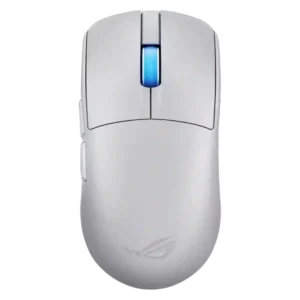
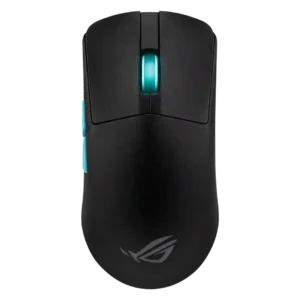
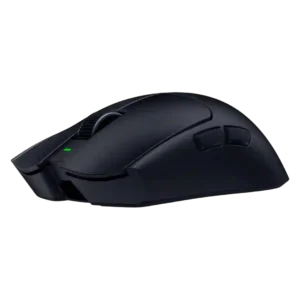
Scorata scores summarize analyzed review evidence on a 1–5 scale; they are not laboratory measurements or a simple average of customer star ratings. Feature scores summarize the reviews covering that feature. The overall score averages feature scores within each review, then combines review averages. When both expert and customer evidence are available, those two groups receive equal weight. Products can have different review coverage, so small score gaps do not establish a winner.
Recommendations prioritize important features for the category, with a score of at least 3.5, a gap of at least 0.25 points and at least two supporting reviews per product. Features with widely varying scores or broad connectivity contexts are excluded from recommendations. These safeguards do not establish statistical significance.
Quick verdict
What each product is best for
The review evidence points to a tradeoff: profile switching and connection stability versus battery life and DPI range. Choose according to which strengths matter more to you; the overall score alone does not settle that choice.
Choose ASUS ROG Harpe II Ace for profile switching and connection stability.
Choose ASUS ROG Harpe Ace Aim Lab for battery life and DPI range.
Why these recommendations?
ASUS ROG Harpe II Ace
Where It Has the Edge
profile switching is 4.3 vs 2.8. Profile and mode switching drew positive reactions for Zone Mode convenience, but underside DPI/profile controls created a usability...
connection stability is 4.8 vs 3.3. Connection stability was a strength across Bluetooth, dongle, and wireless sessions, with no dropouts, desyncs, or odd behavior...
software usability is 4.7 vs 3.2. Software usability was a major win, with Gear Link described as clear, responsive, resource-saving, handy, full-featured, and better...
ASUS ROG Harpe Ace Aim Lab
Where It Has the Edge
battery life is 4.7 vs 4.3. Battery life was consistently praised, with reviewers describing multi-day, fortnight, or even month-like usage and validating the long...
DPI range is 4.9 vs 3.9. The 36,000 DPI range was repeatedly praised as extremely high-end and more than enough for competitive sensitivity needs.
portability is 4.8 vs 4.2. Portability was praised because the light body, dongle storage, and multi-device receiver made it easy to travel with.
ASUS ROG Harpe II Ace4.6 overall score
ASUS ROG Harpe Ace Aim Lab4.1 overall score
Compare features
Scores are out of 5. Missing scores mean missing review evidence, not a missing feature.
Scored on both products
Battery and charging
Battery life
ASUS ROG Harpe II Ace
4.3
Battery life was good at standard polling but mixed at 8K, where reviewers reported notably shorter runtimes.
ASUS ROG Harpe Ace Aim Lab
4.7
Battery life was consistently praised, with reviewers describing multi-day, fortnight, or even month-like usage and validating the long runtime claims.
Charging convenience
ASUS ROG Harpe II Ace
4.8
Charging convenience was positive because reviewers could keep playing while charging or recover hours of play from short top-ups.
ASUS ROG Harpe Ace Aim Lab
5.0
Charging convenience was praised, with reviewers noting quick top-ups from under 30 minutes to about an hour.
Other features
Onboard memory
ASUS ROG Harpe II Ace
2.0
Onboard memory was the clearest functional drawback: one reviewer explicitly called its absence a downside for multi-PC use.
ASUS ROG Harpe Ace Aim Lab
4.3
Onboard memory was useful for profile storage and for reducing dependence on software after setup.
Profile switching
ASUS ROG Harpe II Ace
4.3
Profile and mode switching drew positive reactions for Zone Mode convenience, but underside DPI/profile controls created a usability caveat.
ASUS ROG Harpe Ace Aim Lab
2.8
Profile switching and DPI access were one of the main pain points because several reviewers disliked the underside DPI button, despite onboard profiles being easy once configured.
Connection stability
ASUS ROG Harpe II Ace
4.8
Connection stability was a strength across Bluetooth, dongle, and wireless sessions, with no dropouts, desyncs, or odd behavior reported.
ASUS ROG Harpe Ace Aim Lab
3.3
Connection stability was mostly acceptable but not flawless, with reviewers mentioning brief interference, wake delay, or minor lag events.
DPI range
ASUS ROG Harpe II Ace
3.9
The 42,000 DPI ceiling was seen as impressive but partly overkill, with reviewers noting most players will never use such a high range.
ASUS ROG Harpe Ace Aim Lab
4.9
The 36,000 DPI range was repeatedly praised as extremely high-end and more than enough for competitive sensitivity needs.
Polling rate
ASUS ROG Harpe II Ace
4.4
8K polling was praised as a serious competitive feature, though several reviewers said gains can be subtle and battery cost rises at high rates.
ASUS ROG Harpe Ace Aim Lab
3.5
Polling rate opinions were mixed: 1,000Hz was often enough, but several reviewers wanted higher rates for modern competitive mice.
Wireless latency
ASUS ROG Harpe II Ace
4.9
Wireless latency was rated very highly, with reviewers reporting no noticeable delay, little to no input lag, and instant 2.4GHz response.
ASUS ROG Harpe Ace Aim Lab
4.2
Wireless latency was mostly praised as unnoticeable or very low, though a few reviewers observed occasional lag or jitter.
Portability
ASUS ROG Harpe II Ace
4.2
Portability was good thanks to low weight and travel-friendly size, though one reviewer wanted a carrying bag.
ASUS ROG Harpe Ace Aim Lab
4.8
Portability was praised because the light body, dongle storage, and multi-device receiver made it easy to travel with.
Scroll wheel quality
ASUS ROG Harpe II Ace
4.5
Scroll wheel feedback was positive overall for precision, tactile notches, smoothness, and tension, with some productivity limitations noted.
ASUS ROG Harpe Ace Aim Lab
3.8
Scroll wheel quality was mixed, ranging from tactile and nice-stepped to merely okay or missing adjustable resistance.
Premium feel
ASUS ROG Harpe II Ace
4.7
Premium feel was consistently strong, with reviewers describing high-quality impressions, sturdy construction, and a solid premium feel.
ASUS ROG Harpe Ace Aim Lab
4.1
Premium feel was generally positive for specs and quality, but some reviewers found the look plain or unspectacular.
RGB features
ASUS ROG Harpe II Ace
4.4
RGB was treated as a small but useful extra, mainly around the illuminated scroll wheel and controllable logo lighting.
ASUS ROG Harpe Ace Aim Lab
3.8
RGB was modest but useful to some reviewers for DPI or battery indicators; others found it superfluous or noticed uneven lighting.
MMO gaming suitability
ASUS ROG Harpe II Ace
2.5
MMO suitability was weak because one reviewer found the five-button layout limited for MMO gamers.
ASUS ROG Harpe Ace Aim Lab
2.0
MMO suitability was limited by the pared-back button set, making it less ideal for input-heavy games.
Handedness options
ASUS ROG Harpe II Ace
3.4
Handedness evidence was mixed: one left-handed reviewer liked it, while others noted the side-button layout favors right-handed users.
ASUS ROG Harpe Ace Aim Lab
3.9
Handedness support was useful but imperfect, since the symmetrical body helps left-handers while left-side thumb buttons remain right-hand-biased.
Surface compatibility
ASUS ROG Harpe II Ace
4.7
Surface compatibility was positive, including praise for tracking on varied surfaces and tempered glass, with one reviewer still recommending cloth pads.
ASUS ROG Harpe Ace Aim Lab
5.0
Surface compatibility was praised where reviewers highlighted mousepad calibration as a useful tuning tool.
Weight
ASUS ROG Harpe II Ace
4.7
The ultralight weight was one of the strongest points across reviews, repeatedly described as excellent, headline-worthy, and easy to move.
ASUS ROG Harpe Ace Aim Lab
5.0
Weight was the most consistently praised physical attribute, with reviewers repeatedly emphasizing the 54g body as extremely light and easy to control.
Grip texture
ASUS ROG Harpe II Ace
4.4
Grip texture was mostly positive for grippy coatings and matte finishes, but some reviewers disliked slipperiness or fingerprints.
ASUS ROG Harpe Ace Aim Lab
4.1
Grip texture was mixed: many liked the grippy finish or tape, but some found the sides slippery, oily, or under-coated.
Cable flexibility
ASUS ROG Harpe II Ace
4.8
Cable flexibility had limited but positive evidence, with one reviewer calling the included cable thin and flexible.
ASUS ROG Harpe Ace Aim Lab
5.0
The included cable was praised as light and flexible enough not to get in the way during wired use.
Glide smoothness
ASUS ROG Harpe II Ace
4.7
Glide smoothness was one of the clearest strengths, with reviewers praising smooth, low-friction movement across pads and stock feet.
ASUS ROG Harpe Ace Aim Lab
4.8
Glide smoothness was highly praised thanks to PTFE feet, low weight, and smooth movement across surfaces.
2.4GHz connectivity
ASUS ROG Harpe II Ace
4.7
2.4GHz connectivity received strong marks for gaming preference, lag-free behavior, and wireless 8K support without extra add-ons.
ASUS ROG Harpe Ace Aim Lab
4.8
Reviewers liked the low-latency 2.4GHz mode and receiver setup, especially when it reduced aim-related latency or supported a shared ROG receiver.
Switch feel
ASUS ROG Harpe II Ace
4.6
Switch feel was generally crisp and clean, though one reviewer found the switches merely okay rather than best-in-class.
ASUS ROG Harpe Ace Aim Lab
4.7
Switch feel was broadly praised for satisfying, tactile, responsive clicks, though some felt the switches were heavier than ideal.
Cross-platform compatibility
ASUS ROG Harpe II Ace
4.7
Cross-platform compatibility was positive because web-based settings and easy PC/Mac switching made the mouse flexible across devices.
ASUS ROG Harpe Ace Aim Lab
4.8
Cross-platform flexibility was praised for users switching among PCs, laptops, Macs, handhelds, tablets, or other devices.
Left and right click quality
ASUS ROG Harpe II Ace
4.3
Left and right click quality was mostly strong, but one early unit had main-trigger rattle, creating a mild build-related caveat.
ASUS ROG Harpe Ace Aim Lab
4.3
Main click quality was generally positive for tactility, though one reviewer found the switches slightly stiff.
FPS gaming suitability
ASUS ROG Harpe II Ace
4.8
FPS suitability was extremely strong, with repeated shooter-focused praise around instant reactions, precision, and competitive advantage.
ASUS ROG Harpe Ace Aim Lab
4.8
FPS suitability was a major strength, with reviewers repeatedly calling it excellent, esports-ready, and especially suited to fast shooters.
Motion consistency
ASUS ROG Harpe II Ace
4.9
Motion consistency was rated strongly, with reviewers reporting stable cursors, reliable tracking, and no jitter under fast movement.
ASUS ROG Harpe Ace Aim Lab
4.8
Motion consistency was praised when reviewers noted consistent shots, stable firing, and no jitter in slow tracking.
Click latency
ASUS ROG Harpe II Ace
4.8
Click latency evidence was limited but positive, with optical switches described as avoiding debounce delay.
ASUS ROG Harpe Ace Aim Lab
4.8
Click latency and immediate actuation were rated highly where reviewers mentioned minimal pre-travel, no travel delay, or fatigue-free resistance.
Controls and connectivity
Programmable buttons
ASUS ROG Harpe II Ace
4.7
Programmable button evidence was positive but limited, centered on freely assignable buttons and full-feature button remapping.
ASUS ROG Harpe Ace Aim Lab
2.5
Programmable button coverage was mixed, with minimalist controls helping FPS focus but feeling too feature-light for users wanting more inputs.
Software usability
ASUS ROG Harpe II Ace
4.7
Software usability was a major win, with Gear Link described as clear, responsive, resource-saving, handy, full-featured, and better than Armoury Crate.
ASUS ROG Harpe Ace Aim Lab
3.2
Software usability split reviewers: Aim Lab tools were often useful, while Armoury Crate drew criticism for complexity, updates, missing premium features, or instability.
Side button quality
ASUS ROG Harpe II Ace
4.6
Side buttons were broadly praised for placement, crispness, accessibility, and reduced accidental presses.
ASUS ROG Harpe Ace Aim Lab
3.5
Side button quality was mixed, with some reviewers liking reach and tactility while others found the buttons small or mushy.
Software stability
ASUS ROG Harpe II Ace
3.0
Software stability had a concern: moving settings to a web server raised worries about future access if the service goes down.
ASUS ROG Harpe Ace Aim Lab
2.2
Software stability was a recurring concern, with installation trouble, forced updates, and Armoury Crate issues reported.
Button customization
ASUS ROG Harpe II Ace
4.7
Button customization was rated well because Gear Link exposes broad assignment controls and reviewers found the interface comprehensive.
ASUS ROG Harpe Ace Aim Lab
4.4
Customization was praised when reviewers focused on deep performance tuning and highly configurable buttons, but criticized when the physical button layout felt too sparse.
Button responsiveness
ASUS ROG Harpe II Ace
4.7
Button responsiveness was widely positive, with reviewers calling the clicks immediate, quick, consistent, and dependable in play.
ASUS ROG Harpe Ace Aim Lab
5.0
Button responsiveness was praised for fast, clean, responsive actuation that kept up with esports-style play.
Bluetooth support
ASUS ROG Harpe II Ace
4.6
Bluetooth support was praised for stable productivity use and broader multi-device convenience, though competitive use favored 2.4GHz.
ASUS ROG Harpe Ace Aim Lab
4.7
Bluetooth was valued as a convenient secondary mode for non-competitive use and multi-device flexibility, even when 2.4GHz remained preferred for gaming.
Comfort and build
Shape comfort
ASUS ROG Harpe II Ace
4.6
Shape comfort was broadly positive for neutral, refined handling, though one reviewer found the mouse a little too big.
ASUS ROG Harpe Ace Aim Lab
3.7
Shape comfort was highly divisive, praised by some for FPS control and criticized by others for its hump, narrowness, length, or personal fit.
Switch durability
ASUS ROG Harpe II Ace
4.6
Switch durability evidence came from short-to-medium use outcomes: reviewers said the click feel stayed consistent after intensive sessions.
ASUS ROG Harpe Ace Aim Lab
3.7
Switch durability was mixed: reviewers liked the rated lifespan and reliability claims, but later feedback flagged double-clicking cases.
Ergonomic design
ASUS ROG Harpe II Ace
4.6
Ergonomic design was praised for comfort and not fighting the user's grip, but reviewers stressed that shape fit remains personal.
ASUS ROG Harpe Ace Aim Lab
3.8
Ergonomics were divisive: some reviewers praised comfort and control, while others found the hump, narrowness, or larger-hand fit awkward.
Claw grip comfort
ASUS ROG Harpe II Ace
4.6
Claw grip comfort was a major strength, with multiple reviewers calling the shape suitable, easy, or ideal for claw users.
ASUS ROG Harpe Ace Aim Lab
3.9
Claw grip comfort was split: some reviewers found the mouse useful or comfortable for claw grip, while others disliked the length or rear hump.
Palm grip comfort
ASUS ROG Harpe II Ace
3.6
Palm-grip comfort was mixed: one reviewer fit it well, while others preferred fuller right-handed shapes for long palm-heavy use.
ASUS ROG Harpe Ace Aim Lab
3.1
Palm grip comfort was mixed, with some reviewers comfortable using palm grip and others finding the narrow or long shape challenging.
Long-session comfort
ASUS ROG Harpe II Ace
4.5
Long-session comfort was positive for low fatigue and wrist relief, though palm-grip marathon comfort favored larger ergonomic alternatives.
ASUS ROG Harpe Ace Aim Lab
4.8
Long-session comfort was praised where reviewers noted relaxed fingers or comfortable longer play, but this depended on grip and hand size.
Durability over time
ASUS ROG Harpe II Ace
4.6
Durability over time evidence was positive but short-term, with click feel and button consistency holding up after intensive use.
ASUS ROG Harpe Ace Aim Lab
4.3
Durability over time was mixed: some reviewers found daily-use durability solid, while later comparison feedback flagged double-clicking cases.
Fingertip grip comfort
ASUS ROG Harpe II Ace
4.5
Fingertip grip comfort was also strong, with praise for low-hump control and micro-adjustments, though size may affect smaller-hand users.
ASUS ROG Harpe Ace Aim Lab
4.3
Fingertip comfort was mostly positive where reviewers felt the shape and light weight worked well for fingertip or hybrid fingertip use.
Materials quality
ASUS ROG Harpe II Ace
4.5
Materials quality was praised for the bio-based nylon's feel, rigidity, and grippy surface, with minor smudge and slipperiness caveats.
ASUS ROG Harpe Ace Aim Lab
4.7
Materials quality was praised for strong nylon, sturdy shell feel, and pleasant hand feel despite the low weight.
Build quality
ASUS ROG Harpe II Ace
4.7
Build quality was strongly praised, with repeated comments about rigidity, no flex, no creaks, and premium shell integrity.
ASUS ROG Harpe Ace Aim Lab
4.6
Build quality was generally strong, with many reviewers citing solid shells and no creaking, though one noted the lightweight plastic could feel cheap.
Ownership and support
Value for money
ASUS ROG Harpe II Ace
4.3
Value was mixed-to-positive: reviewers called it competitive or easy to recommend, but several noted the high premium-mouse price.
ASUS ROG Harpe Ace Aim Lab
3.8
Value was mixed-to-positive: many felt the performance justified the premium, while casual users and feature-heavy buyers saw the price as steep.
Tracking and training
Accuracy and tracking precision
ASUS ROG Harpe II Ace
4.8
Reviewers consistently described accurate, stable aiming and precise corrections, with especially strong praise in shooter and aim-control contexts.
ASUS ROG Harpe Ace Aim Lab
4.5
Accuracy was one of the strongest themes, with reviewers repeatedly praising precise tracking, consistent shots, and strong aim performance, though one Aim Lab optimization test only produced a minor improvement.
Performance
Sensor performance
ASUS ROG Harpe II Ace
4.7
Sensor feedback was highly positive overall, with reviewers reporting precise or flawless tracking and only mild caveats that extreme DPI is mostly beyond normal use.
ASUS ROG Harpe Ace Aim Lab
4.9
Sensor performance was a standout strength, with reviewers repeatedly describing it as fast, accurate, responsive, or top-notch.
Wireless performance
ASUS ROG Harpe II Ace
4.9
Wireless performance was consistently excellent, with reviewers reporting standout wireless, low interference, lag-free use, and strong real-play results.
ASUS ROG Harpe Ace Aim Lab
4.8
Wireless performance was praised for feeling close to wired performance, but a few caveats around jitter or sleep wake-up remained.
Click noise
ASUS ROG Harpe II Ace
3.9
Click noise was acceptable to positive: one reviewer found clicks louder than the predecessor, while another found the optical sound mild.
ASUS ROG Harpe Ace Aim Lab
3.9
Click noise was mixed, ranging from consistent and satisfying sound to louder, deeper switches or clicks that were less audible than some competitors.
Evidence available for one product
Other features
Acceleration control
ASUS ROG Harpe II Ace
5.0
Acceleration control was specifically praised in testing where the reviewer found no jitter, skipping, or unwanted acceleration.
ASUS ROG Harpe Ace Aim LabNo score yet
Balance and weight distribution
ASUS ROG Harpe II Ace
4.7
Balance and weight distribution received strong praise from reviewers who found the mouse well balanced and natural in hand.
ASUS ROG Harpe Ace Aim LabNo score yet
Ecosystem integration
ASUS ROG Harpe II AceNo score yet
ASUS ROG Harpe Ace Aim Lab
4.7
ROG ecosystem integration was praised because the Omni receiver could connect compatible ROG peripherals together.
Lift-off distance
ASUS ROG Harpe II AceNo score yet
ASUS ROG Harpe Ace Aim Lab
3.8
Lift-off distance customization was useful but sometimes limited compared with rival software.
Ownership and support
Firmware reliability
ASUS ROG Harpe II AceNo score yet
ASUS ROG Harpe Ace Aim Lab
2.0
Firmware/update reliability was criticized because updates could require awkward dongle-and-mouse connection steps.
Comfort and build
Skate durability
ASUS ROG Harpe II AceNo score yet
ASUS ROG Harpe Ace Aim Lab
4.5
Skate durability and maintenance were helped by high-quality PTFE feet and included replacements, reducing downtime after wear.
Excellent tracking, comfortable right-handed ergonomics and a versatile scroll wheel make the Basilisk V3 a strong gaming and productivity mouse. Its substantial weight, fixed cable and sometimes over-sensitive automatic scrolling...
The L7 Pro delivers remarkably light handling, precise aiming and a grippy shell at a budget price. Stock skates are less impressive, and conflicting click-latency measurements warrant caution for latency-sensitive...
Best for ultra-light, competition-focused speed, precise tracking, stable wireless, and long battery life. Skip it if you need quieter clicks, left-handed support, Bluetooth, more buttons, or better value for casual...
Choose it if you want a premium MMO/productivity mouse with 12 adjustable side buttons, strong battery life, and Stream Deck integration. Skip it if you need an ultralight FPS mouse,...