Scorata scores summarize analyzed review evidence on a 1–5 scale; they are not laboratory measurements or a simple average of customer star ratings. Feature scores summarize the reviews covering that feature. The overall score averages feature scores within each review, then combines review averages. When both expert and customer evidence are available, those two groups receive equal weight. Products can have different review coverage, so small score gaps do not establish a winner.
Recommendations prioritize important features for the category, with a score of at least 3.5, a gap of at least 0.25 points and at least two supporting reviews per product. Features with widely varying scores or broad connectivity contexts are excluded from recommendations. These safeguards do not establish statistical significance.
Quick verdict
What each product is best for
The review evidence points to a tradeoff: handedness options and button responsiveness versus Bluetooth support and profile switching. Choose according to which strengths matter more to you; the overall score alone does not settle that choice.
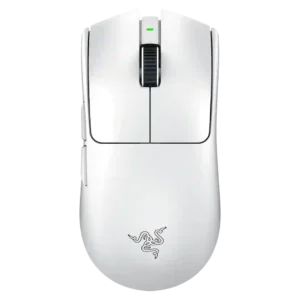
Choose Razer Viper V3 Pro for handedness options and button responsiveness.
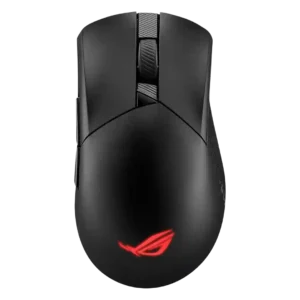
Choose ASUS ROG Gladius III Wireless for Bluetooth support and profile switching.
Why these recommendations?
Razer Viper V3 Pro
Where It Has the Edge
handedness options is 3.8 vs 2.0. Handedness was mixed: the symmetrical shell helped left-handed use, but left-side-only thumb buttons limited true ambidextrous comfort.
button responsiveness is 4.7 vs 3.8. Button responsiveness was widely praised, with clicks described as fast, immediate, smooth, and dependable in competitive play.
weight is 4.7 vs 4.0. Weight was one of the clearest strengths: reviewers repeatedly called the 54g body featherlight, fatigue-reducing, and easy to...
ASUS ROG Gladius III Wireless
Where It Has the Edge
Bluetooth support is 4.1 vs 2.2. Bluetooth support was useful for battery life and multi-device use, but lower polling or lighter-use caveats appeared.
profile switching is 4.7 vs 3.0. Profile switching was praised as convenient, simple, and available directly from the mouse.
charging convenience is 4.5 vs 3.0. Charging convenience was praised because the mouse can be used while charging and has convenient USB-C behavior.
Razer Viper V3 Pro4.2 overall score
ASUS ROG Gladius III Wireless4.3 overall score
Compare features
Scores are out of 5. Missing scores mean missing review evidence, not a missing feature.
Scored on both products
Battery and charging
Battery life
Razer Viper V3 Pro
3.6
Battery life was context-dependent: strong at 1K polling, acceptable at mid polling, and repeatedly criticized at 8K polling.
ASUS ROG Gladius III Wireless
4.3
Battery life was broadly praised, especially on 2.4GHz and Bluetooth, though a few reviewers found it merely decent or mixed with RGB.
Charging convenience
Razer Viper V3 Pro
3.0
Charging convenience was only lightly covered, but reviewers appreciated fast or usable charging while wishing for a dock or stand.
ASUS ROG Gladius III Wireless
4.5
Charging convenience was praised because the mouse can be used while charging and has convenient USB-C behavior.
Other features
2.4GHz connectivity
Razer Viper V3 Pro
2.0
The HyperPolling receiver supports elite wireless performance, but lack of a simpler 2.4GHz USB dongle was criticized as inconvenient.
ASUS ROG Gladius III Wireless
4.4
2.4GHz connectivity was praised for gaming latency, stability, and being a major selling point.
Portability
Razer Viper V3 Pro
2.0
Portability suffered because the required receiver-and-cable setup was considered awkward for travel despite the light mouse body.
ASUS ROG Gladius III Wireless
4.3
Portability received positive but limited evidence from reviewers who liked multi-device flexibility and travel usefulness.
MOBA gaming suitability
Razer Viper V3 Pro
2.5
MOBA suitability was similarly limited; reviewers framed it as an FPS-first mouse rather than a button-rich MOBA tool.
ASUS ROG Gladius III Wireless
4.5
MOBA gaming suitability had limited positive evidence from one reviewer who found the buttons useful for skill-based games.
Cable flexibility
Razer Viper V3 Pro
2.4
Cable feedback was negative to mixed because wired use felt stiff, draggy, or less flexible than expected for such a light wireless mouse.
ASUS ROG Gladius III Wireless
4.2
Cable flexibility was mostly positive for light, soft, flexible use, but one reviewer warned it kinked easily.
Handedness options
Razer Viper V3 Pro
3.8
Handedness was mixed: the symmetrical shell helped left-handed use, but left-side-only thumb buttons limited true ambidextrous comfort.
ASUS ROG Gladius III Wireless
2.0
Handedness options were a consistent limitation because the mouse is clearly right-handed and not suited to left-handed users.
Profile switching
Razer Viper V3 Pro
3.0
Profile switching was mixed because software profiles are useful, but bottom-mounted DPI/profile control felt awkward or finicky to some reviewers.
ASUS ROG Gladius III Wireless
4.7
Profile switching was praised as convenient, simple, and available directly from the mouse.
Onboard memory
Razer Viper V3 Pro
3.3
Onboard memory was valued for carrying settings between PCs, but the single-profile limitation drew criticism.
ASUS ROG Gladius III Wireless
4.5
Onboard memory received limited but positive evidence as a useful feature for gamers using multiple systems.
Premium feel
Razer Viper V3 Pro
3.0
Premium feel was mostly positive, but a few reviewers felt the featherlight plastic made it seem less premium than its price suggests.
ASUS ROG Gladius III Wireless
4.2
Premium feel was mixed, with some quality/aesthetic praise but also a view that the mouse is well-made yet basic.
Polling rate
Razer Viper V3 Pro
3.4
The 8K polling capability impressed reviewers technically, but many found its real-world benefit subtle, hardware-dependent, or not worth constant use.
ASUS ROG Gladius III Wireless
4.5
Polling rate evidence was positive overall, with one benchmark exceeding 1,000Hz and another reviewer saying 1,000Hz felt sufficient for quick response.
Scroll wheel quality
Razer Viper V3 Pro
3.2
Scroll wheel feedback was split: reviewers liked its tactility for gaming, but several found it stiff or uncomfortable for heavy everyday scrolling.
ASUS ROG Gladius III Wireless
4.2
Scroll wheel quality was mixed: several reviewers liked the feel and increments, while others criticized rattling, cheap sound, or limited resistance adjustment.
Weight
Razer Viper V3 Pro
4.7
Weight was one of the clearest strengths: reviewers repeatedly called the 54g body featherlight, fatigue-reducing, and easy to move.
ASUS ROG Gladius III Wireless
4.0
Weight split reviewers: many liked the 79g/89g feel, while others thought it was not ultralight or dated against newer esports mice.
Motion consistency
Razer Viper V3 Pro
4.3
Motion was usually described as buttery, smooth, and accurate, though one reviewer found micro-adjustments jerky with certain large feet and pads.
ASUS ROG Gladius III Wireless
5.0
Motion consistency evidence was limited but positive, with one reviewer reporting no jittering during use.
Connection stability
Razer Viper V3 Pro
4.3
Connection stability was mostly strong, with no drops in several tests, but a few reviewers reported slow wake or brief connection behavior.
ASUS ROG Gladius III Wireless
4.8
Connection stability was strong overall, with reviewers reporting stable wireless behavior and no lag or drops.
Balance and weight distribution
Razer Viper V3 Pro
5.0
Balance was praised by several video reviewers, who found the light body planted and evenly balanced without front or rear tipping.
ASUS ROG Gladius III Wireless
4.5
Balance evidence was limited but positive, with one reviewer saying the mouse felt well balanced and lighter in hand.
Surface compatibility
Razer Viper V3 Pro
4.5
Surface compatibility was praised where tested, including cloth, wood, glass, leather, concrete, and other mousepad surfaces.
ASUS ROG Gladius III Wireless
5.0
Surface compatibility evidence was limited but positive, with one reviewer getting consistent results across surfaces.
Lift-off distance
Razer Viper V3 Pro
4.3
Lift-off and landing distance controls were viewed as useful parts of the precise sensor package, especially for different surfaces.
ASUS ROG Gladius III Wireless
4.5
Lift-off distance received limited but positive evidence, with one reviewer finding it very low in testing.
Grip texture
Razer Viper V3 Pro
4.1
Grip texture was a common strength, praised for secure smooth-touch traction, though a few reviewers found it slippery or prone to grime and fingerprints.
ASUS ROG Gladius III Wireless
4.4
Grip texture was mostly praised for secure control, though one reviewer noted dirt buildup and another found one side slightly slippier.
Left and right click quality
Razer Viper V3 Pro
4.6
Primary clicks were praised for speed, low travel, tactility, and reduced misclick risk, with several reviewers preferring their feel to rivals.
ASUS ROG Gladius III Wireless
4.4
Left and right click quality was generally strong for low play and instant feel, but one reviewer noted post-travel.
Switch feel
Razer Viper V3 Pro
4.4
Switch feel was mostly praised as firm, crisp, snappy, and satisfying, with a few reviewers noting softness or loudness preferences.
ASUS ROG Gladius III Wireless
4.2
Switch feel was mostly liked, especially the satisfying default switches, though one reviewer disliked the sound of the replaceable Omrons.
RGB features
Razer Viper V3 Pro
4.0
The lack of RGB was often treated as an esports-minded tradeoff that saves weight and battery, though some users may miss the flash.
ASUS ROG Gladius III Wireless
4.2
RGB features were generally liked for subtlety and placement, though reviewers also noted battery drain.
DPI range
Razer Viper V3 Pro
3.7
Reviewers treated the 35K DPI ceiling and single-step adjustment as technically impressive, though often more than most players need.
ASUS ROG Gladius III Wireless
3.8
The DPI ceiling impressed reviewers, though several framed the highest settings as overkill or awkward rather than broadly useful.
Glide smoothness
Razer Viper V3 Pro
4.6
Glide was one of the strongest areas, with large PTFE feet repeatedly praised for smooth, effortless movement on many pads and surfaces.
ASUS ROG Gladius III Wireless
4.7
Glide smoothness was one of the strongest positives, with many reviewers praising PTFE feet and smooth, effortless movement.
FPS gaming suitability
Razer Viper V3 Pro
4.7
FPS and esports suitability was the strongest consensus: reviewers repeatedly called it a top-tier competitive shooter mouse.
ASUS ROG Gladius III Wireless
4.6
FPS gaming suitability was strong, with reviewers praising flicks, fast-paced shooters, and FPS accuracy.
Click latency
Razer Viper V3 Pro
5.0
Latency feedback was extremely positive, with reviewers describing the mouse as class-leading, delay-free, or nearly predictive in competitive play.
ASUS ROG Gladius III Wireless
4.9
Click latency was consistently praised, with reviewers citing quick switch response, instant actuation, and zero or very low wireless delay.
MMO gaming suitability
Razer Viper V3 Pro
2.5
MMO suitability was weak because the mouse is genre-specific and lacks the extra buttons many MMO players want.
ASUS ROG Gladius III Wireless
2.5
MMO gaming suitability was weak, with one reviewer saying the button count was not enough for mapping.
Wireless latency
Razer Viper V3 Pro
4.8
Wireless latency was widely praised as near-zero or virtually lag-free, though reviewers often framed 8K gains as only relevant to elite players.
ASUS ROG Gladius III Wireless
4.8
Wireless latency was a strength, with reviewers reporting improved latency, no delays, and minimal input lag.
Controls and connectivity
Bluetooth support
Razer Viper V3 Pro
2.2
Bluetooth support was a clear limitation; reviewers repeatedly noted its absence reduces versatility outside dedicated esports setups.
ASUS ROG Gladius III Wireless
4.1
Bluetooth support was useful for battery life and multi-device use, but lower polling or lighter-use caveats appeared.
Button responsiveness
Razer Viper V3 Pro
4.7
Button responsiveness was widely praised, with clicks described as fast, immediate, smooth, and dependable in competitive play.
ASUS ROG Gladius III Wireless
3.8
Button responsiveness was mixed: one reviewer liked the key impression, while another found the main clicks firmer than expected.
Button customization
Razer Viper V3 Pro
4.0
Button customization was considered strong because Synapse supports remapping, HyperShift layers, and profile-specific setup.
ASUS ROG Gladius III Wireless
4.5
Button customization was praised where reviewers discussed comprehensive software control and full configurability.
Programmable buttons
Razer Viper V3 Pro
4.0
Programmable controls and remapping were seen as useful through Synapse, though the esports-focused button count limits broader genre flexibility.
ASUS ROG Gladius III Wireless
4.5
Programmable-button evidence was limited but positive, tied to reviewers praising broad configuration options.
Software stability
Razer Viper V3 Pro
2.0
Software stability was inconsistent, with a few reviewers reporting Synapse loading issues, crashes, or slow wake behavior.
ASUS ROG Gladius III Wireless
2.3
Software stability was mixed-to-negative, with Bluetooth detection and Armoury Crate failures hurting confidence.
Software usability
Razer Viper V3 Pro
4.0
Software usability was mixed: Synapse offers deep, useful tuning, but some reviewers disliked its bloat, ads, crashes, or general feel.
ASUS ROG Gladius III Wireless
3.8
Software usability was the most mixed major area: some found Armoury Crate polished or comprehensive, while others called it bloated, overloaded, or unusable.
Side button quality
Razer Viper V3 Pro
4.6
Side buttons were generally a strength, often called well placed, firm, separated, and easy to identify, though one review found tactility only decent.
ASUS ROG Gladius III Wireless
4.6
Side button quality was praised for tactile feedback, placement, and responsiveness, with only limited caveats around reach.
Comfort and build
Materials quality
Razer Viper V3 Pro
2.8
Materials were mixed: the lightweight shell and coating helped performance, but some reviewers found it cheap-feeling, grimy, or fingerprint-prone.
ASUS ROG Gladius III Wireless
4.1
Materials quality was mixed, ranging from hollow-feeling plastic criticism to praise for premium look, good fit, and clean finish.
Durability over time
Razer Viper V3 Pro
4.5
Durability over time had limited but positive long-term evidence, with a year-later reviewer reporting few issues across units.
ASUS ROG Gladius III Wireless
3.5
Durability over time was mixed: swappable parts inspired longevity confidence, but one reviewer returned it over daily-use confidence concerns.
Switch durability
Razer Viper V3 Pro
4.0
Switch durability was mainly supported by praise around optical switches avoiding double-click risk and long click life, though long-term proof was limited.
ASUS ROG Gladius III Wireless
4.8
Switch durability and replaceability were a major strength, with reviewers repeatedly praising hot-swappable switches, longevity, and repairability.
Shape comfort
Razer Viper V3 Pro
3.9
Shape comfort was mostly positive for medium-to-large hands, but not universal; some reviewers preferred earlier shapes or found sizing narrow or specialized.
ASUS ROG Gladius III Wireless
4.4
Shape comfort was a major positive for many reviewers, especially for larger or palm-oriented hands, but some found it too small or bulky.
Skate durability
Razer Viper V3 Pro
4.0
Skate durability had limited evidence, but larger PTFE pads were expected to wear slower and feel more stable.
ASUS ROG Gladius III Wireless
4.5
Skate durability evidence was limited but positive, based on replaceable extra feet for wear.
Fingertip grip comfort
Razer Viper V3 Pro
3.8
Fingertip comfort was positive for some reviewers but less consistent, as the larger, taller V3 Pro was not ideal for all fingertip users.
ASUS ROG Gladius III Wireless
3.4
Fingertip comfort was mixed, with some reviewers saying it worked and others doubting success or noting reach issues.
Palm grip comfort
Razer Viper V3 Pro
4.3
Palm support received some positive notes thanks to the rear hump and larger shell, though the mouse is primarily tuned for claw and fingertip users.
ASUS ROG Gladius III Wireless
4.6
Palm grip comfort was consistently positive, with reviewers frequently calling it ideal, comfortable, or a natural fit.
Build quality
Razer Viper V3 Pro
4.5
Build quality drew strong agreement, with most reviewers reporting a solid shell, little flex, no creaking, and high-quality construction.
ASUS ROG Gladius III Wireless
4.2
Build quality was divided: several reviewers found it sturdy or well manufactured, while others described cheap or fragile shell impressions.
Ergonomic design
Razer Viper V3 Pro
4.7
Ergonomics were broadly praised for comfort and hand support, with reviewers highlighting long-session usability and a safe symmetrical design.
ASUS ROG Gladius III Wireless
4.4
Ergonomics were mostly praised for comfort, though one reviewer treated the shape as neutral rather than standout.
Claw grip comfort
Razer Viper V3 Pro
4.6
Claw grip support was a major strength, with multiple reviewers calling the shape ideal or especially comfortable for claw variants.
ASUS ROG Gladius III Wireless
4.4
Claw grip comfort was generally positive, with reviewers saying the ergonomics worked well for claw users.
Long-session comfort
Razer Viper V3 Pro
4.6
Long-session comfort was praised thanks to low weight, supportive shape, smooth glide, and reduced fatigue in long work or gaming sessions.
ASUS ROG Gladius III Wireless
4.5
Long-session comfort was generally positive, with reviewers citing less fatigue and comfort over longer periods.
Ownership and support
Value for money
Razer Viper V3 Pro
3.3
Value was the main tradeoff: reviewers loved the performance but often questioned the high price and bundled dongle for non-elite users.
ASUS ROG Gladius III Wireless
3.9
Value for money was sharply mixed, with praise for feature value and bang-for-buck offset by high-price criticism.
Performance
Click noise
Razer Viper V3 Pro
3.0
Click noise was mixed; reviewers liked the click feel but some found the optical clicks loud or potentially distracting.
ASUS ROG Gladius III Wireless
3.3
Click noise was mixed: some found it quiet or acceptable, while others called it noisy or cheap-sounding.
Sensor performance
Razer Viper V3 Pro
4.8
The Focus Pro sensor was consistently praised as accurate, smooth, and high-end, with several reviewers calling it among the best or flawless in use.
ASUS ROG Gladius III Wireless
4.6
Sensor performance was a standout strength, especially for the AimPoint sensor, which reviewers described as capable, problem-free, and among the best.
Wireless performance
Razer Viper V3 Pro
4.7
Wireless performance was a major strength, with reviewers describing it as stellar, flawless, snappy, and effectively wired-like.
ASUS ROG Gladius III Wireless
4.8
Wireless performance was praised in hands-on use, with reviewers reporting pleasing performance and no lag.
Tracking and training
Accuracy and tracking precision
Razer Viper V3 Pro
4.8
Reviewers repeatedly described tracking and aim translation as precise, reliable, or noticeably confidence-building in shooters and aim trainers.
ASUS ROG Gladius III Wireless
4.8
Tracking precision was repeatedly praised, with reviewers calling the sensor precise and accurate; one reviewer found very high DPI settings messy.
Evidence available for one product
Other features
Cross-platform compatibility
Razer Viper V3 ProNo score yet
ASUS ROG Gladius III Wireless
4.7
Cross-platform compatibility was positive, especially for Mac, iPad, and multi-device workflows.
Dock compatibility
Razer Viper V3 ProNo score yet
ASUS ROG Gladius III Wireless
4.7
Dock and dongle accessories were liked as useful or impressive quality-of-life additions.
Ecosystem integration
Razer Viper V3 ProNo score yet
ASUS ROG Gladius III Wireless
3.5
Ecosystem integration was mixed but present, with Armoury Crate centralizing ASUS devices while feeling overloaded for mouse-only use.
Ownership and support
Firmware reliability
Razer Viper V3 ProNo score yet
ASUS ROG Gladius III Wireless
2.3
Firmware reliability drew negative evidence around inconvenient update requirements and forced software behavior.
Macro support
Razer Viper V3 Pro
4.5
Macro and custom action support was described as useful for assigning extra in-game controls to the side buttons.
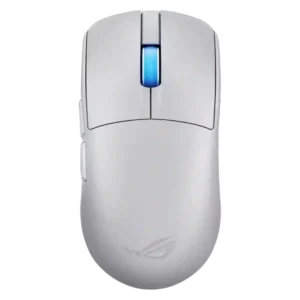
Choose the ROG Harpe II Ace for ultralight FPS play, precise tracking, smooth glide, and web-based tuning. Skip it if you need palm-grip support, MMO buttons, onboard profiles, or long...
Excellent tracking, comfortable right-handed ergonomics and a versatile scroll wheel make the Basilisk V3 a strong gaming and productivity mouse. Its substantial weight, fixed cable and sometimes over-sensitive automatic scrolling...
The L7 Pro delivers remarkably light handling, precise aiming and a grippy shell at a budget price. Stock skates are less impressive, and conflicting click-latency measurements warrant caution for latency-sensitive...
Best for ultra-light, competition-focused speed, precise tracking, stable wireless, and long battery life. Skip it if you need quieter clicks, left-handed support, Bluetooth, more buttons, or better value for casual...