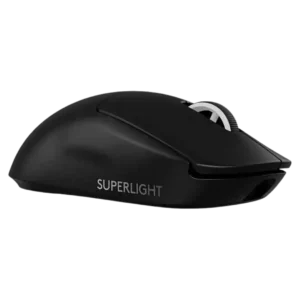
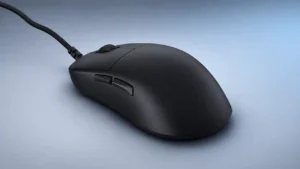
Logitech G PRO X Superlight 2
Where It Has the Edge
No clear scored advantage over the other product.

Scorata scores summarize analyzed review evidence on a 1–5 scale; they are not laboratory measurements or a simple average of customer star ratings. Feature scores summarize the reviews covering that feature. The overall score averages feature scores within each review, then combines review averages. When both expert and customer evidence are available, those two groups receive equal weight. Products can have different review coverage, so small score gaps do not establish a winner.
Recommendations prioritize important features for the category, with a score of at least 3.5, a gap of at least 0.25 points and at least two supporting reviews per product. Features with widely varying scores or broad connectivity contexts are excluded from recommendations. These safeguards do not establish statistical significance.
Quick verdict
The available evidence supports the recommendation below, but does not establish an overall winner. Check the remaining features against your priorities.
There is not enough comparable review evidence to recommend Logitech G PRO X Superlight 2 over the other product.
Choose Endgame Gear OP1 8k v2 for cable flexibility and value for money.
No clear scored advantage over the other product.
Scores are out of 5. Missing scores mean missing review evidence, not a missing feature.
Cable quality was a recurring complaint, with reviewers criticizing drag, resistance, and the dated rubber cable.
The thin, flexible cable and raised exit make it less restrictive than many wired alternatives.
Handedness support was mixed because the symmetrical shape helps lefties, but the side buttons remain left-side only.
The symmetrical outline is not fully ambidextrous because the side controls favor right-handed use.
Glide smoothness was highly mixed: some reviewers praised effortless glide, while others disliked stock-skate drag or control-heavy movement.
Stock PTFE feet glide smoothly, particularly on soft pads, and aftermarket feet offer further options.
Scroll wheel feedback was mixed, with some praise for tactility but repeated criticism that it felt stiff, mushy, vague, or less precise.
The revised wheel feels more controlled and improved over the original, although the heavier action can take adjustment.
Click latency was praised as very low by some reviewers, though one technical reviewer found it merely good rather than flagship-leading.
Extremely low click latency is one of the mouse’s clearest strengths, particularly with GX Speed enabled.
Lift-off distance control was viewed as useful and noticeably adjustable, especially for players who fine-tune mouse behavior.
The very low lift-off distance and fine adjustment increments are particularly useful for frequent repositioning.
Polling-rate opinions were mixed: several reviewers felt clear responsiveness gains, while others saw 2,000Hz as fine but not industry-leading.
The 8K polling implementation is fast, but practical gains are often small and one player experienced substantial lag at the maximum setting.
Motion consistency was described positively, with reviewers calling motion smooth, sharp, and accurate.
Sensor tuning can improve consistency, although earlier firmware settings caused stuttering for some users.
Weight distribution received positive evidence from a reviewer who specifically praised the balance.
The mouse is well balanced for a wired design, though cable tension can shift its forward balance.
Switch feel split reviewers: many loved the crisp, tactile Lightforce feel, while others found the clicks heavier or too tactile.
Kailh GX switches offer crisp rebound and quick repeat clicks, with feel adjustable through optional switch packs.
Grip texture was well received, with reviewers praising the grippy surface, recessed sides, or usefulness for clammy hands.
The surface provides dependable traction without requiring grip tape, including during sweaty play.
Reviewers strongly praised the low weight, calling it excellent, effortless, and well balanced for the mouse size.
At roughly 50 grams, the mouse is easy to flick and reposition. One enthusiast appreciates its controllable weight rather than chasing the lightest possible shell.
Surface compatibility was mixed, with good results across many surfaces but complaints on softer pads and warnings to tune surface modes.
Glass tracking options and broad skate compatibility help adapt the mouse to different surfaces.
Left and right clicks were praised for satisfying tactility, light rapid tapping, and improved main-button feel.
The main clicks are crisp, fast and easy to repeat, though some find the stock actuation fairly firm.
FPS suitability was one of the strongest areas, with repeated praise for speed, responsiveness, and competitive first-person shooter use.
The narrow, light shape and extremely fast response excel at the quick reactions and precise aiming needed in FPS games.
Value was mixed: reviewers praised the performance tier but often questioned the price and upgrade value from the original Superlight.
Flagship-class response and replaceable hardware offer strong enthusiast value, despite a higher price than basic wired mice.
Button responsiveness was mostly praised for tactile, responsive clicks, though one reviewer disliked the heavier actuation for spam clicking.
The buttons register quickly and rebound promptly, making repeated inputs easy.
Software usability was split sharply: some reviewers found G Hub easy and powerful, while others called it unintuitive or frustrating.
The simple, uncluttered driver is easy to navigate despite its dated appearance.
Side button quality was the most contested control area, ranging from well-placed and improved to repeatedly described as mushy.
Side buttons are usable and easy to reach for some, but their uneven shape, hollow feel and close spacing draw criticism.
Customization drew positive comments for granular controls and strong software-hardware integration, though it still depends heavily on G Hub.
The mapping options are useful for tailoring the mouse’s controls to a player’s preferences.
Programmable side buttons were useful to one reviewer for DPI adjustment, especially because the mouse lacks a dedicated DPI button.
The available key binding options are thorough for the mouse’s limited physical button layout.
Ergonomics were generally positive for comfort and contouring, but one review noted large hands may find the shape less ergonomic.
The shaping is thoughtfully designed for controlled claw and fingertip grip, rather than universal palm support.
Switch durability evidence centered on optical-switch reliability and reduced double-click concerns, with reviewers treating it as a meaningful benefit.
Full-sized side switches have a promising cycle rating compared with typical smaller switches.
Durability over time had limited but positive evidence from a longer-use reviewer whose unit remained rock solid.
The redesigned encoder and repair-friendly construction improve durability prospects, but long-term wheel reliability is not yet assured.
Materials quality was praised for a cool, soft matte plastic feel.
High-quality components and clean soldering contribute to the mouse’s solid construction.
Shape comfort was broadly praised as safe, familiar, and very comfortable, though a few reviewers disliked the rounded shape personally.
The compact shape feels excellent for pure aiming, but the narrow body and rear flare can feel restrictive depending on grip and game.
Build quality was repeatedly praised as solid, squeak-free, well put together, and elite despite the light shell.
The rigid shell and solid internal construction attract consistent praise, with little flex or rattling in tested units.
Fingertip grip comfort was praised by reviewers who found the shape comfortable for fingertip use.
The compact shell and light weight make fingertip control particularly appealing when the dimensions match your hand.
Palm grip comfort was limited by one review saying palm-grip players may be better served elsewhere.
Full or relaxed palm grip is a less natural match, although smaller hands may find a palm-claw grip comfortable.
Claw grip comfort was broadly positive, with reviewers calling the mouse comfortable or easy to use for claw grip.
The narrow body and rear hump are particularly well suited to claw grip, though the rear flare feels awkward to some.
Skate durability was a repeated concern, with reviewers calling the PTFE feet thin, meh, or unlikely to last long.
The PTFE stock feet wear faster on hard surfaces, making aftermarket feet an appealing option.
Click noise was mixed: some liked the satisfying click sound, while others found it loud or high-pitched.
Clicks are relatively quiet, though a sharper pitch or difference between left and right buttons may bother some.
The HERO 2 sensor was widely praised as crisp, precise, fast, and close to flawless, though some reviewers framed the higher specs as incremental.
The sensor delivers excellent tracking and very low motion delay, with unusually flexible lift-off and angle controls.
Reviewers consistently described the mouse as accurate in games, with especially strong praise for tracking, pointer accuracy, and shot control.
Fast, accurate tracking and the light, controllable shell make flicks and precise aiming easy.
Battery life was generally praised as long-lasting, though reviewers noted it drops with higher polling rates.
Charging convenience was praised for USB-C, faster charging, and fewer desk cables.
The 2.4GHz connection was praised through an instant, fast connection experience with the included dongle.
Acceleration feel received direct praise in one review, where the reviewer enjoyed its smoothness in Diablo IV.
Wide skate channels support a broad range of aftermarket feet, including options for hard pads.
Selectable GX modes let players prioritize exceptionally fast actuation or safer click behavior.
The raised, flexible cable minimizes drag but does not eliminate it, especially during wide swipes on cloth.
The lightweight cable is thoughtfully constructed and flexible; it can also be replaced internally if damaged.
Fast clicks remain consistent, and the tested buttons have well-balanced actuation weights.
The grippy coating is a standout, maintaining traction even with sweaty hands.
Lighter colorways make dust buildup less noticeable than darker finishes.
Connection stability was praised in one review for not faltering even in a difficult RF environment.
Cross-platform compatibility was praised through G Hub support for both Windows and macOS.
A previous software malware issue was reported as resolved, though the reviewer noted that Windows may still warn about the download.
PowerPlay compatibility was viewed positively, though one reviewer called the accessory expensive.
DPI coverage was seen as technically strong and granular, but one reviewer felt the extreme ceiling is more marketing than everyday value.
The revised dustproof wheel encoder is a welcome change intended to reduce earlier durability problems.
Ecosystem integration was praised for Logitech presets, backward compatibility, and community/profile support.
The stock feet glide well, particularly on soft pads, and their improved adhesive simplifies replacement.
The coating resists visible skin oil and sweat residue, even after use with sweaty hands.
Firmware updates add helpful tuning options and address reported sensor behavior.
Maximum polling can add system load and cause lag; lower rates may deliver a smoother experience.
Alternate feet and an accessible screwdriver make the included accessories useful for maintenance and customization; the Raw Input edition adds a switch pack.
The supplied side grips are underwhelming and can become slippery when wet; the stock coating is more dependable.
The quick-start diagrams explain how to open the mouse and swap switches, making service easier.
The tested unit showed strong quality control and no noticeable assembly issues.
The heavier wheel click and sensitive main buttons may take some adjustment.
Middle clicks are responsive and easy to repeat, although the revised wheel switch may feel heavier to some.
Sparse controls are a poor match for macro-heavy MMO play.
MOBA suitability was weaker because one reviewer found the heavier clicks worse for spam-click games.
The original and v2 share similar names and shapes, so checking the exact model avoids confusing their hardware and firmware.
Sensor latency is exceptionally low, matching the mouse’s fast click performance.
The cable is fixed during ordinary use, but internal modular construction allows replacement during repair.
Onboard memory was supported by the ability to save multiple profiles, though evidence was more about usefulness than enthusiasm.
The combination of fast response, low weight and serviceability makes this a standout specialist mouse, although the narrow wired design is not for everyone.
Packaging clearly lists component specifications, dimensions and included accessories, helping buyers know what they are getting.
Portability was supported by the dongle-storage cover, which one reviewer framed as essential for esports travel.
Premium feel was positive overall, with reviewers saying the mouse feels sturdy, premium, and high quality.
Profile behavior was mixed: app-linked settings were useful, but onboard-profile handling was described as confusing in G Hub.
Accessible screws and modular switches, boards and cable make repairs unusually approachable, although disassembly still requires care.
The mouse feels exceptionally responsive in quick aiming and clicking, even if the new internals do not always create a noticeable advantage over the original.
Stock may fluctuate because the manufacturer is relatively small.
The lack of RGB was generally accepted as a worthwhile tradeoff for battery life, weight, and the mouse’s clean look.
Distinct, tactile steps make scrolling controllable and precise.
Defined wheel steps are welcome, but the revised encoder is noticeably heavy for some users.
The revised wheel improves scroll-wheel resets, although it is still not a favorite for Fortnite.
The unusually wide sensor rotation range accommodates tilted grips without requiring a separate utility.
The sensor position can take a few days to adjust to, particularly with larger hands or tilted grips.
The GX switch implementation is particularly impressive for speed and repeated clicking.
Weight tuning was weakly received because the swappable cover options were seen as features most people would not find useful.
Wired operation delivers excellent responsiveness without charging, but the cable can still be felt during broad swipes. A bungee helps.
Wireless latency was praised directly, with reviewers reporting no latency issues or seemingly no latency at all.
Click filtering helps prevent accidental inputs, but sensitive main clicks and close side-button spacing can still cause mistakes.
The minimalist button layout works for focused shooters but can disappoint players who need many shortcuts.
The side buttons are positioned for easy reach, although their shape and spacing can feel awkward.
The main buttons are well implemented, but the side-button shape is less convincing.
Main clicks have short pre-travel and snappy rebound, though one tester found the overall travel slightly longer than expected.
Fine DPI adjustments and independent horizontal and vertical settings are useful for dialing in sensitivity.
Selectable polling rates allow players to find a setting that works smoothly with their games and hardware.
The wheel’s multi-click filter offers useful additional control over its behavior.
The configuration utility is straightforward and useful for performance tuning, though basic-looking and lacking a web-based alternative.
The lightweight configuration software uses very few resources.
Software stability had limited but positive evidence from one review calling the G Hub interface stable.
The Raw Input special edition’s distinctive pink finish earns praise for its appearance.
Comfort is strongest with claw or fingertip grips and matching hand dimensions.
Small and medium hands are the safest fit; larger hands may need a fingertip grip or a wider mouse.
Replaceable main switches let owners change the click feel or repair worn components without replacing the mouse.
Long-session comfort was strongly positive in one review that reported almost no hand fatigue after long sessions.
The compact, narrow shell favors claw and fingertip control, but broader hands can find it cramped.
Dust buildup can be removed easily with a dry microfiber cloth.
Raw gaming performance is excellent, especially in shooters, although the shape and sparse controls limit broader appeal.
It can handle ordinary desktop tasks if the compact shape fits, but its layout is focused on gaming.
The wheel is somewhat loud, but headphones can make the noise less noticeable.
Measured stock weight closely matches the advertised 49.5 grams.
Wireless performance was praised as seamless and flawless, with no cable-related compromise in use.
GX Safe and click filtering help prevent unintended double clicks.
Drag click support had limited positive evidence from one reviewer who called drag clicking pretty awesome.
Some users experienced stuttering with earlier sensor settings; disabling forced maximum sensor FPS can help.
The rear hump gives some support for claw grip, but broad palms may find it inadequate.
Macro support was praised for an easy-to-use macro tool that guides users through setup.
Optional switch packs and replacement components make it easier to maintain and personalize the mouse.
Improved adhesive makes changing feet much easier, and access holes let owners open the shell without ruining the skates.
The revised encoder and easier skate replacement are welcome, but measured speed gains over the original are minimal. Upgrade value depends on the price difference and which improvements matter.
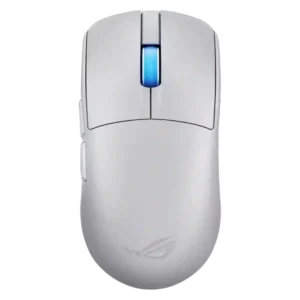
Choose the ROG Harpe II Ace for ultralight FPS play, precise tracking, smooth glide, and web-based tuning. Skip it if you need palm-grip support, MMO buttons, onboard profiles, or long...
Pros: glide smoothness, weight
Cons: handedness options
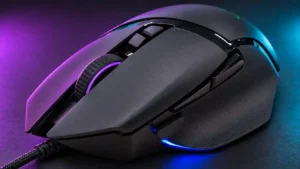
Excellent tracking, comfortable right-handed ergonomics and a versatile scroll wheel make the Basilisk V3 a strong gaming and productivity mouse. Its substantial weight, fixed cable and sometimes over-sensitive automatic scrolling...
Pros: scroll wheel quality, RGB features
Cons: weight, handedness options
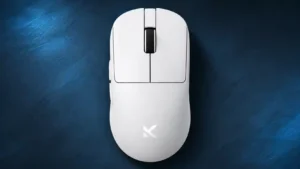
The L7 Pro delivers remarkably light handling, precise aiming and a grippy shell at a budget price. Stock skates are less impressive, and conflicting click-latency measurements warrant caution for latency-sensitive...
Pros: value for money, weight
Cons: wired connectivity
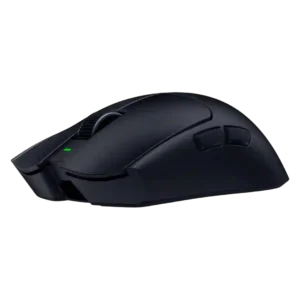
Best for ultra-light, competition-focused speed, precise tracking, stable wireless, and long battery life. Skip it if you need quieter clicks, left-handed support, Bluetooth, more buttons, or better value for casual...
Pros: value for money, weight
Cons: click noise, RGB features