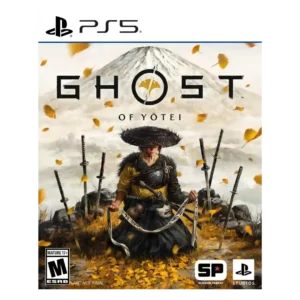
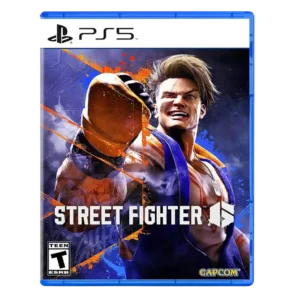
Compare Street Fighter 6 vs Ghost of Yōtei

Street Fighter 6

Street Fighter 6

Overall score 4.2 / 5

Based on 26 scored reviews

vs
Ghost of Yōtei

Ghost of Yōtei

Overall score 4.4 / 5

Based on 30 scored reviews

How we score

Scorata scores summarize analyzed review evidence on a 1–5 scale; they are not laboratory measurements or a simple average of customer star ratings. Feature scores summarize the reviews covering that feature. The overall score averages feature scores within each review, then combines review averages. When both expert and customer evidence are available, those two groups receive equal weight. Products can have different review coverage, so small score gaps do not establish a winner.

Recommendations prioritize important features for the category, with a score of at least 3.5, a gap of at least 0.25 points and at least two supporting reviews per product. Features with widely varying scores or broad connectivity contexts are excluded from recommendations. These safeguards do not establish statistical significance.

Quick verdict

What each product is best for

The review evidence points to a tradeoff: sandbox freedom and world-building versus frame rate stability and mission design. Choose according to which strengths matter more to you; the overall score alone does not settle that choice.

Choose Street Fighter 6 for sandbox freedom and world-building.

Choose Ghost of Yōtei for frame rate stability and mission design.

Why these recommendations?

Street Fighter 6

Where It Has the Edge

  • sandbox freedom is 4.7 vs 3.8. Avatar and moveset customization were major positives, letting players build intentionally wild or broken fighters.
  • world-building is 4.7 vs 3.8. World-building was praised for making Metro City and the broader Street Fighter universe feel lived-in and connected.
  • content variety is 4.9 vs 4.3. Content variety was a major strength, with reviewers emphasizing the breadth of modes, training, arcade, online, and offline...

Ghost of Yōtei

Where It Has the Edge

  • frame rate stability is 5.0 vs 2.8. Frame-rate evidence is very positive, including stable pacing, smooth transitions, and rock-solid 60 FPS in PS5 Pro modes.
  • mission design is 4.3 vs 2.4. Mission design is generally positive for diverse objectives and strong campaign structure, though some side mission design is...
  • performance optimization is 4.9 vs 3.3. Performance feedback is very positive overall, with strong PS5/PS5 Pro stability, polished execution, and few performance complaints.
Street Fighter 6 4.2 overall score
Ghost of Yōtei 4.4 overall score

Compare features

Scores are out of 5. Missing scores mean missing review evidence, not a missing feature.

Scored on both products

Controls and connectivity

Protagonist appeal
Street Fighter 6
2.0

The World Tour avatar/protagonist drew criticism when described as mute and overly errand-focused.

Ghost of Yōtei
4.8

Atsu is widely praised as a compelling, complex, fiery, and memorable lead who gives the sequel a stronger identity.

Voice acting
Street Fighter 6
4.5

Voice and commentary features were liked when they made fights feel more like events, though repetition was a caveat elsewhere.

Ghost of Yōtei
4.9

Voice acting receives strong praise, especially Erika Ishii’s performance and the English/Japanese voice casts.

Controls responsiveness
Street Fighter 6
4.6

Responsiveness was strong across most versions, though weaker platforms and connections could still affect the feel.

Ghost of Yōtei
4.3

Parrying, quick selection, and combat inputs are praised, but one review flags the overall control system as demanding.

Menu usability
Street Fighter 6
2.8

Menu usability had some friction, especially around settings, friends, and navigation.

Ghost of Yōtei
2.5

Menu usability has a specific criticism around a hard-to-see reticule and low-contrast text.

Other features

Fast travel convenience
Street Fighter 6
2.5

Fast travel was useful only after unlocking points; before then, one reviewer felt they ran around aimlessly.

Ghost of Yōtei
5.0

Fast travel is strongly praised as instantaneous or highly respectful of the player’s time.

Writing quality
Street Fighter 6
2.0

Writing quality suffered where the story relied on thin characters, predictable twists, or fetch-quest framing.

Ghost of Yōtei
4.3

Writing is praised for creative freshness and emotional ambition, but one dissenting review calls it conventional blockbuster material.

Frame rate stability
Street Fighter 6
2.8

Frame-rate stability was excellent in core fights on stronger versions but inconsistent in World Tour, PS4, PC open areas, and Switch 2 exploration.

Ghost of Yōtei
5.0

Frame-rate evidence is very positive, including stable pacing, smooth transitions, and rock-solid 60 FPS in PS5 Pro modes.

Family friendliness
Street Fighter 6
4.0

Family or casual-group play was supported by Dynamic controls, party-style modes, and approachable local play.

Ghost of Yōtei
2.0

The family-friendliness score is low because the only explicit family guidance warns against younger gamers due to violence and mature content.

Accessibility options
Street Fighter 6
4.8

Accessibility was a standout, with Modern/Dynamic controls and approachable design repeatedly praised for welcoming new players.

Ghost of Yōtei
3.0

Accessibility evidence is limited and mixed: TechRadar notes helpful subtitles, visibility, control simplification, and combat assists, but says the suite is lighter than some PS5 peers and lacks colorblind options.

Dialogue quality
Street Fighter 6
4.5

Dialogue and small master interactions were warmly received, especially casual chats and text-message moments.

Ghost of Yōtei
2.8

Dialogue and delivery are mixed: some conversations carry emotion well, but several reviewers call line delivery stilted or conversations dated.

Polish
Street Fighter 6
3.0

Polish was mostly strong, though pop-in and platform-specific compromises prevented a perfect score everywhere.

Ghost of Yōtei
4.8

Polish is a recurring strength, with reviewers calling the release premium, cinematic, and impressively crafted despite a few bugs or animation rough edges.

Exploration quality
Street Fighter 6
3.0

Exploration was considered fun in spots but not consistently distinctive compared with other open-world games.

Ghost of Yōtei
4.7

Exploration is one of the strongest areas, often called rewarding, organic, and meaningful, though one dissenting review finds it over-guided.

Platforming precision
Street Fighter 6
2.0

Platforming in World Tour was one of the few clearly criticized mechanical side activities.

Ghost of Yōtei
3.7

Platforming and climbing are mixed: one review says climbing is improved, while others call it awkward or overly gamified.

Narrative quality
Street Fighter 6
2.8

Narrative quality was the most common creative weakness, with several reviewers calling World Tour's main story weak, dull, or shallow.

Ghost of Yōtei
4.4

The narrative is generally praised as emotional, well-executed, and compelling, but some reviewers criticize predictability, structure, or linear revenge beats.

Load times
Street Fighter 6
3.5

Load times ranged from extremely quick in stronger versions to sluggish on base PS4 hardware.

Ghost of Yōtei
5.0

Load times are one of the clearest technical wins, with reviewers calling travel and boot-to-game transitions near-instant.

Originality
Street Fighter 6
4.5

Originality came through World Tour's unusual fighting-game RPG structure and the full package's fresh approach.

Ghost of Yōtei
3.0

Originality is moderate: reviewers repeatedly say Yōtei does not revolutionize the formula, but many accept that as focused refinement.

Skill tree depth
Street Fighter 6
3.0

Skill-tree depth was viewed as functional but basic rather than a major strength.

Ghost of Yōtei
4.5

Skill depth is praised where charms, loadouts, weapon skills, and spirit attacks allow specialized builds and granular tuning.

Difficulty balance
Street Fighter 6
2.6

Difficulty balance was mixed, with some reviewers finding World Tour too easy and others hitting frustrating late-game spikes.

Ghost of Yōtei
4.0

Difficulty is mostly praised for rewarding patience and offering customization, though critics cite easy challenge, high damage, or artificial duel constraints.

Progression system
Street Fighter 6
3.0

Progression was criticized for slow style leveling and a drip-feed of unlocks despite giving players plenty to chase.

Ghost of Yōtei
4.4

Progression is praised for tying upgrades to exploration and skill shrines, though some reviewers want more depth or nuance.

Innovation
Street Fighter 6
4.5

Innovation was praised in the open-world RPG structure, accessibility ideas, and Drive system.

Ghost of Yōtei
3.2

Innovation scores trend moderate because reviewers describe Yōtei as refinement rather than reinvention, with familiar systems made better.

AI behavior
Street Fighter 6
3.3

AI-related features were mixed: V-Rival-style practice was useful, while some World Tour AI behavior drew criticism.

Ghost of Yōtei
4.5

Enemy perception receives positive attention where stealth is described as sound-driven, with enemies reacting to audio as well as sight.

Endgame content
Street Fighter 6
4.5

Endgame content centered on ranked play and ongoing improvement, which reviewers saw as a long-term grind.

Ghost of Yōtei
3.3

Endgame evidence is mixed: there are post-story tasks and challenge reasons to return, but one review notes no new game plus and another says late content can feel samey.

Immersion
Street Fighter 6
5.0

Immersion benefited from World Tour and Battle Hub, with reviewers calling it the franchise's most immersive entry.

Ghost of Yōtei
3.8

Immersion is a major strength through world navigation, sound, and minimal HUD, though occasional technical or duel design issues can break it.

Pacing
Street Fighter 6
2.5

Pacing was uneven: the main fighting stayed engaging, but World Tour could feel repetitive, grindy, or padded.

Ghost of Yōtei
3.6

Pacing is divisive: Game Informer praises it as a triumph, while several reviewers cite predictability, prolonged beats, or odd act structure.

Animation quality
Street Fighter 6
5.0

Animation quality stood out through expressive character movement and polished fight presentation.

Ghost of Yōtei
4.0

Combat animation is often praised for brutality and style, but several reviewers note repetition or less-polished NPC/casual dialogue animation.

Visual effects quality
Street Fighter 6
5.0

Visual effects, especially paint-splatter and Drive Impact effects, were consistently praised.

Ghost of Yōtei
4.0

Visual-effects evidence is positive but limited, with reviewers appreciating enhanced particles, blood, mud, wind, and cinematic environmental effects.

Sandbox freedom
Street Fighter 6
4.7

Avatar and moveset customization were major positives, letting players build intentionally wild or broken fighters.

Ghost of Yōtei
3.8

Freedom is moderate: reviewers appreciate loose target order and player-directed wandering, but note that some freedom is an illusion.

Onboarding experience
Street Fighter 6
4.9

Onboarding was consistently strong because World Tour, guides, and Modern controls taught fundamentals without isolating newcomers.

Ghost of Yōtei
4.0

Onboarding is initially intimidating for some, but reviewers say the discovery and indicator systems become enjoyable once learned.

Character development
Street Fighter 6
4.0

Character development showed up in master bonds and arcade/world interactions, but it was not the central narrative strength.

Ghost of Yōtei
4.8

Atsu’s arc is praised for emotional clarity, redemption, growth, and a more intimate character focus than the predecessor.

Tutorial quality
Street Fighter 6
4.8

Tutorials and training tools were among the most acclaimed parts of the package, often called best-in-class.

Ghost of Yōtei
4.0

Tutorial/onboarding evidence is modestly positive, praising learn-by-doing design and seamless early teaching.

Environmental detail
Street Fighter 6
4.3

Environmental detail was strong in stages and city presentation, though older hardware reduced background liveliness.

Ghost of Yōtei
5.0

Environmental detail earns strong praise for realistic items, dense foliage, weather, light, and painstakingly crafted spaces.

Content variety
Street Fighter 6
4.9

Content variety was a major strength, with reviewers emphasizing the breadth of modes, training, arcade, online, and offline extras.

Ghost of Yōtei
4.3

Reviewers praise the amount of meaningful activities and handcrafted diversions, while a few note that repeated open-world tasks can become chores.

Side character depth
Street Fighter 6
4.3

Side-character depth was a pleasant surprise, especially through master relationships and smaller personal interactions.

Ghost of Yōtei
3.7

Side character depth is mixed, with praise for strong companions and villains but criticism that many allies or supporting figures lack involvement.

Gameplay mechanics
Street Fighter 6
4.9

Reviewers praised the Drive-era mechanics as deep, flexible, and satisfying, with post-launch updates adding meaningful tactical changes.

Ghost of Yōtei
4.3

General mechanics are praised as refined and improved, though some reviewers call them reused rather than evolutionary.

Mission variety
Street Fighter 6
4.6

Mission variety was positive when minigames and combat lessons taught mechanics, but not all mission structures stayed fresh.

Ghost of Yōtei
4.0

Mission variety is lightly positive, with praise for varied missions in different places and diverse objectives.

Lore depth
Street Fighter 6
4.0

Lore references and Final Fight/Street Fighter connections added flavor for longtime fans.

Ghost of Yōtei
4.5

Lore depth receives positive but limited support through mythic tales and storytelling sequences that expand the world’s legends.

Graphics quality
Street Fighter 6
4.5

Graphics were generally praised, though Switch, PS4, and World Tour performance/visual compromises were noted.

Ghost of Yōtei
4.9

Visuals receive near-universal praise, from stunning fidelity and landscapes to screenshot-worthy environments and color.

Grind level
Street Fighter 6
2.4

Grind level was a recurring drawback in World Tour, especially master/style leveling and late-game stat farming.

Ghost of Yōtei
2.8

Grind sentiment is mixed-to-negative where repeated side activities, collectibles, or checklist tasks create fatigue over time.

Emotional impact
Street Fighter 6
4.5

Some reviewers described a genuine emotional response to the character redesigns and franchise comeback.

Ghost of Yōtei
4.9

Reviewers frequently describe the story as moving, affecting, and emotionally rich, including moments that brought tears or strong sympathy.

Learning curve
Street Fighter 6
4.3

The learning curve was considered manageable because the game has depth but gives players practical tools to improve.

Ghost of Yōtei
4.0

Learning curve evidence is positive but modest, emphasizing learn-by-doing design that mirrors Atsu’s practice and attention rather than heavy explanation.

Character roster
Street Fighter 6
4.8

The roster was widely praised as balanced, varied, stylish, and strong for both returning and new characters.

Ghost of Yōtei
4.5

The supporting ensemble is viewed positively in several reviews, though some reviewers find side figures underused or shallow.

Enemy variety
Street Fighter 6
4.5

Enemy variety in World Tour was praised for teaching matchups and adding amusing oddball opponents.

Ghost of Yōtei
4.3

Enemy variety is positively noted through more weapon matchups, multiple factions, and a better range of enemies than before.

Combat system
Street Fighter 6
4.9

Combat earned the strongest praise: reviewers highlighted expressive Drive options, strategic meter use, and satisfying risk-reward decisions.

Ghost of Yōtei
4.7

Combat is the most broadly praised system, with fluid parries, weapon-swapping, violent impact, and strong duels; criticisms focus on rigidity or fatigue in the rock-paper-scissors weapon setup.

Fun factor
Street Fighter 6
4.9

Fun factor was extremely high, with reviewers repeatedly calling matches, modes, and systems exciting or addictive.

Ghost of Yōtei
4.7

Reviewers repeatedly describe the game as enjoyable, addictive, and fun from start to finish, even when noting formulaic elements.

Art direction
Street Fighter 6
5.0

Art direction was a major strength, with repeated praise for the graffiti, hip-hop, urban, and colorful visual identity.

Ghost of Yōtei
4.9

Reviewers strongly praise the painterly visual identity, lighting, color, and intentional environmental effects, with only mild familiarity concerns.

Core gameplay loop
Street Fighter 6
4.8

The core loop was repeatedly described as quick, satisfying, addictive, and hard to put down.

Ghost of Yōtei
4.8

The core loop is repeatedly described as compelling, hard to put down, and more fruitful than Tsushima for some reviewers.

Faithfulness to franchise
Street Fighter 6
4.8

Faithfulness to the franchise was strong because reviewers felt the game honored Street Fighter while moving it forward.

Ghost of Yōtei
4.7

Yōtei is viewed as a worthy successor that preserves Ghost of Tsushima’s best ideas while refining them around Atsu.

Atmosphere
Street Fighter 6
5.0

The atmosphere captured an arcade/community feeling that several reviewers found nostalgic and energizing.

Ghost of Yōtei
5.0

The atmosphere is consistently framed as a major strength, emphasizing contemplative tone, environmental mood, and cinematic immersion.

Economy and resource balance
Street Fighter 6
4.5

The Drive Gauge's resource design was praised as a balanced risk-reward system with meaningful consequences.

Ghost of Yōtei
4.5

Resource balance is praised where simplified material categories and less strict upgrade paths encourage more engagement.

Movement feel
Street Fighter 6
5.0

The fighting feel was described as fluid, logical, natural, and easy to pick up without losing depth.

Ghost of Yōtei
5.0

Movement is praised for fluidity, especially in combat flow and traversal compared with the predecessor.

Comfort and build

Quest design
Street Fighter 6
2.5

Quest design drew criticism when missions required backtracking and became tedious despite some memorable character interactions.

Ghost of Yōtei
4.5

Quest design is a major strength in many reviews thanks to memorable tales, bounties, organic side stories, and worthwhile rewards, though Eurogamer sharply dislikes the formulaic sidequests.

Mission design
Street Fighter 6
2.4

Mission design was mixed to negative because reviewers enjoyed some lessons and minigames but disliked fetch quests and backtracking.

Ghost of Yōtei
4.3

Mission design is generally positive for diverse objectives and strong campaign structure, though some side mission design is criticized elsewhere.

Level design
Street Fighter 6
3.5

World Tour's main hubs were appreciated, while smaller global areas were criticized for feeling limited.

Ghost of Yōtei
2.5

The only scored level-design evidence is critical, describing certain mission spaces as single-route and overly linear.

User interface design
Street Fighter 6
2.5

User interface design was criticized by at least one reviewer as confusing and harder than it should be.

Ghost of Yōtei
3.5

UI evidence is mixed: restrained maps and menus are praised, but one reviewer reports low-contrast text and hard-to-see map elements.

World-building
Street Fighter 6
4.7

World-building was praised for making Metro City and the broader Street Fighter universe feel lived-in and connected.

Ghost of Yōtei
3.8

World-building is mixed-to-positive: Ezo’s culture and social context are compelling, but some reviewers wanted broader supporting context.

Sound design
Street Fighter 6
4.5

Sound design was praised for adding impact through fight shouts, hits, and combat audio.

Ghost of Yōtei
4.9

Sound design is consistently praised for environmental audio, combat effects, and the way it supports immersion.

Open-world design
Street Fighter 6
4.1

World Tour was broadly welcomed as an ambitious single-player RPG mode, though reviewers varied on its execution and polish.

Ghost of Yōtei
4.4

The open world is widely praised for beauty, density, organic discovery, and restraint, with dissenting notes about repetition, over-guidance, or familiar structure.

Ownership and support

Platform-specific feature support
Street Fighter 6
2.5

Platform-specific features were mixed: touch controls helped on Switch 2, while gyro modes felt more gimmicky than essential.

Ghost of Yōtei
4.2

PS5-specific features are mostly praised, especially PS5 Pro modes and DualSense use, though some touchpad/motion gimmicks are considered distracting.

Replay value
Street Fighter 6
4.9

Replay value was very high thanks to ranked play, Battle Hub, training, World Tour completion, and long-term competitive depth.

Ghost of Yōtei
4.5

Replay value is supported by a large map, many activities, and difficulty-based return reasons, but lack of new game plus limits the endgame.

Value for money
Street Fighter 6
4.6

Value for money was high because reviewers saw a large, feature-rich package with offline, online, and edition-specific value.

Ghost of Yōtei
4.8

Value sentiment is positive where reviewers call the game worth buying or a must-play, supported by long playtime and substantial content.

Performance

Performance optimization
Street Fighter 6
3.3

Performance optimization varied sharply by platform and mode, with traditional fights strong but World Tour often weaker.

Ghost of Yōtei
4.9

Performance feedback is very positive overall, with strong PS5/PS5 Pro stability, polished execution, and few performance complaints.

Soundtrack quality
Street Fighter 6
4.2

Soundtrack reactions were mostly positive, with a few reservations about specific new character themes.

Ghost of Yōtei
4.8

The soundtrack receives strong praise for atmospheric Japanese instrumentation, shamisen motifs, memorable songs, and cinematic tension.

Evidence available for one product

Controls and connectivity

Age appropriateness
Street Fighter 6No score yet
Ghost of Yōtei
2.0

The only explicit age-appropriateness judgment warns against younger players because of bloody violence, mature themes, language, drug use, frightening scenes, and slight nudity.

Other features

Aiming precision
Street Fighter 6No score yet
Ghost of Yōtei
2.5

The only scored aiming-related evidence is negative, with one reviewer saying auto-targeting hindered them and contributed to deaths.

Bug frequency
Street Fighter 6No score yet
Ghost of Yōtei
4.2

Most reviewers report few or no serious bugs, though some mention an odd freeze, minor technical issues, or rare late-game disruptions.

Camera behavior
Street Fighter 6No score yet
Ghost of Yōtei
3.3

Camera feedback is mixed: one reviewer says it is improved, while others cite visibility problems or off-screen/camera-management friction.

Checkpoint system
Street Fighter 6No score yet
Ghost of Yōtei
4.0

Checkpoint evidence is limited but positive for convenience, with one reviewer noting instant respawns and mid-fight boss checkpoints that reduce punishment.

Class balance
Street Fighter 6
4.5

Class or archetype balance was praised through comments that every character had viable strengths and weaknesses.

Ghost of YōteiNo score yet
Community features
Street Fighter 6
4.8

Community features were praised through Battle Hub's arcade feel, rival/friend tools, and social gathering design.

Ghost of YōteiNo score yet
Companion AI
Street Fighter 6No score yet
Ghost of Yōtei
4.0

The wolf companion is generally appreciated as a useful and flavorful aid, but some reviewers expected it to be more impactful or frequent.

Competitive balance
Street Fighter 6
4.3

Competitive balance was viewed positively overall, especially the Drive system, Modern tradeoffs, and later character viability.

Ghost of YōteiNo score yet
Crafting system
Street Fighter 6No score yet
Ghost of Yōtei
4.0

Crafting/resource gathering is lightly but positively scored because materials are more generalized, making upgrades easier to engage with.

Crash stability
Street Fighter 6No score yet
Ghost of Yōtei
3.0

Crash evidence is limited to one reviewer reporting two late-game crashes, while most other technical impressions lean stable.

Facial animations
Street Fighter 6No score yet
Ghost of Yōtei
4.5

Facial animation is praised in cutscenes and Atsu’s expressions, with reviewers noting visible emotion and strong performance capture.

Handheld play suitability
Street Fighter 6
4.3

Handheld suitability was positive on Switch 2, though World Tour and visual compromises limited the result.

Ghost of YōteiNo score yet
Haptic feedback integration
Street Fighter 6No score yet
Ghost of Yōtei
5.0

DualSense haptics and touchpad integrations are widely praised, especially wind, riding, rain, music, and activity feedback.

HUD clarity
Street Fighter 6No score yet
Ghost of Yōtei
4.8

HUD and marker restraint are praised for keeping the view clear and helping exploration feel less like a checklist.

Loot system
Street Fighter 6No score yet
Ghost of Yōtei
4.5

Loot evidence is positive where quests and conflicts reward Atsu with valuable loot, information, and clues that feed exploration.

Matchmaking quality
Street Fighter 6
4.0

Matchmaking was mostly quick and smooth, but ranked matchmaking concerns appeared in one later player-focused review.

Ghost of YōteiNo score yet
Microtransaction impact
Street Fighter 6
2.1

Microtransactions were a repeated negative, even when reviewers noted cosmetics did not affect gameplay.

Ghost of YōteiNo score yet
Monetization fairness
Street Fighter 6
2.6

Monetization fairness was the most persistent concern, with several reviewers objecting to premium currency and aggressive cosmetic monetization.

Ghost of YōteiNo score yet
Online stability
Street Fighter 6
4.5

Online stability was a clear strength, with reviewers repeatedly praising netcode and smooth connections, despite isolated issues.

Ghost of YōteiNo score yet
Seasonal content quality
Street Fighter 6
4.3

Seasonal content quality was positive in post-launch coverage, especially for well-received guest and returning fighters.

Ghost of YōteiNo score yet
Social features
Street Fighter 6
4.3

Social features were one of the game's identity points, from avatars and chat to spectating and lobby interactions.

Ghost of YōteiNo score yet
Stealth mechanics
Street Fighter 6No score yet
Ghost of Yōtei
3.9

Stealth is enjoyable and viable, especially with chain assassinations and tools, but several reviewers call it basic or largely unchanged.

Upgrade system
Street Fighter 6No score yet
Ghost of Yōtei
4.5

Upgrades are praised for being tied to exploration, weapons, armor, charms, and mastery activities rather than pure XP grinding.

Weapon balance
Street Fighter 6No score yet
Ghost of Yōtei
4.1

Weapon balance is praised for distinct tools and effective counters, but mixed overall because several reviewers find weapons too situational or favorite weapons underpowered outside matchups.

World interactivity
Street Fighter 6
4.3

Reviewers enjoyed the ability to fight nearly anyone and interact with the world in silly, playful ways.

Ghost of YōteiNo score yet

Ownership and support

Battle pass value
Street Fighter 6
2.0

Battle pass value was viewed negatively as unnecessary in a paid fighting game.

Ghost of YōteiNo score yet
DLC value
Street Fighter 6
5.0

DLC value was strongest for the Years 1-2 Fighters Edition, which bundled characters at a better value.

Ghost of YōteiNo score yet
Live-service support
Street Fighter 6
4.0

Live-service support was considered solid after launch, though monetization concerns kept it from being unqualified praise.

Ghost of YōteiNo score yet
Server reliability
Street Fighter 6
4.0

Server reliability had a brief private-lobby issue, but the reviewer noted Capcom resolved it quickly.

Ghost of YōteiNo score yet

Comfort and build

Boss design
Street Fighter 6No score yet
Ghost of Yōtei
4.1

Duels and boss-style encounters are usually exciting and memorable, though one reviewer criticizes duel advantages as artificial.

Map and navigation design
Street Fighter 6No score yet
Ghost of Yōtei
4.8

Navigation is strongly praised for wind guidance, readable maps, organic discovery, spyglass/map ideas, and low UI clutter.

Multiplayer design
Street Fighter 6
4.7

Multiplayer design was praised for Battle Hub, ranked/casual paths, and flexible ways to fight without forcing the social lobby.

Ghost of YōteiNo score yet
Puzzle design
Street Fighter 6No score yet
Ghost of Yōtei
1.5

Puzzle design receives a low score from a reviewer who calls several puzzles overly simple and almost pointless.

Other Top Video Games to Consider

#1 Well Dweller
4.7

Best for fluid traversal, rewarding exploration, striking art, and forgiving quality-of-life features. Skip it if you want deep combat, radical genre innovation, or consistently demanding bosses.

Pros: difficulty balance, boss design

Cons: innovation, sandbox freedom

#2 Hades II
4.5

Best for superb combat, inventive builds, and richly voiced characters. Skip it if repeated runs, resource gathering, or visually busy battles outweigh the appeal of steady progress.

Pros: overall quality, combat system

Cons: pacing, grind level

#3 Valheim
4.5

Good if you want a beautiful, demanding survival sandbox built around exploration, building, progression, and memorable co-op. Skip it if long resource runs, harsh death recovery, and deliberate pacing sound...

Pros: town-building system, exploration quality

Cons: grind level, fast travel convenience

#4 Grand Theft Auto VI
4.5

Leonida is a breathtakingly alive crime sandbox with memorable protagonists, spectacular heists, and extraordinary detail. The tradeoff is a 30 fps ceiling, occasional control awkwardness, and some progression friction.

Pros: immersion, graphics quality

Cons: grind level, controls responsiveness