Scorata scores summarize analyzed review evidence on a 1–5 scale; they are not laboratory measurements or a simple average of customer star ratings. Feature scores summarize the reviews covering that feature. The overall score averages feature scores within each review, then combines review averages. When both expert and customer evidence are available, those two groups receive equal weight. Products can have different review coverage, so small score gaps do not establish a winner.
Recommendations prioritize important features for the category, with a score of at least 3.5, a gap of at least 0.25 points and at least two supporting reviews per product. Features with widely varying scores or broad connectivity contexts are excluded from recommendations. These safeguards do not establish statistical significance.
Quick verdict
What each product is best for
The review evidence points to a tradeoff: gaming performance and software quality versus ergonomics and portability. Choose according to which strengths matter more to you; the overall score alone does not settle that choice.
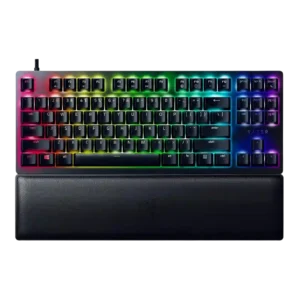
Choose Razer Huntsman V2 TKL for gaming performance and software quality.
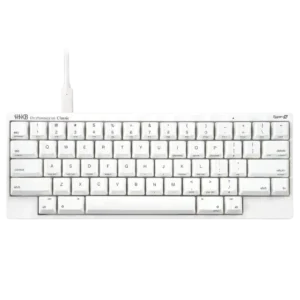
Choose HHKB Professional Classic Type-S for ergonomics and portability.
Why these recommendations?
Razer Huntsman V2 TKL
Where It Has the Edge
gaming performance is 4.6 vs 2.2. Gaming performance was broadly strong, especially for competitive play, with reviewers praising speed, control, and the TKL form...
software quality is 4.3 vs 2.8. Software quality was generally strong due to Synapse control and seamless peripheral integration, though Chroma Studio and macro...
HHKB Professional Classic Type-S
Where It Has the Edge
ergonomics is 4.9 vs 3.9. Ergonomics improve once the layout is learned: Control, Backspace, and Fn functions sit closer to the home row...
portability is 5.0 vs 4.4. Portability is excellent thanks to the low weight and compact 60% body. Multiple reviewers explicitly describe it as...
size and form factor is 5.0 vs 4.4. The 60% form factor is a major strength, keeping the board exceptionally compact without shrinking the main typing...
Razer Huntsman V2 TKL4.0 overall score
HHKB Professional Classic Type-S4.0 overall score
Compare features
Scores are out of 5. Missing scores mean missing review evidence, not a missing feature.
Scored on both products
Comfort and build
Ergonomics
Razer Huntsman V2 TKL
3.9
HHKB Professional Classic Type-S
4.9
Details and evidence for ergonomics
Razer Huntsman V2 TKL
Ergonomics were mostly positive thanks to incline options, centering, and wrist support, with some caveats about feet grip and wrist-rest use.
Ergonomics improve once the layout is learned: Control, Backspace, and Fn functions sit closer to the home row and reduce hand travel. The learning period is the main barrier to realizing that benefit.
Build impressions are mixed despite a mostly sturdy design. Several reviewers praise the robust, flex-free chassis, while others feel the lightweight all-plastic construction seems flimsy or disappointing for the price.
The 60% form factor is a major strength, keeping the board exceptionally compact without shrinking the main typing keys. Reviewers repeatedly praise how little space it occupies.
Durability is a consistent strength. PBT keycaps are expected to resist wear for years, and the long-running plastic case design is repeatedly described as proven and durable.
The minimalist HHKB silhouette is widely admired for its clean, distinctive proportions, especially in Snow and charcoal finishes. The black-on-black treatment is divisive because its visual stealth hurts readability.
Long-session comfort is generally strong, with reviewers praising the curved profile and soft Topre feel. Some users report short-term fatigue while adapting to the angle and layout.
Plastic construction is functional and can be very sturdy, but reviewers question whether the materials feel premium enough for the price. The light case helps portability more than luxury appeal.
Reliability was supported by limited evidence: durable construction and stable profile/cable fit suggested dependable daily use, but cable issues in some reviews kept it from being universal.
Reliability is usually a strength, with the HHKB praised as a long-lasting, dependable work keyboard. One review reported a defective key out of the box, showing quality control is not flawless.
Value is the most consistent objection: reviewers repeatedly call the roughly premium-tier price difficult to swallow. Enthusiasts who prioritize Topre feel may still consider it worthwhile, but mainstream buyers get fewer conventional features for the money.
One exact Classic Type-S review criticizes the lack of persistent onboard configuration memory, saying travel between systems can require repeated setup. That weakens the keyboard’s otherwise portable design.
Stabilizer impressions are mostly positive on newer Pro 3-era boards, with factory lubrication helping the spacebar feel smooth. One Classic review still singles out the spacebar as especially loud.
Rigidity draws sharply different impressions: one long-term review reports no flex or creaking, while another calls the board rattly and unstable-feeling under typing. The lightweight plastic construction shapes that perception.
The HHKB layout is the product’s biggest tradeoff. Fans find it efficient and eventually intuitive, while critics consider the Fn-layer arrows and missing dedicated keys frustrating enough to be deal-breakers.
The 125 Hz polling rate is functional for ordinary use but clearly behind gaming-focused keyboards. Reviewers treat it as one reason this is not a competitive-gaming choice.
Type-S acoustics are generally praised as low-pitched, rounded, and free of the usual Topre rattles. The integrated plastic construction contributes to the softer sound character.
Cable quality was mixed-to-positive: reviewers liked detachable braided cables, but some disliked stiffness, placement, or third-party cable limitations.
The included right-angle USB-C cable draws mild-to-strong criticism for awkward routing. Reviewers generally prefer a straight or more thoughtfully shaped cable.
Typing feel earns some of the strongest praise, with descriptions ranging from silky and plush to “typing on a cloud.” Even less enthusiastic reviewers still tend to find it agreeable.
Reviewers praised the red linear optical switches for speed and smoothness, but several noted dampened or mushy bottom-outs and disliked the clicky option.
Topre feel is the keyboard’s signature strength: most reviewers call it smooth, cushioned, tactile, refined, or outright delightful. A minority finds the action too soft or abrupt, so preference still matters.
Portability is excellent thanks to the low weight and compact 60% body. Multiple reviewers explicitly describe it as a keyboard they would carry to work or pack for travel.
Actuation is repeatedly described as smooth, solid, and consistent, including after long-term use. Reviewers specifically praise the lack of chatter and the confident feel of each press.
Basic cross-platform hardware use is solid, but official Linux software support is missing. Linux users can type normally yet must rely on third-party tools for deeper remapping or firmware-related tasks.
The Professional Classic Type-S is wired-only, which one reviewer sees as a meaningful limitation next to HHKB’s Bluetooth Hybrid models. USB-C works, but there is no wireless option on this model.
The compact footprint frees meaningful desk space for other devices and accessories. Reviewers specifically like having more room for tablets, macro pads, trackballs, or simply a cleaner setup.
Key response is generally praised as crisp, consistent, and accurate, with several reviewers reporting snappy input. One reviewer notes slower rebound than mechanical switches, which can make the response feel less immediate.
The PBT keycaps are widely liked for texture, wear resistance, and feel, with several reviewers saying they stay fresh for years. One review criticizes their thickness at this price.
Key stability is excellent in the detailed Classic review, with virtually no wobble even on larger keys. The Topre keycap and slider design feels notably solid.
Macro support is notably limited. The configuration software lacks a macro editor and other advanced controls found on more gaming- or enthusiast-focused keyboards.
Software quality was generally strong due to Synapse control and seamless peripheral integration, though Chroma Studio and macro setup drew small complaints.
The keymap software is simple rather than powerful. Saving remap files is useful, but Linux support is absent and the overall feature set feels secondary compared with enthusiast tools.
Customization is one of the most disputed areas. Some sources praise key remapping and aftermarket possibilities, while others criticize the Classic model’s restricted software mapping and proprietary Topre ecosystem.
Media controls exist on the function layer, but they are not especially discoverable. One reviewer found the volume-related shortcuts hard enough to remember that a separate macro pad was easier.
Gaming is a weak point. The missing cursor cluster, 125 Hz polling rate, and slower tactile switches make the HHKB far less appealing for serious gaming than purpose-built boards.
Factory silencing is effective without adding the mushiness some silent switches introduce. Reviewers see the damping as a key advantage of the Type-S treatment.
Legend visibility depends heavily on colorway. The charcoal-on-charcoal version is repeatedly criticized as difficult to read, while the Snow/centered legends are much easier to see.
The Type-S is consistently quieter than conventional or standard Topre boards and works well in offices or late-night settings. Bottom-out remains audible, so “silent” is relative rather than literal.
Switch replacement and internal modification are difficult. Topre parts are not designed for quick swapping, and opening the board for deeper changes is tedious compared with hot-swap mechanical keyboards.
Overall sentiment is polarized but often enthusiastic: several reviewers call the HHKB a favorite or best-ever typing board, while others remain unconvinced by its price and layout compromises. It is a niche product with unusually strong fans and detractors.
The lack of a built-in USB hub is a repeated disappointment, especially because an earlier HHKB generation included one. Reviewers miss being able to connect a mouse or accessory through the keyboard.
The red and purple switch choices gave buyers options, though opinion strongly favored the quieter red linears while clicky or silent-linear feel split reviewers.